
If your hydrangeas are struggling, chances are good that one of four things is off: light, soil, water, or pruning timing. Fix the right one and you'll see a noticeable difference within a single season. This guide walks through every lever that drives vigorous hydrangea growth, in the order you should think about them.
How to Help Hydrangeas Grow: Light, Soil, Water, Fertilizer, Pruning
Marcus Holloway
24 Mar 2026
Getting the light and placement right first
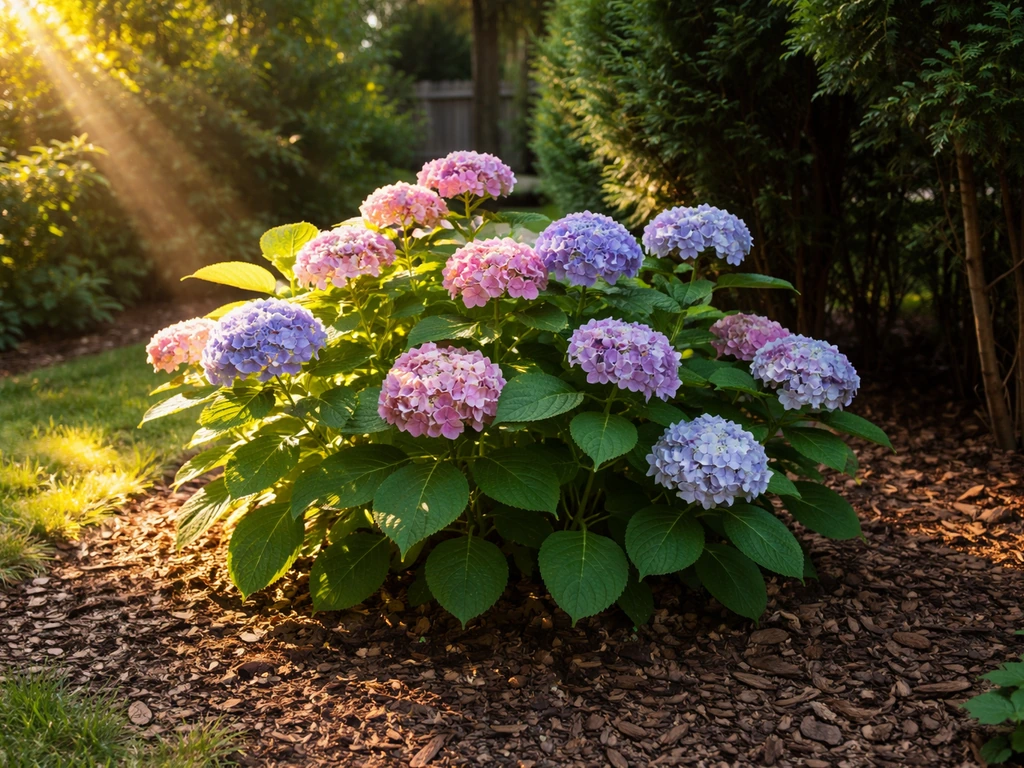
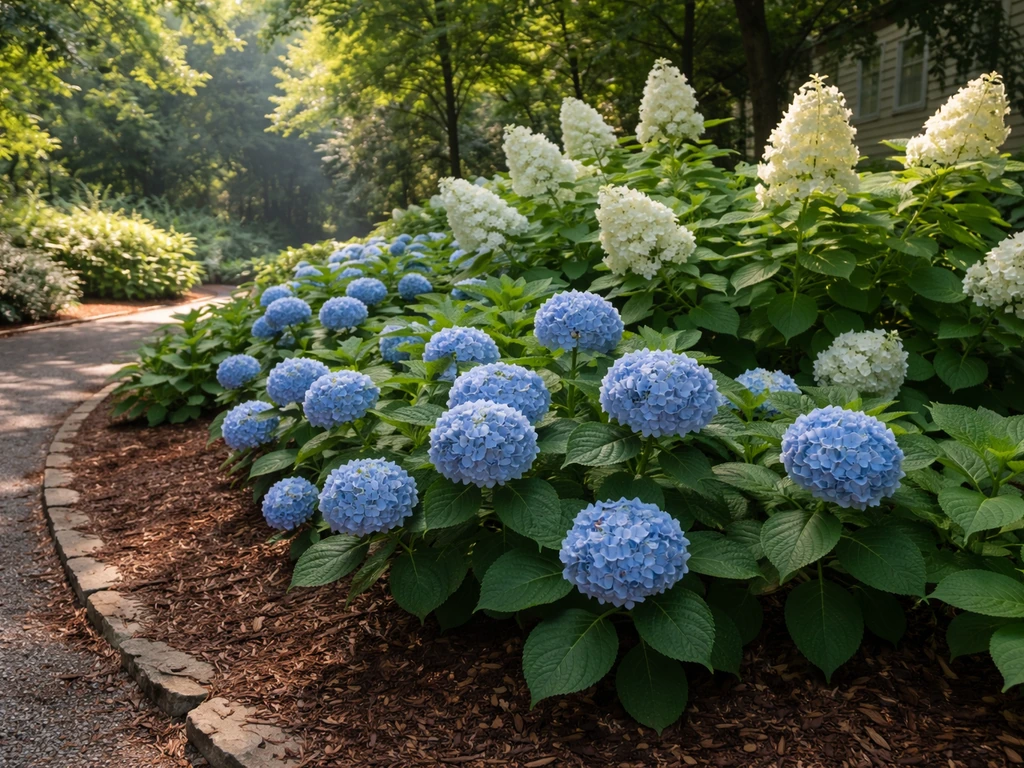
Most hydrangeas want morning sun and afternoon shade. That combination gives them enough light to fuel strong growth and bloom production without the leaf scorch and wilting you get from baking afternoon heat. A spot that gets roughly four to six hours of direct sun before noon, then dappled or full shade after about 2 p.m., is close to ideal for bigleaf (macrophylla), lacecap, and oakleaf types.
Panicle hydrangeas (Hydrangea paniculata) are the exception. They're the toughest and most sun-tolerant of the group. They can handle six or more hours of direct sun and actually bloom better with more light. If you're planting in a sunnier spot and want reliable flowers, Panicle hydrangeas (Hydrangea paniculata) are the exception. They're the toughest and most sun-tolerant of the group. They can handle six or more hours of direct sun and actually bloom better with more light. If you're planting in a sunnier spot and want reliable flowers, panicles are your best bet.. hydrangeas how to grow. how to grow panicle hydrangea
Smooth hydrangeas like Annabelle land somewhere in between. They tolerate more shade than panicles but prefer at least a few hours of sun to hold their stems upright and produce full flower heads.
Placement also matters beyond light. Avoid spots where cold air pools in late spring, since a late frost hitting fresh new growth can set a plant back significantly. Also keep hydrangeas out of wind tunnels, especially bigleaf types, because their large leaves desiccate quickly and their stems can snap. A sheltered corner with good air circulation is far better than an open exposed bed.
Soil and planting setup
Hydrangeas grow best in rich, well-draining soil that holds moisture without staying waterlogged. That sounds contradictory but it's not. You're aiming for soil that drains freely after rain or watering but has enough organic matter to stay evenly moist between waterings. Straight clay holds too much water and starves roots of oxygen. Pure sandy soil drains too fast and dries out. Work toward the middle.
Before planting, dig a hole that's about twice as wide as the root ball and roughly the same depth. Mix your native soil with a good amount of compost, around one part compost to two parts soil. This improves both drainage in clay soils and water retention in sandy ones. If your drainage is genuinely poor, consider raising the bed a few inches rather than fighting waterlogged conditions with amendments alone.
Soil pH: when it matters and when it doesn't
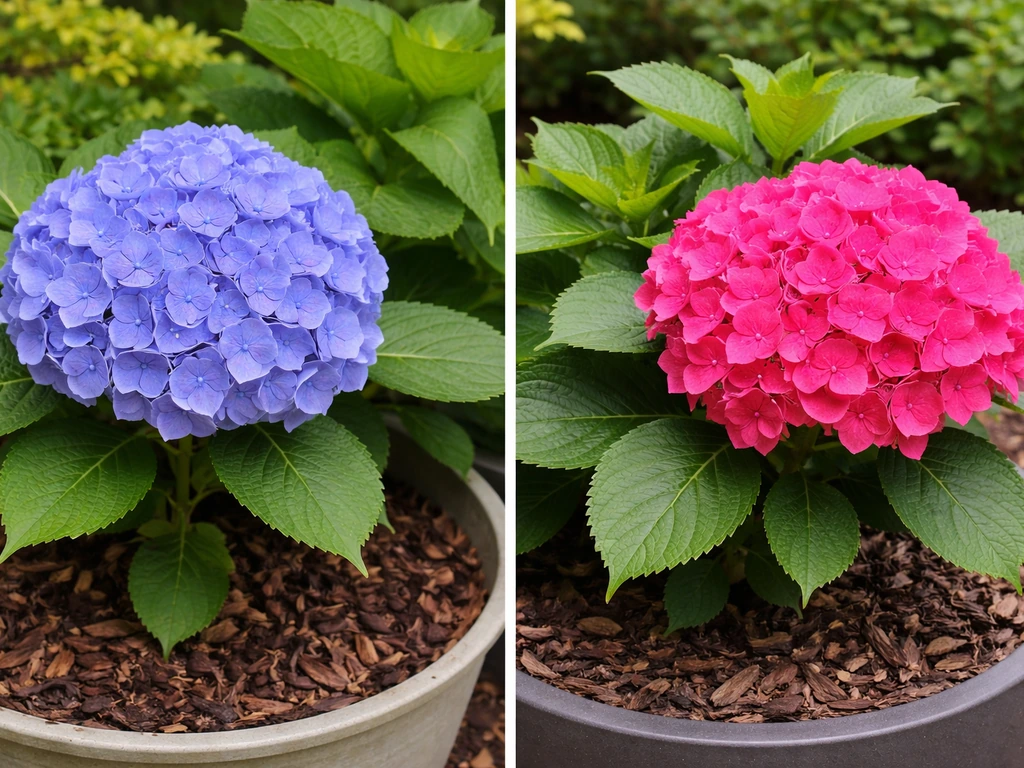
Soil pH is critical specifically for bigleaf hydrangeas if you care about flower color. A pH below 6.0 (acidic) produces blue flowers; a pH above 7.0 (alkaline) shifts flowers toward pink. This color change happens because pH controls aluminum availability in the soil, and aluminum affects pigmentation. If you're growing bigleaf hydrangeas and want to control color, do a soil test first. You can push pH lower by working in sulfur or acidifying fertilizer, and you can raise it with lime.
For panicle, smooth, and oakleaf hydrangeas, pH is much less of a concern for color, but it still affects overall plant health. A pH between 6.0 and 6.5 works well across all types and supports good nutrient uptake. Outside that range, plants can develop yellowing leaves even when plenty of nutrients are present, because the nutrients become chemically unavailable.
Watering for steady growth and big blooms
Consistent moisture is one of the biggest growth drivers for hydrangeas. These plants evolved in woodland and forest-edge environments where the soil stays reliably moist, and they perform best when you replicate that. The name itself comes from the Greek word for water, which should tell you something.
In the growing season, most hydrangeas need about one inch of water per week, either from rain or irrigation. During hot, dry stretches, that can go up to two inches. The best approach is deep, infrequent watering rather than frequent shallow watering. Water deeply two or three times a week, enough to soak the root zone six to eight inches down, rather than a light daily sprinkle that only wets the surface and encourages shallow roots.
Water at the base of the plant, not overhead. Wet foliage sitting overnight invites powdery mildew and leaf spot, both of which are common hydrangea problems. Drip irrigation or a soaker hose is ideal. If you're hand watering, just point the hose at the soil, not the leaves.
Mulch is one of the most useful tools for keeping moisture consistent. A two to three inch layer of shredded bark or wood chip mulch around the root zone (kept a few inches away from the stem) dramatically reduces evaporation and keeps soil temperature stable. It also suppresses weeds that compete for water and nutrients. If you're not mulching your hydrangeas, start there.
When you see wilting in the afternoon on a hot day, don't immediately panic and water. Hydrangeas regularly wilt mid-afternoon even in moist soil. Check the soil with your finger at two to three inches deep. If it's still moist, the plant is just reacting to heat and will recover by evening. If the soil is dry, water thoroughly.
Fertilizing and feeding schedule
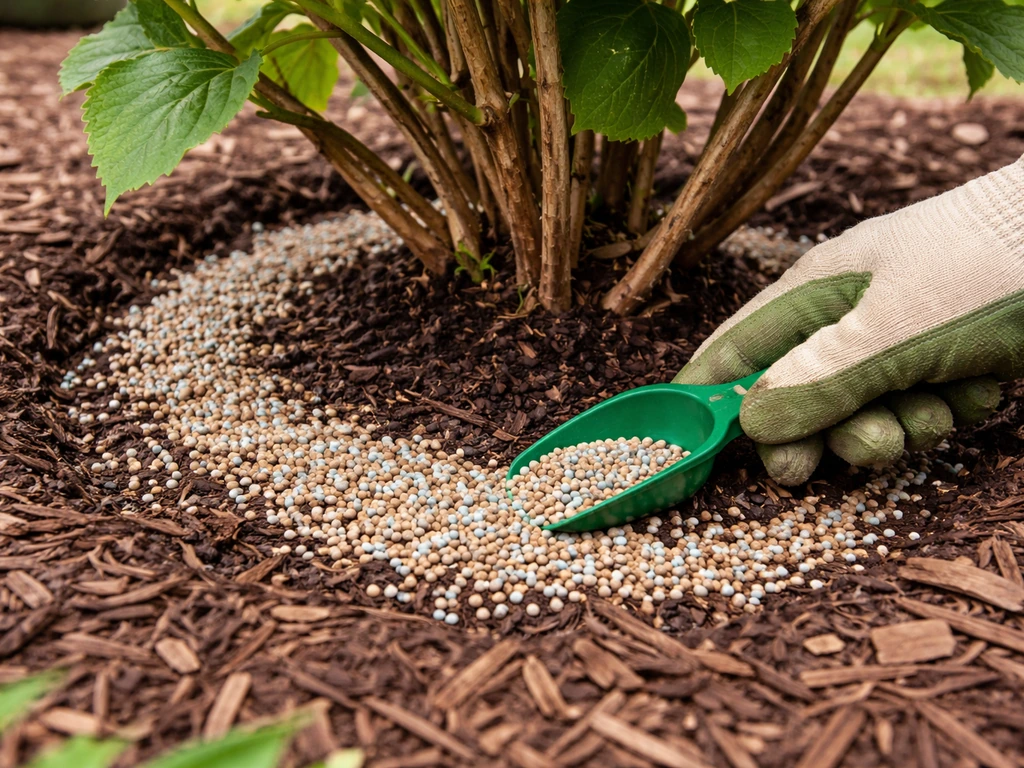
Hydrangeas benefit from fertilizing, but more is not better. Over-fertilizing, especially with high-nitrogen formulas, pushes lush leafy growth at the expense of flowers. I've seen gardeners dump Miracle-Gro on their hydrangeas every two weeks wondering why they get giant plants with almost no blooms. High nitrogen is the culprit.
For most hydrangeas, a balanced slow-release granular fertilizer (something like a 10-10-10 or a formula made specifically for flowering shrubs) applied once in early spring as growth begins is a solid starting point. Some gardeners do a second lighter application in early summer. Avoid fertilizing after July or August in most climates. Late feeding pushes tender new growth that gets damaged by frost and doesn't help flowering.
If you want to encourage more blooms specifically, look for a fertilizer with a lower first number (nitrogen) and higher second and third numbers (phosphorus and potassium). Something like a 5-10-10 or a fertilizer labeled for blooming shrubs will support flower bud development better than a general all-purpose formula.
For oakleaf hydrangeas and panicle hydrangeas growing in reasonable soil, you can often get away with just a single spring application or even just top-dressing with compost. They're less demanding feeders than bigleaf types.
| Hydrangea Type | Fertilizer Timing | Recommended Formula | Notes |
|---|---|---|---|
| Bigleaf (macrophylla) | Early spring; optional early summer | Balanced 10-10-10 or bloom-focused 5-10-10 | Avoid high nitrogen to protect flower buds |
| Panicle (paniculata) | Early spring | Balanced slow-release | Tolerates less frequent feeding |
| Smooth (arborescens) | Early spring | Balanced slow-release | Light feeder; compost top-dress often sufficient |
| Oakleaf (quercifolia) | Early spring | Balanced slow-release or compost | Minimal feeding needed in good soil |
| Mountain (serrata) | Early spring | Balanced 10-10-10 | Similar needs to bigleaf types |
Pruning by hydrangea type: this is where most people go wrong
Pruning is the single most misunderstood part of hydrangea care, and getting it wrong is the most common reason plants fail to bloom. The key rule is simple once you know it: some hydrangeas bloom on old wood (last year's stems), and some bloom on new wood (this year's stems). If you prune an old-wood bloomer at the wrong time, you cut off the flower buds that were already set and waiting for spring.
Old-wood bloomers: prune right after flowering
Bigleaf hydrangeas (macrophylla), lacecap hydrangeas, mountain hydrangeas (serrata), and oakleaf hydrangeas all bloom on old wood. These plants form their flower buds for the following season during late summer and early fall, typically August through September. If you prune them in fall, winter, or early spring, you're cutting off those buds and guaranteeing a bloomless season.
The right time to prune old-wood bloomers is immediately after they finish flowering, by around August 1 at the latest in most climates. A light cleanup, removing spent flower heads and any dead or crossing stems, is all most plants need. Avoid heavy pruning unless you're dealing with very old, crowded stems that need to be cut to the ground for renovation.
New-wood bloomers: prune in late winter or early spring
Panicle hydrangeas and smooth hydrangeas (including Annabelle) bloom on the current season's new growth. Panicle hydrangea flower heads can be left for winter interest, and they should be pruned in late winter or spring rather than in fall Panicle hydrangeas and smooth hydrangeas. That means they set flower buds after you prune, so timing is flexible and forgiving. Cut them back in late winter or early spring before growth starts, and they'll push vigorous new stems that bloom well by midsummer. In fact, cutting panicle hydrangeas back hard in early spring often results in fewer but much larger flower heads.
The practical takeaway: if you can't remember which type you have, look at when it blooms. Early to midsummer bloomers (especially those with rounded blue, pink, or white mophead flowers) are almost always old-wood types. Late summer bloomers with cone-shaped white or cream flowers are almost always panicle types. That distinction alone will save you a lot of frustration.
A seasonal care plan
Spring
Spring is when you set the stage for the whole year. As soon as the ground thaws and growth begins, apply your slow-release fertilizer and refresh the mulch layer. Check for any winter-killed stems on old-wood bloomers by scratching the bark lightly. If it's green underneath, it's alive. Dead stems (brown or hollow) can be removed. Hold off on pruning beyond dead removal until after flowering. For new-wood types like panicle and Annabelle, this is the ideal time to do any shaping or hard cutback.
Summer
Summer is about keeping moisture consistent and watching for stress. Water deeply and regularly, especially during heat waves. Watch for wilting, yellowing, or signs of powdery mildew. Old-wood bloomers should be flowering now. Once they finish, deadhead spent blooms and do any needed pruning by early August at the latest. A light second feeding of flowering-formula fertilizer can go in during early June if plants look like they need a boost, but skip it if growth is already strong.
Fall
Fall is hands-off season for old-wood bloomers. Those plants are quietly setting next year's flower buds right now, and any disruption to the stems risks damaging them. Don't prune. You can leave the dried flower heads on through winter. They look good, and they protect the bud nodes below from temperature swings. Taper off watering as temperatures drop and rainfall increases. In colder climates (zones 5 and below), you can mound a few inches of mulch or straw around the base of bigleaf hydrangeas after hard frost to protect the crowns and lower stem buds.
Winter
Most hydrangeas don't need much in winter beyond the protective mulch you applied in fall. Panicle and smooth types are very cold-hardy, typically handling zones 3 to 4 without issue. Bigleaf hydrangeas are the weak link in cold climates. In zones 5 and 6, a late cold snap after buds have broken can wipe out the season's flowers even on a healthy plant. There's not much you can do about that beyond choosing remontant (reblooming) bigleaf varieties that also set buds on new wood as backup.
Troubleshooting slow growth and poor flowering
If your hydrangea is alive but clearly not thriving, run through this checklist before reaching for a fertilizer or pesticide.
- No blooms on an otherwise healthy plant: Almost certainly a pruning timing issue on an old-wood type, or frost damage to buds. Check when you pruned and what the spring weather was like.
- Pale yellow leaves with green veins (chlorosis): Usually a pH or iron availability problem. Test your soil. If pH is too high (above 7.0), the plant can't absorb iron. Apply acidifying sulfur or switch to an acidifying fertilizer.
- Wilting despite moist soil: Often a root problem. Check for root rot if soil has been consistently wet. Also check for vine weevil grubs in the root zone.
- Leggy, weak stems flopping over: Too much shade or too much nitrogen. Move the plant to brighter morning sun, or back off on nitrogen-heavy fertilizers.
- Small flower heads or few flowers: Often related to over-pruning, high nitrogen, or insufficient light. Bigleaf types also produce smaller blooms in heavy shade.
- Brown leaf edges: Typically sun scorch from afternoon heat, drought stress, or wind damage. Improve watering consistency and consider a windbreak or afternoon shade source.
- Powdery mildew (white coating on leaves): Overcrowding and poor air circulation. Thin the plant out, avoid overhead watering, and if needed apply a fungicide labeled for ornamental shrubs.
- No growth at all in spring: Could be cold damage to stems. Wait until late spring before writing off a plant. Even stems that look dead sometimes push new growth from the base.
Common mistakes and how to fix them fast
Most hydrangea problems come down to a handful of repeated mistakes. Here's what I see most often and what to do about each one.
Pruning at the wrong time is the number one issue. If you've been cutting your bigleaf hydrangeas back in fall or early spring out of habit, stop immediately. Leave the stems alone until after flowering next summer. One season of correct pruning timing is usually enough to see blooms return.
Planting in too much shade is the second most common problem. A hydrangea that gets fewer than three hours of direct sun will grow slowly, produce weak stems, and bloom poorly or not at all. If the spot is too shady, either move the plant in fall when it's dormant or thin out overhead trees to let more light in.
Over-fertilizing with the wrong formula. Grabbing a general-purpose fertilizer and applying it repeatedly through the season feels helpful but often backfires. High nitrogen pushes vegetative growth and suppresses flowering. Stick to one or two applications of a balanced or bloom-focused slow-release formula per season and let the plant do its thing.
Inconsistent watering is a quiet killer. Plants that get flooded then dried out repeatedly develop shallow root systems and stressed tissue that's more susceptible to disease. Set up a consistent deep-watering routine and use mulch to buffer the swings between rain events.
Planting too deep is something a lot of gardeners don't realize they've done. The crown of the plant should sit at or very slightly above the surrounding soil level, not buried. A plant set too deep often sulks for years or slowly declines. If you suspect this, you can carefully excavate around the base and lift the root ball slightly, then backfill.
The good news is that hydrangeas are genuinely tough plants once established. I've seen badly neglected specimens come back strong after a single season of corrected care. Get the light, soil drainage, watering, and pruning timing right, and your hydrangeas will grow with very little else from you. The flowers practically take care of themselves after that.
FAQ
How can I tell whether my hydrangea is an old-wood or new-wood bloomer if I do not know the variety?
Use bloom timing and flower shape as your shortcut. Early to mid-summer blooms (often rounded mopheads) usually come from old wood. Late summer blooms with cone-shaped flowers are typically panicle types, which are new-wood bloomers. If you are unsure, wait until after the first flush before pruning anything other than dead stems.
My bigleaf hydrangea has leaves but no flowers. What should I check first?
First confirm pruning timing. If it was cut in fall or early spring, you may have removed next season’s buds. Next do a soil pH test, because very acidic or alkaline soil can reduce bud performance even if leaves look healthy. Finally, verify it is getting at least a few hours of morning sun.
Is it better to water hydrangeas every day or less often?
Less often but deeper is usually better. Aim to soak the root zone 6 to 8 inches down, two to three times per week during normal weather, and adjust upward in heat waves. Daily light watering keeps roots near the surface and increases stress when temperatures swing.
Should I remove afternoon-wilted hydrangea blooms or just water?
Do not assume wilt means the plant is dry. Check soil moisture 2 to 3 inches down first. If it is still moist, the plant is likely wilting from heat and will recover overnight. If the soil is dry, water deeply at the base, then resume your normal schedule.
Can I change hydrangea flower color if I have already planted the shrub in the ground?
Yes, but do it gradually and based on a soil test. For blue flowers, lowering pH typically requires sulfur or an acidifying fertilizer applied in small steps, then retesting. For pink, raising pH with lime is also best done slowly. Repeated large changes can stress roots and delay visible color shifts.
What soil test should I do, and how often should I retest?
Test pH first, and if growth is poor, consider a basic nutrient panel too. Retest pH after you make amendments, usually once per growing season, because pH adjustments are not instantaneous. Avoid guessing based only on leaf color.
How much mulch should I use, and can it touch the stem?
Use 2 to 3 inches of shredded bark or wood chips around the root zone. Keep it a few inches away from the stem to prevent rot and to avoid creating a constantly damp collar. Replenish mulch as it breaks down, especially after heavy rains.
Why did my hydrangea get lots of leaves but fewer or no blooms after fertilizing?
High-nitrogen feeding is the most common cause. Switch to a slow-release balanced or bloom-focused fertilizer and apply it once in early spring (and only lightly again if the plant truly needs it). Stop fertilizing after mid to late summer so new growth hardens before frost.
When should I fertilize if my hydrangea is still recovering from winter damage?
For old-wood types, wait until you see active growth in spring and you have removed only dead stems. Then apply your spring fertilizer, and refresh mulch rather than forcing a late-season growth flush. If stems look alive but growth is slow, focus first on light, drainage, and consistent watering.
What pruning should I do in spring for hydrangeas that bloom on old wood?
In spring, do only minimal pruning beyond removing dead or obviously damaged stems. Scratch-test stems to confirm whether the tissue is alive, then cut out only the dead portions. Leave healthy stems alone until after flowering, because buds form on that existing wood.
My panicle or Annabelle hydrangea has huge flower heads but stems are falling over. What can I do?
First, check the amount of light. Too much shade can create weak stems even if the plant blooms. If light is fine, use a lighter pruning approach, or support the plant with rings or stakes during bloom. Also avoid excessive nitrogen, which can make stems more floppy.
What is the best way to handle poor drainage or standing water?
If the site stays soggy, raised beds or improved grading are usually more reliable than just adding compost. Improve the entire root zone, and plant so the crown sits at or slightly above surrounding soil. If you notice water pooling repeatedly after rain, redesign the planting area rather than relying on amendments.
Do hydrangeas need overhead protection from rain or sun scorch?
Overhead watering is generally avoidable, but rain itself is not the problem. What matters is keeping foliage from staying wet overnight. If you are in a humid area and mildew appears, increase airflow by spacing plants and pruning lightly after flowering for old-wood types.