
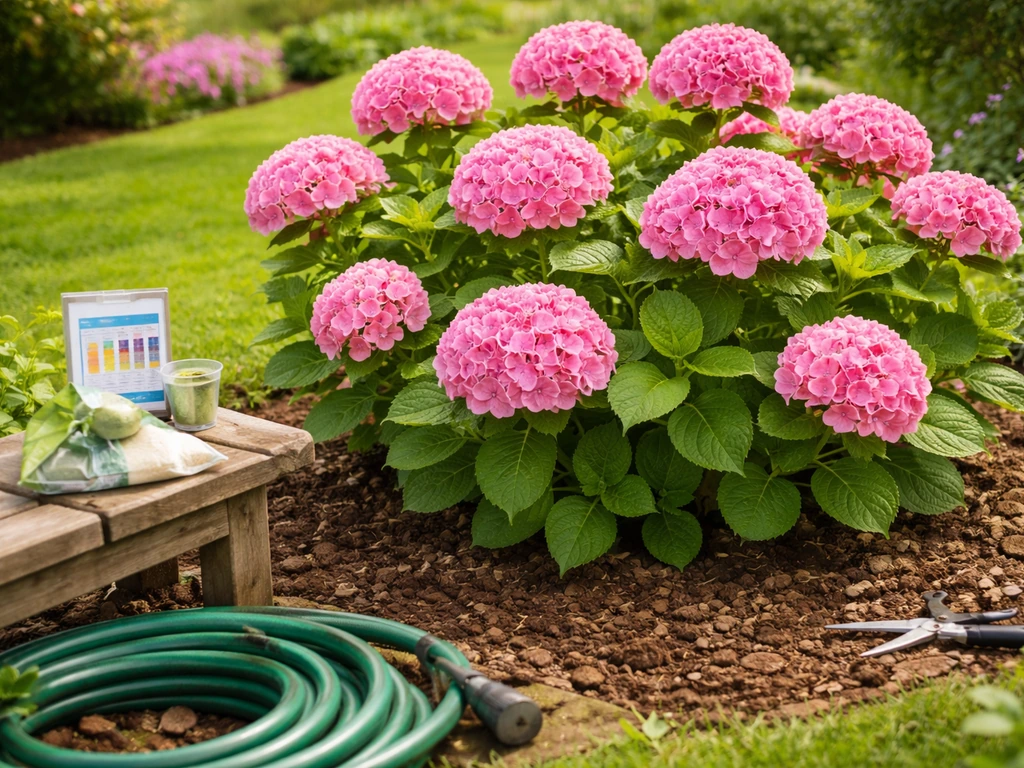
Growing pink hydrangeas is absolutely doable, but it's not quite as simple as picking a pink one at the nursery and hoping for the best. The color, the bloom timing, and even whether the plant blooms at all depend heavily on which type of hydrangea you're growing, where you plant it, and what your soil is doing. Get those three things right, and you'll have full, reliable pink blooms every season. Get them wrong, and you'll end up with a blue hydrangea, a non-blooming shrub, or a plant that sulks for years. This guide walks you through everything from choosing your plant to fine-tuning soil chemistry This guide walks you through everything from choosing your plant to fine-tuning soil chemistry so the color stays exactly where you want it.
How to Grow Pink Hydrangea: Planting, Care, Color Tips

Marcus Holloway
24 Mar 2026
Choose the right pink hydrangea type
Not all hydrangeas behave the same way, and the type you pick determines everything downstream: when you prune, how you manage color, and how much maintenance you're signing up for. There are four types worth knowing about for pink blooms.
Bigleaf hydrangea (Hydrangea macrophylla)
This is the classic, the one most people picture when they think of pink or blue hydrangeas. Bigleaf hydrangeas are uniquely sensitive to soil pH, which means you can actually dial in pink or blue color by adjusting your soil chemistry. They bloom on old wood (meaning last year's stems), so if you prune at the wrong time, you lose next year's flowers. Newer reblooming varieties like 'Endless Summer' and 'Incrediball Blush' bloom on both old and new wood, which gives you more flexibility. If pink color management is your main goal, this is your plant.
Panicle hydrangea (Hydrangea paniculata)
Panicle hydrangeas start white or cream and turn pink, rose, or even deep red as the season progresses. Varieties like 'Limelight Prime,' 'Quick Fire,' and 'Pinky Winky' are reliable pink producers. They bloom on new wood, so pruning is much more forgiving. They're also the hardiest of the group, tolerating full sun better than most. If you want reliable color without the soil chemistry work, panicles are the easiest path to pink. You can read more about growing this type in a dedicated panicle hydrangea guide. how to grow panicle hydrangea
Oakleaf hydrangea (Hydrangea quercifolia)
Oakleaf hydrangeas produce white blooms that fade to pinkish-tan as they age. The color is subtle rather than vivid, but the plant has fantastic four-season interest with peeling bark and fall foliage. They bloom on old wood, so the pruning rules are similar to bigleaf. Good choice if you want a low-maintenance native option with soft pink tones.
Mountain and smooth hydrangeas (H. serrata and H. arborescens)
Mountain hydrangeas (H. serrata) behave a lot like bigleaf and also respond to soil pH, but they tend to be hardier and smaller. Smooth hydrangeas like 'Annabelle' bloom white, though some newer cultivars like 'Invincibelle Spirit' produce true pink. Smooth hydrangeas bloom on new wood and are nearly impossible to kill with bad pruning.
| Type | Natural Pink Color? | Color Affected by pH? | Blooms On | Best For |
|---|---|---|---|---|
| Bigleaf (H. macrophylla) | Yes, vivid | Yes, strongly | Old wood (reblooming: both) | Color control, classic look |
| Panicle (H. paniculata) | Yes, seasonal fade to pink | No | New wood | Easy care, reliable color |
| Oakleaf (H. quercifolia) | Soft pinkish-tan | No | Old wood | Native, low maintenance |
| Mountain (H. serrata) | Yes | Yes | Old wood | Compact, cold-hardy |
| Smooth (H. arborescens) | Yes (select cultivars) | Minimal | New wood | Tough, beginner-friendly |
My recommendation: if you want classic, vivid pink blooms you can actually influence, start with a bigleaf or a reblooming bigleaf cultivar. If you want something more forgiving, go with a panicle type.
Site selection: sunlight, wind, and spacing
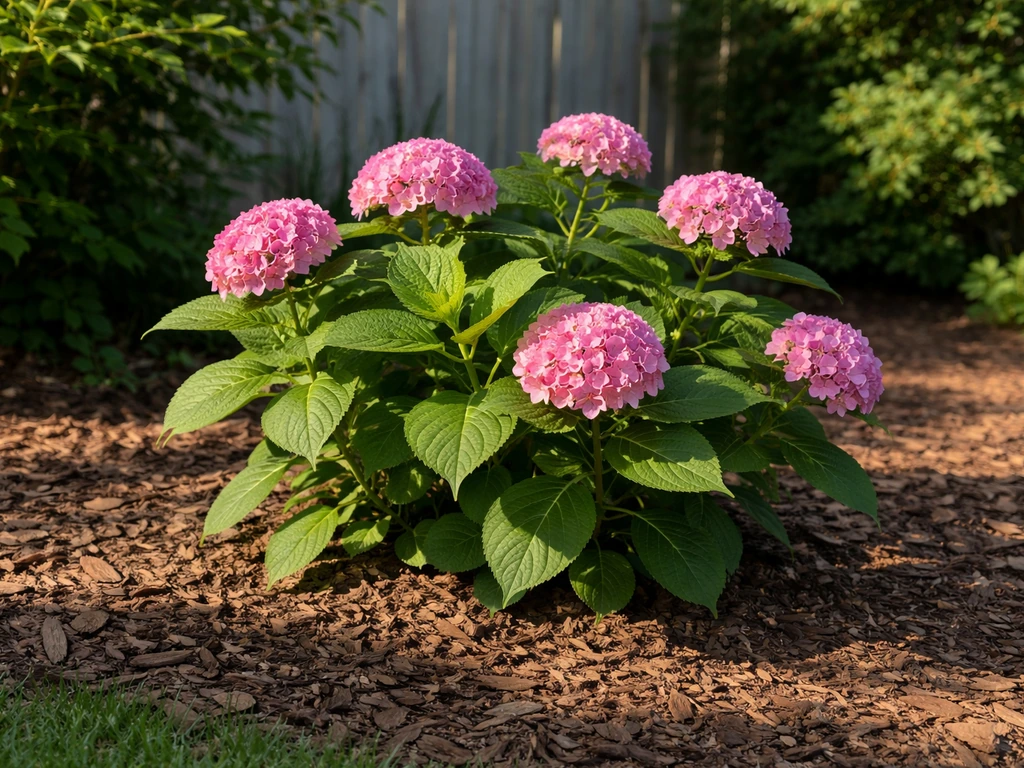
Most hydrangeas, especially bigleaf types, do best with morning sun and afternoon shade. This is not a suggestion you can work around. Afternoon sun in most climates is intense enough to wilt the large leaves and stress the plant significantly. I've seen gardeners plant bigleaf hydrangeas in full sun and wonder why they look terrible by 3pm every day in July. The answer is almost always too much afternoon heat.
Panicle hydrangeas are the exception here. They can handle more sun, even full sun in cooler climates, and actually produce better color when they get more light. But even panicles benefit from some afternoon relief in zones 7 and warmer.
Wind is an underrated problem. Hydrangeas have large, soft leaves that dry out and tear in consistent wind. Avoid exposed corners of the yard or wind tunnels between buildings. A spot near a fence or building that provides a windbreak without blocking morning light is ideal.
For spacing, give bigleaf hydrangeas at least 4 to 6 feet between plants, depending on the cultivar. Panicle varieties can get large (some reach 6 to 10 feet wide at maturity) and need 6 to 8 feet of clearance. Crowding restricts airflow and invites fungal issues. Check the mature size on the plant tag and take it seriously, because hydrangeas fill out faster than most people expect.
- Bigleaf, oakleaf, and mountain types: morning sun, afternoon shade
- Panicle types: full sun to partial shade, handles more heat
- All types: protect from persistent wind
- Bigleaf spacing: 4 to 6 feet apart
- Panicle spacing: 6 to 8 feet apart
- Avoid low spots where water pools after rain
Soil and pH for getting (and keeping) pink blooms
This section matters most if you're growing bigleaf or mountain hydrangeas. The pink-versus-blue question is almost entirely a soil chemistry question. Here's the short version: at higher soil pH (more alkaline), aluminum becomes less available to the plant, and the flowers stay pink. At lower pH (more acidic), aluminum becomes more available and the anthocyanin pigments in the petals react with it to produce blue color. So if you want pink, you want a higher pH. If you're seeing blue when you wanted pink, your soil is likely too acidic.
The target pH range for pink bigleaf hydrangeas is generally 6.0 to 6.5. Below 6.0, you'll start getting blue or purple tones. Above 7.0 can cause its own nutrient availability issues. blank" rel="noopener noreferrer">Get a soil test before you plant. Both the UConn Extension and OSU Extension specifically recommend testing before planting if flower color matters, and they're right, this is part of the process in hydrangeas how to grow, including how to grow blue hydrangeas. It's a $15 to $25 investment that tells you exactly what you're working with and what you need to add. Guessing is how you end up with the wrong color. how to help hydrangeas grow
If your soil is too acidic and producing blue flowers, raise the pH by adding ground agricultural lime. Work it into the soil well before planting. If your soil is already too alkaline and you want more neutral pH, you can lower it with elemental sulfur, though this takes weeks to have full effect. Adjusting pH is significantly easier before the plant is in the ground, which is another reason that pre-planting soil test pays off.
Beyond pH, hydrangeas need well-draining soil with good organic matter. Heavy clay holds too much water and promotes root rot. Sandy soil drains too fast and dries out. The fix for both is the same: work in 2 to 3 inches of compost before planting. Compost improves drainage in clay, improves water retention in sand, and adds slow-release nutrition.
Planting timing and step-by-step planting
The best time to plant hydrangeas is spring after the last frost or early fall, at least 6 weeks before the first expected frost. Spring planting gives the plant a full growing season to establish before facing winter. Fall planting works well in mild climates (zones 7 and warmer) but can be risky in cold climates because the roots don't have enough time to anchor before the ground freezes. Avoid planting in summer heat if you can. If you do plant in summer, you're committing to intensive watering for the first few weeks.
- Get a soil test and amend pH if needed, ideally 2 to 4 weeks before planting.
- Choose your site based on the sunlight and spacing guidelines above.
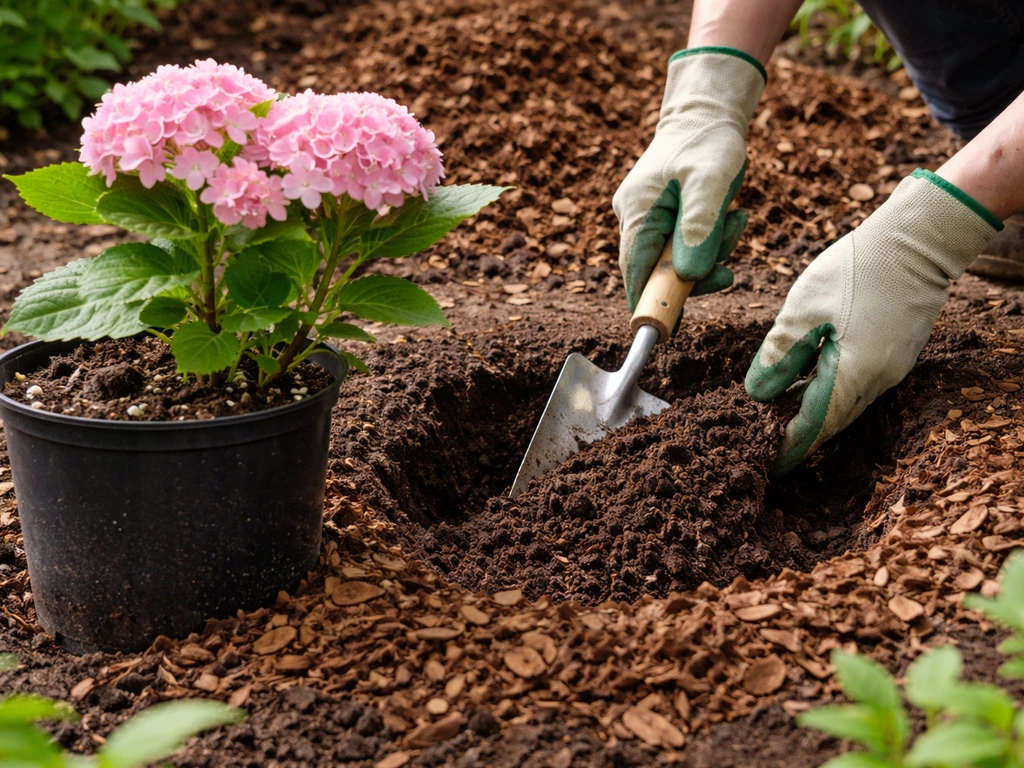
- Dig a hole twice as wide as the root ball and the same depth. Do not dig deeper than the root ball.
- Mix the removed soil with compost at roughly a 50/50 ratio.
- Place the plant in the hole so the top of the root ball sits level with (or very slightly above) the surrounding soil. Planting too deep is a common mistake that causes rot and poor growth.
- Backfill with the amended soil, pressing gently to eliminate air pockets. Do not pack it hard.
- Water thoroughly until water pools slightly at the base and then absorbs. This settles the soil and eliminates air gaps around the roots.
- Apply 2 to 3 inches of mulch (bark, wood chips, or shredded leaves) around the plant, keeping it a few inches away from the stems. Mulch retains moisture and regulates soil temperature.
- Water every 2 to 3 days for the first 2 to 3 weeks, then transition to regular deep watering as described below.
One thing I always do: water the plant in its nursery container the night before I plant it. A hydrated root ball settles into new soil much better than a dry, compacted one.
Watering and fertilizing through the seasons
Watering
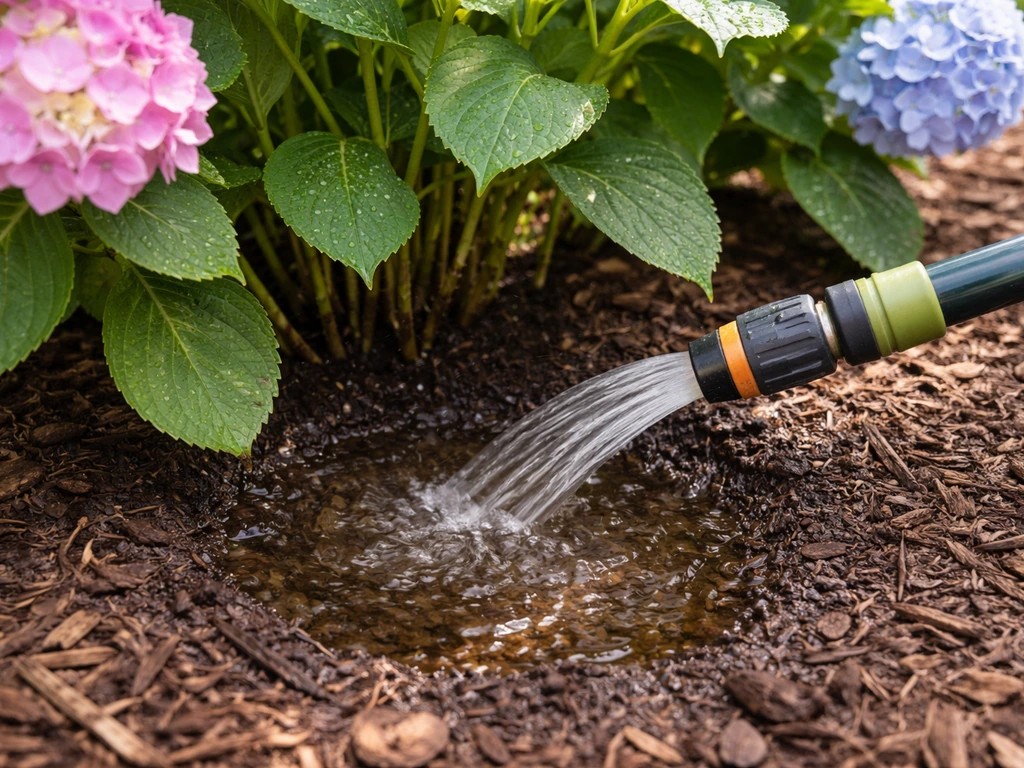
Hydrangeas are moisture-loving plants but they don't want to sit in wet soil. The goal is consistently moist, not soggy. In the first year after planting, water deeply 2 to 3 times per week during dry spells. ...if the plant looked incredible and didn't flower at all.
After the first year, established hydrangeas typically need about 1 inch of water per week. In hot or dry weather, bump that to 1.5 inches. The easiest way to check is to stick a finger 2 inches into the soil. If it's dry, water. If it's still moist, wait. Morning watering is best because it gives leaves time to dry before evening, which reduces fungal disease risk. Avoid wetting the foliage if possible, and definitely avoid evening overhead watering.
Container-grown hydrangeas need more frequent watering, sometimes daily in summer, because pots dry out much faster than in-ground soil.
Fertilizing
Hydrangeas don't need heavy feeding. Over-fertilizing, especially with high-nitrogen fertilizers, pushes lush leafy growth at the expense of blooms. I've made this mistake. The plant looked incredible and didn't flower at all.
For most hydrangeas, a balanced slow-release fertilizer (something like 10-10-10) applied once in early spring as new growth emerges is usually enough. A second light application in early summer (around June) can support strong growth, but skip fall fertilizing because it pushes new tender growth right before frost.
If you're trying to maintain pink color in a bigleaf hydrangea, be careful with fertilizers that contain extra phosphorus or those specifically marketed for acid-loving plants. Acidifying fertilizers will lower your soil pH over time, which is exactly what you don't want if you're trying to stay pink. Stick to a balanced formula and monitor pH annually.
| Season | Watering | Fertilizing |
|---|---|---|
| Early spring | Resume regular watering as growth emerges | Apply balanced slow-release fertilizer (10-10-10) |
| Late spring / early summer | 1 inch per week, increase in heat | Optional second light application in June |
| Summer | 1 to 1.5 inches per week, deep and infrequent | None unless growth is very weak |
| Fall | Reduce as temperatures drop | Do not fertilize |
| Winter | Minimal; let rainfall handle it in most zones | None |
Pruning correctly (and it really does depend on the type)
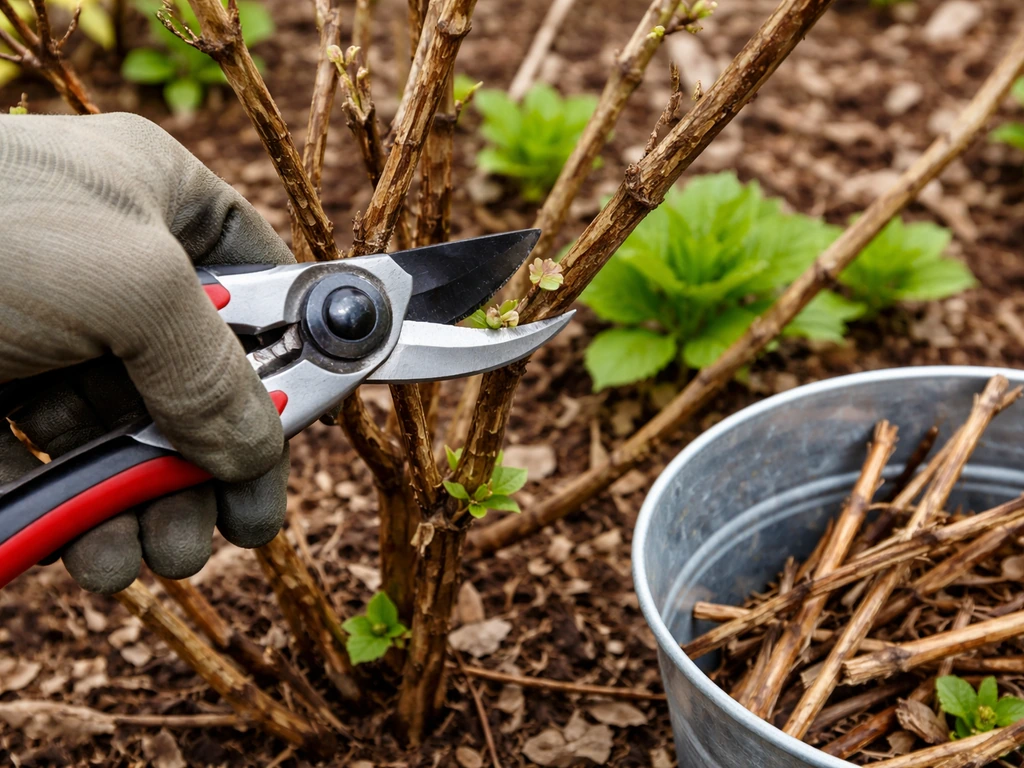
Wrong pruning is the number one reason hydrangeas fail to bloom. The rule that will save you: know whether your plant blooms on old wood or new wood before you touch it with shears.
Old wood bloomers: bigleaf, oakleaf, and mountain hydrangeas
These types set next year's flower buds on the stems they grew this year. That means if you prune in fall, winter, or early spring, you're cutting off the blooms before they ever open. The correct time to prune is immediately after flowering, typically in late summer. Illinois Extension also notes that for old-wood types such as many H. macrophylla, pruning should be done after flowering and by about August 1 at the latest For old-wood types (including many H. macrophylla), pruning should be done after flowering and by about August 1 at the latest. Even then, prune lightly. Remove dead stems, crossing branches, and spent flower heads. Leave as much healthy stem as possible.
The exception is removing truly dead wood, which you can (and should) do in early spring. Scratch a stem with your fingernail. Green tissue underneath means it's alive. Brown or hollow means it's dead. Remove dead stems all the way to the base.
Reblooming bigleaf varieties like 'Endless Summer' bloom on both old and new wood, so mistimed pruning won't wipe out your entire bloom season, just the early flush. Still, it's good practice to prune them right after the first wave of blooms.
New wood bloomers: panicle and smooth hydrangeas
These types produce flowers on the growth they put out in the current season, so pruning in late winter or early spring (before new growth starts) is perfectly safe and actually encourages stronger, more vigorous blooms. Cut panicle hydrangeas back by about one-third to one-half in late winter. Smooth hydrangeas like Annabelle can be cut back hard, even to 12 inches from the ground, and they'll come back strong.
Seasonal care and troubleshooting
Spring
Pull back mulch slightly as soil warms to allow air circulation. Check for frost damage on old-wood bloomers by scratching stems. Remove any confirmed dead wood. Apply fertilizer once new growth is clearly underway, not before. If you had color issues last season, this is the time to adjust soil pH so amendments have time to work before the plant flowers.
Summer
Keep up with watering during heat waves. Wilting in the afternoon heat is normal and not always a crisis, but if the plant is wilted in the morning, it needs water immediately. Deadhead spent blooms on reblooming varieties to encourage a second flush. Watch for powdery mildew on leaves (white powdery coating), which is more common in humid conditions with poor airflow.
Fall
Stop fertilizing. Reduce watering as temperatures drop. In cold climates (zones 5 and colder), protect bigleaf and mountain hydrangeas after the first hard frost by mounding a few inches of mulch or straw loosely around the base. Some gardeners build wire cages around tender old-wood bloomers and fill them with leaves. Don't do this too early or you risk keeping the plant too warm going into winter.
Troubleshooting common problems
- No blooms: Most likely pruned at the wrong time (old-wood bloomers) or frost killed the buds. Check if you pruned in fall or spring. Protect buds next winter.
- Blooms turned blue: Soil pH dropped below 6.0, making aluminum available. Test and raise pH with ground limestone.
- Blooms fading to purple or lavender: This is a transition color as pH shifts. Stabilize pH at 6.0 to 6.5 for consistent pink.
- Afternoon wilting: Normal in high heat if the plant perks up by morning. Increase mulch depth to retain soil moisture.
- Morning wilting: Water immediately and check for root rot if it persists despite regular watering.
- Yellowing leaves: Could be overwatering, underwatering, or iron chlorosis from high pH. Test soil before adjusting.
- Brown leaf edges: Usually sunscald or underwatering. Move to more shade if in full afternoon sun.
- Powdery mildew: Improve airflow by thinning branches and avoid wetting foliage. Fungicidal spray helps but won't fix the underlying airflow problem.
Changing or maintaining flower color over time
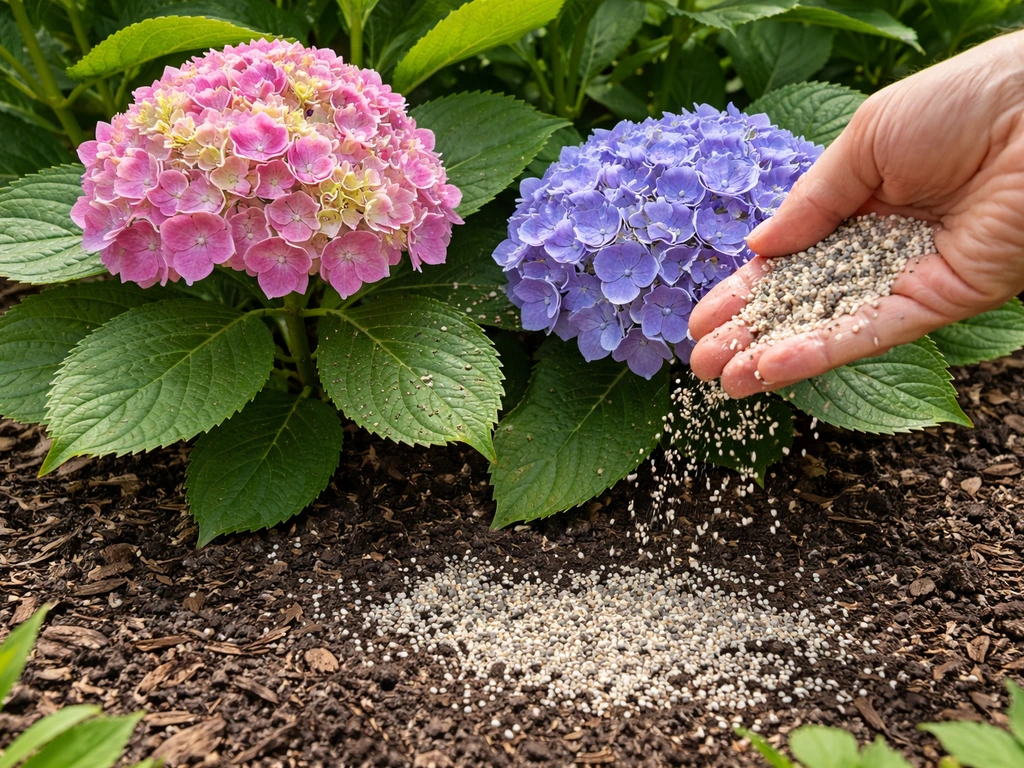
If your bigleaf hydrangea is producing blue or purple flowers when you want pink, the fix is to raise your soil pH. The most reliable way to do this is with ground agricultural lime (calcium carbonate). Apply it around the drip line of the plant and water it in. The change won't happen overnight. Expect 4 to 8 weeks for meaningful shifts, and full color change may take a full growing season. Patience is required.
For ongoing maintenance of pink color, test your soil pH every spring. This is the single most useful habit you can build. Soil pH drifts over time, especially if you're adding organic matter (which can acidify slightly), if you're in a naturally acidic region, or if rain is washing lime through the soil profile. A quick annual test tells you if you need to correct before it shows up as the wrong bloom color.
You can also limit aluminum availability by avoiding aluminum sulfate products entirely near pink-targeted plants. Aluminum sulfate is commonly sold to make hydrangeas blue. It works by lowering pH and adding aluminum directly. Keep it far away from any plant you want to stay pink.
One thing I want to be honest about: if your natural soil is strongly acidic, like in the Pacific Northwest or parts of the Southeast, fighting it toward alkaline for pink blooms is a constant uphill battle. You'll spend more time managing pH than anything else. In that situation, panicle hydrangeas or smooth hydrangeas with naturally pink cultivars are a much more practical choice. They don't care about pH for color purposes, and they'll give you reliable pink without the chemistry work.
White-flowered hydrangea varieties will not change to pink regardless of pH adjustments. Color manipulation only works on cultivars that already have pink or blue pigmentation potential. Check the plant tag or cultivar description before expecting color changes.
Stick to these fundamentals: match the type to your goals, plant it in the right light, get a soil test before you start, water deeply and consistently, fertilize lightly in spring, and prune only at the right time for your specific variety. Do those things well and pink hydrangeas are genuinely one of the most rewarding plants you can grow.
FAQ
Can I change a white hydrangea to pink by adjusting soil pH?
Yes, but only if you choose a variety that has color-responsive potential. White-only cultivars typically keep white flowers no matter what you do to pH. For pink goals, start with a bigleaf (or a reblooming bigleaf) cultivar known to go pink under higher pH.
How long after adding lime will my hydrangea turn more pink, and can I keep adjusting right away?
Reapply only when needed. A common mistake is chasing color week to week with lime or other amendments. Lime shifts pH slowly, so after an application, wait at least 4 to 8 weeks to judge progress, then confirm with a soil test before adding more.
Why doesn’t my hydrangea match the “pink/blue” description on the plant tag?
Most hydrangeas are sold with care instructions based on what they prefer, but the actual color outcome depends on your specific soil and the cultivar’s genetics. If your tag does not mention that it can shift pink and blue, assume it might not meaningfully respond, even with perfect pH.
What happens if I prune my bigleaf hydrangea at the wrong time, and how can I recover?
If you prune at the wrong time on an old-wood bloomer (bigleaf or mountain), you can lose the next flowering cycle. For these types, prune just after flowering, usually late summer, and prune lightly unless a stem is truly dead. When in doubt, wait until after blooms fade.
Should I test soil pH only once when planting, or every year?
For color control, the key is not just pH at planting, it is pH stability. Soil testing each spring helps because rain, compost additions, and natural drift can move pH enough to shift color again over time. If you are changing mulch type or adding lots of compost, test more frequently the first year after changes.
Can I grow pink hydrangeas in pots and still control the color?
Yes, containers can work, but the pH can change faster than in-ground soil because potting mixes and watering patterns differ. Use a large pot with drainage, track watering carefully, and plan to test pH periodically. Also, expect more frequent watering, which can make pH corrections require more attention.
My hydrangea droops in the afternoon, does that mean I’m under-watering?
A “wilted” look in the afternoon does not automatically mean you have a watering problem. The important check is morning: if leaves are drooping in the morning, water immediately. If morning turgor is fine, the afternoon slump is often heat stress, especially with bigleaf hydrangeas.
Can fertilizer make my pink hydrangea turn blue or stop blooming?
It can, especially if the fertilizer is designed for acid-loving plants or contains extra phosphorus or ammonium-based nitrogen. For pink-targeted bigleaf hydrangeas, use a balanced fertilizer and avoid products aimed at turning blooms blue. Then monitor pH annually instead of relying on fertilizer to manage color.
What causes white powder on hydrangea leaves, and should I change my watering?
Yes, especially for bigleaf types in humid conditions with poor airflow. Powdery mildew shows up as a white powdery coating and is more likely when foliage stays damp or plants are crowded. Improve spacing, water at the soil level when possible, and remove heavily diseased leaves.
Does deadheading affect color or only flowering, and when should I do it?
Deadheading is helpful for reblooming varieties because it can encourage another flush, but it will not fix color problems caused by wrong pH. Also note that panicle hydrangeas often look tidy without deadheading, while reblooming bigleaf types benefit from it after the first wave.
What if my yard’s soil is naturally very acidic, can I still reliably grow pink hydrangeas?
If your soil is strongly acidic naturally, you may spend years trying to push it higher for pink color. In that situation, a practical move is choosing panicle hydrangeas or smooth hydrangeas with pink cultivars that do not rely on pH for color. This avoids constant re-correction and gives more predictable pink results.
My hydrangea grows leaves but won’t flower, what should I check first?
Often it is light or pruning, not color chemistry. If you have the wrong pruning window, you may cut off buds and get few or no flowers. If pruning timing is correct, then check light (morning sun with afternoon shade for most types) before assuming the soil is the problem.