
You can grow deep-blue hydrangeas, but only if you understand what actually controls the color. It is not magic, and it is not just about buying the right plant. Blue hydrangea blooms depend on the right cultivar, the right soil pH, and available aluminum in that soil. Get all three right and you will have saturated, true-blue flowers. Miss one of them and you will end up with pink, lavender, or a muddy mix of both on the same plant. This guide walks you through every step, from picking a variety to fixing the most common reasons blooms refuse to go blue.
How to Grow Blue Hydrangeas for Deep Blue Blooms

Marcus Holloway
24 Mar 2026
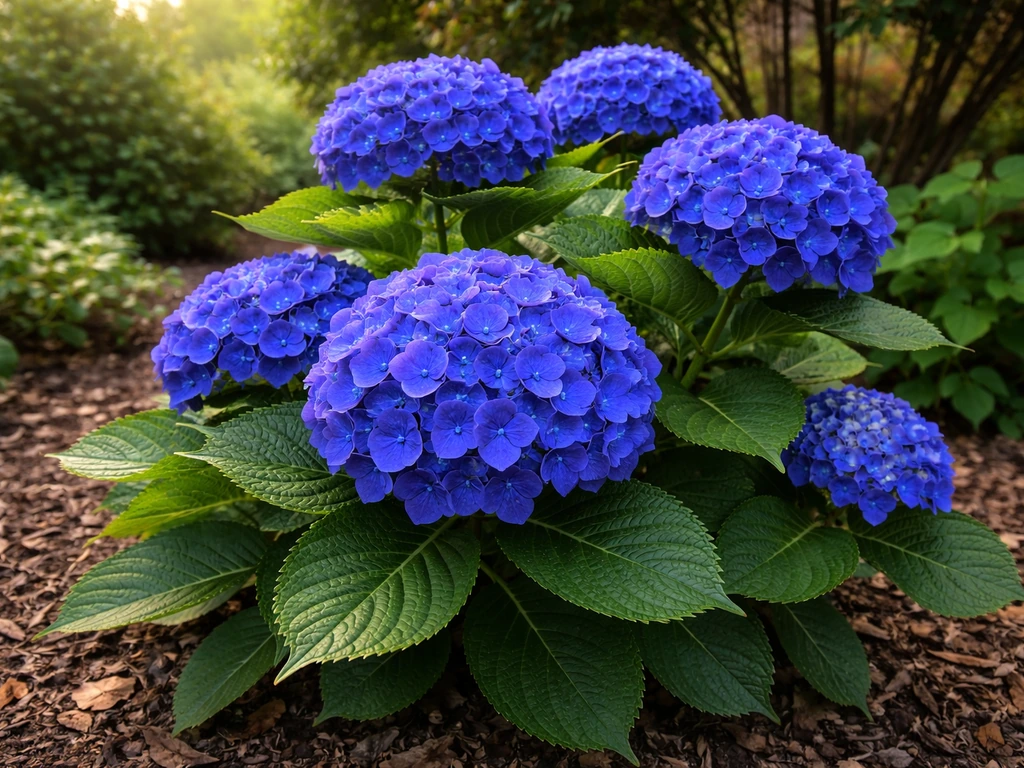
Choosing the right blue hydrangea variety (and understanding what "blue" really means)
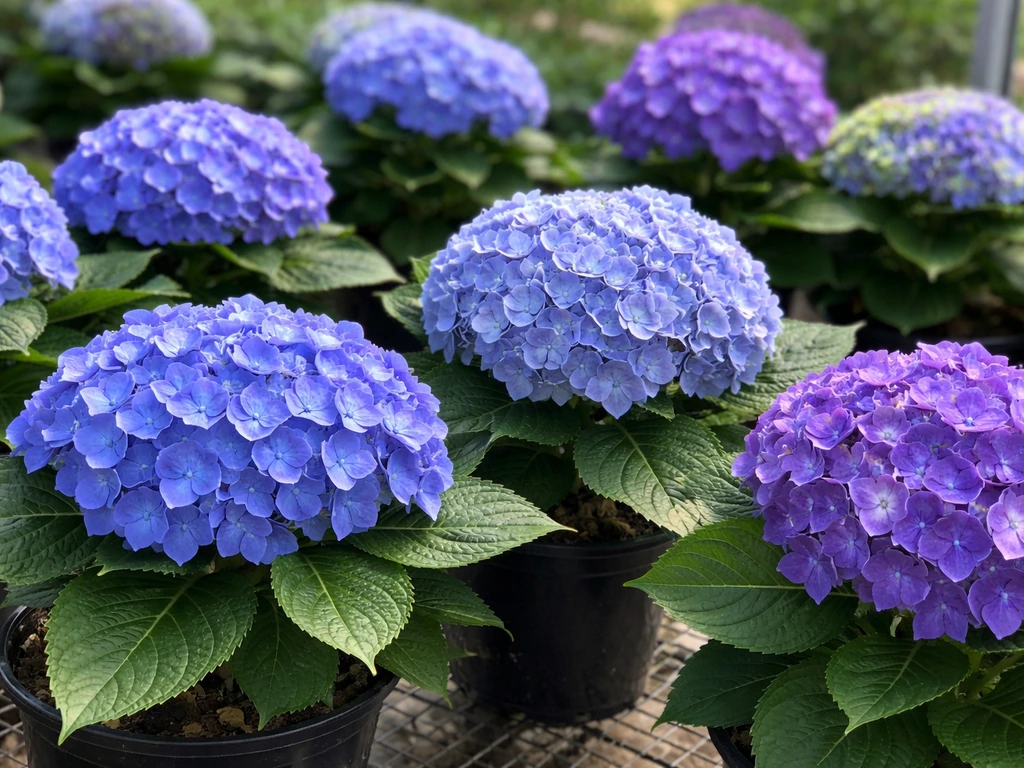
Before you do anything else, you need to know that not every hydrangea can turn blue. Color plasticity, the ability to shift between pink and blue, is a trait specific to bigleaf hydrangea (Hydrangea macrophylla). Panicle hydrangeas, smooth hydrangeas like Annabelle, and oakleaf hydrangeas do not respond to soil pH changes the same way. If you are trying to figure out how to grow panicle hydrangea, focus on choosing the right plant and meeting its growing needs rather than relying on the same soil pH tricks used for bigleaf hydrangeas Panicle hydrangeas. If you plant one of those and try to push them blue with soil amendments, nothing will change. You need H. macrophylla.
Within H. macrophylla, cultivar matters a lot. Some cultivars naturally lean blue in acidic conditions, while others resist it and tend to stay pink or purple no matter what you do to the soil. If deep blue is your goal, start with cultivars known for strong blue response. Proven performers include 'Nikko Blue,' 'Endless Summer BloomStruck,' 'Blauer Zwerg,' and 'Hortensis.' The Endless Summer series is worth a special mention because those cultivars bloom on both old and new wood, which means a late frost or hard winter that kills old stems will not wipe out your entire flower display for the year.
One thing worth knowing: pink and blue flowers can appear on the same plant at the same time. This is not a defect. It happens when different roots are growing in zones of soil with different pH levels. It is actually good evidence that your whole root zone needs consistent amendment, not just a spot treatment near the base of the stem.
Where to plant for the best blue blooms
Bigleaf hydrangeas do best in morning sun with afternoon shade, especially in warmer climates. Full sun all day in a hot garden stresses the plant, causes wilting, and can bleach flower color. Aim for four to six hours of direct morning light and filtered or full shade from midday onward. In cooler northern gardens (USDA zones 5 and 6), a bit more sun is fine since temperatures stay lower.
Avoid planting under large trees with aggressive, shallow root systems. Those roots compete hard for water and nutrients, and you will be fighting a losing battle trying to maintain consistent soil chemistry in a root zone shared with a mature maple or beech. A raised bed or a spot against a north or east-facing wall or fence is often ideal: good light, protection from harsh afternoon sun, and a contained soil area you can actually manage.
Wind protection also matters for old-wood bloomers. Cold winter winds desiccate and damage the buds that form in late summer and carry over winter. A sheltered location on the south or east side of a structure gives you extra insurance, especially in zones 5 through 7.
The soil pH and aluminum strategy that actually turns hydrangeas blue
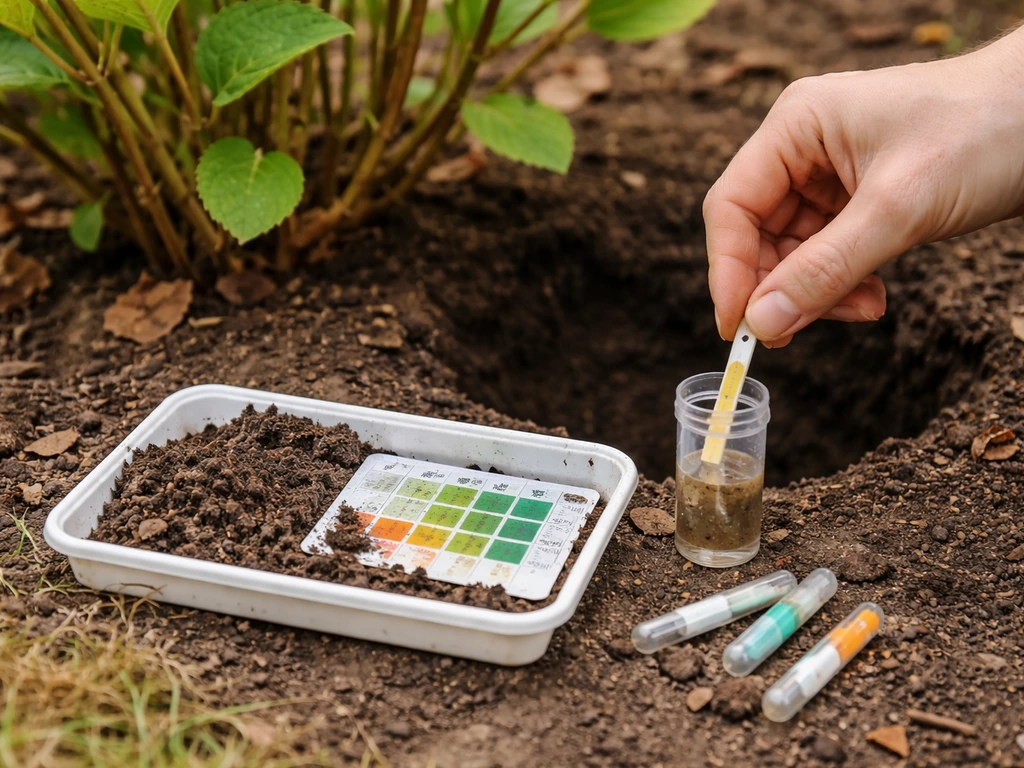
Here is the chemistry in plain terms: blue color in H. macrophylla flowers comes from aluminum ions being taken up by the plant and combining with the pigment delphinidin in the petals. Aluminum availability is controlled by soil pH. In acidic soil (pH 5.5 or lower), aluminum dissolves into a form the plant can absorb. As pH rises above 6.5, aluminum locks up in the soil and becomes unavailable, and without it, the same pigment produces pink instead of blue. The Oregon State University Extension puts it simply: blue comes from a pH of 5.5 or lower, purple from 5.5 to 6.5, and pink from 6.5 and above.
So your first job is to blank" rel="noopener noreferrer">test your soil. Do not guess. A basic home test kit works, but a lab test from your county extension office gives you more detail and is worth the small cost, usually under $20. You want to know your current pH before you add anything.
Lowering pH with sulfur
If your soil is above 5.5, elemental sulfur is the safest and most reliable way to bring it down gradually. Products like Espoma Soil Acidifier (elemental sulfur plus gypsum) are designed exactly for this. Work it into the soil before planting or apply it around established plants. Follow up every 60 days or so until your pH test shows you have reached your target. Sulfur works slowly, so do not expect overnight results. It can take a full growing season to see significant movement in established garden beds.
Adding aluminum directly with aluminum sulfate
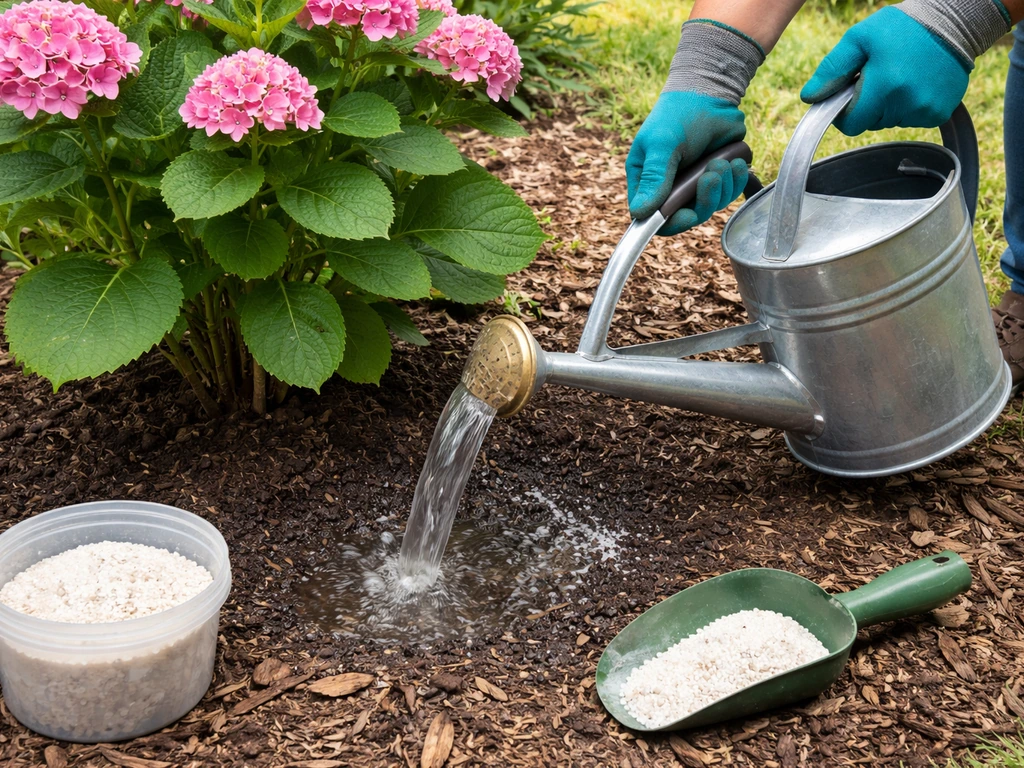
Lowering pH alone is not always enough, especially if your native soil is low in aluminum. That is why many growers also apply aluminum sulfate directly. It does two things at once: it supplies aluminum to the plant and it also lowers soil pH. A common application rate is 1 tablespoon dissolved in 1 gallon of water, applied as a soil drench around the root zone.
In greenhouse and nursery production, the target substrate pH when using aluminum sulfate is around 5. 2 to 5. 5. For home gardens, aim for that same range if you want reliable deep-blue color.
Do not overdo it though. Excess aluminum can damage roots. Apply in early spring as growth starts and repeat monthly through the growing season, then test your soil to monitor progress.
Fertilizer choices that support blue (and ones that work against it)
Phosphorus is the nutrient to watch carefully. High-phosphorus fertilizers interfere with aluminum uptake, essentially blocking the plant's ability to absorb the aluminum you are working so hard to make available, Phosphorus is the nutrient to watch carefully.
For a closely related deep-dive on blooms, also see hydrangeas how to grow as you compare fertilizer and soil choices. High-phosphorus fertilizers interfere with aluminum uptake, one of the key how to grow annabelle hydrangea considerations for getting blue blooms. High-phosphorus fertilizers interfere with aluminum uptake, essentially blocking the plant's ability to absorb the aluminum you are working so hard to make available, one of the key hydrangeas how to grow considerations for getting blue blooms.
Standard balanced fertilizers like 10-10-10 are fine for general growth but can undermine your bluing efforts. For blue hydrangeas, look for a low- or no-phosphorus formula with moderate nitrogen and good potassium. Some specialty hydrangea fertilizers are formulated with this in mind. The general rule: anything marketed as a bloom booster tends to be high phosphorus, so read the label before you use it near your blue hydrangeas.
how to help hydrangeas grow. how to make hydrangea grow bigger. how to grow panicle hydrangea
How and when to plant hydrangeas
The best planting windows are spring after the last frost and early fall, at least six weeks before your first expected hard frost. Spring planting gives the roots a full season to establish before their first winter. Fall planting works well in zones 6 and warmer where winters are mild enough for the roots to settle in before the ground freezes hard.
- Dig a hole twice as wide as the root ball and the same depth. You want width for root spread but you do not want to plant too deep.
- Mix organic matter (compost or aged pine bark) into the backfill. This improves drainage and starts building the loose, slightly acidic soil structure H. macrophylla loves.
- Set the plant so the top of the root ball sits at the same level it was in the container. Planting too deep is a common cause of poor establishment and root rot.
- Backfill firmly, water thoroughly to settle the soil, then apply 2 to 3 inches of mulch over the root zone. Keep mulch away from the crown of the plant by a few inches to prevent rot.
- If you are starting with a pH-lowering plan, incorporate elemental sulfur into the planting area before you set the plant in. Getting the chemistry right from day one is much easier than trying to correct it later.
For spacing, most bigleaf hydrangeas need 3 to 6 feet between plants depending on the mature size of your cultivar. Once you dial in proper growing conditions like spacing and light, you can focus on good hydration and consistent care to help your hydrangeas grow bigger how to make hydrangea grow bigger. Check the tag. Crowding reduces airflow, increases fungal disease risk, and makes the whole root-zone management job harder.
Watering and drainage: getting this right protects both the roots and the flowers
Hydrangeas need consistent moisture, but they do not want to sit in wet soil. The name hydrangea references water, and these plants are genuinely thirsty, but the roots need oxygen too. Soggy, poorly drained soil causes root rot and sets up conditions for disease. The ideal soil stays evenly moist but drains freely after rain or irrigation.
In most climates, established bigleaf hydrangeas need about 1 inch of water per week during the growing season, more during heat waves or periods of low rainfall. Water deeply and less frequently rather than a light daily sprinkle. Deep watering encourages roots to go down, which makes the plant more drought-tolerant over time. A drip line or soaker hose at the base of the plant is ideal. Overhead watering, especially in the evening, can encourage fungal leaf diseases like botrytis and powdery mildew.
The mulch layer you applied at planting does double duty here: it holds moisture between waterings and helps regulate soil temperature around the roots. Replenish it each spring to keep it at 2 to 3 inches. Just check periodically that it has not packed down and formed a crust that sheds water instead of absorbing it.
If your planting spot has heavy clay, raised beds or mounded planting areas (slightly elevated above grade) can save you a lot of trouble. Even 4 to 6 inches of elevation above surrounding grade improves drainage enough to make a real difference.
Seasonal care to keep blue blooms coming year after year
Spring
Early spring is your most important action window. As soon as you see buds beginning to swell and expand on the old stems, remove any winter protection you put in place (more on that below). Do not rush this: wait for bud movement, not just a warm spell in February. Apply your first aluminum sulfate drench now, and apply your first round of pH-adjusted fertilizer. This is also the right time to add elemental sulfur if your fall pH test showed you need more acidification.
Hold off on any major pruning of old-wood bigleaf hydrangeas until you can clearly see which stems survived winter. Dead wood will be brittle and have no swelling buds. Cut that out cleanly. Leave everything with live buds alone.
Summer
Keep up with watering during bloom time, especially in heat. Dehydrated plants wilt badly and stressed plants produce smaller flower heads with less intense color. Continue monthly aluminum sulfate drenches through summer if you are still working toward your target pH. Once your soil test confirms you are in the 5.2 to 5.5 range and blooms are showing good blue color, you can shift to maintenance applications rather than corrective ones.
If you want to prune old-wood types, the right time is immediately after the flowers fade, typically late summer. Bigleaf hydrangeas begin setting buds for the following year in mid-summer through fall on those same old stems. The UGA Extension is clear on this: prune when flowers begin to fade, not in fall or spring. UGA’s Paulding County Extension article also notes that old-wood hydrangeas are best pruned after they flower, but no later than about August 1 prune when flowers begin to fade. Pruning too late removes the buds you are counting on for next year's bloom.
Fall
In fall, take a soil sample and test your pH again. Make any sulfur adjustments needed so the amendment has the winter to work into the soil. Stop fertilizing by early fall to let the plant harden off before winter. In zones 5 through 7, old-wood bigleaf hydrangeas benefit from winter bud protection. A wire-mesh cylinder filled loosely with dry leaves or straw placed around the plant, not touching the stems tightly, protects buds from desiccating winds and temperature swings. The UConn Extension recommends exactly this approach. Remove it carefully in spring once you see buds starting to move.
Why your hydrangeas are not turning blue (and how to fix it)
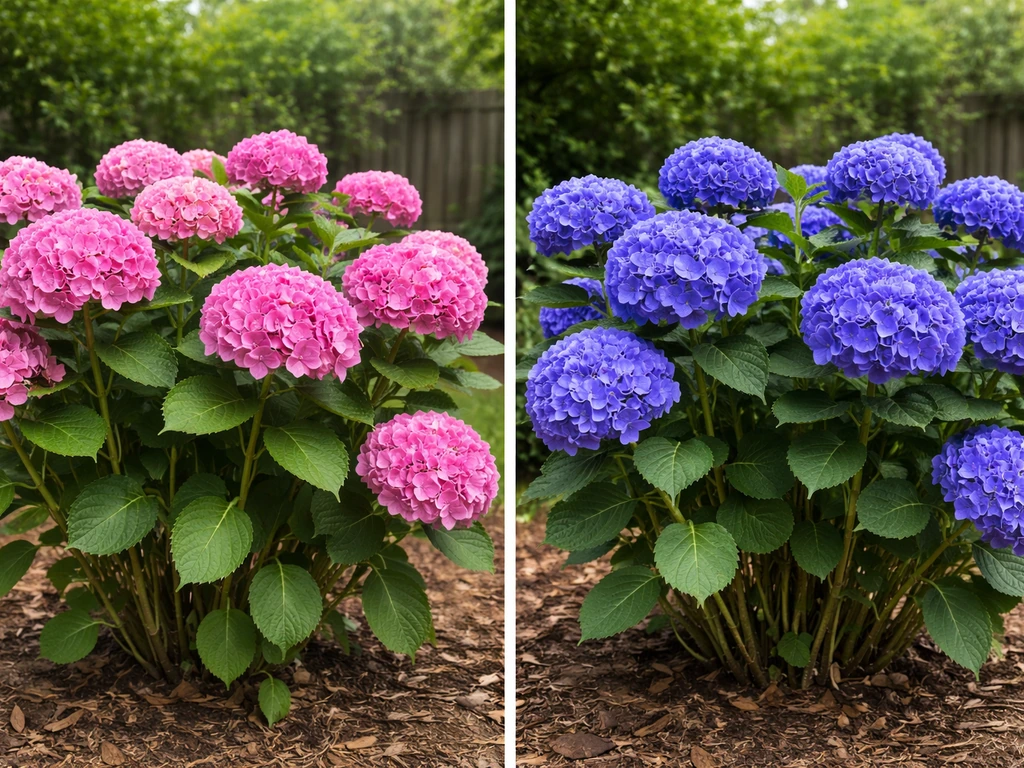
This is the section most people actually need. Here are the real reasons blue hydrangeas stay pink or go back to pink, and what to do about each one. If you are growing Annabelle hydrangea, make sure you use the right cultivar and soil approach so you do not end up with pink blooms instead of blue blue hydrangeas stay pink.
| Problem | Likely Cause | Fix |
|---|---|---|
| Flowers are pink despite amendments | Soil pH is still too high (above 6.5) or aluminum is not available | Test soil pH first. Apply aluminum sulfate drench (1 tbsp per gallon) and elemental sulfur. Retest in 4 to 6 weeks. |
| Mixed blue and pink on the same plant | Uneven soil pH across the root zone | Treat the entire root zone, not just one spot near the stem. Consistent amendment across the full planting area is required. |
| Blooms were blue last year but pink this year | Soil pH has drifted back up, especially in alkaline tap water or limestone-heavy soil | Retest pH and reapply sulfur and aluminum sulfate. Consider using rainwater or acidified water for irrigation. |
| Plant blooms but color is washed-out lavender, not blue | Cultivar may not respond strongly, or pH is in the purple zone (5.5 to 6.5) | Push pH below 5.5. Also confirm your cultivar is a strong blue responder like Nikko Blue. |
| No flowers at all | Buds were killed over winter, or old wood was pruned at the wrong time | Check whether your cultivar is an old-wood or new-wood bloomer. Protect old-wood types over winter. Prune only after flowering. |
| High-phosphorus fertilizer was used | Phosphorus blocks aluminum uptake | Switch to a low- or no-phosphorus fertilizer. Avoid bloom-booster formulas with high P values. |
| Wrong species planted | Panicle, smooth, or oakleaf hydrangea will not turn blue | Confirm you have Hydrangea macrophylla. If not, replant with an H. macrophylla cultivar bred for blue response. |
The single most common mistake I see is people applying aluminum sulfate once, not seeing immediate results, and giving up. This process takes time. Your soil did not become alkaline overnight and it will not become acidic overnight either. Stick with it through a full season, keep testing, and you will see the color shift. Patience here is genuinely the difference between success and frustration.
If you are dealing with very alkaline soil (pH above 7.5), growing in containers with an amended, acidic potting mix is a legitimate strategy. You have far more control over a container's chemistry than you do over a heavy alkaline native soil. Use a mix of acidic potting soil, pine bark fines, and perlite, and manage pH with aluminum sulfate drenches from the start. Many gardeners in the Midwest and Southwest have better luck this way than fighting their native soil chemistry for years.
If you are just getting started with hydrangeas in general, the basics of growing H. macrophylla successfully, including watering schedules, general feeding, and hardiness zone guidance, apply here just as they do for other varieties. The blue-specific steps outlined above layer on top of solid foundational hydrangea care, so getting that foundation right first makes everything else work better. If you want the right approach for your yard, learn the steps for hydrangea care that support healthy growth.
FAQ
How long should it take to see blue hydrangea blooms after I add sulfur or aluminum sulfate?
Expect gradual change. If your soil pH is only slightly high, you may notice shifts within one growing season. If it is much higher or your root zone is slow to react, the color can take most of a full season (or longer) because pH and aluminum availability move slowly in established beds. Keep retesting and do not treat the first application as a one-and-done fix.
Can I change flower color by amending only the soil right at the base of the plant?
Usually you need to manage the whole root zone, not just a small patch. Bigleaf hydrangeas spread roots wider than most people expect, so a spot treatment can create mixed zones of different pH. If you see pink and blue flowers at the same time, it is a sign the root area is not uniform, so widen your amendment area over time.
What pH target should I aim for if I want consistent deep blue?
For most home gardens, the practical target is roughly pH 5.2 to 5.5 in the root zone. If you are still above 5.5, you may get purple or pink blooms, even if the plant looks healthy. Retest after amendments, since soil pH can drift between seasons.
Will rainfall or irrigation undo the work I did to lower soil pH?
It can, especially if your water source is alkaline or hard. Over time, minerals in irrigation water and natural soil buffering can push pH upward, reducing available aluminum. If you use well water or have very hard municipal water, test your water pH and plan on periodic pH checks and maintenance drenches.
Should I use aluminum sulfate as a soil drench or directly on leaves?
Use soil application methods, like a root-zone drench, because aluminum availability depends on what happens in the soil, not on the foliage. Foliar sprays can burn leaves and do not reliably deliver aluminum to the area roots absorb it from. Apply in early spring and during the growing season as your soil tests indicate.
How much fertilizer is safe when my goal is blue flowers?
Do not over-fertilize while you are correcting color. Excess feeding, especially products marketed for bloom boosting, often comes with higher phosphorus that can interfere with aluminum uptake. Aim for moderate nitrogen and potassium with low or no phosphorus, and stop corrective inputs by early fall so the plant hardens off.
Can I use compost or mulch to help acidify the soil for blue hydrangeas?
Compost and organic mulches help with moisture and soil structure, but they usually do not reliably lower pH to the degree needed for deep blue. If you use organic matter, consider it supportive, then base your actual color plan on soil testing plus sulfur or aluminum amendments. Also note that large amounts of certain manures or composts can raise pH.
Why do my blooms turn pink again after being blue earlier?
Color can shift if soil pH rises, aluminum becomes less available, or phosphorus inputs interfere with uptake. Common causes include using a bloom booster fertilizer, applying too much lime, switching to a different fertilizer schedule, or having pH drift from irrigation and seasonal changes. If you see the shift, retest pH first, then adjust only what the test shows.
Are there common pruning mistakes that reduce blue blooms?
Yes, old-wood hydrangeas can lose next year’s buds if pruning happens at the wrong time. If you prune in fall or early spring before you see which stems survived, you can cut off flower buds formed mid-summer through fall. For bigleaf, wait until after flowers fade to remove dead wood and do any desired shaping.
Do container-grown blue hydrangeas need the same soil pH management as in-ground plants?
Container plants need pH management too, but you have more control. If you use an acidic potting mix from the start and apply aluminum sulfate drenches as needed, you can often maintain bluer color more predictably than in native alkaline soil. Still, containers can drift over time, so test periodically.
Is it normal for a single hydrangea to have both blue and pink blooms at the same time?
Yes, it can happen when different roots are absorbing from areas with different pH levels. This is not a disease, but it means your root zone amendment is uneven. Over time, correct the chemistry more uniformly rather than trying to target one spot.
What should I do if my soil test says the problem is not just pH?
If pH is in range but you still struggle with blue color, the next thing to check is aluminum availability and interfering nutrients, especially phosphorus. Also confirm your fertilizer label, because even occasional bloom-boosting products can disrupt uptake. If native soil is very low in aluminum, you may need aluminum sulfate more consistently during the active season.