
Hydrangeas are not difficult to grow, but they have a few specific quirks that trip up even experienced gardeners. Get those details right and you'll have massive, reliable blooms year after year. Miss them, especially the pruning timing or the soil moisture balance, and you'll end up with a healthy-looking shrub that refuses to flower. This guide walks you through everything from first planting to seasonal care, with honest advice on what actually goes wrong and how to fix it. If you want a deeper walkthrough of how to help hydrangeas grow in your exact conditions, see how to help hydrangeas grow for a step-by-step approach. how to grow hydrangea
Hydrangeas How to Grow: Planting, Care, and Regrowth Tips

Marcus Holloway
24 Mar 2026
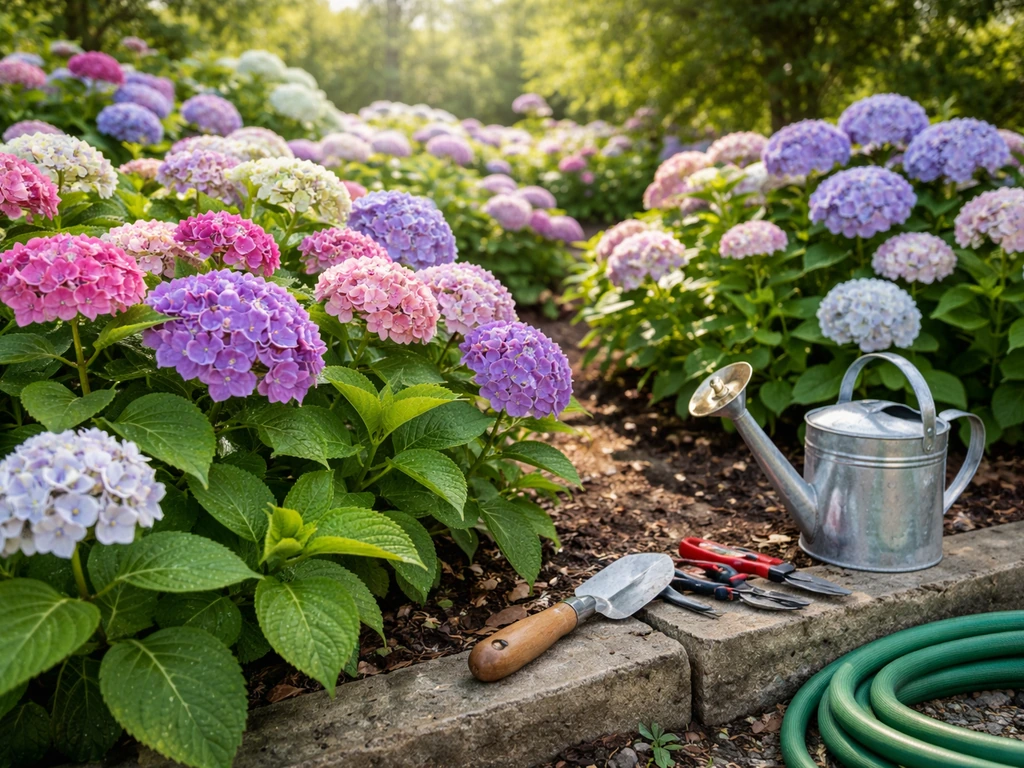
How hydrangeas actually grow
A healthy hydrangea is a fast, vigorous shrub. In a single growing season, established plants can push out 1 to 2 feet of new growth, depending on the species and conditions. What you're looking for is strong, upright stems, large deep-green leaves with no yellowing, and plenty of buds forming by midsummer. If your plant looks lush but produces no flowers, or if stems keep dying back each winter and barely recover, something in the care routine is off.
The single most important thing to understand about hydrangeas is whether your particular variety blooms on 'old wood' or 'new wood.' Old-wood bloomers, like the classic bigleaf mophead and lacecap types (Hydrangea macrophylla), set their flower buds on stems from the previous season, specifically between August and September. Those buds survive winter on the stems and open the following June or July. New-wood bloomers, like panicle (H. paniculata) and smooth hydrangeas (H. arborescens), form flower buds on stems that grow in the current spring, so they have a clean slate every year. This one distinction drives almost every other care decision, especially pruning.
Choosing the right type and matching it to your conditions
There are five main types you'll encounter at garden centers, and they don't all want the same thing. Picking the right one for your light and climate will save you years of frustration.
| Type | Blooms On | Light | Cold Hardiness | Best For |
|---|---|---|---|---|
| Bigleaf / Mophead / Lacecap (H. macrophylla) | Old wood | Morning sun, afternoon shade | Zones 5–9 (buds vulnerable in cold winters) | Classic big round blooms; color-changing in acid soil |
| Panicle (H. paniculata) | New wood | Full sun to part shade | Zones 3–8; very hardy | Cold climates; tall pyramidal flower clusters July–Sept |
| Smooth / Annabelle (H. arborescens) | New wood | Part shade to full shade | Zones 3–9; very hardy | Shade gardens; reliable bloom even after hard winters |
| Oakleaf (H. quercifolia) | Old wood | Part shade | Zones 5–9 | Fall color; drought tolerance once established |
| Mountain (H. serrata) | Old wood | Morning sun, afternoon shade | Zones 6–9 | Smaller habit; similar color response to macrophylla |
If you're in Zone 5 or colder, panicle and smooth types are your most dependable choices because they bloom on new wood and don't rely on surviving buds from last year. Bigleaf hydrangeas can struggle in cold climates unless you choose a reblooming cultivar like the Endless Summer series, which sets buds on both old and new wood. That's why they're popular in northern gardens: even if a harsh winter kills the old-wood buds, the plant can still form new buds on fresh spring growth and give you flowers later in the season.
Light requirements
Most hydrangeas prefer morning sun and afternoon shade, which gives them enough light to bloom without scorching their large leaves during peak summer heat. Panicle hydrangeas are the exception, handling and even preferring more sun than other types. Smooth hydrangeas, including Annabelle, actually perform well in deeper shade, making them one of the few shrubs that'll give you real flowers under a tree canopy. If your bigleaf is struggling to bloom, inadequate light is one of the first things to check.
Soil and pH
All hydrangeas want well-drained soil that holds some moisture. They don't like soggy roots or bone-dry conditions, so heavy clay and very sandy soils both need amendment before planting. Work in compost to improve structure and moisture retention.
If you're growing bigleaf or mountain hydrangeas and you care about flower color, blank" rel="noopener noreferrer">soil pH becomes a real variable. Pink or red. The range in between (roughly 5.5 to 6.5) tends to produce purple. how to grow pink hydrangea The range in between (roughly 5.5 to 6.5) tends to produce purple. This is a bigleaf-specific trait; panicle and smooth hydrangeas don't do this. If you want blue flowers, aluminum availability matters too, which is why aluminum sulfate is sometimes added to containers or soilless mixes where there's naturally little aluminum. To shift toward pink, incorporate lime before planting since surface applications work slowly and tilling it in gets results faster.
Step-by-step planting and establishment
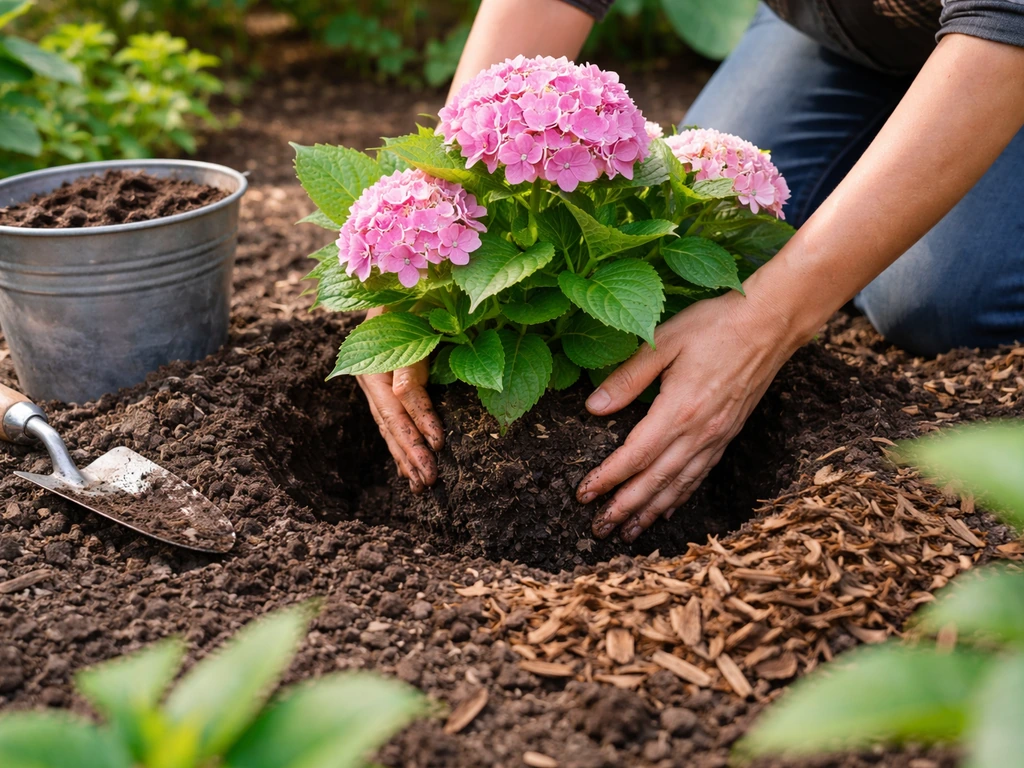
The best time to plant hydrangeas is spring after your last frost or early fall at least 6 weeks before your first expected freeze. This gives roots time to settle in before extreme temperatures arrive. Avoid planting in midsummer heat if you can, because newly planted shrubs stress easily when temperatures spike.
- Pick your spot. Confirm light conditions match your hydrangea type. Check that drainage is adequate by digging a small hole and watching whether water sits for hours after rain.
- Prep the soil. Dig in a generous amount of compost across the planting area, not just in the hole. If you're adjusting pH for bigleaf color, incorporate lime or sulfur now while you can work it into the soil.
- Dig the hole. Make it twice as wide as the root ball but no deeper. The root collar (where the stem meets the roots) should sit at ground level or just slightly above it to prevent settling and water pooling around the crown.
- Remove the plant from its container and loosen any circling roots gently with your fingers. For balled-and-burlapped plants, remove as much of the wrapping as possible once the plant is positioned.
- Backfill with the original soil, tamping gently to remove air pockets. Do not mound soil against the stem.
- Water deeply immediately after planting, soaking the root zone thoroughly.
- Mulch 2 to 3 inches deep around the base, keeping mulch a few inches back from the stem. This holds moisture and regulates soil temperature during establishment.
- Water consistently for the first full growing season. New plants need regular moisture while roots expand, typically 1 inch per week, more in hot weather.
Growing in containers
Containers work well for hydrangeas, especially bigleaf types where you want more control over soil pH for color. Use a large pot (at least 18 inches wide) with drainage holes and a quality potting mix. Container plants dry out faster than in-ground ones, so you'll be watering more frequently, sometimes daily in summer heat. They're also more vulnerable to cold, since the roots are exposed above ground, so in colder zones you may need to move pots into an unheated garage or shed for winter. The same planting depth rules apply: don't bury the crown.
Spacing
Give hydrangeas room. Most mature at 4 to 6 feet wide, and some panicle varieties get considerably larger. Plant them at least as far apart as their expected mature spread. Crowding reduces airflow, increases disease risk, and leads to plants competing for resources just when they need energy to bloom.
Watering and fertilizing for steady growth and blooms
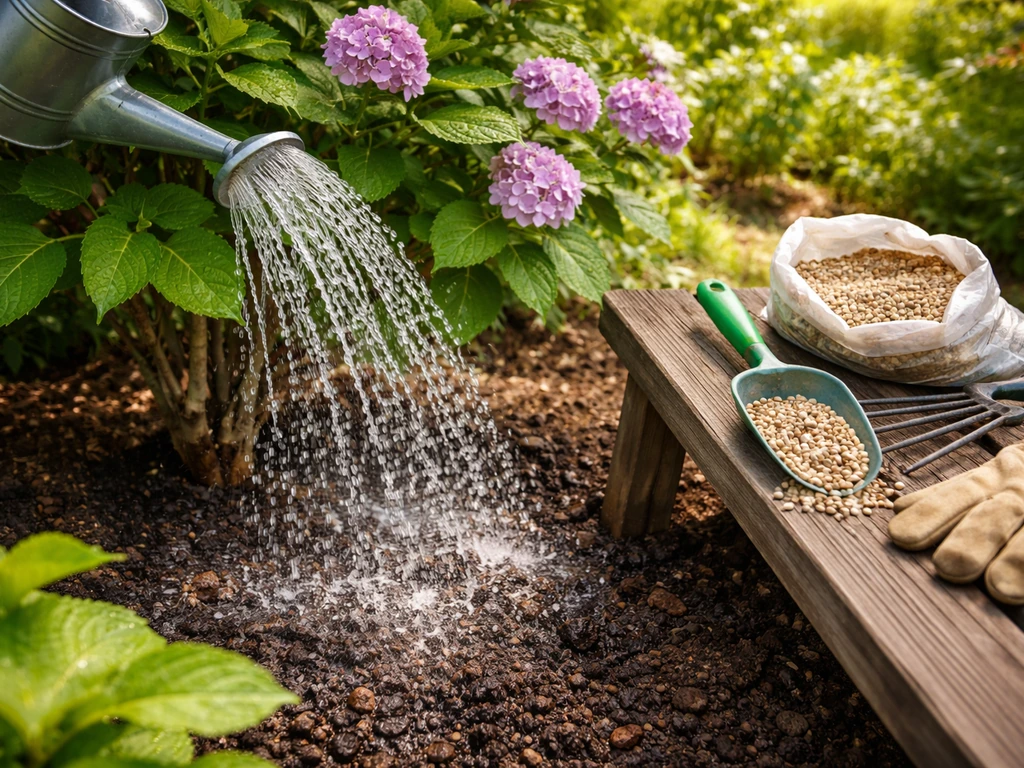
Hydrangeas are not drought-tolerant plants, especially in their first few years. Established plants handle short dry spells better, but consistent moisture is what keeps them lush and blooming. Aim for about 1 inch of water per week through rain or irrigation. Water deeply and less frequently rather than shallow daily sprinkles, which keeps roots near the surface where they're vulnerable. Wilting in the late afternoon on a hot day isn't always a crisis, but if leaves are wilting in the morning, the plant is genuinely dry and needs water immediately.
For fertilizing, hydrangeas prefer moderate nutrition, not the heavy feeding people sometimes give them hoping for bigger flowers. A good approach is to apply about 4 ounces of a balanced fertilizer in early spring before new growth starts, then again after the first flush of flowers. For bigleaf hydrangeas you're trying to keep blue, use an acid-forming fertilizer low in phosphorus, something in the 12-4-8 range. High phosphorus can interfere with aluminum uptake and push flowers toward pink. Avoid fertilizing during drought unless you're actively irrigating, because feeding dry, stressed roots can cause damage rather than benefit.
One thing I'd caution against is the reflex to grab Miracle-Gro and apply it heavily whenever a hydrangea looks off. Overfeeding with nitrogen pushes lush leafy growth at the expense of flowers, and the plant can look very healthy while producing almost nothing. More fertilizer is rarely the answer when blooming is the problem. Focus on soil quality, moisture consistency, and pruning timing first.
Pruning rules that help hydrangeas grow back
Pruning is where most gardeners go wrong, and it's almost always by pruning old-wood types at the wrong time. Here's the rule: know your wood type before you touch your pruners.
Old-wood types: bigleaf, lacecap, oakleaf, and mountain
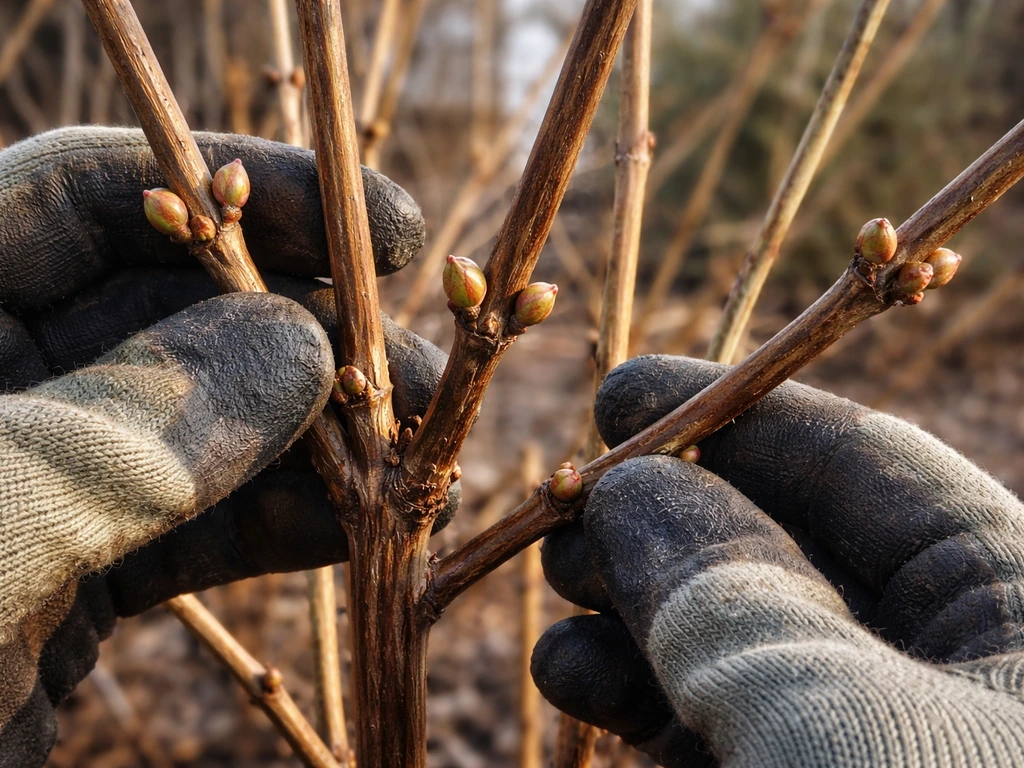
These hydrangeas form next year's flower buds on this year's stems, between August and September. If you prune them in fall or winter, you're cutting off the buds you were counting on for next summer. The correct time to prune bigleaf and lacecap hydrangeas is right after they finish blooming, typically around July, by cutting flowering shoots back to the next visible bud.
Clemson's Home and Garden Information Center notes that bigleaf hydrangeas set flower buds on old wood in late summer and fall, so pruning should be done immediately after flowering bigleaf hydrangeas set their flower buds on old wood in late summer and fall. Oakleaf hydrangeas follow a similar pattern.
In spring, limit yourself to removing dead, weak, or crossing branches only. Don't do a hard cutback. If you're in early spring right now and wondering whether to cut your bigleaf back, the answer is: remove only clearly dead wood and leave everything else alone.
New-wood types: panicle and smooth
Panicle hydrangeas (like Limelight or PeeGee) and smooth hydrangeas (like Annabelle) bloom on stems that grow fresh each spring, so you can prune them hard without losing any flower buds. The right time is [late winter or early spring](https://www. rhs. org.
uk/plants/hydrangea/pruning-guide), before new growth starts. You can cut smooth hydrangeas all the way back to 12 to 18 inches above the ground if you want to rejuvenate them or keep them tidy. Panicle hydrangeas can be pruned similarly or just lightly shaped. If you've been wondering whether to try a hard renovation prune, these are the types to do it on.
Check out the specific care guides for Annabelle and panicle hydrangeas elsewhere on this site for more detail on those pruning techniques.
Reblooming types: Endless Summer and similar
Reblooming bigleaf cultivars bloom on both old and new wood, which gives them a safety net in cold winters. Even if old-wood buds are killed by frost, the plant forms new buds on fresh growth and still flowers, just later in the season. For these, prune lightly and only remove dead wood in spring. They don't need or benefit from a hard cutback.
Why your hydrangeas aren't growing back or thriving
Here's an honest rundown of what fails and why.
Pruned at the wrong time
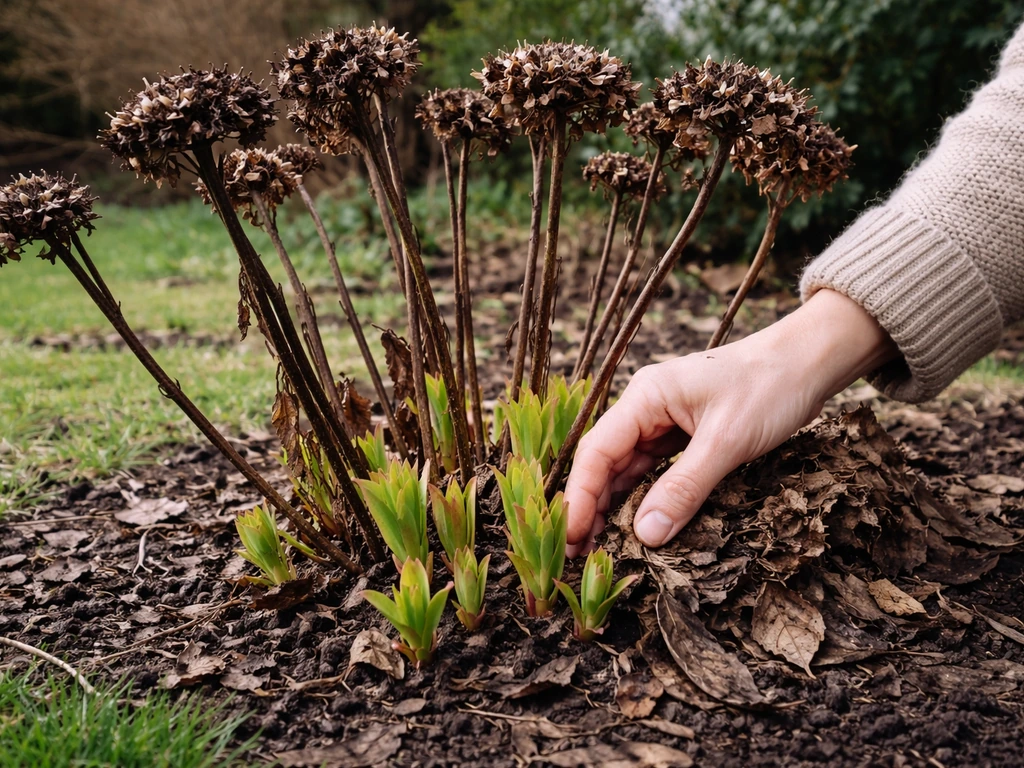
This is the most common reason bigleaf hydrangeas don't bloom. If you cut them back in fall, winter, or early spring, you removed the buds that were sitting on those stems waiting to open in summer. The plant is perfectly healthy and will grow new stems, but it won't flower until those new stems have time to set buds, which won't happen until next August or September. If you want a deeper walkthrough beyond troubleshooting, see our how to grow hydrangea guide for step-by-step planting, watering, and care. The fix is simply to adjust your pruning timing going forward and protect the stems over winter.
Winter frost damage to buds
Even if you prune correctly, a harsh winter can kill the flower buds on old-wood types. The stems may survive but the buds inside are dead. You'll see live growth emerge from the base or from lateral buds lower on the stem, but no flowers at the tips. To reduce this risk, mulch heavily around the base in late fall and, in colder zones, consider wrapping the stems with burlap or straw to insulate them. Choosing a reblooming variety like Endless Summer is a longer-term solution for chronically cold climates.
Too much shade
Hydrangeas need some sun to bloom. A plant in deep shade will grow leaves but rarely flowers. If yours has been getting progressively shadier as nearby trees have grown, that may be your answer. Moving it to a spot with at least 3 to 4 hours of morning sun usually solves the problem.
Inconsistent watering
Both drought stress and waterlogged soil will shut down flower production and cause stunted, weak growth. If your soil stays wet after rain, you may need to improve drainage or move the plant. If it dries out rapidly, add more mulch and water more deeply.
Pest and disease problems
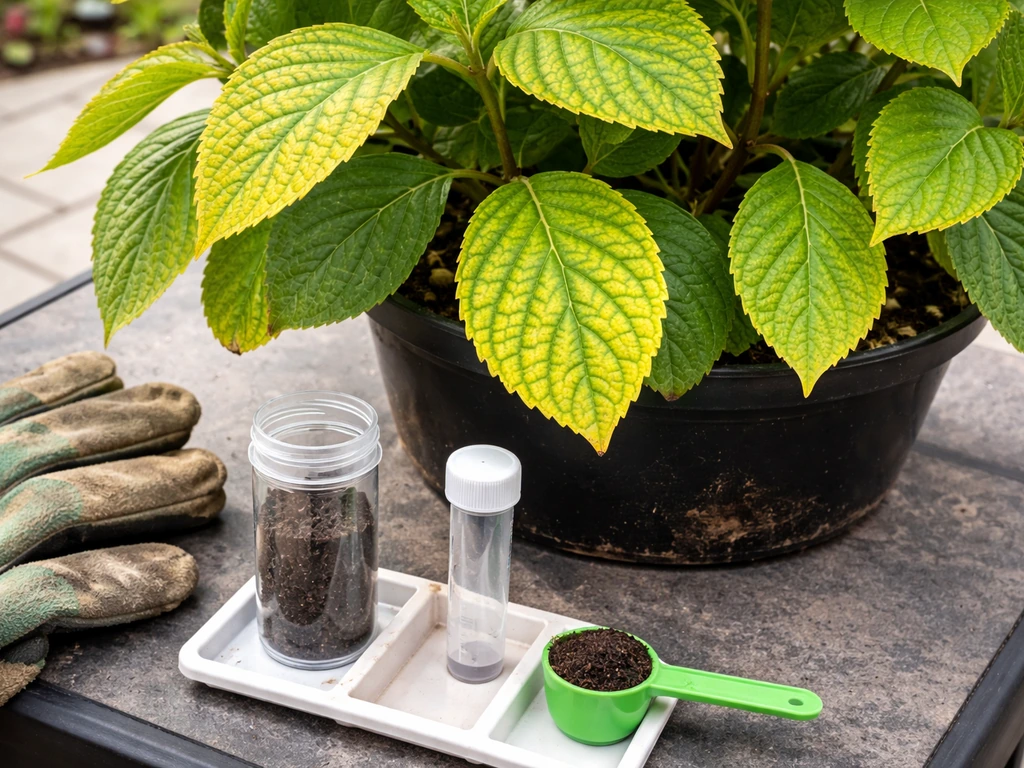
Aphids and spider mites can colonize hydrangeas during hot, dry weather, causing distorted or yellowing leaves. A strong spray of water or insecticidal soap handles most infestations. Powdery mildew is common in humid conditions or when airflow is poor, showing up as a white dusty coating on leaves. Improve spacing and airflow, and avoid wetting foliage late in the day. Botrytis (gray mold) can damage flowers and buds in cool, wet springs. Neither pest nor disease issue is usually serious if caught early.
Nutrient imbalances
Yellowing leaves with green veins (chlorosis) often signal iron or manganese deficiency, typically triggered by high soil pH. A soil test will tell you where you stand. If pH is too high for your bigleaf hydrangeas, acidifying fertilizer and sulfur applications will help over time. General yellowing across older leaves can indicate nitrogen deficiency, which is easier to correct with a balanced spring fertilizer.
A seasonal care calendar to keep you on track
| Season | Task |
|---|---|
| Late winter (Feb–Mar) | Prune panicle and smooth hydrangeas hard before new growth starts. Remove only dead wood from old-wood types. Pull back mulch slightly to let soil warm. |
| Early spring (Mar–Apr) | Apply balanced fertilizer (about 4 oz per plant). Add acid-forming fertilizer for blue bigleaf types. Replenish mulch to 2–3 inches. Plant new shrubs after last frost. |
| Late spring (Apr–May) | Watch for new growth emerging. Water consistently, especially if rainfall is low. Check for aphids or other early-season pests. |
| Early summer (Jun–Jul) | Enjoy blooms on old-wood types. Prune bigleaf and lacecap hydrangeas right after flowers fade, cutting flowering shoots back to the next bud. Panicle types begin blooming. Apply second round of fertilizer after flowering. |
| Midsummer (Jul–Aug) | Flower buds forming on old-wood types for next year. Do not prune these types now. Water deeply during hot spells. Watch for powdery mildew in humid conditions. |
| Late summer (Aug–Sep) | Buds fully set on old-wood types. Panicle flowers maturing and turning color. No pruning of bigleaf types. Continue watering as needed. |
| Fall (Oct–Nov) | Leave dry flower heads on old-wood types for winter interest and stem protection. Apply a thick layer of mulch (3–4 inches) around the base before hard freezes. In cold zones, consider burlap wrapping for bigleaf stems. |
| Winter (Dec–Feb) | No pruning. Monitor for animal damage to stems. Enjoy the dried flower heads and wait for late winter to begin the cycle again. |
Hydrangeas reward attentive gardeners who understand their specific type. Once you nail the pruning timing and get the moisture balance right, you'll find they're actually pretty forgiving plants that produce a stunning amount of color for the effort involved. If you want to go deeper on specific varieties, the guides on growing blue hydrangeas, growing pink hydrangeas, and growing panicle hydrangeas on this site cover the color-shifting and type-specific techniques in more detail.
FAQ
My hydrangea is in the wrong place, can I transplant it and will it still bloom?
Yes, but pick the right timing. Start pruning only after you identify whether your plant blooms on old wood or new wood, because the “no flowers” mistake often comes from cutting off next season’s buds. If you are unsure, wait until you see whether flower buds are forming on stems from last year (clues in midsummer), then prune only lightly this spring and use targeted fixes next season.
Why does my hydrangea bloom less after transplanting?
Use a “root ball first” approach. Transplant in early spring or early fall when temperatures are mild, dig a wide ball (at least 12 to 18 inches out from the trunk), and keep the soil around the roots intact. Expect fewer blooms the first year, even with good care, because hydrangeas need time to reestablish fine roots for bud production.
How do I protect old-wood hydrangeas from spring frost damage?
A late freeze can mimic pruning problems because old-wood buds may be killed while stems survive. Cover vulnerable plants when a frost is forecast (lightweight burlap or frost cloth), focus on protecting flower buds on the upper stems, and avoid heavy pruning during spring until you can see what survived.
How can I tell if I over-fertilized my hydrangea?
If flowers are scarce but new leaves look healthy, check nitrogen level first. Too much nitrogen pushes leafy growth and delays or reduces blooms, especially after heavy feeding. Follow the moderate fertilizer pattern, and if your plant is already green and vigorous, skip feeding until after the first bloom flush.
My hydrangea makes buds but they never open, what’s the cause?
Look for the symptom pattern. Buds that never open but stems otherwise grow usually point to winter bud kill (old-wood types) rather than current-year drought. In contrast, buds that abort after a hot, dry stretch often indicate inconsistent watering. Adjust irrigation depth and consistency before increasing fertilizer.
Can I propagate hydrangeas by cuttings or division, and when?
Yes, but choose the method based on the hydrangea type and season. For quick results, take softwood cuttings in late spring to early summer, dip in rooting hormone, and keep humidity high without letting cuttings sit in water. Large divisions can stress hydrangeas and delay flowering, so plan on at least one season with reduced blooms.
What should I do if my bigleaf hydrangeas do not change color after adding lime or aluminum?
For bigleaf color control, soil pH shift is slow, and surface-only changes can take a long time. If you are using lime to push pink, incorporate it into the planting area earlier rather than just scratching the surface. For blue, aluminum availability matters, so container mixes often need amendments because native aluminum is inconsistent.
My hydrangea leaves turn yellow, is it always a soil pH problem?
If you see yellow leaves with green veins, that is often chlorosis from high pH, but not always. Confirm with a soil test because poor drainage and root stress can also weaken the plant and make leaves look sick. For container plants, leach salts occasionally and refresh mix if you have been fertilizing heavily.
Is afternoon wilting a problem or just normal heat stress?
In most cases, yes. Hydrangeas can handle short wilts on hot afternoons, but morning wilting plus thin growth points to real dryness. Water deeply until moisture reaches the root zone, then mulch to slow evaporation, aiming for consistent weekly moisture rather than small daily sips.
What’s the fastest way to diagnose why my hydrangea won’t flower?
Most common “stays green, no blooms” causes are incorrect pruning timing for old-wood types, too little light, overfeeding with nitrogen, or winter bud loss. Use a simple check: confirm light (morning sun), confirm pruning category (old wood vs new wood), and confirm whether buds formed midsummer. If buds never formed, fix sunlight and moisture first before you change fertilizer rates.