
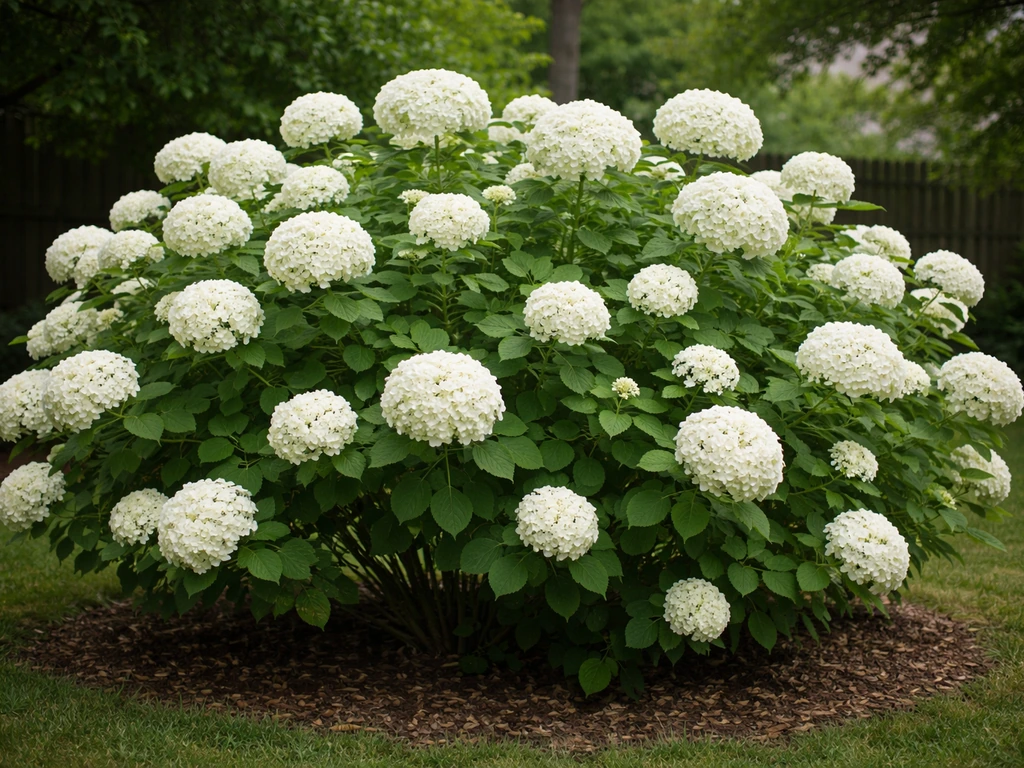
Annabelle hydrangea (Hydrangea arborescens 'Annabelle') is one of the most forgiving, rewarding shrubs you can plant in a home garden. It reliably produces enormous creamy-white globe blooms from June through September, tolerates a wide range of soils, and bounces back from hard pruning year after year. If you get the basics right, the right spot, consistent moisture, and a well-timed haircut in early spring, you'll have flower clusters up to 10 inches across nodding over your garden beds all summer long.
How to Grow Annabelle Hydrangea: Planting, Care, Pruning Tips

Marcus Holloway
24 Mar 2026
What Annabelle hydrangea needs (quick overview)
Before diving into the details, here's the short version of what Annabelle wants from you. It's a 'new wood' bloomer, meaning it sets its flower buds on stems that grow fresh each spring, not on stems from last year. That one fact changes almost everything about how you prune and care for it. Beyond that, it wants part shade (especially in the afternoon), consistent moisture, decent but not fussy soil, and a light feeding in spring. That's genuinely it. It's not a fussy plant once it's established.
- Type: Smooth hydrangea (Hydrangea arborescens), blooms on new wood
- Bloom time: June through September, light green buds opening to creamy white
- Flower size: Globe clusters up to 10 inches across
- Light: Part shade preferred; full sun possible in northern zones with consistent moisture
- Soil pH tolerance: Wide range, roughly pH 5.0 to 8.0
- Water needs: Consistent moisture, especially in summer heat
- Hardiness: USDA zones 3 to 9
Planting timing and selecting the right spot
The best time to plant Annabelle hydrangea is in spring after your last frost date, or in early fall at least 6 weeks before the ground freezes. Spring planting gives the roots a full growing season to establish before facing their first winter. Fall planting works well too, but you need that buffer of warm soil weeks so the roots can anchor before dormancy. Avoid planting in midsummer heat if you can help it, you'll spend the whole time fighting wilting and trying to keep the plant alive instead of letting it establish.
Site selection is where a lot of people go wrong. Annabelle thrives in part shade, and specifically appreciates morning sun with afternoon shade. That setup gives the plant enough light for strong flowering without the brutal afternoon heat that causes wilting and stress. In northern zones (Zone 4 and colder), you can get away with more sun as long as you don't let the soil dry out. In Zone 6 and south, afternoon shade is not optional, it's the difference between a healthy plant and a struggling one that flops and looks miserable by July.
Look for spots near the east or north side of your house, under the dappled canopy of a high-branched tree, or along a fence line that gets morning light. Avoid the west-facing side of structures where reflected heat builds up in the afternoon. Also avoid low-lying spots where water collects after rain, Annabelle likes moisture, but sitting in soggy soil will rot the roots.
Soil preparation and fertilizing for big blooms
Here's something that surprises a lot of gardeners: Annabelle hydrangea is not picky about soil pH. Unlike bigleaf hydrangeas (the ones where you adjust pH to change flower color), Annabelle tolerates a wide range from about pH 5.0 to 8.0. You don't need to obsess over acidifying your soil or chasing a specific number. What matters far more is that your soil drains reasonably well while still retaining some moisture, and that it has decent organic matter.
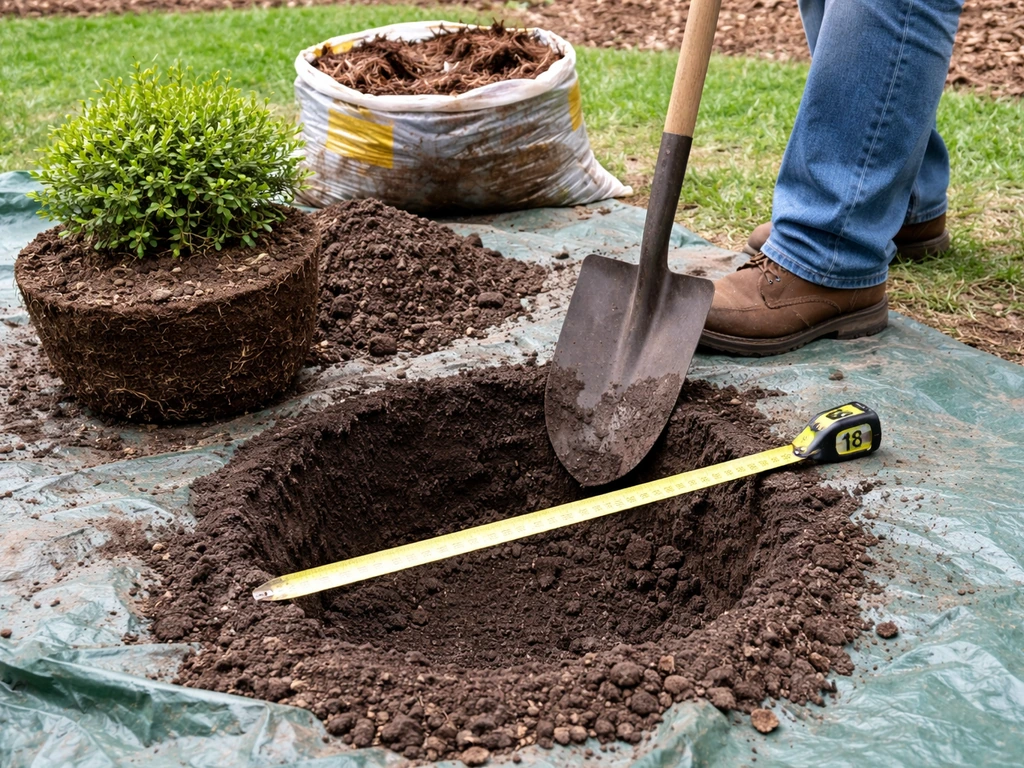
Before planting, dig a hole about twice as wide as the root ball and roughly the same depth. Mix the native soil with a good amount of compost, I usually work in about 30% compost by volume for new plantings. This improves drainage in heavy clay soils and adds water-holding capacity in sandy soils. You don't need to import special soil or buy bags of peat moss. Compost from your pile or a bag from the garden center does the job.
For fertilizing, a balanced slow-release granular fertilizer applied once in early spring is all Annabelle really needs. Something in the range of 10-10-10 or a formulation labeled for flowering shrubs works well. Apply it around the drip line of the plant (not right against the stems), water it in, and let it do its work over the season. I'm skeptical of loading up on quick-release fertilizers like water-soluble products multiple times a season, too much nitrogen pushes leafy growth at the expense of blooms, and it can make stems weak and floppy. One good feeding in spring is the better play.
Watering schedule and moisture management
Water is where Annabelle hydrangea is genuinely demanding. The word 'arborescens' might sound stoic, but this plant does not handle drought stress well, especially during its first two seasons. If you let it dry out repeatedly, you'll get smaller blooms, wilting leaves, and a plant that looks defeated even in otherwise good conditions.
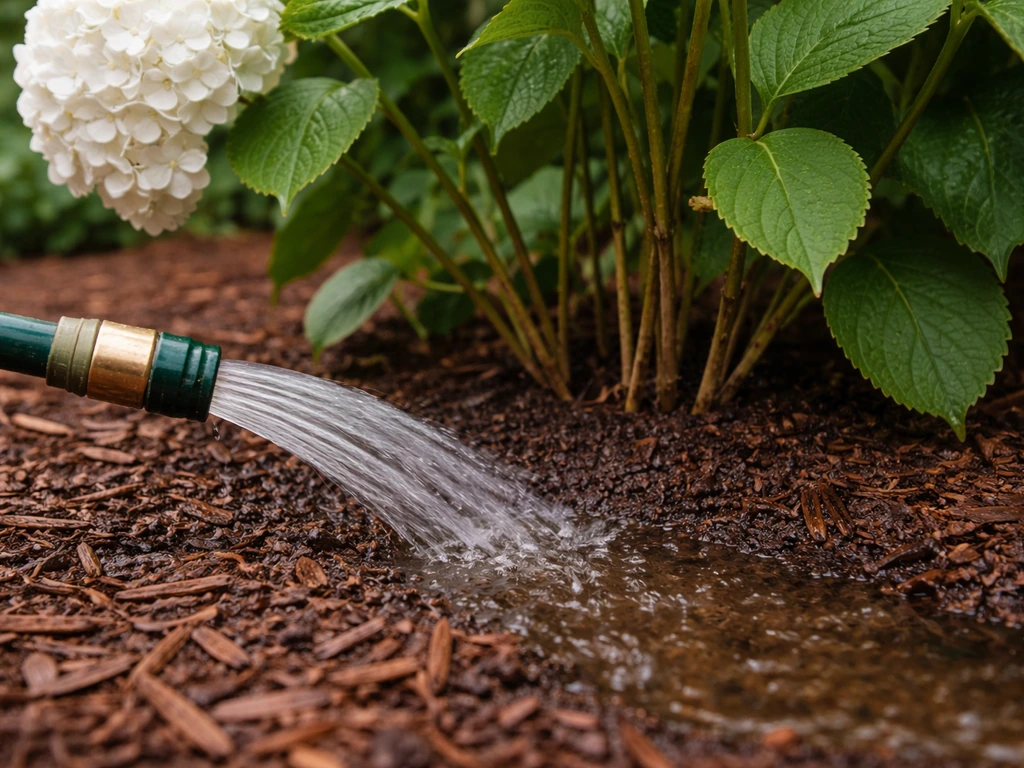
During the first growing season, water deeply two to three times per week, depending on your climate and how quickly your soil dries. 'Deeply' means soaking the root zone, not just wetting the surface. A slow trickle from a hose at the base for several minutes is better than a quick overhead sprinkle. Once established (usually after the second full growing season), Annabelle becomes more resilient, but you'll still want to water during dry spells, particularly in July and August when the plant is blooming hard.
Mulching is one of the best things you can do for moisture management. Apply 2 to 3 inches of shredded bark, wood chips, or leaf mulch around the base of the plant, keeping it a few inches away from the main stems. Mulch slows evaporation dramatically and keeps soil temperatures more stable, which helps enormously during summer heat waves. It also suppresses weeds that would compete for moisture. Refresh the mulch layer each spring before the heat sets in.
Sunlight, temperature, and overwinter considerations
As mentioned, Annabelle does best in part shade, particularly in warmer climates. But let's be specific: 3 to 6 hours of morning sun with shade in the afternoon is close to ideal in Zone 5 through Zone 7. In Zone 4 and colder, you can push toward more sun because the lower heat intensity won't stress the plant as much, and the stronger light may actually improve flowering. In Zone 7 and warmer, lean into shadier spots with only 2 to 3 hours of direct sun.
Annabelle is remarkably cold-hardy. It's rated down to Zone 3, which means it handles brutal winters without needing protection. Because it blooms on new wood, even if the stems die back completely in a harsh winter (which can happen), the plant will regrow from the roots and still bloom that same summer. This is one of the reasons it's so dependable compared to other hydrangea types. You don't have to worry about protecting buds that were set the previous fall.
That said, a few fall care steps help set you up for a strong spring. After a hard frost has killed the leaves and stems have turned woody and brown, you can leave the old flower heads standing through winter. They actually look beautiful with frost or light snow on them, and they protect the crown slightly. Come late winter or early spring, that's when you do your pruning (more on that below). In very cold zones, you can mound a few inches of straw or shredded leaves over the crown in late fall for extra protection, but it's usually not necessary for healthy established plants.
Pruning and seasonal care for maximum flowering
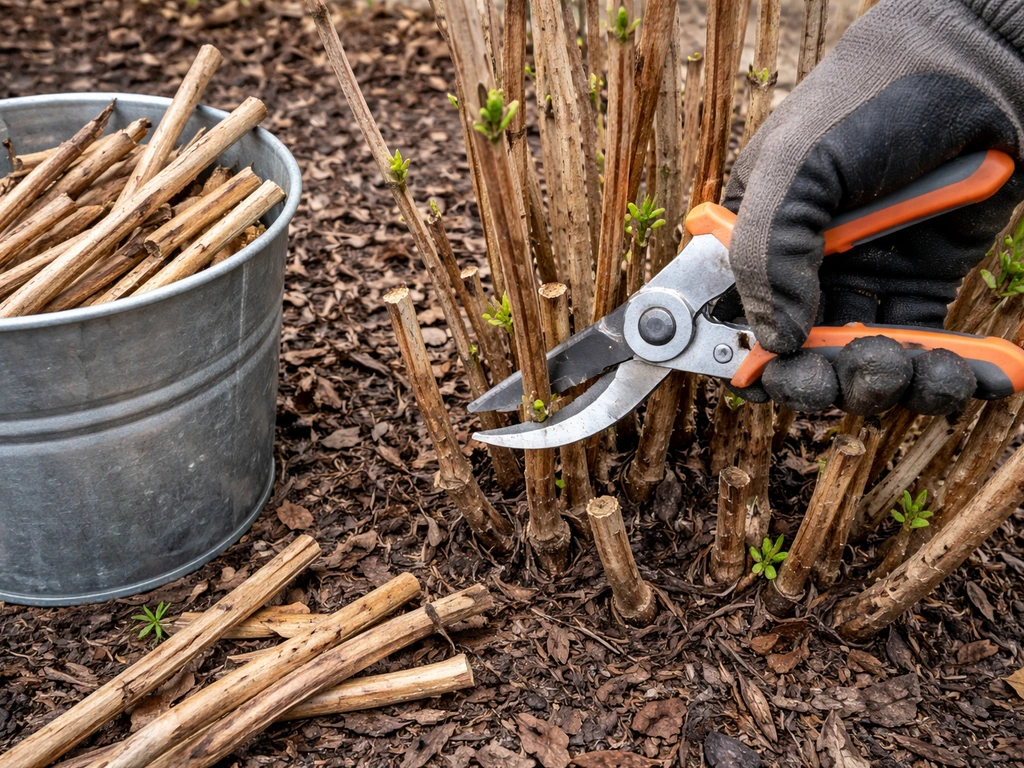
Pruning Annabelle hydrangea correctly is probably the single most important skill to get right. Because it blooms on new wood, you have a lot of flexibility, you're not going to accidentally cut off next year's buds the way you would with a bigleaf hydrangea. But there's still a right approach and a wrong one.
The best time to prune is late winter to early spring, just before new growth begins pushing. In most of the country, that means somewhere between late February and early April depending on your zone. You can cut Annabelle back hard, many gardeners cut it all the way down to about 12 to 18 inches from the ground, or even lower. This encourages vigorous new stems that will carry large flower heads. If you want more (but slightly smaller) flowers and a fuller shrub shape, do a lighter prune, cutting stems back by about one-third. Hard pruning gives you fewer, larger blooms. Light pruning gives you more, somewhat smaller blooms on a larger plant.
One practical note: Annabelle's large flower heads can get heavy and cause stems to flop, especially after rain. If this is a recurring problem in your garden, try the lighter pruning approach rather than the hard cut. More stems means the plant supports itself better as a group. You can also try staking or using a grow-through support hoop placed over the plant in early spring before stems get tall.
Seasonal care calendar at a glance
| Season | Task |
|---|---|
| Late winter / early spring (Feb–April) | Prune stems back before new growth starts; apply slow-release granular fertilizer; refresh mulch layer |
| Spring (April–May) | Watch for new growth; water consistently as temperatures rise; remove any dead wood not yet cut back |
| Summer (June–September) | Water deeply during dry spells; enjoy blooms; deadhead spent flowers to encourage reblooming or extend the display |
| Fall (October–November) | Let the plant harden off naturally after frost; leave old flower heads for winter interest; apply extra mulch in coldest zones |
| Winter (December–February) | Plant is dormant; no action needed except in extreme cold zones where crown mulching may help |
Troubleshooting: why it won't bloom or is struggling
If your Annabelle isn't performing the way you hoped, the problem almost always comes down to a handful of fixable causes. Let's work through the most common ones honestly.
No blooms or very small blooms
The most frequent cause is too much shade. If your plant is growing lush and green but producing few or tiny flowers, it's probably not getting enough light. Annabelle needs some direct sun to bloom well, deep shade produces leaves, not flowers. The fix is to either move the plant (this is very doable in fall) or thin out whatever is blocking the light. The second most common cause is over-fertilizing with nitrogen. If someone has been loading the plant with lawn fertilizer or high-nitrogen products, the plant puts energy into foliage instead of flowers. Cut back the feeding and switch to a balanced or low-nitrogen fertilizer.
Wilting leaves (even with watering)
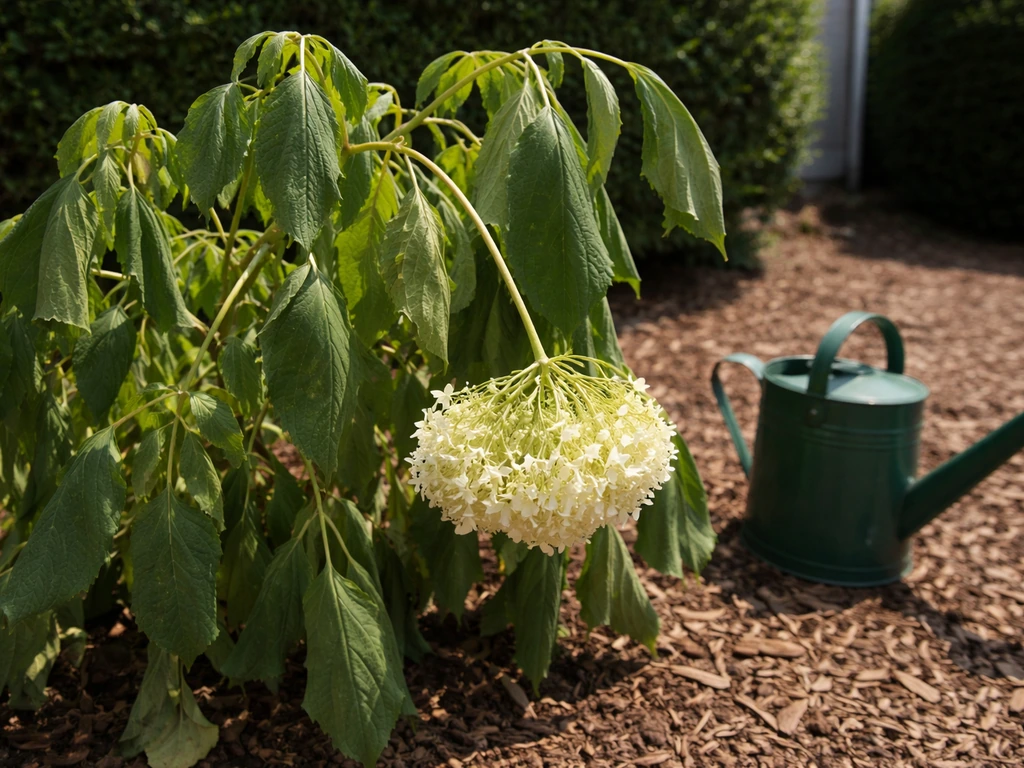
Afternoon wilt on Annabelle is common and is usually not a cause for alarm, the plant often droops in peak afternoon heat and perks back up by evening. If it's still wilted the next morning, that's when you have a real water problem. Check soil moisture a few inches down. If the soil is dry, increase your watering frequency. If the soil is wet, you may have a drainage or root rot issue, which is less common but does happen in compacted or waterlogged sites.
Flopping stems
Stems flopping over under the weight of blooms is a classic Annabelle complaint. Heavy rain makes it worse. This isn't a disease or nutrient problem, it's a structural issue. Try pruning less aggressively (leave more stems so they support each other), use a grow-through support hoop installed in early spring, or plant Annabelle where neighboring plants can provide some physical support. Some gardeners also find that reducing nitrogen keeps stems a little thicker and sturdier.
Yellow leaves
Yellowing leaves most often signal either overwatering and poor drainage, or a nutrient deficiency (usually iron or magnesium). Check your drainage first. If the soil is constantly soggy, that's your culprit. If drainage is fine but leaves are yellowing between the veins (a pattern called chlorosis), try a foliar spray of chelated iron or a dose of Epsom salt (magnesium sulfate) dissolved in water. Remember that Annabelle tolerates a wide pH range, so adjusting pH is rarely the fix here the way it might be with other plants.
Plant looks dead in spring
Don't panic if stems look completely dead and brown in early spring. Scratch a stem with your fingernail, if you see green tissue underneath, it's alive. Even if stems have died back to the ground in a hard winter, Annabelle will regrow from the roots and bloom that same summer because it's a new-wood bloomer. Give it until mid-spring before concluding it's actually dead. It's almost certainly not.
A simple success plan: next steps and maintenance calendar
If you're planting Annabelle for the first time this spring (it's late March now, which is a great time in most zones), here's exactly what to do in sequence. If you already have an established plant and are trying to improve it, start from step 3.
- Choose your spot: Morning sun, afternoon shade, away from low-lying wet areas or full western exposure
- Prepare the soil: Dig a wide planting hole, amend with compost, make sure drainage is adequate
- Plant at the right depth: Set the root ball so the crown is level with or very slightly above the surrounding soil
- Water in thoroughly after planting, then water 2 to 3 times per week for the first full growing season
- Mulch immediately: 2 to 3 inches of shredded bark or wood chips around the base, kept away from the stems
- Fertilize once in spring with a balanced slow-release granular fertilizer; don't overdo it
- Prune every late winter to early spring before new growth: hard cut (down to 12 to 18 inches) for large blooms, light cut (one-third off) for fuller shape
- Watch for afternoon wilt in summer and respond with deep watering if soil is dry the following morning
- Leave old flower heads standing through winter, then cut back in late February to early April as part of your regular spring routine
Annabelle hydrangea rewards consistency more than complexity. If you are wondering how to grow hydrangea in general, the same basics about light, moisture, and pruning apply Annabelle hydrangea. You don't need special products, complex schedules, or years of expertise. Get the site right, keep the moisture consistent especially in the first two years, prune in late winter, and feed lightly in spring.
Do those things and you'll have one of the most spectacular flowering shrubs in your garden blooming reliably from June through the end of summer every single year. To push your blooms even larger, follow these tips for how to make hydrangea grow bigger alongside your Annabelle care routine.
If you're interested in exploring other hydrangea types with different care needs, guides on growing panicle hydrangea or blue hydrangeas (which involve very different pruning rules and soil considerations) are worth a look once you have Annabelle dialed in. how to grow blue hydrangeas. how to grow panicle hydrangea
FAQ
How much sun does Annabelle hydrangea need to actually bloom, not just grow leaves?
Aim for roughly 3 to 6 hours of morning sun with afternoon shade, especially in Zone 5 to Zone 7. If you notice lush growth but few blooms, try increasing light by thinning nearby plants or moving the shrub, because Annabelle can tolerate shade but will rarely perform well deep in it.
Can I grow Annabelle hydrangea in a container?
Yes, but it requires more consistent watering than in-ground planting. Use a large pot with drainage holes, keep the root ball evenly moist (never repeatedly drying out), and refresh mulch like you would outdoors. Plan on repotting or top-dressing compost periodically because container soil dries faster and nutrients wash out.
Do I need to change the soil pH to get big white flowers on Annabelle?
No. Annabelle tolerates a broad pH range, so flower color will not be controlled by soil acidity. Instead, focus on organic matter and reasonable drainage, since consistent moisture and root health matter far more than pH for performance.
What’s the difference between hard pruning and lighter pruning, and how do I choose?
Hard pruning (cutting back close to the ground) usually produces fewer stems but larger, heavier blooms that may flop. Lighter pruning (about one-third back) creates more stems, which helps the plant support itself and often gives a fuller look with slightly smaller flowers. If you routinely get stem flopping after rain, lean toward lighter pruning or added support.
Should I remove the spent flower heads in fall or winter?
You can leave them standing after frost through winter, many gardeners find they look good and they offer slight protection to the crown. Do the main pruning later in late winter or early spring, right before new growth begins, rather than cutting everything back in fall.
My Annabelle’s leaves are yellow. How do I tell whether it is drainage-related or nutrient-related?
First check whether the soil stays soggy after watering or rain. Consistently wet soil points to drainage or overwatering problems. If drainage is fine and yellowing appears as chlorosis between leaf veins, you can try a chelated iron foliar spray or an Epsom salt solution for magnesium, since pH adjustments are usually not the fix for Annabelle.
Why does my Annabelle wilt in the afternoon but look fine by evening?
This is often normal summer behavior. The key check is whether it rebounds by the next morning. If it stays wilted the following morning, increase watering for the root zone and verify that mulch is thick enough (about 2 to 3 inches) and not pulled back from the stems.
How often should I water once it is established?
Even after the first two seasons, water during dry spells, especially in July and August while it is blooming. A good rule is to water deeply when the soil a few inches down has dried, then soak thoroughly at the base rather than using short overhead sprinkles.
What should I do if my Annabelle stems look dead or brown in early spring?
Wait before removing anything. Scratch a stem with your fingernail, if you see green underneath it is alive. Even if stems died back to the ground after a harsh winter, Annabelle should regrow from the roots and bloom on new wood later in the season.
Can I fertilize more if I want bigger flowers?
Usually no. Too much nitrogen encourages leafy growth and can reduce bloom quality. Stick to a single early spring feeding with a balanced slow-release fertilizer, and avoid repeated quick-release nitrogen products, especially if your plant is already producing plenty of foliage.