
Yes, you can absolutely use Miracle-Gro on impatiens, and it works well when you pick the right formula and apply it correctly. The main thing to get right is not overdoing nitrogen, which pushes leafy growth at the expense of flowers. Stick to a balanced or slightly phosphorus-forward mix, dilute it properly, and feed about once a month after planting. Do that, and your impatiens will stay compact, bushy, and covered in blooms all summer.
Can You Use Miracle-Gro on Impatiens? How to Feed Safely

Marcus Holloway
26 Jun 2026
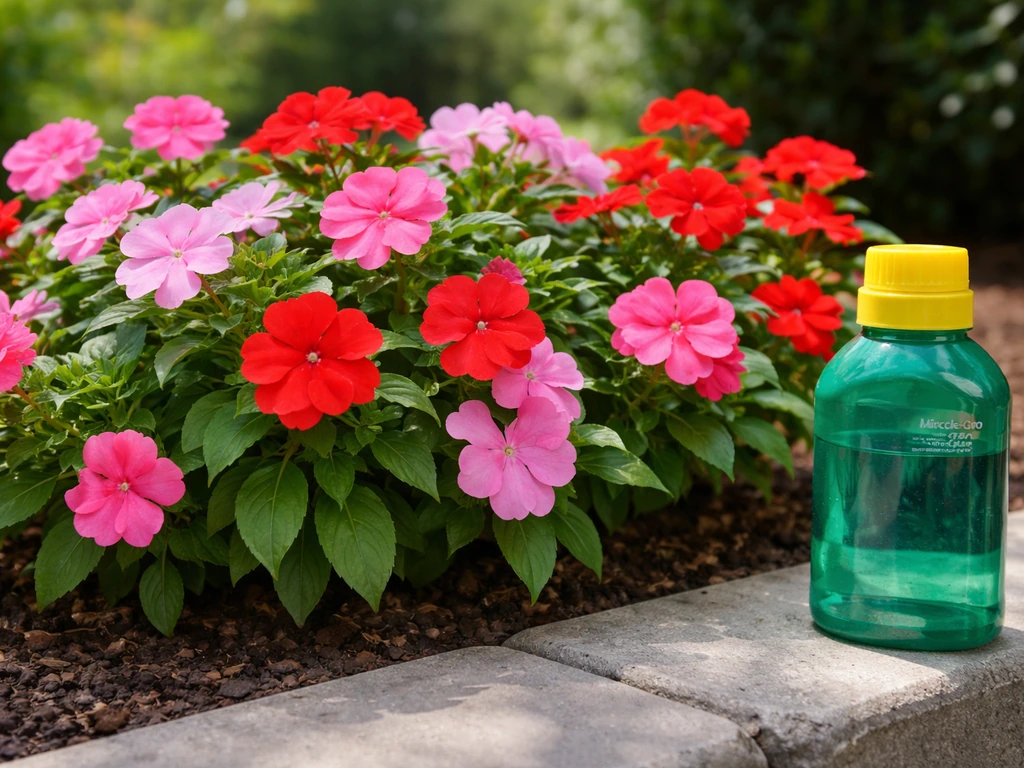
Quick yes or no: Is Miracle-Gro safe for impatiens?
Yes, with a few caveats. Impatiens are moderate feeders. Peonies are a different kind of flowering plant, so Miracle-Gro may not be the best match without adjusting the fertilizer type and timing to support blooms Impatiens are moderate feeders.. They appreciate regular nutrition but they're not heavy feeders like some vegetables, so the "more is better" mindset will actually hurt you here. Too much nitrogen and you'll get gorgeous dark green leaves and almost no flowers. The goal is a fertilizer that supports bloom development, not just foliage, so you want something balanced or slightly higher in phosphorus (the middle number on the label) relative to nitrogen (the first number). Standard Miracle-Gro All Purpose formulas work fine at the right dilution and frequency. Just don't use it at full strength on stressed or dry plants, and don't feed more often than the label recommends.
Which Miracle-Gro formula to use and how each one works
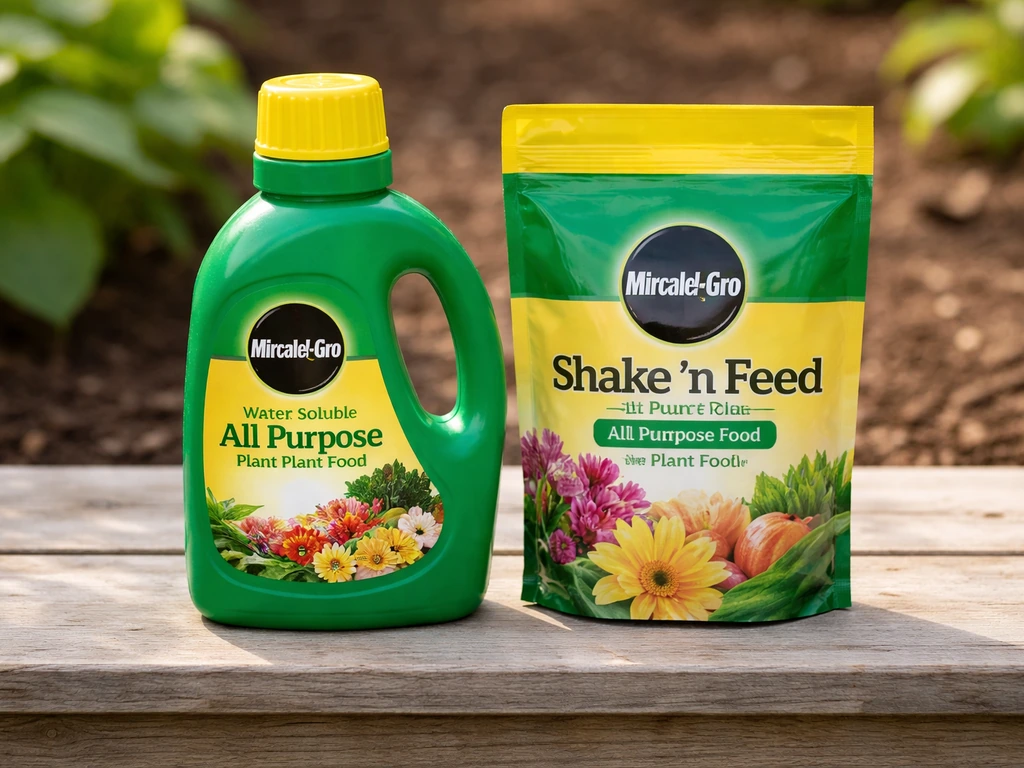
Miracle-Gro makes several different product lines and they're not all the same for impatiens. Here's how the main options stack up.
| Product | Best Use Case | Application Frequency | Notes for Impatiens |
|---|---|---|---|
| Water Soluble All Purpose Plant Food | In-ground beds and containers | Every 1-2 weeks (liquid feeding) | Most flexible; easy to control dose; dilute at 1.5 tbsp per 1.5 gallons outdoors |
| Shake 'n Feed All Purpose (granular) | In-ground beds and larger containers | Every 3 months | Slow-release; 4 tbsp per 4 sq ft in beds; 1.25 tsp for a 6-inch pot |
| Organic All Purpose Granules | Beds and containers with organic preference | Every 1-3 months | Gentler release; about 1 tbsp per 6-inch pot; good for beginners nervous about burn |
| LiquaFeed All Purpose | Hose-end or watering can delivery | Every 1-2 weeks | Use the LiquaFeed applicator or dilute at 1.5 tsp per gallon if using a watering can |
My personal go-to for impatiens in containers is the Water Soluble All Purpose formula because I can control exactly how much each plant gets. For in-ground beds, the Shake 'n Feed granules are more convenient and reduce the risk of over-applying. If you're new to fertilizing flowers and worried about burning your plants, the Organic Granules are the most forgiving option since they release slowly and are harder to overdo. If you're also growing other flowering plants like geraniums or petunias in the same season, the same Miracle-Gro water-soluble formula you're using for impatiens works fine across all of them. The same guidance applies when you’re wondering whether Miracle-Gro is good for petunias, since the right formula and dilution help keep plants blooming without burning.
When to start feeding and how timing affects results
At planting time
Don't fertilize at the time of planting. This is a common mistake. Newly planted impatiens need to establish roots first, and hitting them with fertilizer right away stresses roots that haven't had a chance to settle in. If you're amending your soil before planting, work in compost or a slow-release granule like Miracle-Gro Organic into the bed at that stage, but hold off on water-soluble feeding until the plants have been in the ground for a couple of weeks and show signs of active growth.
Active growing season (late spring through summer)
Once impatiens are established and actively growing, monthly feeding is the standard recommendation from university extension services. UMN Extension specifically recommends monthly fertilization using granular, water-soluble, or foliar fertilizer with higher phosphorus than nitrogen to encourage flowers over leaves. An e-GRO alert document for ornamentals also references bedding impatiens (Impatiens walleriana) within regulated horticulture production guidance notes specifically recommends monthly fertilization using granular, water-soluble, or foliar fertilizer with higher phosphorus than nitrogen. If you're using the water-soluble formula, you can feed every one to two weeks at a diluted rate, but monthly at the standard rate is plenty for most home gardeners and dramatically reduces the risk of fertilizer problems.
Late summer into fall
Taper off feeding in late summer. Impatiens are annuals in most climates, and pushing them with fertilizer as temperatures drop doesn't help and can leave salts accumulating in the soil. Your last feeding should be around six to eight weeks before your first expected frost. After that, consistent watering is more valuable than fertilizer for keeping the plants blooming until the cold shuts them down.
Exact rates, dilutions, and how often to apply
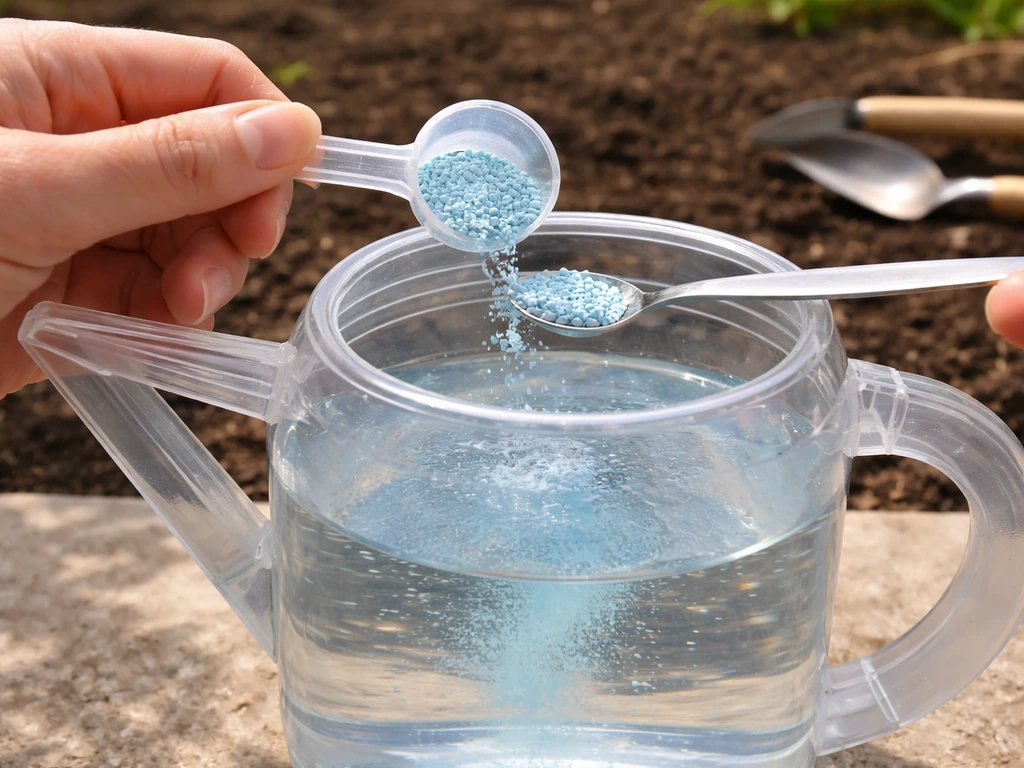
The mixing numbers matter more than people realize. Using too concentrated a solution is one of the most common causes of fertilizer burn in impatiens, especially in containers where salts have nowhere to go.
- Water Soluble All Purpose (outdoor use): 1.5 tablespoons per 1.5 gallons of water; apply every 1-2 weeks or monthly depending on how closely you want to monitor
- Water Soluble All Purpose (indoor or smaller pots): 0.5 teaspoon per 1 gallon of water; this gentler dilution is smart for impatiens in small containers
- Shake 'n Feed granular: 4 tablespoons per 4 square feet in beds; 1.25 teaspoons per 6-inch pot; water in thoroughly after applying
- Organic All Purpose Granules: approximately 1 tablespoon per 6-inch pot; feeds for up to 3 months so don't reapply before that window closes
- LiquaFeed (watering can method): 1.5 teaspoons per 1 gallon of water; use the LiquaFeed applicator system for larger areas
Always err on the lower end of the dosage range for impatiens in containers. They sit in a fixed volume of soil, so salts accumulate faster than in open ground. When in doubt, dilute more and feed more frequently at a lower concentration rather than applying a strong dose less often.
Watering and soil conditions that make feeding work (and prevent burn)
Impatiens are thirsty plants. UMN Extension notes they require a lot of moisture and need soil that both retains water and drains well. That combination matters a lot when you're fertilizing, because dry soil concentrates fertilizer salts and increases the risk of root and leaf damage. Never apply Miracle-Gro to dry soil or to wilted plants. Always water first, let the soil absorb the moisture so it's evenly damp but not waterlogged, and then apply your fertilizer solution.
Soil pH is also important here. If your nasturtiums still won't grow, nutrient uptake can also fail when soil pH is off, even if you're using fertilizer correctly. Impatiens prefer a slightly acidic pH between 6.0 and 6.5 with high organic matter. At that pH range, nutrients in Miracle-Gro are most available to the roots. If your soil pH drifts outside this range, you can fertilize perfectly and still see poor results because the plant can't take up what you're giving it. If you're troubleshooting and nothing seems to work despite correct feeding, testing your soil pH is worth doing.
For containers specifically, make sure you have drainage holes and that water actually exits when you water. Containers without drainage trap salts in the potting mix and burn roots over time even at normal fertilizer rates. After a few feedings, it's a good practice to flush container soil thoroughly with plain water to push accumulated salts out through the drainage holes.
What goes wrong: over and under fertilizing impatiens
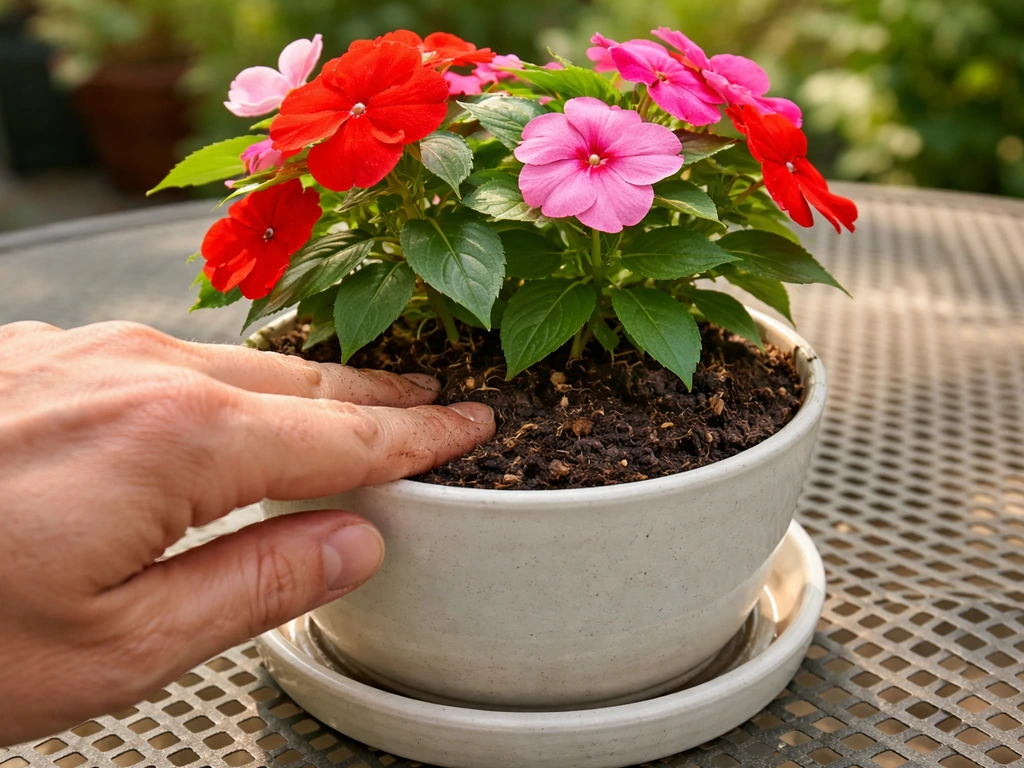
Signs you're overdoing it
Overfertilizing is more common than underfertilizing in home gardens, and the symptoms are specific. According to Washington State University extension research, fertilizer burn in containers often shows up first as a brownish or whitish crusty buildup on the inside rim of the pot where salts have migrated. On the plants themselves, you may notice wilting even with adequate water (because excess salts pull moisture away from roots), leaf tip burn starting at the edges, lower leaf drop, and slowed overall growth. University of Maryland Extension notes that soluble salts can concentrate in leaf tissue on hot dry days, which makes heat waves a particularly risky time to feed. The key diagnostic sign with fertilizer burn versus disease is that symptoms tend to be evenly distributed across the plant, not patchy.
Signs you're not feeding enough
Underfed impatiens are pretty easy to spot. Pale, light green or yellowing leaves (especially older leaves lower on the plant) usually signal nitrogen deficiency. Plants that are slow to bloom, producing few flowers, or staying small and stunted despite good watering and adequate light may simply need feeding. The fix here is straightforward: start a regular monthly feeding schedule at the correct dilution and you should see improvement within two to three weeks.
Too much nitrogen specifically
This deserves its own mention because it's the most common Miracle-Gro mistake with flowering plants. If your impatiens have lush, deep green foliage but almost no flowers, excess nitrogen is the likely culprit. The plant is putting energy into leaves because there's plenty of nitrogen driving that growth. Switch to a fertilizer with a higher phosphorus ratio or simply cut back on feeding frequency for a few weeks and let the plant redirect energy toward blooms.
What to do if you already over-applied or want a gentler approach
If you think you've over-fertilized, act quickly. For container plants, flush the soil with plain water several times in a row to leach out accumulated salts. Run water through the pot until it drains freely from the bottom, let it drain completely, and repeat two or three times. For in-ground beds, water deeply and thoroughly for several days. Remove any visibly burned leaves and skip fertilizing for at least four to six weeks to let the roots recover.
If you'd rather avoid the guesswork entirely, a few alternatives are worth knowing about. Compost worked into the soil before planting provides slow, gentle nutrition that's almost impossible to overdo. A balanced granular slow-release fertilizer (look for something labeled 10-10-10 or similar) applied once at the start of the season is a legitimate set-it-and-forget-it approach that works well for busy gardeners. If you grow other flowering plants alongside your impatiens, the feeding schedule is similar: petunias and geraniums also benefit from phosphorus-forward balanced feeding at roughly monthly intervals. If you're wondering whether Miracle-Gro is good for geraniums, the same phosphorus-forward, properly diluted approach helps support blooms without pushing excess leafy growth petunias and geraniums. Going too heavy on nitrogen causes the same leggy, low-bloom outcome in all of them.
Miracle-Gro can and does work well for impatiens, but it's not magic. It's a tool that helps when plants are in good soil at the right pH with consistent watering. Think of fertilizer as a supplement to good growing conditions, not a replacement for them. Get the basics right first, then use Miracle-Gro on the schedule above and your impatiens will reward you with a full season of dense, colorful blooms.
FAQ
Can I use Miracle-Gro on impatiens that are already stressed or wilting?
Yes, but only after the plants are actively growing. For impatiens just transplanted, use a lighter touch (for example, half the labeled dilution) and wait until you see new growth for signs the roots have recovered before switching to a monthly full-strength feeding.
Is it okay to fertilize impatiens right after watering, or should I wait?
Avoid it. If the label says to apply to moist soil, follow that because dry soil concentrates fertilizer salts and increases the chance of root damage. A safe sequence is water first, let the excess drain, then apply the diluted Miracle-Gro solution.
How do I adjust feeding if I prefer to fertilize more often than once per month?
If you use water-soluble Miracle-Gro at more frequent diluted intervals (like every 1 to 2 weeks), reduce the dilution so the total monthly “dose” stays similar. The goal is to keep fertilizer burn risk low in containers while still maintaining steady nutrition.
What if I used compost or slow-release fertilizer when planting, can I still add Miracle-Gro?
Yes, but it depends on what else is in the pot. If you already mixed compost or used a slow-release fertilizer at planting, you should start with a longer gap (or a lower rate) for the first few weeks to prevent pushing too much nitrogen.
My impatiens are not flowering. Should I change Miracle-Gro or check something else first?
Do a soil test if available, because poor flowering can come from the pH range being off, not just fertilizer choice. Impatiens generally do best when soil is slightly acidic (roughly 6.0 to 6.5), and you may need pH adjustment before changing fertilizer amounts.
How can I tell fertilizer burn from a disease or pest problem?
Look for both pattern and timing. Fertilizer burn in containers often shows as evenly distributed leaf tip burn or a crusty salt buildup on the pot rim, and it tends to worsen after warm, dry days. Patchy spots with spreading areas suggest a disease issue instead.
How often should I flush container soil when using Miracle-Gro?
For containers with drainage holes, you still need a periodic flushing routine. If you notice salt crust or plants respond negatively after repeated feeding, flush with plain water several times so the solution drains fully from the bottom, then resume at a lower dose.
Does it matter which Miracle-Gro formula I choose, or are they all the same for impatiens?
If the label is different, follow the product-specific numbers, but keep the nitrogen too-high problem in mind. For impatiens, a balanced or slightly phosphorus-forward blend is safer, and you should not apply at full strength if you are seeing lush foliage with few blooms.
Can I fertilize impatiens after moving them from indoors to outdoors?
Yes, and it can help you avoid overdoing it. When you move impatiens outdoors (or between indoor and outdoor conditions), start at the lower end of dilution and feed less frequently for the first few weeks because growth and evaporation rates change.