
Yes, you can use Miracle-Gro on peonies, but the product you choose and how you use it matters a lot. Peonies are surprisingly sensitive to nitrogen overload, and most standard Miracle-Gro formulas lead with nitrogen. Used carelessly, they'll give you a lush, leafy plant that barely blooms. You can apply the same general logic to impatiens too, but you should focus on a balanced fertilizer rate rather than high-nitrogen feedings can you use miracle grow on impatiens. Used correctly, a low-dose, phosphorus-forward approach at the right time of year will support strong flowering without the downsides.
Is Miracle-Gro Good for Peonies? How to Feed Safely

Marcus Holloway
19 May 2026
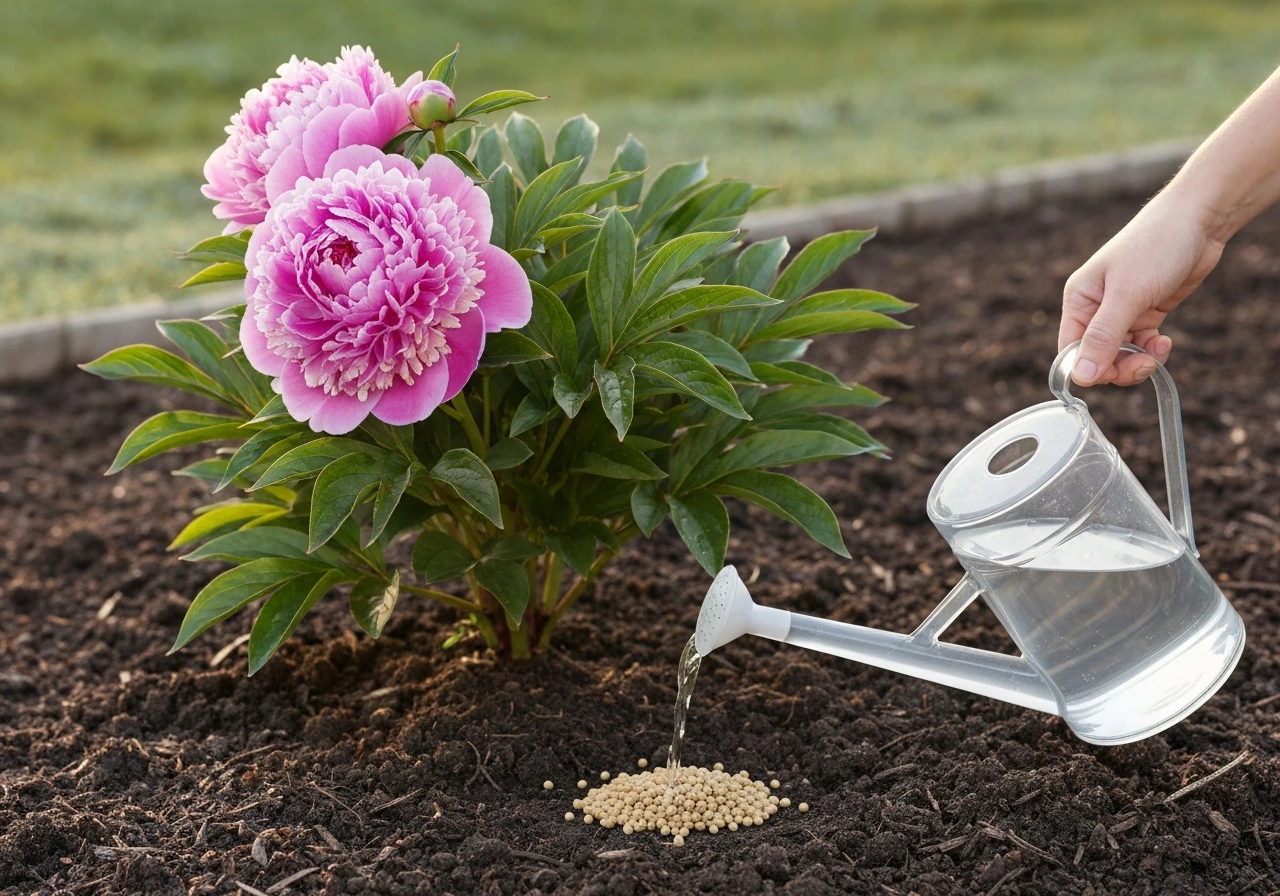
Which Miracle-Gro Products Work for Peonies (and Which to Skip)
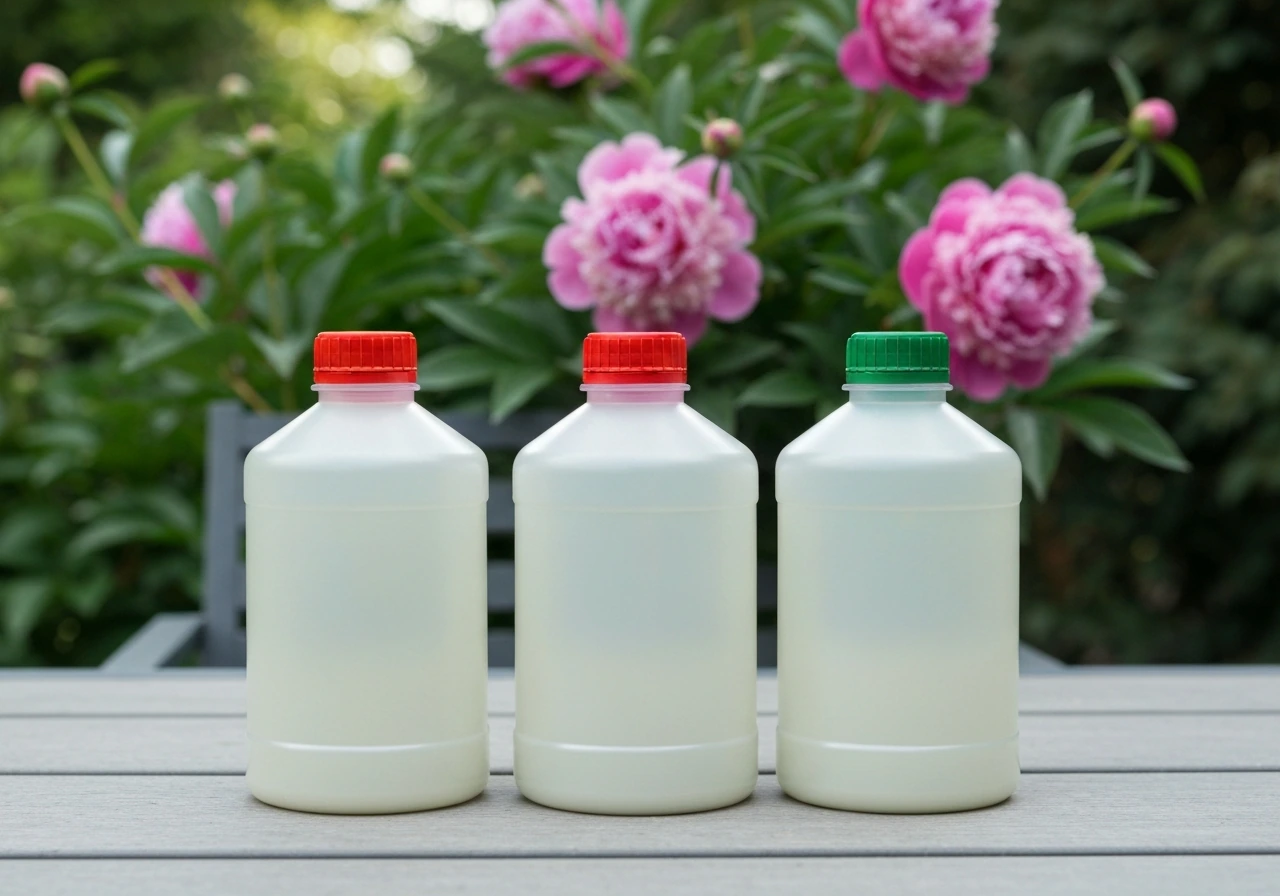
Not all Miracle-Gro products are created equal when it comes to peonies. The N-P-K ratio (nitrogen, phosphorus, potassium) is what you need to pay attention to, because peonies need relatively little nitrogen and much more support for root development and flowering.
| Product | N-P-K | Type | Verdict for Peonies |
|---|---|---|---|
| Miracle-Gro Water Soluble All Purpose Plant Food | 24-8-16 | Water-soluble liquid feed | Use with caution, heavily diluted and infrequently |
| Miracle-Gro Shake 'n Feed All Purpose | 12-4-8 | Slow-release granules | Acceptable option if applied sparingly once per season |
| Miracle-Gro Bloom Booster Flower Food | 15-30-15 | Water-soluble, high phosphorus | Best Miracle-Gro option for peonies — supports blooms over foliage |
The Bloom Booster (15-30-15) is the one Miracle-Gro product I'd actually recommend for peonies if you're committed to using the brand. That high-phosphorus middle number is what encourages flowering rather than leafy growth. The standard All Purpose formula (24-8-16) has nearly three times more nitrogen than phosphorus, which is the opposite of what a peony needs. If you've ever fed peonies a high-nitrogen fertilizer and ended up with gorgeous foliage and no flowers, that's exactly why.
The Shake 'n Feed granules (12-4-8) are a reasonable middle ground. The nitrogen is lower than the water-soluble All Purpose, and the slow-release formula means you're not hitting the plant with a sudden surge. The risk is still overfeeding if you apply it too often or too generously, so stick to one application per season at most.
What to avoid entirely: any lawn fertilizer or fertilizer with an N number above 15 applied directly around peonies. The American Peony Society specifically warns against high-nitrogen fertilizers because they encourage soft, disease-susceptible growth and actively reduce flowering. Iowa State Extension backs this up, noting that excessive nitrogen is one of the key drivers of poor bloom performance in peonies.
When to Feed Your Peonies (Timing Is Everything)
Peonies have a narrow window when fertilizer actually helps them. Feed outside that window and you're either wasting product or actively hurting the plant.
- Early spring, when shoots emerge: This is your primary feeding window. As those red-tipped shoots push up through the soil, a light feeding supports root development and bud formation.
- After blooming, in early summer: A second light feeding helps the plant build energy stores for next year's flowers. Keep it minimal.
- Late summer and fall: Do not feed. University of Connecticut extension is direct about this — no fertilizer in late summer or fall. New growth stimulated late in the season won't harden off before winter and the plant wastes energy it needs for dormancy.
One thing worth knowing: peonies need winter cold to flower. No amount of fertilizer compensates for a lack of chilling hours. If your peonies aren't blooming and you're in a warm climate, that's a different problem than feeding, and more fertilizer won't fix it.
How to Apply Miracle-Gro to Peonies Without Overdoing It
The standard Miracle-Gro label directions are written for heavy feeders like tomatoes and annuals. Peonies are not heavy feeders. You'll want to dial things back significantly from what the label suggests. Miracle-Gro can also work for hoya, but you still need to use a low-nitrogen approach to avoid leafy growth without blooms Miracle-Gro for hoya.
Water-Soluble Miracle-Gro (All Purpose or Bloom Booster)
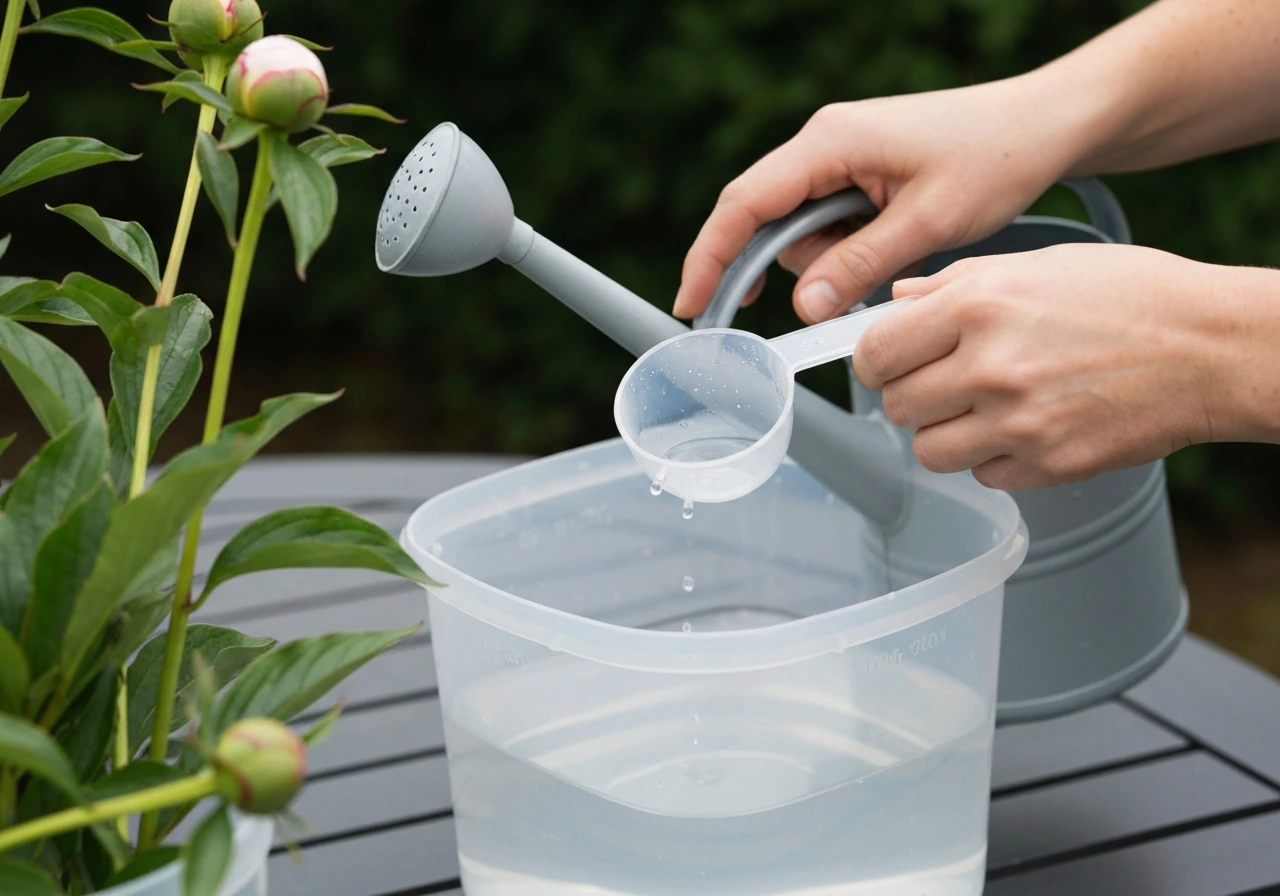
The label says to mix 1.5 tablespoons per 1.5 gallons of water for outdoor plants and apply every 7 to 14 days. For peonies, cut that frequency way down. For hanging baskets, you typically want to follow the label and avoid frequent feeding, usually limiting Miracle-Gro to about every couple of weeks during active growth cut that frequency way down. Apply once at shoot emergence in early spring, and once more after blooms fade in early summer. That's it for the season. Use the standard dilution (1.5 tablespoons per 1.5 gallons) but do not repeat every two weeks like the label suggests for annuals.
When you apply it, water at the base of the plant and target the drip line (the outer edge of the plant's canopy), not the crown itself. The American Peony Society specifically recommends keeping fertilizer away from the crown, which is the cluster of growth buds at or just below soil level. Getting concentrated fertilizer directly on the crown can damage it.
Shake 'n Feed Granules
Apply the granules dry directly onto the soil around the drip line. Work them gently into the top 1 to 3 inches of soil, then water thoroughly to start the release process. The product feeds for up to 3 months, so one application in early spring is all you need for the season. Do not apply a second round in summer or fall.
Signs You're Over or Under-Feeding Your Peonies
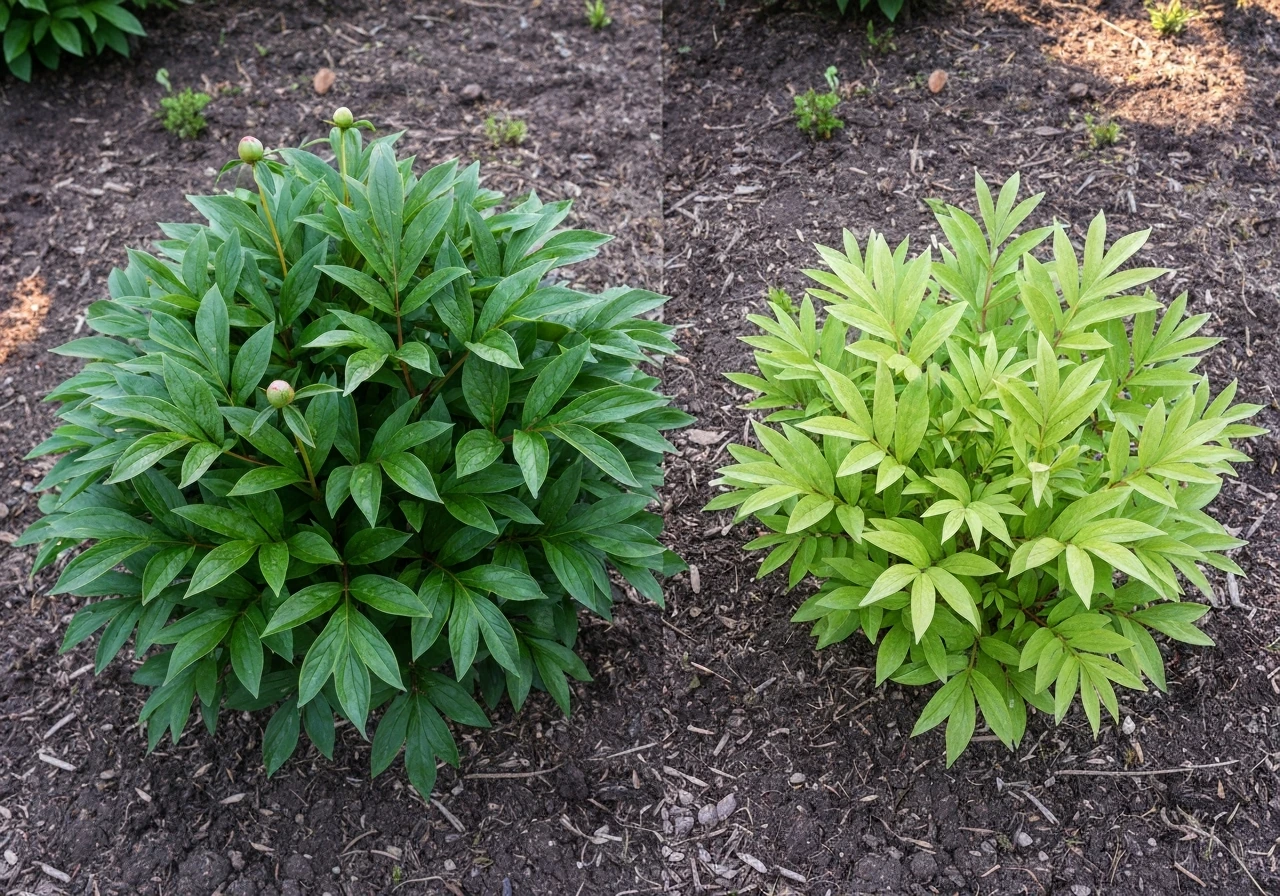
Peonies are pretty good at telling you when something is off. Here's what to look for and what it means: If you’re wondering why your nasturtiums won’t grow, the issue is often light, soil, or watering rather than fertilizer why your nasturtiums won't grow.
| What You're Seeing | Likely Cause | What to Do |
|---|---|---|
| Lots of lush green foliage, few or no blooms | Too much nitrogen | Stop all feeding; skip fertilizer next season or switch to Bloom Booster |
| Buds form but blast (turn brown before opening) | Multiple possible causes including fertilizer imbalance or watering stress | Reduce nitrogen, check watering, rule out botrytis blight |
| Pale, yellowing leaves with weak stems | Possible underfeed or nutrient deficiency | Light feeding with a balanced or phosphorus-forward fertilizer in spring |
| Soft, mushy foliage with poor disease resistance | Excess nitrogen causing weak growth | Cut back nitrogen feeds entirely; improve drainage |
| Strong foliage growth and good bloom production | Feeding is working well | Maintain current approach, feed only twice per season |
The most common mistake I see is gardeners feeding peonies the same way they'd feed petunias or tomatoes, on a regular every-two-weeks schedule with a high-nitrogen formula. Peonies don't want that. If you're treating your peony like a heavy feeder and it's not blooming well, the fertilizer is almost certainly the problem. Stop feeding and give it a full season to reset.
Better Alternatives If Miracle-Gro Isn't the Right Fit
If you want to feed your peonies in a way that's more naturally matched to what they need, a few alternatives are worth considering:
- Balanced granular fertilizer with lower nitrogen: A 10-10-10 or 5-10-5 fertilizer applied at planting time or early spring is a classic recommendation from Iowa State Extension. Use around 1/4 cup worked lightly into the soil near the crown. Low nitrogen, steady release, and inexpensive.
- Bone meal: High in phosphorus, which supports root development and flowering. Apply in early spring around the drip line. It breaks down slowly and won't spike nitrogen levels.
- Compost: Top-dressing with a couple of inches of well-aged compost in early spring feeds the soil biology, improves drainage, and provides trace nutrients without any risk of nitrogen overload. This is my personal default for established peonies.
- Rose fertilizer (low-nitrogen formulas): Some rose-specific fertilizers have N-P-K ratios that work well for peonies too, since both plants prioritize blooms. Look for something in the 5-10-5 or 4-12-4 range.
If you grow other flowering plants alongside your peonies, it's worth knowing that fertilizer needs vary quite a bit by species. Geraniums and petunias, for example, tend to tolerate or even benefit from more frequent Miracle-Gro applications than peonies do. Petunias can respond well to Miracle-Gro, but you still want to use the right formula and avoid overfeeding.
Use Miracle-Gro on geraniums more freely than you would on peonies, but still follow the label rates so you avoid overfeeding. What works great for one plant can actively harm another, so it pays to treat each type individually rather than feeding everything on the same schedule.
Because impatiens have different nutrient needs than peonies, it is best to avoid using Miracle-Gro meant for peonies without checking the label for the right formulation and timing can you use miracle grow on impatiens. Also, is Miracle-Gro good for hibiscus? The answer depends on which formula you use and how closely you match hibiscus nutrient needs. The same idea applies to hibiscus too, since Miracle-Gro is not automatically the right choice without checking its nutrient needs each type individually.
What to Do Right Now for Your Peony
Where you are in the season changes what action makes sense today. Here's a quick guide:
| Time of Year | What to Do |
|---|---|
| Early spring (shoots just emerging) | Apply one light feeding: Miracle-Gro Bloom Booster at the drip line, or 1/4 cup of 5-10-5 worked into the soil. Water well. |
| Late spring through bloom time | No feeding needed. Let the plant focus on flowering. |
| Early summer (blooms just finished) | Optional: one final light feeding to help the plant store energy. Skip if you already fed in spring. |
| Late summer or fall | Do not feed. Stop now if you haven't already. Prepare for dormancy. |
| Plant isn't blooming despite good care | Stop all nitrogen-heavy fertilizers. Check planting depth (crown should be 1-2 inches below soil). Rule out shade and chilling issues before adjusting feed. |
If your peony is newly planted, hold back on fertilizer for the first season or two. The American Peony Society recommends feeding sparingly in the early years, since the plant's priority is root establishment, not flowering. A little compost or a very light granular feeding is plenty. Give it time, give it good drainage, and resist the urge to push it with heavy feeding. Peonies reward patience far more than they reward extra fertilizer.
FAQ
Can I follow the Miracle-Gro label frequency for peonies (every 7 to 14 days)?
Not usually. For peonies, using Miracle-Gro at the label’s every-7-to-14-days pace tends to oversupply nitrogen over time, which can reduce bud set even if the plant stays green and healthy. Stick to low-dose, limited applications during active growth (and avoid any second summer or fall feeding).
Is Miracle-Gro good for peonies grown in pots or containers?
Yes, if you use the same low-dose, low-nitrogen approach, but keep it away from the crown and cut the amount back. Peonies in containers often dry faster and concentrate salts faster, so even a correct N-P-K formula can cause problems if you fertilize too often.
My peonies have lots of leaves but few flowers, should I keep feeding or stop?
It depends on what you see, but generally, if blooming is poor and foliage is unusually lush, reducing or stopping fertilizer is the first move. Peonies often “reset” the next season if you stop high-nitrogen feeding for a full year, and you can support recovery with proper watering and mulch rather than adding more fertilizer.
Where exactly should I apply Miracle-Gro to peonies, near the crown or further out?
Be cautious. Peonies have sensitive crown tissue, and fertilizer placed directly on or around the crown can injure the buds. Always apply dry granules to the soil at the outer edge of the canopy (drip line), and water thoroughly afterward.
Can I use Miracle-Gro lawn fertilizer on peonies?
Not for peonies. Lawn fertilizers are typically formulated for turf needs and often carry a high-nitrogen profile, which is one of the quickest ways to get soft, disease-prone growth and weak flowering in peonies.
What if my garden soil is already high in nutrients?
If your soil is already rich (lots of compost or manure, or very fertile garden beds), you may not need much Miracle-Gro at all. In that case, a lighter feeding schedule or only early-season feeding is safer, because peonies can be harmed by nutrient surplus even when the product is “the right brand.”
How can I tell if Miracle-Gro is harming my peony, and what should I do?
A salt buildup or nutrient excess is a common cause of “fertilizer burn” look-alikes, especially in containers or heavy-granule applications. If you notice scorched leaf tips or sudden decline after feeding, stop fertilizer immediately, flush the soil with water (for containers, ensure full drainage), and wait for new growth before considering any re-feeding.
When is the safest time to apply Miracle-Gro to peonies (spring or after planting)?
Yes, and timing matters. If you feed before the plant has emerging shoots in early spring, you may encourage unwanted growth or waste product that doesn’t help flowering. A practical approach is to apply at shoot emergence, then apply again only after blooms fade in early summer.
Should I use Miracle-Gro All Purpose to boost peony blooms?
If the plan is to stimulate flowering, don’t. High-nitrogen “general purpose” formulas can push vegetative growth at the expense of blooms. For Miracle-Gro specifically, choose the flowering-oriented product types discussed in the article, and keep nitrogen below the levels you’d use for lawn or heavy-feeder annuals.