
Yes, Miracle-Gro works well on hibiscus, but the product you pick and how you apply it matters a lot. If you are also wondering about impatiens, you can use Miracle-Gro, but you should match the rate to the plant and avoid overfeeding can you use Miracle-Gro on impatiens. Hibiscus are heavy feeders, so they genuinely benefit from regular fertilizing during the growing season. The safest bet is a balanced water-soluble formula like Miracle-Gro All Purpose Plant Food (20-20-20 ratio) or, if you want to push blooms, the blank" rel="noopener noreferrer">Miracle-Gro Bloom Booster Flower Food. If you are also wondering can i use Miracle-Gro on hoya, use the same cautious idea here: choose a balanced formula and follow dilution and timing closely rather than overfeeding. What you want to avoid is overfeeding, applying it to dry soil, or leaning too hard on high-phosphorus formulas, which can actually work against hibiscus over time.
Is Miracle-Gro Good for Hibiscus? How to Feed Safely

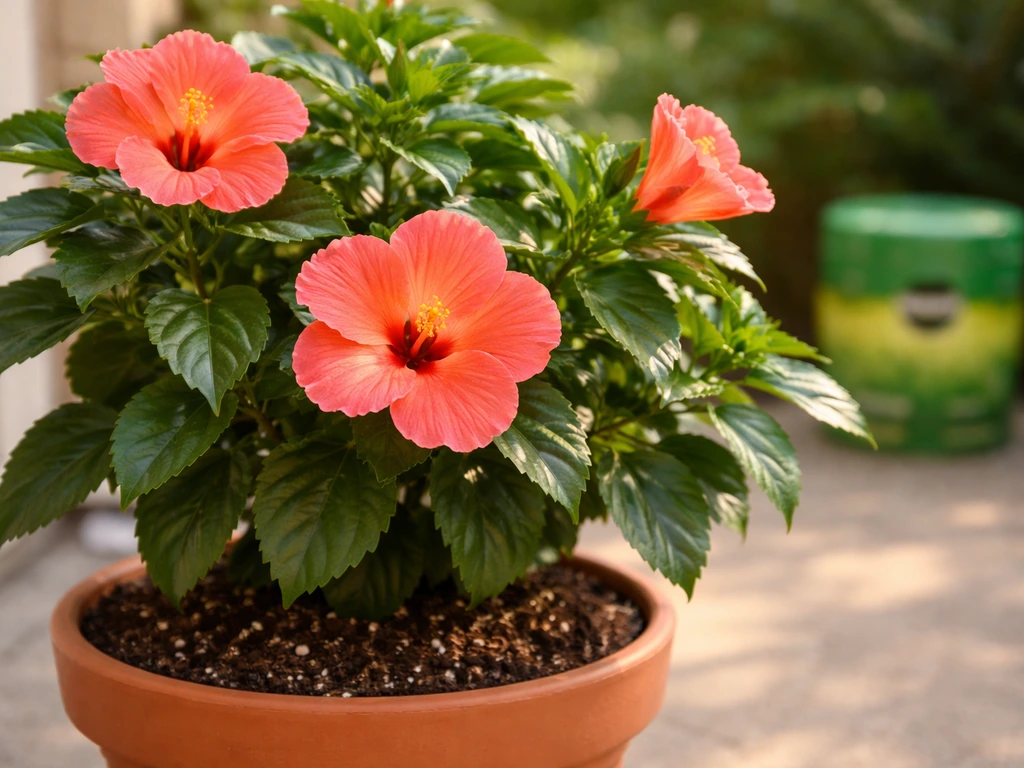
Which Miracle-Gro products work for hibiscus (and which to skip)
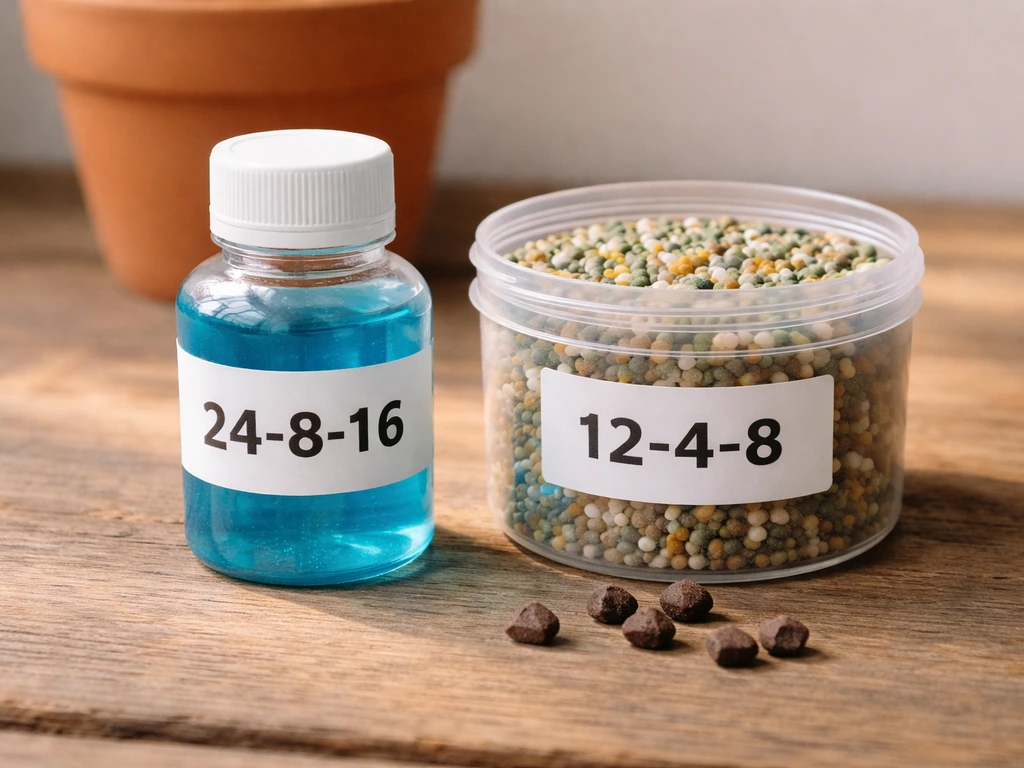
Not every Miracle-Gro product is equally well suited to hibiscus. Here's how the main options stack up.
| Product | N-P-K | Best For | Hibiscus Verdict |
|---|---|---|---|
| Water Soluble All Purpose Plant Food | 24-8-16 | General feeding throughout the growing season | Good choice — balanced, easy to dilute, hard to over-apply if you follow the label |
| Water Soluble Bloom Booster Flower Food | 10-52-10 | Pushing flower production | Use with caution — the very high phosphorus can become a problem for hibiscus with repeated use |
| LiquaFeed Bloom Booster | 10-52-10 | Easy hose-end feeding | Same caution as Bloom Booster above — rotate with a balanced formula |
| Shake 'N Feed All Purpose (slow-release) | 12-4-8 | Low-maintenance granular feeding | Decent option for in-ground hibiscus, but less precise for containers |
| Miracid (Acid-Loving Plant Food) | 30-10-10 | Acid-loving plants | Skip this one — too nitrogen-heavy and not appropriate for hibiscus |
The Southern California Hibiscus Society specifically warns that hibiscus can start struggling when phosphorus climbs too high, which is worth keeping in mind if you're tempted to use Bloom Booster every single feeding. A better approach is to alternate it with the balanced All Purpose formula, or just stick with the All Purpose the whole season if your plant is already blooming well.
How to actually apply it: dilution, schedule, and amounts
Water-soluble formulas (All Purpose or Bloom Booster)
For outdoor hibiscus in the ground, the standard Miracle-Gro Water Soluble All Purpose rate is 1 tablespoon per 1 gallon of water, applied so that roughly 1 gallon covers every 10 square feet of root zone. Feed every 7 to 14 days through the growing season. For potted hibiscus, mix 1/2 teaspoon per gallon and feed every two weeks. That half-strength approach is a smart default for containers because salt can build up faster in pots than in open ground. For hanging baskets specifically, aim to feed on a similar schedule but use half-strength and watch for salt buildup since containers dry out and concentrate fertilizer faster how often should i use Miracle-Gro on hanging baskets. Gardening Know How specifically recommends half-strength water-soluble fertilizer for hibiscus to avoid overfeeding, and I'd second that advice, especially early in the season when growth is just kicking off.
If you're using the Bloom Booster, the indoor/container dilution is the same: 1/2 teaspoon per gallon every two weeks. If you've recently planted into fresh Miracle-Gro potting soil, wait about 30 days before starting to feed, since that soil already contains starter nutrients.
Slow-release granular (Shake 'N Feed)
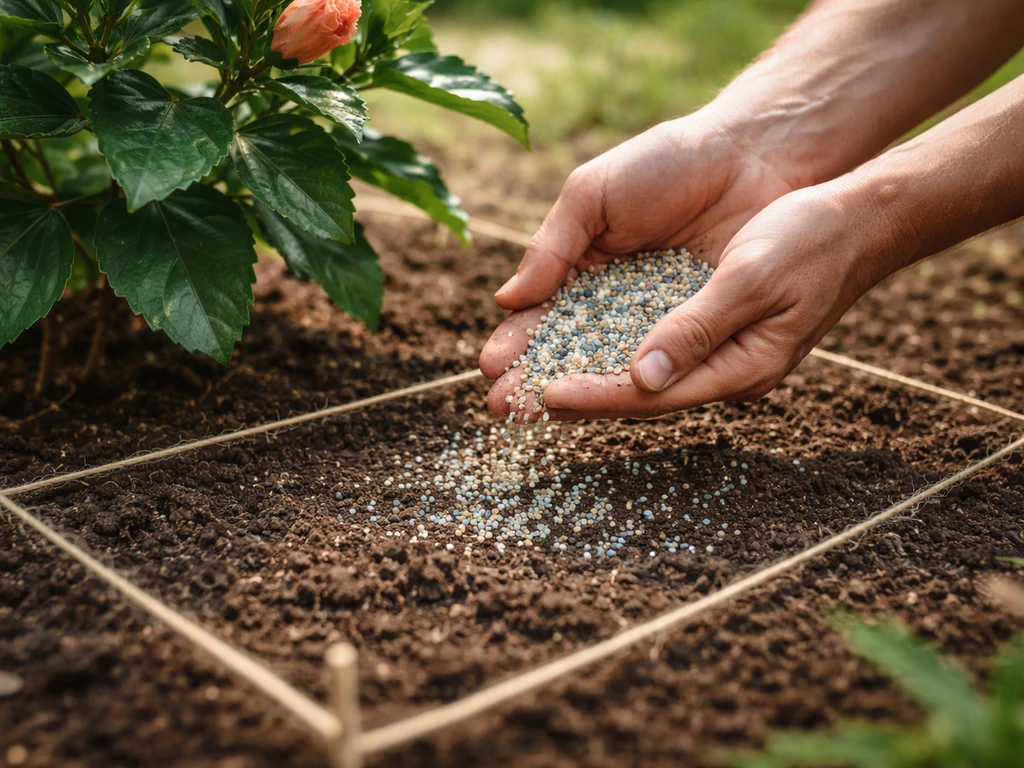
For in-ground hibiscus, Shake 'N Feed at 4 tablespoons per 4 square feet (a 2x2 area) scratched lightly into the top inch of soil works well as a background feeding program. The slow-release format reduces salt buildup risk, which is one of its real advantages. Just keep in mind that granular fertilizers release more nutrients in warm, moist soil and nearly nothing in cold or dry conditions, so if you're in a cool spring or a dry stretch, don't count on it doing much until conditions improve.
Feeding schedule through the season
- Early spring (new growth emerging): Hold off feeding until you see at least a few inches of new growth, or about 2 to 6 weeks after planting a new container hibiscus.
- Active growing season (late spring through summer): Feed every 7 to 14 days with water-soluble formula, or every 2 weeks at half strength for potted plants.
- Peak bloom: This is when a bloom booster rotation makes the most sense, but don't use it every feeding — alternate with a balanced formula.
- Late summer/early fall: Taper off feeding as temperatures drop and growth slows. Stop feeding about 6 to 8 weeks before your first expected frost.
- Winter: No feeding needed for dormant or overwintered hibiscus.
Soil and water basics that actually drive hibiscus performance
Fertilizer cannot fix a watering problem or a drainage problem. Hibiscus need consistently moist (not soggy) soil to perform well. If the soil dries out too much between waterings and then you apply fertilizer, you're essentially dumping concentrated nutrients onto drought-stressed roots, which makes burn and yellowing much more likely. Always water your hibiscus thoroughly before you fertilize, and make sure the soil around the roots is completely moist when you apply any liquid feed.
For potted hibiscus, drainage is non-negotiable. Use a well-draining potting mix and make sure water flows freely out the bottom of the pot. When you water, aim for about 10% of the water to leach out the bottom. This flushes dissolved salts and prevents the buildup that causes root damage over time. Every couple of months, do a deliberate deep flush: water slowly and thoroughly several times in a row using plain water to push accumulated fertilizer salts out of the root zone.
In-ground hibiscus are a bit more forgiving about salt because the soil volume is larger, but they still need good drainage. Heavy clay soils that stay waterlogged will cause root problems that no amount of fertilizer can solve. If your soil is heavy, amend it with compost before planting, or mound the bed slightly to improve drainage.
How to tell if your feeding program is working (or going wrong)
Signs things are going well
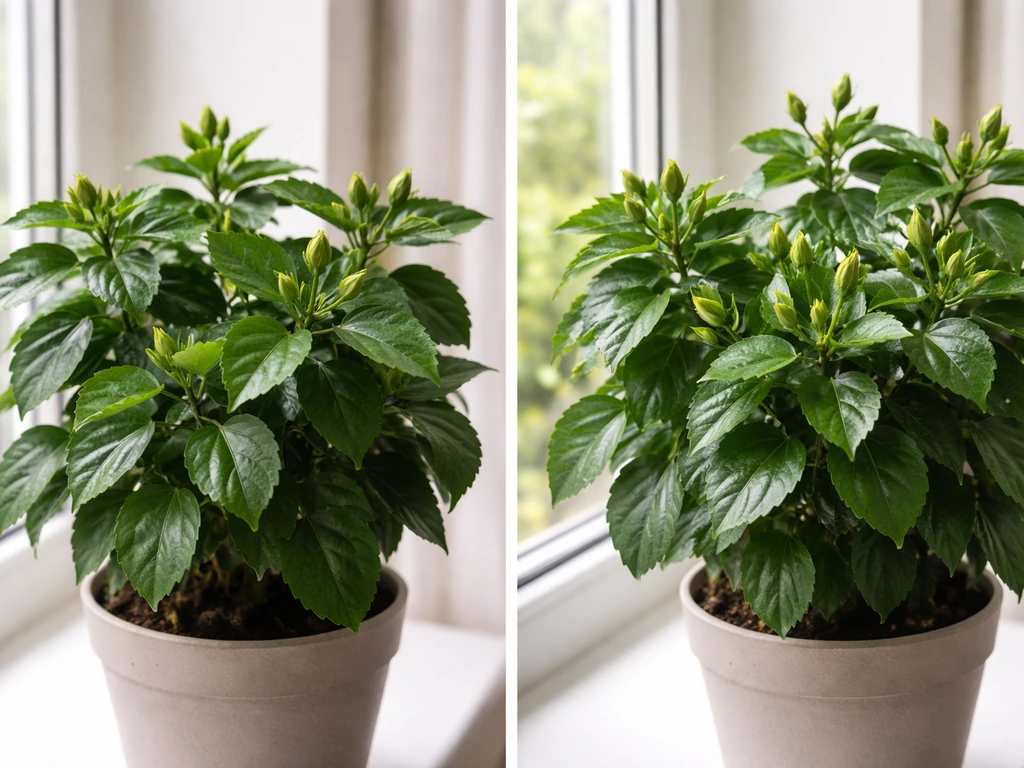
- Deep green leaves with no yellowing or spotting
- Steady production of new growth tips (hibiscus flowers on new/terminal growth, so new branches = more buds)
- Flower buds forming consistently through the growing season
- Blooms that open fully and hold for a day or more
Signs you're overfeeding or feeding incorrectly
- Leaf tip or leaf edge browning (classic fertilizer burn, usually from salt damage)
- Lots of lush green leaves but very few blooms (often a nitrogen-heavy formula issue)
- Yellowing leaves, especially older ones dropping prematurely (can indicate salt toxicity or nutrient imbalance)
- White crusty residue on the soil surface or pot edges (salt buildup — a signal to flush immediately)
- Wilting even with adequate water (high salt concentration makes it harder for roots to take up water)
- Stunted or distorted new growth (can signal excess nitrogen or micronutrient lockout from pH issues)
If you're seeing burn symptoms, stop feeding right away and flush the pot or root zone with plain water several times. For a container, water slowly and thoroughly three or four times in a row so water runs freely out the bottom each time. Then wait at least two weeks before resuming feeding, and when you do, cut the dose in half.
When fertilizer isn't the real problem
If your hibiscus isn't blooming despite regular feeding, check the basics before assuming it's a fertilizer issue. If your nasturtiums still refuse to grow, the most common causes are poor light, wrong soil conditions, or watering issues why won't my nasturtiums grow. For peonies, Miracle-Gro can help with growth, but the best results depend on using the right product and timing for how peonies feed Miracle-Gro for peonies. Hibiscus needs at least 6 hours of direct sun to bloom reliably. It also flowers on new growth, so if you haven't pruned in a while, the plant may simply not be generating enough fresh branching to carry buds. Fertilizer alone cannot compensate for too much shade or a plant that hasn't been pruned to encourage new wood. Poor drainage, root-bound containers, and spider mite infestations are other common culprits that show up looking like feeding problems.
Better alternatives and extra tips for more blooms
Miracle-Gro works, but it's not the only option, and for serious hibiscus growers it's not always the best one. If you want a fertilizer formulated specifically with hibiscus in mind, look for a balanced 20-20-20 or 10-10-10 formula, which is exactly what the University of Minnesota Extension recommends for hibiscus as heavy feeders. These ratios support both lush foliage and reliable blooming without the risk of pushing phosphorus too high.
A few hibiscus-specific feeding tips that make a real difference:
- More frequent feeding at a lower dose beats less frequent feeding at a higher dose for container hibiscus. Watering flushes nutrients out of pots quickly, so smaller, regular doses keep nutrients consistently available without salt spikes.
- Potassium matters as much as phosphorus for flowering. Don't focus entirely on the middle number (phosphorus) in the N-P-K ratio. Potassium (the third number) is essential for photosynthesis and the metabolic processes that drive flower production.
- If leaves show reddish-purple tones on new growth, that's a phosphorus deficiency signal. It's relatively rare in hibiscus that are being fed, but it's worth knowing.
- Fish emulsion or seaweed extract used every few weeks alongside a balanced synthetic fertilizer provides trace minerals that water-soluble synthetics often lack, and it tends to be gentler on roots.
- For tropical hibiscus overwintered indoors, stop fertilizing entirely in fall and don't resume until you see active new growth in spring, regardless of what the calendar says.
If you've been using Miracle-Gro on other flowering plants like geraniums or petunias, the approach for hibiscus is similar but hibiscus are heavier feeders and more sensitive to phosphorus buildup over time, so the balanced formula really does outperform the Bloom Booster for season-long use. If you're wondering whether Miracle-Gro is good for geraniums too, it can work, but you should use a balanced formula and avoid overfeeding Miracle-Gro on other flowering plants like geraniums. The key with any fertilizer program is consistency at moderate rates, good watering practices, and a flush every couple of months to keep salt levels in check. Get those three things right and your hibiscus will reward you with blooms from late spring all the way through fall.
FAQ
When should I start feeding after repotting or planting hibiscus into Miracle-Gro soil?
If your hibiscus is in fresh Miracle-Gro potting mix, start feeding after about 30 days, then use the container rate at half strength (about 1/2 teaspoon per gallon) on a 2 week schedule. If it is a landscape plant where the soil was amended at planting, you can usually begin with the normal in-ground schedule 2 to 4 weeks after planting, then adjust based on growth.
Can I alternate Miracle-Gro Bloom Booster with All Purpose fertilizer every time I feed?
Do not switch between products at full dose, even if one is “for flowers.” If you want blooms faster, alternate Bloom Booster with the balanced all-purpose fertilizer, keep the same dilution strength each time, and never treat every feeding as a Bloom Booster feeding, especially if your soil or container tends to build salts.
Why didn’t Shake 'N Feed seem to work during a cool or dry stretch?
Granular products like Shake 'N Feed can underperform in cold weather or during dry spells because release slows, so in those periods you may see little benefit. If your area is cool or the soil is slow to stay moist, prefer water-soluble fertilizer and keep to the measured dilution, then resume granular once temperatures and moisture are reliably warm.
My hibiscus looks yellow and I fertilized, what should I check first?
If hibiscus leaves look pale, it is not always a fertilizer shortage. First confirm at least 6 hours of sun, then check drainage and watering consistency. If the roots stay too wet, or the plant dries out too much between waterings, feeding can’t correct the stress and can worsen yellowing.
What’s the right recovery plan after fertilizer burn on hibiscus?
If you see fertilizer burn or crisp leaf edges, stop feeding immediately and flush with plain water multiple times until runoff is clear, then wait at least 2 weeks before resuming. When you restart, cut the dose in half and keep to the “water first, fertilize second” rule to prevent concentrated salts from sitting in the root zone.
Should I fertilize hibiscus year-round, including winter indoors?
Yes, but the key is timing and dilution. During winter or whenever growth slows (less light, cooler temperatures), reduce or stop feeding because the plant uses far fewer nutrients. If you keep it indoors under steady bright light and it is actively growing, you can feed at a reduced frequency (for example, half the usual interval) using the half-strength container dilution.
How can I tell if fertilizer salts are building up in my potted hibiscus?
For containers, salt buildup is the usual problem behind slow decline, so plan a controlled flush every couple of months. A simple indicator is crusty white residue on the pot rim or persistent browning tips. If that happens sooner than expected, flush sooner rather than continuing to feed.
What if my hibiscus is root-bound, will Miracle-Gro still help?
If your hibiscus is root-bound, it can respond poorly or unevenly to fertilizer because uptake is limited and salts concentrate faster. Repot into fresh, well-draining mix and size up appropriately before restarting a fertilizer schedule, then use the half-strength container dose and give it time to establish again.
My plant is growing a lot of foliage but not blooming well, could phosphorus be the issue?
Overusing Bloom Booster long-term can raise phosphorus and strain the plant, so the fix is not “more fertilizer.” Switch back to balanced 20-20-20 or 10-10-10 for the next several feedings, follow moderate intervals, and focus on consistent watering and pruning to encourage fresh bloom wood.