
Yes, Miracle-Gro works well for geraniums, but only if you pick the right formula and don't overdo it. The sweet spot is a balanced or slightly phosphorus-forward fertilizer applied every two to four weeks during the growing season, not every week, and definitely not at full strength straight out of the box. Get that right and you'll see stronger stems, deeper green leaves, and a noticeably longer flush of blooms.
Is Miracle-Gro Good for Geraniums? Safe Use Tips

Marcus Holloway
15 May 2026
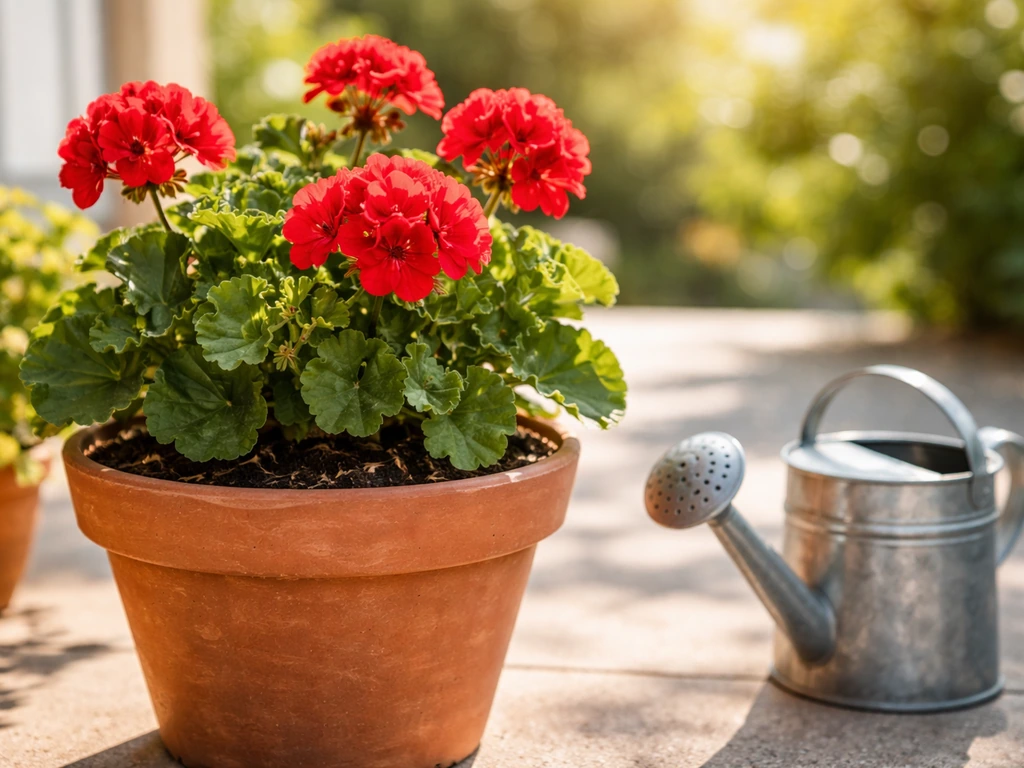
Do geraniums actually like Miracle-Gro?
Before getting into products and schedules, it helps to know which geranium we're talking about. There are two very different plants people call 'geraniums. ' True geraniums (genus Geranium) are hardy perennials that spread as groundcovers. The ones most people are growing in pots on their porch, in hanging baskets, or as summer bedding are actually pelargoniums, but everyone calls them geraniums and that's fine.
UMN Extension notes that the “geranium” grown as annual bedding plants in pots is actually pelargonium, and it provides container-focused care guidance such as using full sun and well-drained soil pelargoniums, but everyone calls them geraniums. This guide is focused on those common bedding and container geraniums, the zonal types and ivy-leafed types you pick up at the garden center every spring.
These plants are moderate feeders. They need consistent nutrients to fuel continuous flowering, but they're not hungry like petunias or heavy-blooming annuals that practically demand weekly feeding. Because petunias are heavy-blooming and tend to need more frequent feeding, they do better with a different approach than what you use for geraniums. Over-fertilize a geranium and you get a lot of beautiful leafy growth with disappointing flower production.
That's the main trap with Miracle-Gro: it's easy to use too much, too often. For hanging baskets, follow the container geranium timing and use Miracle-Gro every two to four weeks during the growing season rather than weekly. Used correctly, though, it genuinely helps, especially for plants in containers where the potting mix gets depleted fast.
Which Miracle-Gro product to use on geraniums
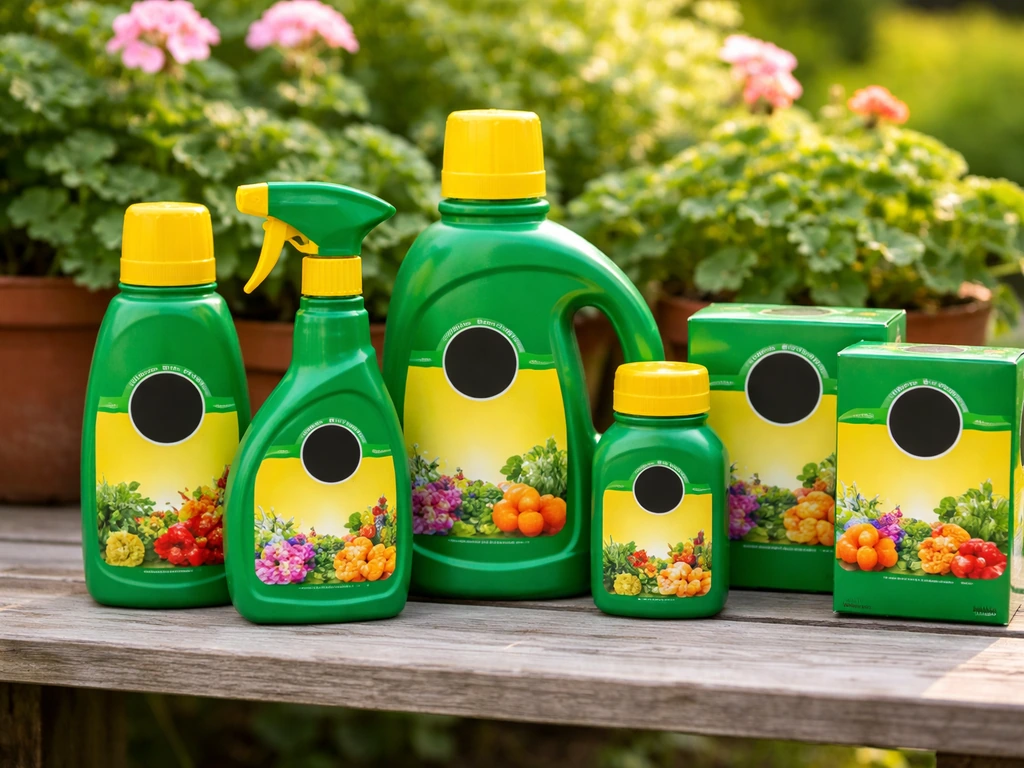
Not all Miracle-Gro products are the same, and the formula you choose matters more than most people realize. For geraniums, you generally want something that won't throw nitrogen way out of balance with phosphorus and potassium, because it's the middle number (phosphorus) that drives root development and bloom production.
| Product | N-P-K | Best Use | Geranium Verdict |
|---|---|---|---|
| Miracle-Gro Water Soluble All Purpose Plant Food | 24-8-16 | General feeding, containers, in-ground | Good starting point; dilute to half strength for containers |
| Miracle-Gro Bloom Booster Flower Food | 15-30-15 | Flowering annuals and perennials | Best pick for maximizing blooms; higher P supports flower production |
| Miracle-Gro Shake 'N Feed Flowering Plants | 12-4-8 (granular) | In-ground beds or large containers | Convenient for beds; releases slowly so lower burn risk |
| Miracle-Gro Performance Organics Blooms Plant Nutrition | 1-4-2 (organic-based liquid) | Gardeners who prefer gentler, organic-leaning options | Gentlest option; great for beginners worried about overfeeding |
If you're growing geraniums in pots (which most people are), the Bloom Booster liquid is probably your best friend. The higher phosphorus ratio encourages flowering rather than leafy growth, which is exactly what you want. The standard All Purpose formula works, but if you use it at full label strength in containers, you risk exactly the lush-foliage-no-flowers problem mentioned above. The organic-based liquid option is worth considering if you've ever accidentally burned plants before, because it's much harder to overdo.
Liquid vs granular: which is better for geraniums?
For container geraniums, liquid wins almost every time. Liquid fertilizers deliver nutrients immediately and let you control exactly how much you're giving the plant at each watering. In container gardening, the potting mix and fertilizer choices matter because container soils are typically not naturally nutrient-replenished like garden beds are potting mix gets depleted fast. They also flush out of pots more easily, which reduces salt buildup (more on that below). Granular slow-release fertilizers are more convenient for in-ground beds or very large planters where you want a set-and-forget approach. The downside with granulars in containers is that nutrients can concentrate unevenly and you have less control if something starts going wrong.
How to feed geraniums with Miracle-Gro: rates, timing, and frequency
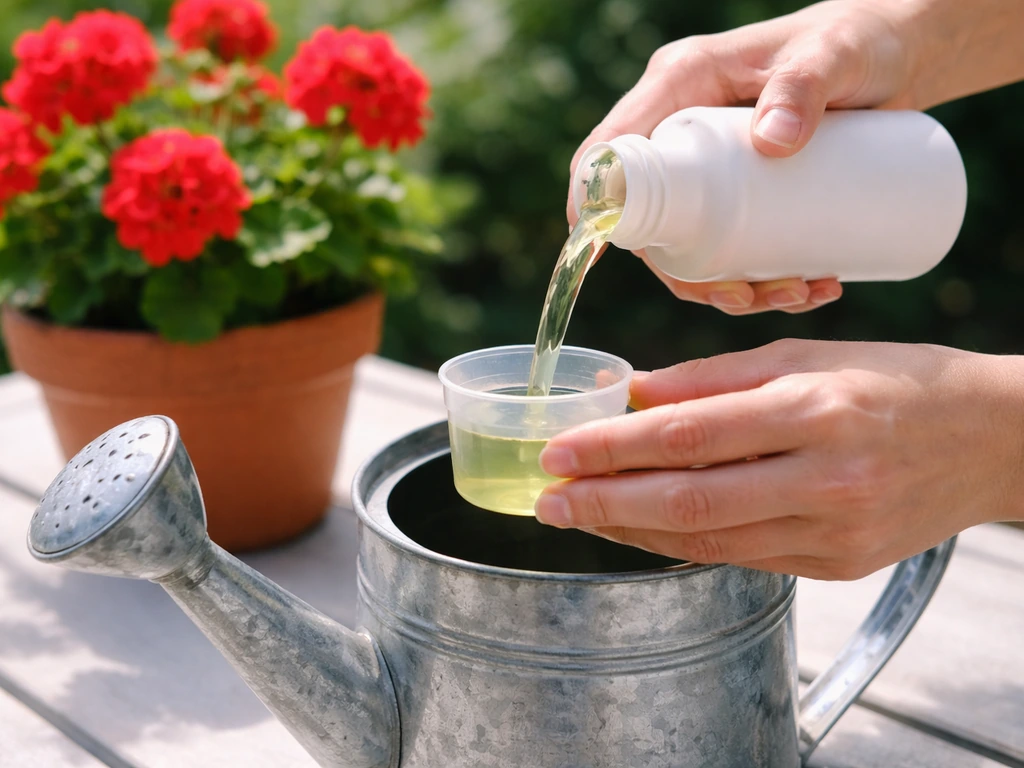
Here's where people go wrong most often: they follow the label exactly, and the label is written for maximum effect, not for the specific needs of moderate-feeding geraniums in containers. My recommendation is to start at half the label's suggested dilution for the first few applications and watch how your plant responds before going up to full strength.
- Mix the liquid fertilizer at half the label rate to start (typically about 1/2 tablespoon of All Purpose per gallon of water instead of the full tablespoon).
- Apply at your regular watering time so the soil is already moist, never fertilize bone-dry soil as it concentrates the solution around roots and causes burn.
- Feed every two weeks during active growth (late spring through summer), not every week.
- Skip fertilizing in the two to three weeks after transplanting or repotting; let the plant establish first.
- Flush your containers with plain water once a month to wash out accumulated fertilizer salts.
- Stop feeding entirely in late autumn and through winter unless you're overwintering plants indoors under grow lights and they're actively putting out new growth.
For granular Shake 'N Feed in beds, mix it into the top inch of soil once every three months during the growing season and water it in well. Don't pile granules around the base of the stem.
Getting the basics right first
No fertilizer fixes a plant that's in the wrong conditions. I've seen people chase nutrient problems with more and more fertilizer when the real issue was too much shade or constantly wet roots. Get these fundamentals right and your Miracle-Gro applications will actually do something useful.
Sun
Zonal geraniums want at least six hours of direct sun per day. Ivy geraniums can tolerate slightly less but still prefer bright conditions. In the peak of summer, a little afternoon shade can actually help in hot climates, as UGA Extension notes. But deep shade kills bloom production before any fertilizer issue even gets a chance to show up.
Soil and containers
Geraniums need well-draining soil. In containers, use a quality potting mix, not garden soil, which compacts in pots and suffocates roots. A mix with some perlite added is ideal. Geraniums are among the plants that actually do better slightly underpotted rather than in huge containers, because large volumes of slow-draining soil stay wet too long between waterings.
Watering
Water thoroughly, then let the top inch or two of soil dry out before watering again. Geraniums hate sitting in wet soil and they're somewhat drought-tolerant once established. Overwatering is probably the single most common reason geraniums decline, and no amount of Miracle-Gro will rescue a waterlogged plant. Make sure your pots have drainage holes and that water actually flows out the bottom when you water. For hoyas, the same idea of not overfeeding and using a balanced fertilizer applies, but you'll want to focus on a hoya-appropriate blend and amount hates sitting in wet soil.
Drainage
If your containers are sitting in saucers, empty them after every watering. Roots sitting in standing water rot quickly, especially on warm nights. In-ground geraniums need soil that doesn't pool water after rain. Raised beds or amended sandy or loamy soil works best.
Signs you're overfeeding or underfeeding your geraniums
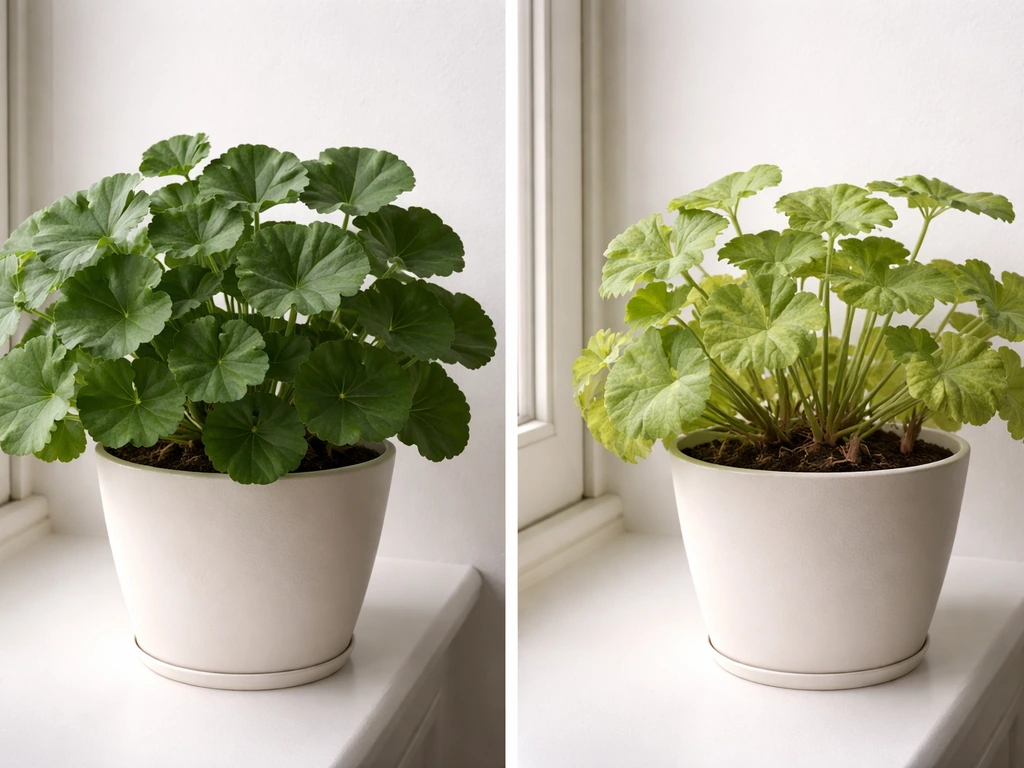
Geraniums are pretty good communicators if you know what to look for. Here's a quick read of what's going wrong and why:
| Symptom | Likely Cause | What To Do |
|---|---|---|
| Lots of lush green leaves, very few flowers | Too much nitrogen (overfeeding with high-N formula) | Switch to Bloom Booster; reduce feeding frequency; deadhead regularly |
| Yellowing lower leaves with green upper leaves | Nitrogen deficiency or overwatering (check roots) | If soil is dry, increase feeding slightly; if soil is wet, back off watering first |
| Brown leaf tips or edges | Fertilizer salt burn or underwatering | Flush pot with plain water; reduce fertilizer concentration |
| Pale or washed-out leaf color across the whole plant | Overall nutrient deficiency, especially if in old potting mix | Start a regular feeding schedule at half-strength liquid fertilizer |
| Leggy, stretched stems with small leaves | Not enough light (not a fertilizer issue) | Move to a sunnier location; fertilizer won't fix this |
| White crusty residue on soil surface or pot rim | Salt buildup from fertilizer accumulation | Flush thoroughly with plain water several times; switch to organic feed or reduce frequency |
One thing worth saying plainly: if your geraniums look off and you're not sure what's wrong, don't immediately add more fertilizer. That's the instinct, but more often the problem is water-related, light-related, or an existing salt buildup that extra feeding will only make worse. Diagnose first, fertilize second.
When Miracle-Gro isn't the right fit, and what to use instead
Miracle-Gro is a synthetic, fast-release fertilizer. That's great for quick results, but it also means it's easy to overdo and it doesn't do much for your soil's long-term health. There are situations where switching to something else or supplementing makes a lot of sense.
- If you've had repeated salt buildup issues: Switch to an organic liquid fertilizer like fish emulsion or a seaweed-based feed. These release nutrients more slowly and won't accumulate salts the same way.
- If you want more blooms with less fuss: Try a tomato fertilizer (typically around 5-10-10 or similar), which has a high middle number for flowering. It's not just for tomatoes and works well on flowering annuals including geraniums.
- If you're growing in-ground in a well-amended bed: You may not need to fertilize at all beyond a spring top-dressing of compost. In-ground soil replenishes nutrients differently than container potting mix.
- If you want a slow-release option you can trust not to burn: Osmocote or similar controlled-release granular fertilizers work well blended into the potting mix at planting time, especially for container geraniums.
- If you're overwintering geraniums indoors: Cut fertilizer almost entirely from October through February. A very light monthly dose of diluted liquid fertilizer is the most you should do during dormancy.
If you're also growing other flowering plants nearby, the fertilizer question comes up in similar ways. The same bloom-focused approach that helps geraniums applies well to petunias and impatiens, while plants like hibiscus and peonies have more specific nutrient timing needs that are worth understanding separately. You can use Miracle-Gro on impatiens, but it should be diluted and applied carefully so you do not push too much leafy growth.
If you’re wondering whether Miracle-Gro is good for peonies too, the key is using the right formula and not overfeeding hibiscus and peonies. If you're wondering whether Miracle-Gro is good for hibiscus, it's important to match the fertilizer timing and phosphorus needs to avoid too much leafy growth Miracle-Gro good for hibiscus.
A seasonal feeding schedule for geraniums
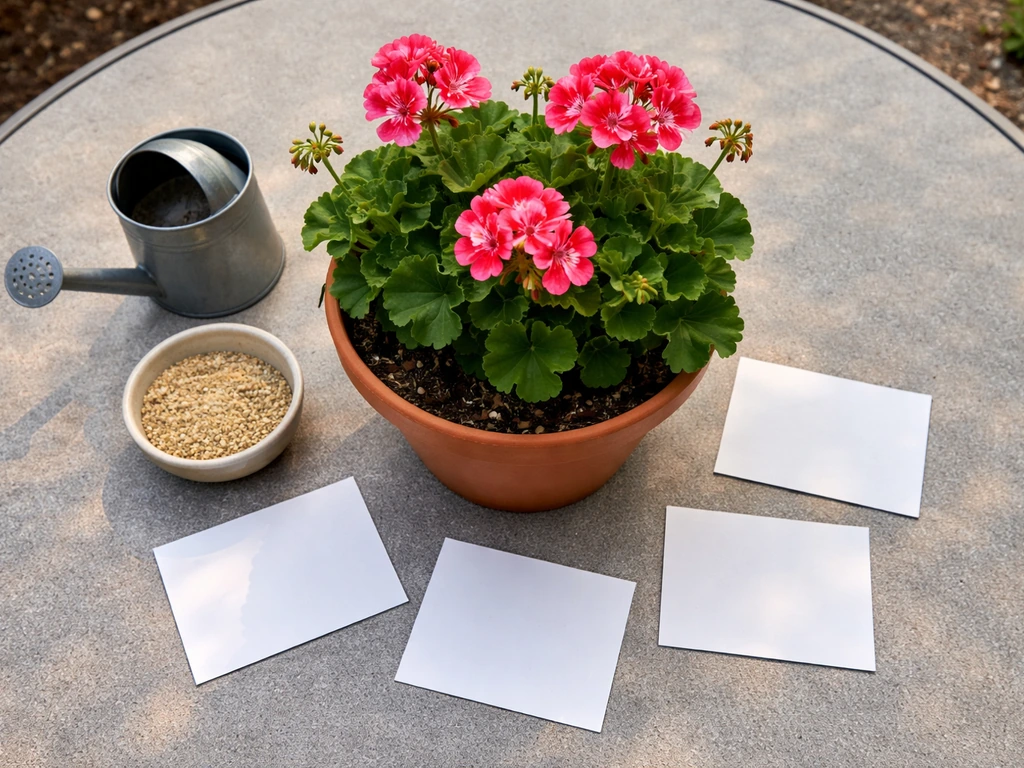
This is the schedule I'd give anyone growing zonal or ivy geraniums in containers in a temperate climate, adjusting slightly if you're in a warmer zone with a longer growing season.
| Season / Timing | What To Do | Product Suggestion |
|---|---|---|
| Early spring (planting time, late March to May depending on zone) | If using fresh potting mix, wait 4 to 6 weeks before fertilizing since most mixes come pre-charged with nutrients. In old or depleted mix, start with half-strength liquid after the first week. | Miracle-Gro All Purpose at half strength, or Bloom Booster at half strength |
| Late spring through early summer (May to June) | Begin regular feeding every two weeks. This is peak growing time and plants can handle consistent nutrition. Watch for signs of overfeed. | Miracle-Gro Bloom Booster at label rate or slightly below |
| Midsummer (July to August) | Continue every-two-week schedule. Flush pots with plain water once a month. Reduce to once every three weeks during heat waves when plants may slow growth. | Bloom Booster or organic liquid alternate |
| Late summer to early autumn (September) | Taper off feeding as days shorten. One final feeding in early September, then stop. | Half-strength liquid application only |
| Autumn and winter (October to February) | No feeding for outdoor plants. For indoor overwintering plants, a very light dose once a month at quarter-strength if the plant is actively growing under lights. | Diluted organic liquid only if needed |
| Pre-season prep (February to March, indoors) | If you've overwintered geraniums indoors and are seeing new growth, you can resume very light feeding to encourage a strong start before moving outside. | Bloom Booster at quarter to half strength |
Stick to this general rhythm and you'll avoid the two most common mistakes: starting too strong too early, and forgetting to stop in autumn. Geraniums are tough plants that respond well to a little attention and consistent care. Give them the right fertilizer at the right time and they'll reward you with blooms all season long. Miracle-Gro, however, is not a typical choice for hibiscus, so it helps to use a hibiscus-specific fertilizer for best results.
FAQ
Can I use Miracle-Gro Shake 'N Feed or do I need a liquid for geraniums?
Yes, but use it differently than liquid. In containers, granules tend to release unevenly, so start with a smaller amount than the label suggests and water immediately after applying. If you have any doubt about buildup, switch to a liquid formulation so you can control dose each watering.
Should I fertilize geraniums immediately after repotting or buying new plants?
Avoid feeding right after transplanting or repotting. A good rule is to wait about 2 to 3 weeks (or until you see new growth) before starting fertilizer, so the roots recover and you reduce the risk of stress that can look like fertilizer deficiency.
What should I do if Miracle-Gro makes my geraniums leafy but not blooming?
If your geranium is making lush leaves but has few flowers, the first fix is to reduce fertilizer frequency and strength, then check light. Make sure the plant gets at least several hours of direct sun, because in deep shade even a bloom formula will underperform.
How can I tell if I have fertilizer salt buildup in my container geraniums?
Flush the pot with plain water occasionally, especially if you use liquid regularly. Aim for a thorough runoff, then let the top inch or two dry before the next feeding. This helps prevent dissolved salts from accumulating in the potting mix.
I missed a feeding and want to “catch up,” should I increase the dose?
Use a half-strength approach when you’re uncertain, and increase only if plants stay compact and keep flowering. Also pay attention to timing, in containers the typical rhythm is every 2 to 4 weeks during active growth, not weekly.
Can Miracle-Gro still help if my geranium is sitting in a saucer or not draining well?
If the plant is in a hanging basket or saucer, don’t fertilize more often to “fix” stress from poor drainage. Empty saucers after watering, and check that water actually flows out of the bottom. Overly wet roots plus fertilizer is a common fast path to decline.
What if my geranium is turning yellow after I start Miracle-Gro, is it overfertilizing or watering?
If you see yellowing plus drooping and the soil stays wet, stop fertilizing and correct watering first. Fertilizer can intensify the issue when roots are damaged from overwatering, so let the mix dry back and ensure drainage holes are clear.
Do I still feed Miracle-Gro in early spring or late fall?
In cool weather or when growth slows, pause or extend the feeding interval. Miracle-Gro is most effective when geraniums are actively growing, so you can reduce feedings in cooler stretches and restart with the normal schedule as temperatures and growth pick up.
Do zonal and ivy geraniums need different Miracle-Gro schedules?
Yes, but they should be treated as different plants in practice. Ivy and zonal geraniums both like moderate feeding, but ivy often tolerates slightly less intense conditions; match your light level and keep fertilizer at the moderate, bloom-friendly schedule to avoid leafy growth.