
The best time to start hydrangea seeds indoors is late winter to early spring, roughly 10 to 12 weeks before your last expected frost date. For most gardeners in the US, that puts you somewhere between January and March. If you have bigleaf (mophead) hydrangeas, you'll want to plan even further ahead because those seeds need 30 to 90 days of cold stratification before they'll sprout. Panicle hydrangeas skip that step entirely and can actually flower the same year from seed if you start them early enough. The short version: know your hydrangea type, find your frost date, and count backward.
When to Grow Hydrangea From Seeds: Timing Guide
Marcus Holloway
12 Jun 2026
Pick the hydrangea type and match timing to your climate
Not all hydrangeas treat seeds the same way, and this is where a lot of gardeners get tripped up. If you are wondering whether hydrangea seeds are hard to grow, the answer depends mostly on your type and whether you can handle cold stratification and consistent light is it hard to grow hydrangeas from seed. The species you're working with changes your start date by weeks or even months, so getting this right first saves a lot of frustration later.
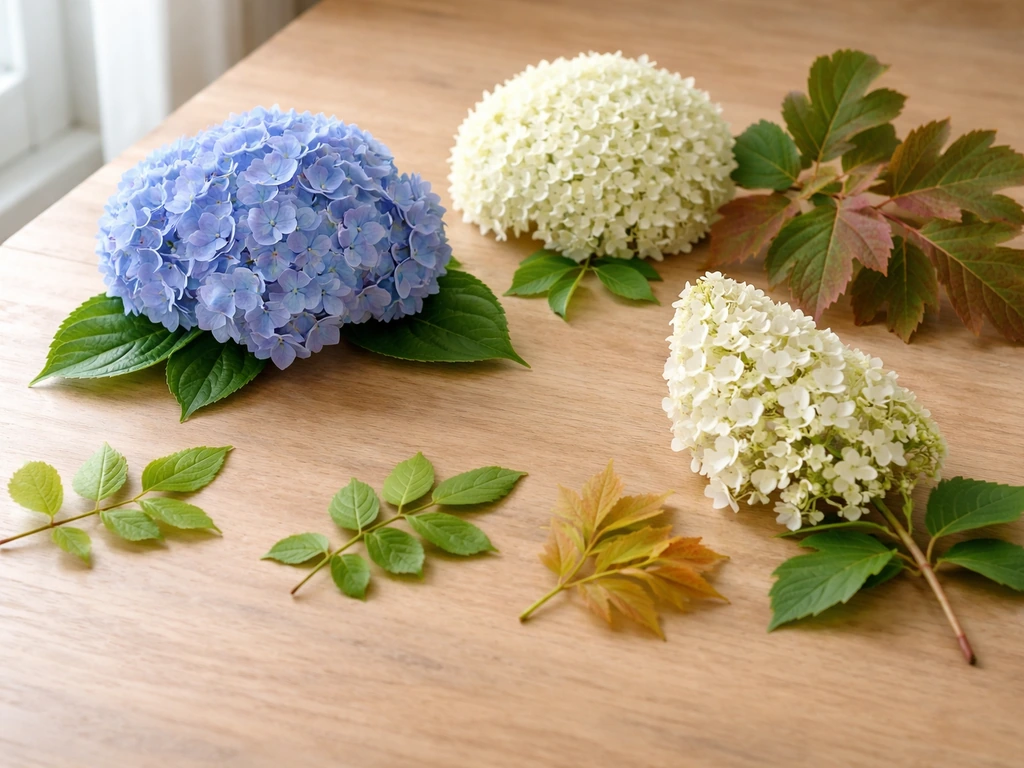
Bigleaf hydrangeas (Hydrangea macrophylla), the classic mopheads and lacecaps, have seeds that need cold stratification: 30 to 90 days of moist, cold treatment before they're willing to germinate. If you skip this step, you can wait forever and nothing will happen. For these, you'll start stratification in late fall or early winter (think November or December), then sow indoors around February or March after the cold treatment is complete.
Panicle hydrangeas (Hydrangea paniculata) are the easy-going ones. No pretreatment needed. Sow them directly on moist seed-starting mix in late winter indoors, and under the right conditions, they can actually bloom their first year from seed. This is the type I'd recommend for anyone just getting started with hydrangea seed growing.
Smooth hydrangeas (Hydrangea arborescens) sit in the middle. They benefit from about 60 days of cold stratification before sowing. Oakleaf hydrangeas (Hydrangea quercifolia) are similar: some propagators report good germination without any pretreatment, while others see better results with roughly 30 days of cold storage first. If you're working with oakleaf, try a light 4-week stratification as a reasonable middle ground.
| Hydrangea Type | Stratification Needed | When to Start Stratification | Indoor Sow Date | Blooms from Seed |
|---|---|---|---|---|
| Bigleaf / Mophead (H. macrophylla) | 30 to 90 days cold stratification | November to January | February to March | Year 2 or later |
| Panicle (H. paniculata) | None | Skip this step | January to March | Possible year 1 |
| Smooth (H. arborescens) | ~60 days cold stratification | December to January | February to March | Year 2 typically |
| Oakleaf (H. quercifolia) | 0 to 30 days (optional) | December if using | February to March | Year 2 typically |
Climate matters too. In South Africa, you can apply the same timing ideas by working from your local last frost (or frost-free season) and choosing hydrangea types that suit your climate how to grow hydrangeas in south africa. If you're in a warm region with a last frost date in February or early March (zones 8 to 10), you can move up your entire timeline or even attempt a direct outdoor sow in late fall for species that need cold stratification, letting nature handle the cold treatment. In cool climates with a last frost in late April or May (zones 4 to 6), you have plenty of winter time to stratify indoors and still hit a good spring sowing window.
When to start hydrangea seeds indoors vs outdoors
Almost every hydrangea gardener is better off starting seeds indoors. Plants started indoors under controlled conditions flower sooner than those started directly outdoors, and with hydrangeas already being slow to bloom from seed, every advantage counts. If you are looking for a simpler alternative to indoor seed-starting timelines, you may also want to review how to grow hydrangeas in water as an adjacent method. Indoors, you control temperature and light, which are the two biggest levers on germination speed.
For indoor starting, count back 10 to 12 weeks from your average last frost date. The UAF Cooperative Extension Service frost-date method advises subtracting the number of weeks listed from the average date of the last spring frost to determine indoor seed-starting and transplanting timing count back 10 to 12 weeks from your average last frost date. If your last frost is April 15, you're looking at a late January to early February indoor sow date (after stratification is already done, if your species requires it). If your last frost is May 15, you sow indoors in late February to early March.
Direct outdoor sowing is really only a practical option if you're using a fall sow method to let the seeds naturally stratify through winter, then germinate in spring. If you want the best results outdoors, make sure you time sowing around your last frost and match it to your hydrangea type’s cold-stratification needs direct outdoor sowing. This works reasonably well for bigleaf and smooth hydrangeas in zones 5 to 7 where winters are cold but not brutally so.
You sow on the surface of a prepared outdoor bed in October or November, mulch lightly over the top, and let cold temperatures do the stratification work. The downside is that you have zero control over moisture, temperature swings, or hungry critters, and germination rates are usually lower than with indoor-controlled stratification.
If you're growing in New Zealand, the UK, or South Africa, your seasons are reversed or modified compared to the Northern Hemisphere standard, so your indoor sow windows shift accordingly. The principle stays the same: start 10 to 12 weeks before your last frost, stratify species that need it beforehand, and keep seedlings indoors until frost risk has passed.
How to sow for fast, reliable germination
Hydrangea seeds are tiny, and that changes how you handle them at sowing time. Most beginner failures here come from burying the seeds too deep or keeping the medium waterlogged. Here's exactly what to do.
Stratification for species that need it
For bigleaf and smooth hydrangeas, place your seeds in a small container with lightly moist peat or paper towels, seal it in a plastic bag, and put it in your refrigerator (not freezer) at around 35 to 40°F. Leave it there for the required stratification period (30 to 90 days for bigleaf, about 60 days for smooth). Check occasionally to make sure the medium stays barely moist and that there's no mold forming. When the stratification window is up, move on to sowing.
The sowing setup
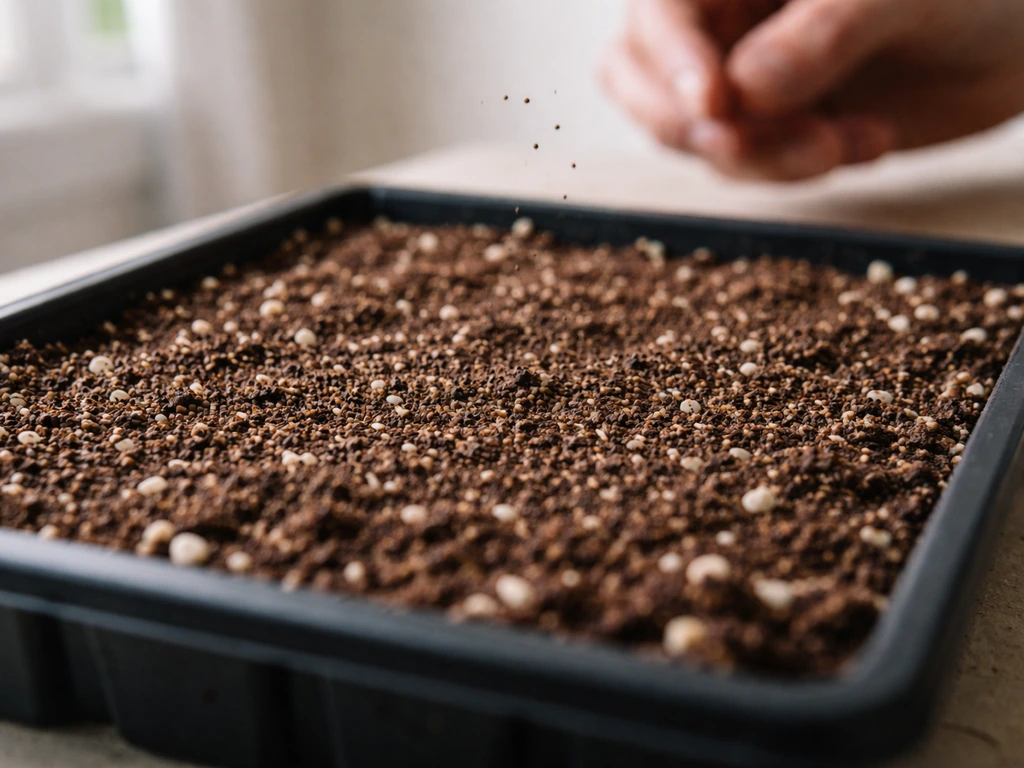
Fill shallow containers or cell trays with sterile, moistened seed-starting mix. Not garden soil, not potting mix from a big bag. Sterile seed-starting mix keeps damping-off fungus out of the equation right from the start. Press the mix lightly to remove air pockets and water it so it's evenly damp but not dripping.
Sprinkle seeds on the surface. Hydrangea seeds need light to germinate, so do not cover them with soil. You can press them very gently into the surface so they make contact with the mix, but leave them essentially uncovered. If you bury them even a quarter-inch deep, you're going to significantly reduce your germination rate.
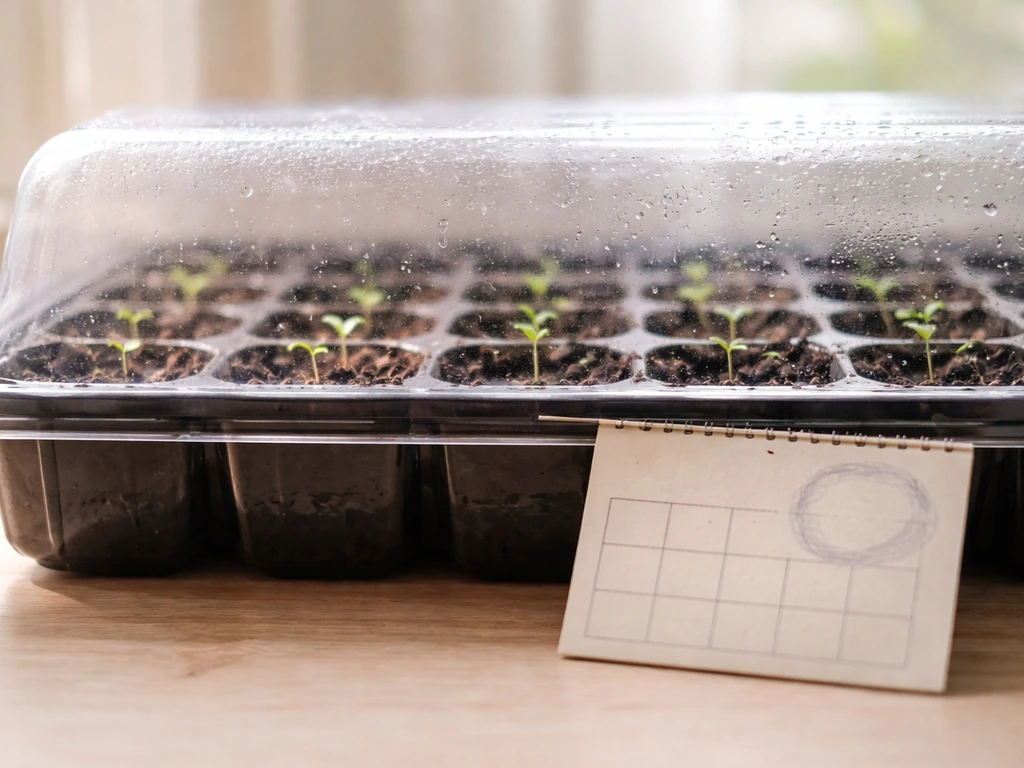
Cover the tray with a clear plastic dome or wrap to hold humidity, then place it somewhere warm. Hydrangea seeds germinate best at temperatures between 65 and 75°F. If your home runs cooler than that in winter, a seedling heat mat under the tray makes a real difference. Don't rely on ambient room temperature if it dips below 65°F at night.
Once the dome is on, put the tray under grow lights or in a very bright window. Because the seeds need light to germinate, keeping them in a dim corner won't work. A fluorescent or LED grow light positioned 2 to 3 inches above the tray is ideal. Expect to see germination in 14 to 30 days under good conditions for panicle and oakleaf types, and roughly the same range for bigleaf after stratification.
Seedling care timeline: watering, light, and transplanting
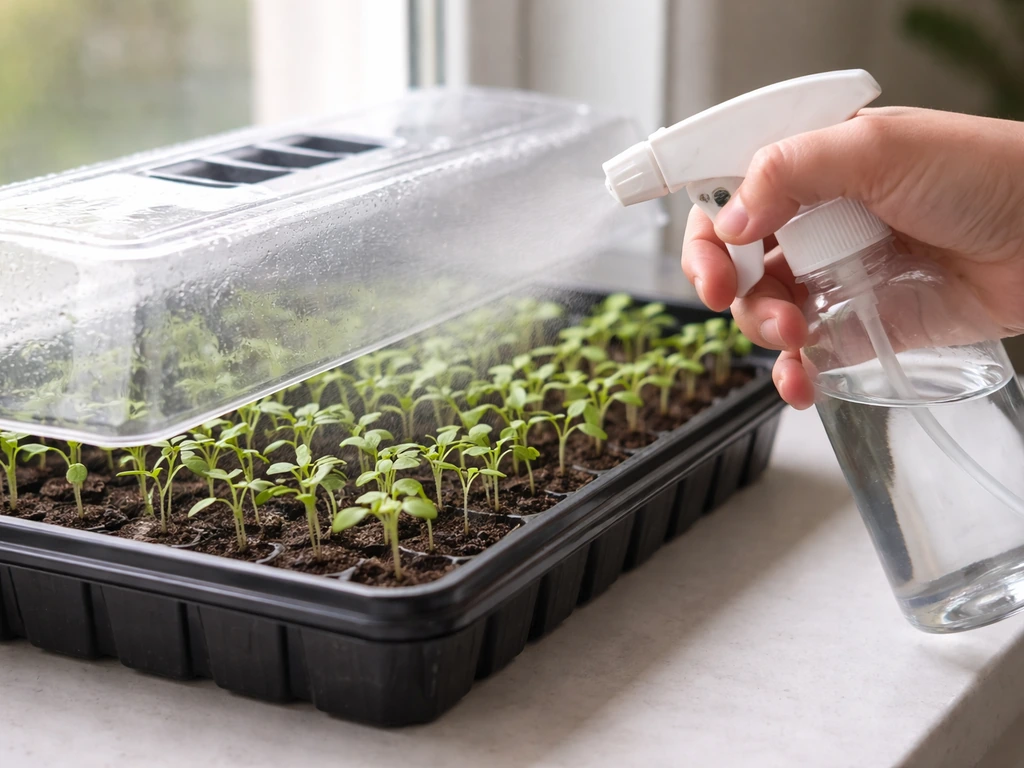
Once you see sprouts, remove the humidity dome during the day to start getting airflow to the seedlings. Damping off (the stem-rotting disease that collapses young seedlings at the soil line) loves still, wet air, and good airflow is your cheapest prevention.
Water with a fine mist spray bottle rather than pouring. The goal is to keep the surface of the mix from drying out completely without ever letting it become waterlogged. If in doubt, err on the dry side. Overwatering kills more hydrangea seedlings than underwatering does.
Keep grow lights on for 14 to 16 hours per day, positioned close enough that seedlings don't stretch toward the light. As seedlings develop their first true leaves (distinct from the first tiny seed leaves), you can start misting with a very dilute liquid fertilizer at quarter-strength. Don't fertilize at full strength on seedlings, and don't fertilize during the hardening-off stage later.
When seedlings have developed two to three sets of true leaves and are looking sturdy, they're candidates for potting up into small individual containers (2 to 3 inch pots) if you started them in a communal tray. Use a mix of sterile potting soil at this stage, not the original seed-starting mix, which lacks the nutrients seedlings need once they're actively growing.
Hardening off before going outside
Start hardening off seedlings 1 to 2 weeks before you plan to transplant them outdoors. [Do not fertilize during the hardening-off period](https://naes. agnt. unr.
edu/PMS/Pubs/2003-3291. pdf), and after about 7 to 10 days plants should be sturdy enough to transplant outdoors. This means gradually exposing them to real outdoor conditions: wind, direct sun, and temperature fluctuations. On the first day, put them outside in a sheltered, shaded spot for an hour or two, then bring them back in.
Each day, extend the time and increase sun exposure. By day 7 to 10, they should be spending most of the day outside, coming in only if temperatures dip below 45°F or if strong wind is forecast. Don't skip hardening off. Plants moved straight from a warm, still indoor environment to outdoor conditions go into shock, set back your timeline by weeks.
How long it takes: when seedlings can go outside and first blooms
Seedlings are ready to go into the ground or into larger outdoor containers after your last frost date has passed and after the full 7 to 14 day hardening-off period is complete. Don't rush this based on optimistic weather forecasts. One late frost after you've transplanted is enough to set everything back significantly.
On the bloom question, be honest with yourself about expectations. Panicle hydrangeas are the champions here: under ideal conditions, H. paniculata started from seed in late January can produce flowers in their first growing season. Most other hydrangea types grown from seed take two years or more to reach their first bloom. Bigleaf hydrangeas are especially slow, and it's entirely normal to wait two to three seasons before seeing flowers. This is one reason cuttings and division are so popular for propagating hydrangeas, but growing from seed gives you something cuttings can't: the possibility of seedling variation and the genuine satisfaction of raising a plant from its very beginning.
Troubleshooting timing problems
Here's what actually goes wrong and what to do about it, because the perfect plan rarely survives first contact with real seeds.
Nothing is sprouting after 3 to 4 weeks
First, check whether your species needed stratification and whether you completed it. This is the most common reason for total germination failure with bigleaf and smooth hydrangeas. If you skipped stratification, put the seeds back in cold stratification now and restart. Second, check your temperature. If the seed tray is sitting somewhere cooler than 65°F, germination will stall or fail. Get a heat mat. Third, check light: seeds surface-sown in a dim room won't sprout reliably. Move the tray under a proper light source.
Slow or uneven germination
Hydrangea germination isn't always tidy. Some seeds in the same batch can sprout at different rates over 2 to 4 weeks. This is normal, especially with bigleaf types. Don't pull the tray and start over too quickly. If you're past 6 weeks with no activity despite correct conditions, seed viability is likely the issue. Hydrangea seeds have a short viable life and don't store well. Always source fresh seeds from a reputable supplier and aim to sow within a year of harvest.
Damping off: seedlings collapsing at the base
You'll recognize damping off immediately: the stem turns brown or black right at the soil line and the seedling topples over. Once a seedling has it, you can't save it, but you can stop it spreading. Remove affected seedlings immediately, improve airflow over the tray (take the dome off entirely or add a small fan), and back off on watering. If it spreads to multiple seedlings, the mix is likely contaminated. Start a fresh tray with new sterile medium. Using sterile seed-starting mix from the beginning is the best prevention.
Seedlings are leggy and pale
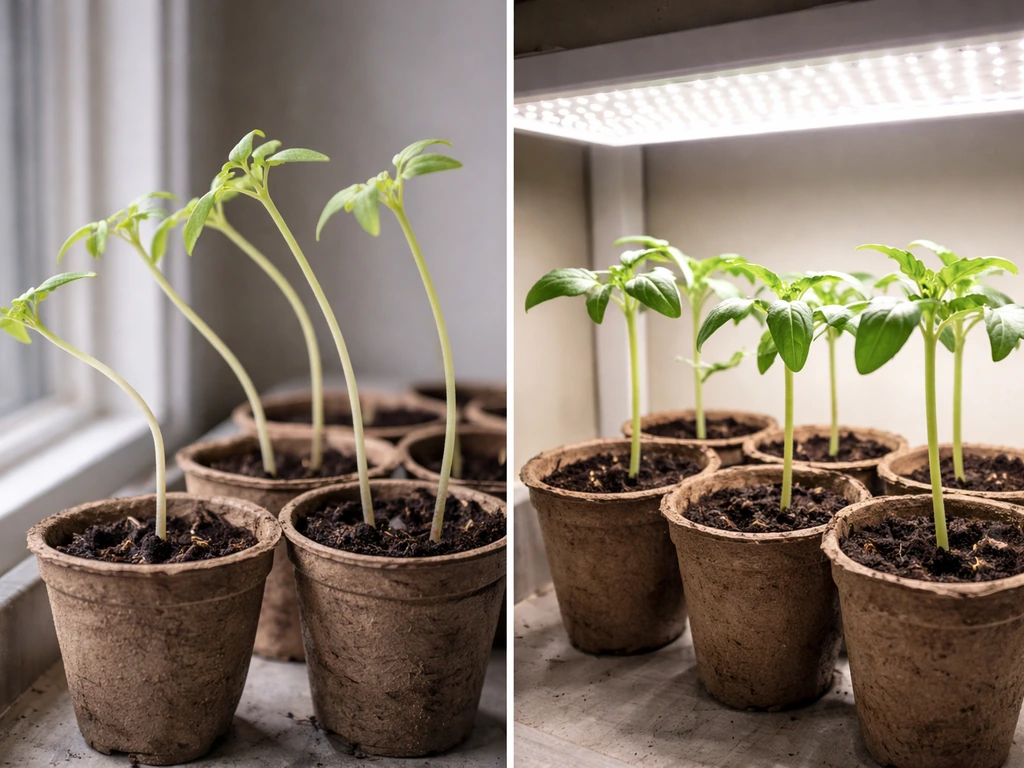
Leggy, stretched seedlings mean they're not getting enough light. Move them closer to your grow light (aim for 2 to 3 inches between the light and the tops of the plants) or increase the daily light duration to 14 to 16 hours. Pale seedlings that aren't stretching may just need a dose of dilute liquid fertilizer, as seed-starting mix contains very little nutrition.
Your "today" plan based on your current month and frost date
Since today is June 12, 2026, here's an honest assessment of where you stand and what your next move should be, depending on your situation.
- If you're in the Northern Hemisphere and your last frost has already passed (most of zones 5 to 10): You've missed the ideal indoor start window for this spring's outdoor planting. The most practical move is to start seeds now for seedlings that will overwinter as young plants in pots and transplant next spring. Panicle hydrangeas are your best bet for a mid-summer indoor start since they need no stratification and can still develop into strong young plants by fall.
- If you're in zones 9 to 10 with a mild winter and a last frost in February: Start bigleaf or smooth hydrangea seeds in cold stratification now (June through August), then sow indoors around September to October for spring transplanting. Panicle types can be sown indoors now.
- If you're in the Southern Hemisphere (or New Zealand, South Africa, or southern Australia) and heading into your cold season now: June is actually a great time to stratify bigleaf and smooth hydrangea seeds naturally in your refrigerator, then sow in August to September for spring planting in your region.
- If you want to plan ahead for next year's ideal window: Put a reminder in late October or November to begin stratification for bigleaf or smooth hydrangeas, and set your indoor sowing target at 10 to 12 weeks before your local last frost date. Look up your exact last frost date by ZIP code or region and count backward.
- For the absolute quickest path to blooms from seed: Get fresh H. paniculata seeds, sow them now indoors without any stratification, keep the tray at 70°F under lights, and you have a real shot at flowers next summer.
The timing of hydrangea seed growing rewards people who plan ahead, but it's never too late to start building toward next season. Even if this spring's window has passed, starting seeds now for next year puts you way ahead of the gardener who keeps waiting for the perfect moment. Get the seeds, pick your species, and start counting backward from your frost date. That's the whole formula. If you want the full step-by-step for starting and timing hydrangea seeds in the UK, follow this guide on how to grow hydrangeas in the UK how to grow hydrangeas uk.
FAQ
If my last frost date is uncertain, when should I start hydrangea seeds indoors for best results?
Use the earliest likely last-frost date (the date you would consider “safe-ish”), then count back 10 to 12 weeks. If you later learn your frost is later, you can delay transplanting by keeping seedlings indoors longer (or chilling them slightly to slow growth), but you cannot easily recover if they are transplanted too early after cold snaps.
Can I stratify bigleaf hydrangea seeds in the refrigerator and still sow them late, like in April?
You can extend timing after stratification, but germination still needs warm conditions plus light. If you finish stratification late, sow as soon as the cold period ends and provide consistent 65 to 75°F warmth and bright grow-light exposure, otherwise the seeds may sit dormant rather than germinate.
How do I tell whether my hydrangea seeds were harvested recently enough to work with the timing plan?
Seed viability declines quickly, even when stored well. If you are not sure how old they are, assume a lower germination rate and sow anyway, but do a quick viability check by trying stratification and germination under correct conditions. If you have had no sprouting by about 6 weeks after sowing (with light, warmth, and, if required, completed stratification), plan on replacing seeds for the next run.
Is it okay to soak hydrangea seeds before stratification to speed things up?
Avoid long soaking. Hydrangea seeds are tiny, and overly wet handling increases mold risk and can damage viability. If you do anything, use only brief moisture contact (enough to keep the medium barely moist), then rely on the controlled moist, cold stratification period.
What temperature counts as “cold” for stratification, and what if my fridge runs colder than 35°F?
Aim for roughly 35 to 40°F (do not freeze). If your fridge regularly dips below freezing, keep the seeds in the coldest stable spot that stays above freezing, or shorten the stratification period slightly only if germination still happens. Freezing can ruin embryos and lead to total failure.
Can I stratify in soil instead of paper towels or peat, like in a tray, and still follow the timing?
Yes, but it’s easier to get wrong. Soil mixes can stay too wet or too dry, and they can introduce pathogens. If you stratify in a medium, use a sterile, very lightly moist approach and check frequently for mold or soggy conditions, then transition immediately to warm, bright sowing after the cold period.
Why do some seedlings germinate weeks later than others, and should I restart if most have not sprouted?
Hydrangea batches can germinate unevenly, especially bigleaf. It’s normal to see sprouting spread over 2 to 4 weeks. Don’t restart just because not all seeds sprout early. Only consider viability issues if you are past the typical window (about 6 weeks total under correct conditions) and you have confirmed warmth, light, and (when needed) stratification.
When should I remove the dome or wrap after germination starts?
Keep humidity high until you see sprouts, then increase airflow quickly to prevent damping off. A practical approach is to remove the dome fully at daytime once seedlings emerge, and only keep it on at night if your indoor air is extremely dry, tapering off within a few days.
Do hydrangea seeds need bottom heat during germination, or is room warmth enough?
Room warmth is often not enough in winter. Germination is most reliable around 65 to 75°F. If nighttime temperatures drop below that, a seedling heat mat under the tray improves consistency. The goal is stable warmth, not just a warm daytime peak.
How close should grow lights be during the seed stage to avoid timing issues like stretching?
If seedlings stretch or lean, move lights closer or increase daily light duration. A good target is 2 to 3 inches between the light and the tops of the seedlings. Also keep lights on 14 to 16 hours per day so seedlings do not stall and become weak for transplanting later.
Can I plant seedlings outdoors immediately after hardening off, even if it might dip below freezing?
No. Hardening off reduces shock risk, but it does not protect against freeze damage. If temperatures are forecast to go below about 45°F, delay transplanting or protect the bed temporarily. One late frost after transplant can set growth back by weeks or worse.
If I miss the indoor sow window, what is the safest way to recover without losing a full year?
Start seeds at the next feasible time using the same reverse-count method for next year’s frost, then keep seedlings indoors longer than usual until outside conditions are truly stable. You can also switch species to one that needs less or no cold treatment (like panicle) if you want a faster path to usable plants.
Do panicle hydrangeas always bloom the same year from seed, or can timing still delay flowers?
Panicle hydrangeas have the best chance, but bloom timing still depends on temperature, light intensity, and when transplanting occurs relative to the growing season. If you start too late, grow lights are weak, or seedlings are stunted, they may miss the first-year flowering window. Aim for early starts, strong lighting, and full-season outdoor growth after frost.