
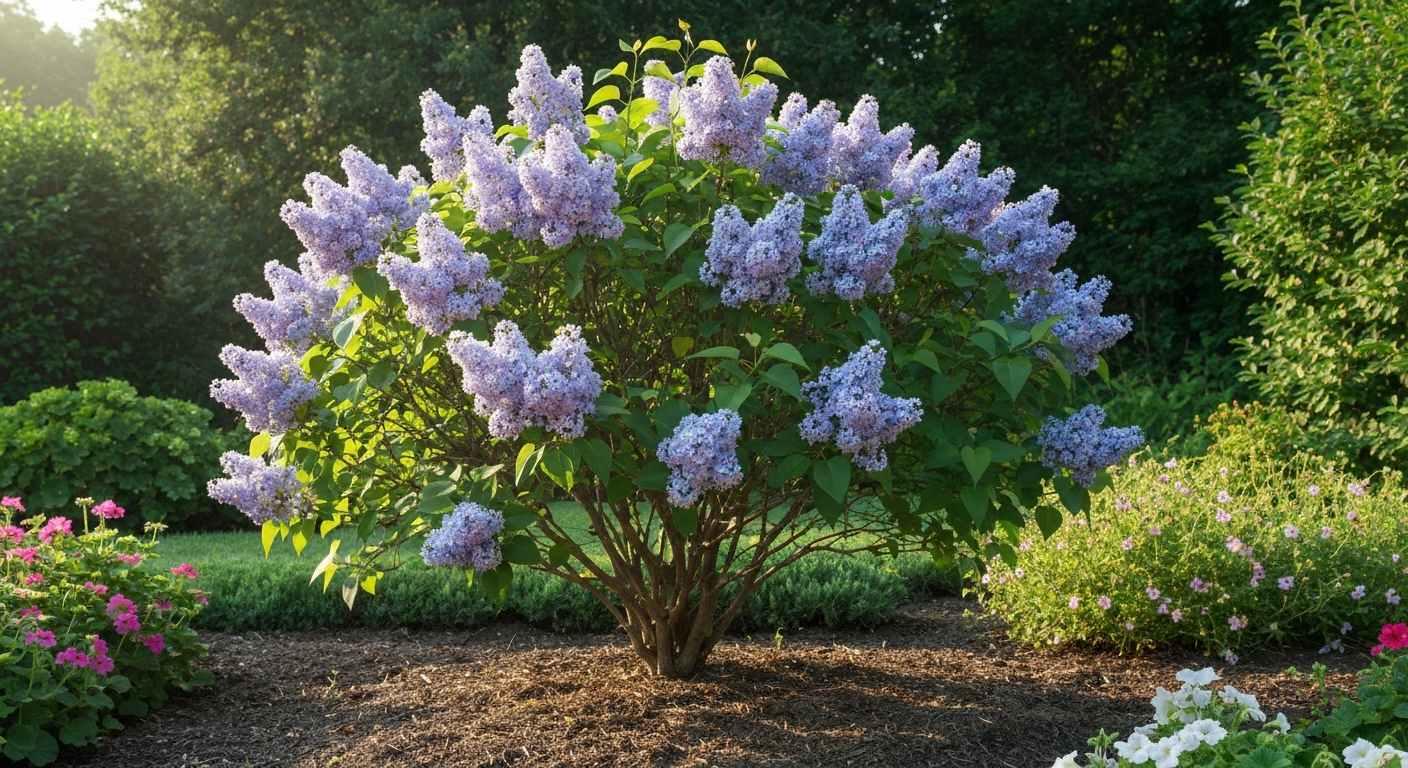
Miss Kim lilac (Syringa pubescens subsp. patula 'Miss Kim') is one of the most rewarding compact shrubs you can plant in a home garden. Give it full sun, well-drained soil with a pH between 6.5 and 7.5, and room to breathe, and it will reward you every late spring with fragrant purple panicles and virtually no fuss. It's hardy from USDA zones 3 through 8, tops out around 4 to 9 feet tall, and is much more forgiving of heat, humidity, and tight spaces than the old-fashioned common lilac. Plant it in early spring or fall, prune it only in the two to three weeks right after it finishes blooming, and you'll have flowers reliably year after year.
How to Grow Miss Kim Lilac: Complete Planting & Care Guide

Marcus Holloway
9 Aug 2026
What Miss Kim lilac is and why it's worth growing
Miss Kim is a Korean and Manchurian lilac selected for its compact, rounded growth habit and its ability to thrive where common lilacs (Syringa vulgaris) often struggle. It blooms later than common lilac, typically in mid-to-late spring depending on your region, which makes it a great way to extend the lilac season in your garden. 'Lilac Care | Penn State Extension' notes that 'Miss Kim' blooms later than common lilac and that spent flower panicles should be removed immediately after blooming to encourage next-year bud development. The flowers open icy lavender-blue and carry the classic lilac fragrance you'd expect. In autumn, the foliage often turns burgundy-purple before dropping, so you get a second season of interest.
Compared to the old-fashioned French hybrid lilacs that can reach 15 feet or more, Miss Kim is a practical choice for smaller yards. It fits foundation plantings, mixed shrub borders, and low hedges without overtaking its neighbors. Gardeners also choose it because it resists powdery mildew better than many other lilacs, though it isn't immune. If you're familiar with growing other fragrant flowering shrubs like magnolias or camellias, the general logic of full sun, sharp drainage, and careful pruning timing carries over nicely. For gardeners familiar with camellias, see how to grow Pink Perfection camellias for comparable care tips. For guidance on growing another fragrant shrub, see our concise guide on how to grow Michelia alba. For region-specific care, see a detailed guide on how to grow camellias in Florida.
Hardiness, mature size, bloom time, and growth rate
Miss Kim is reliably cold-hardy in USDA zones 3 through 8, which covers most of the continental United States except the hottest parts of the Deep South and Florida. In zone 8, pick a site with afternoon shade during the hottest weeks and make sure drainage is excellent. In zones 3 and 4, the plant handles brutal winters without any special protection once established.
| Characteristic | Miss Kim Lilac | Common Lilac (Syringa vulgaris) |
|---|---|---|
| USDA Hardiness Zones | 3–8 | 3–7 |
| Mature Height | 4–9 ft (1.2–2.7 m) | 8–15 ft (2.4–4.6 m) |
| Mature Spread | 4–9 ft (roughly equal to height) | 6–12 ft |
| Bloom Time | Mid-to-late spring (later than common lilac) | Mid-spring |
| Growth Rate | Slow to moderate | Moderate |
| Powdery Mildew Resistance | Better than average | Prone, especially in humid climates |
Miss Kim is a slow-to-moderate grower, adding roughly 6 to 12 inches per year under good conditions. Don't expect a quick privacy screen. What you do get is a dense, tidy shrub that holds its shape well without constant intervention. Flower buds that will open next spring actually form during the summer and early fall of the current year, which is the single most important fact to understand about managing this plant's bloom cycle.
Picking the right spot and the best time to plant
Sun exposure is non-negotiable. Miss Kim needs a minimum of six hours of direct sunlight every day, and more is better. A site that gets eight hours will produce noticeably more flowers than one that gets six. I've seen Miss Kim shrubs planted on the north side of a fence or under a high tree canopy that looked healthy enough but produced almost no blooms. If you're troubleshooting a non-blooming plant, inadequate sun is the first thing to investigate.
Avoid low spots, the bottom of slopes, and areas where water sits after rain. Miss Kim does not tolerate wet feet, and planting in a poorly drained location is a fast path to root rot and a weakened, disease-prone plant. A slight slope or a raised area of the garden is ideal. If you're in a climate with cold, late springs, a south or southeast-facing microclimate warms up faster in spring and can coax slightly earlier blooms, though in really warm zones you might actually prefer a spot that heats up a little more slowly to extend the flowering window.
The two best planting windows are early spring (before or just as growth resumes) and fall (at least four to six weeks before the ground freezes hard). Container-grown plants are the most forgiving and can be planted in either window. Bare-root plants should go in during early spring only, before the buds break. Fall planting works well in zones 5 through 8 but requires enough time for some root establishment before winter dormancy kicks in. Summer planting is possible in a pinch for container plants, but it adds heat and drought stress on top of transplant shock, so it's not recommended if you can avoid it.
Soil requirements: drainage, pH, testing, and what to fix
Lilacs are one of those plants that genuinely prefer close-to-neutral soil. The target pH range is 6.5 to 7.5. Below 6.0, nutrient uptake suffers and powdery mildew risk climbs. Above 7.5, you can see chlorosis from micronutrient lockout. Before you plant, run a soil test through your local cooperative extension service (usually under $20 and worth every cent). If your soil comes back acidic, add ground limestone according to the test recommendation. If it's already in the 6.5 to 7.5 range, leave it alone.
Good drainage matters more than soil texture. Miss Kim will grow in sandy loam, loam, or even clay-leaning soils as long as excess water moves through. If you have heavy clay that drains poorly, raise the planting area by 6 to 12 inches using a mix of your existing soil amended with coarse grit or pine bark fines, or build a simple raised bed. Avoid peat-heavy mixes that hold too much moisture. A basic jar test (shake a soil sample with water and let it settle overnight) tells you a lot about your clay-to-sand ratio before you start amending.
Step-by-step planting instructions
Planting a container-grown Miss Kim
- Water the container thoroughly the day before planting so the root ball is fully moist, not bone dry.
- Dig a hole twice as wide as the root ball but no deeper than the height of the root ball. Depth matters: the root flare (where the trunk base widens into roots) must sit at or just slightly above the final soil grade. Planting too deep is one of the most common reasons lilacs fail to thrive.
- Loosen the sides of the hole with a fork or spade so roots can penetrate the surrounding soil. In hard clay, score the sides of the hole.
- Remove the plant from the container and gently tease apart any circling roots at the base. Circling roots left in place become girdling roots years later.
- Set the plant in the center of the hole. Check the depth from multiple angles before backfilling.
- Backfill with the original soil you removed. If your native soil is very poor (almost pure sand or compacted clay), mix in no more than 25% compost to improve structure. Avoid creating a dramatically different soil environment inside the hole versus outside: this can act like a bathtub, trapping water inside and drowning the roots.
- Firm the soil gently with your hands as you go to eliminate large air pockets, but do not tamp it so hard that you compact it.
- Form a shallow watering basin or berm just outside the root ball edge to direct irrigation water inward during the first growing season.
- Water deeply and thoroughly right after planting to settle the soil and close any remaining air gaps.
- Apply mulch (see the mulching section below) but keep it pulled back from the trunk.
Planting bare-root Miss Kim
Bare-root plants arrive dormant, typically in late winter or early spring. Keep the roots moist and cool until planting day. Soak the roots in plain water for 12 to 24 hours before planting to rehydrate them. Dig your hole wide enough to spread the roots naturally outward, never cramped or circling. Build a small cone of soil in the center of the hole so you can drape the roots over it and set the plant at the correct depth. The rest of the process follows the container steps above.
Planting balled-and-burlapped (B&B) Miss Kim
B&B stock is heavier and trickier to handle than containers. Set the plant in the hole before removing any burlap or wire basket. Once it's positioned correctly, cut and fold back the burlap from the top half of the root ball, and remove or cut away wire basket sections that are near the trunk. Leaving burlap under the lower root ball is acceptable if it's natural burlap (it will decompose), but synthetic burlap must come out entirely. Backfill and water as with container planting.
Light, watering, and irrigation schedules
During establishment (first 1 to 2 years)
For the first one to two growing seasons, water deeply once a week during dry spells, enough to moisten the entire root zone to a depth of 12 inches. In very hot, windy, or sandy-soil conditions, you may need to water twice a week. The goal is deep, infrequent watering that pushes roots down, not shallow daily sips that keep roots near the surface. Stick your finger or a long screwdriver into the soil near the drip line: if the top 2 inches are dry but the soil is still moist below that, you can wait another day.
Mature plant watering
Once established, Miss Kim is moderately drought-tolerant. It typically needs supplemental watering only during extended dry periods (two or more weeks without meaningful rain). Overwatering a mature lilac is genuinely harmful: constantly wet soil reduces flowering, invites root rot, and creates the humid leaf conditions that power up powdery mildew. When you do water, water at the soil line. Soaker hoses and drip irrigation are ideal. Avoid overhead sprinklers that wet the foliage and leave it damp overnight, especially in warm, humid weather.
Fertilizing and mulching
Here's an honest take on fertilizing lilacs: most established plants in average soil don't need much. The biggest fertilizer mistake I see is people loading up their lilacs with high-nitrogen fertilizer (or granular lawn fertilizer they had left over) and then wondering why the shrub is all leaves with no flowers. High nitrogen pushes vegetative growth at the expense of bloom. If your soil test shows good phosphorus and potassium levels, a light top-dressing of compost in early spring is often all you need.
If your soil is genuinely low in nutrients and a soil test confirms it, apply a balanced slow-release granular fertilizer, something in the 10-10-10 range, once in early spring just as growth begins. Follow the label rate exactly, and err on the low side. Never fertilize in late summer or fall: it pushes tender new growth that gets killed by early frost and weakens the plant heading into winter. Miracle-Gro and similar soluble high-N fertilizers are not the right tool here. They're fine for annual flowers and vegetables, but they'll give you a lush, green lilac that barely blooms.
For mulching, spread a 2 to 3 inch layer of coarse organic mulch (shredded bark or wood chips work well) over the root zone, extending out to the drip line if possible. Pull the mulch back 2 to 3 inches from the base of the trunk. Mulch right up against the crown traps moisture, harbors rodents, and contributes to collar rot. Refresh mulch each spring as the old layer breaks down. Over time, decomposing mulch adds gentle organic matter to your soil, which is exactly what you want.
Pruning and deadheading: getting the timing right
Pruning timing is the single biggest factor separating gardeners who get abundant blooms every year from those who get none. Miss Kim sets next year's flower buds on the new growth it produces after it blooms, starting in early summer and continuing into fall. Those buds overwinter and open the following spring. If you prune in late summer, fall, or winter, you are cutting off the buds that would have been your next season's flowers. The rule is simple: prune immediately after the flowers fade, within two to three weeks of bloom. That's it.
Deadheading spent blooms
Remove spent flower panicles as soon as the petals drop. Cut just below the flower head, down to the next set of leaves or the first strong pair of buds below the spent bloom. This prevents the plant from putting energy into seed development and supports more vigorous bud formation for next year. It's not a dramatic pruning cut, just a quick snip down to living leaf axils.
Shaping and light annual pruning
Right after deadheading, you also have the window to shape the plant lightly: remove any crossing or rubbing branches, thin out any obviously crowded stems to improve airflow, and cut back any extra-long shoots that make the outline lopsided. Because Miss Kim is naturally compact and rounded, it rarely needs aggressive shaping. Aim to thin rather than shear: removing individual branches selectively rather than buzzing the whole plant into a ball. Shearing removes many of the growing tips where next year's buds will form.
Renewal pruning for old or overgrown plants
If you've inherited an older, leggy Miss Kim that has lost its shape or stopped blooming well, you can do a phased renewal. In the first year immediately after bloom, remove one-third of the oldest, thickest stems at the base. Repeat the following two years until the old wood is replaced with vigorous new growth. Avoid cutting the entire plant back to the ground at once: it will survive but you'll lose three or more years of blooms and the resulting regrowth is often awkward and rank.
Seasonal care checklist
| Season | Task |
|---|---|
| Early spring | Pull back old mulch, check and adjust soil pH if needed, apply slow-release balanced fertilizer only if soil test indicates low nutrients, refresh mulch layer |
| Mid-to-late spring | Enjoy the blooms; monitor for pests; prepare pruning tools |
| Immediately after bloom | Deadhead all spent panicles, do light shaping or renewal pruning, apply fresh mulch if needed |
| Early summer | Deep water during dry spells; do NOT prune (buds are forming); monitor for powdery mildew |
| Midsummer to late summer | Water during drought; no fertilizing; no pruning; watch for aphids and scale |
| Fall | Plant new specimens (zones 5–8); do NOT prune; remove fallen leaves if disease was present this year |
| Winter | No action needed for in-ground plants; check container plants for frost protection in zone 8 |
Pests and diseases to watch for
Powdery mildew
Powdery mildew is the most common foliar problem you'll encounter. It shows up as a white or grayish powdery coating on the leaf surface, usually in late summer when nights are cool and humid. It's ugly but rarely fatal. Prevention is easier than cure: plant in full sun with good airflow, avoid overhead irrigation, and keep the area around the base free of dense weedy growth. If mildew does appear, a simple spray of diluted neem oil or potassium bicarbonate fungicide can slow its spread. Miss Kim is more resistant than many lilacs, but humid climates and shaded sites will push it past its resistance threshold.
Aphids and lilac borers
Aphids sometimes cluster on new shoot tips in spring, but they're rarely more than a cosmetic nuisance on an otherwise healthy plant. A strong jet of water from your hose knocks them off without any chemistry. Lilac borer (Podosesia syringae) is a more serious threat: it's a clearwing moth whose larvae tunnel into stems, causing branch dieback. Look for sawdust-like frass at entry holes near the base or on main stems. Prune out and dispose of affected branches. Pheromone traps can help you monitor adult activity in late spring, which is the best time to apply protective trunk sprays if borers have been a persistent problem in your area.
Scale insects
Oystershell scale and other armored scales occasionally colonize lilac bark, appearing as small, oyster-shaped bumps on stems. Heavy infestations weaken the plant and reduce flowering. Treat with horticultural oil applied in early spring before bud break, coating stems thoroughly. Repeat application may be needed. Good overall plant health (adequate light, correct drainage) is your best defense.
Troubleshooting: no blooms, leggy growth, and mildew
- No blooms at all: First suspect is inadequate sunlight. Move the plant if it's in a pot, or consider significant pruning of overhanging trees. Second suspect is pruning at the wrong time: if you pruned in fall or winter, you removed next year's buds. Third suspect is too much nitrogen fertilizer pushing vegetative growth.
- Bloomed once or twice, then stopped: Often happens when a young plant matures into a site that is subtly shadier than it looked at planting time, or when someone started fall-pruning it. Review sunlight hours honestly with a sun calculator app or simple observation.
- Leggy, open habit with sparse growth: Usually a combination of insufficient light and infrequent pruning of old wood. Start a phased renewal pruning immediately after bloom and assess the sunlight situation.
- Powdery mildew every year: Your site is too humid, too shaded, or you're watering overhead. Improve air circulation by thinning the interior of the plant after bloom. Switch to drip irrigation. If the site is simply too shady, relocation may be the only real fix.
- Yellow leaves in summer: Check soil pH first. If pH has drifted below 6.0, iron and manganese become less available and leaves yellow between the veins (interveinal chlorosis). A soil test and lime application will correct it over one to two seasons. Also rule out overwatering and root rot.
Propagation: cuttings, suckers, and seeds
Softwood cuttings
The most reliable propagation method for named cultivars like Miss Kim is softwood cuttings taken in late spring to early summer, just as the new growth firms up slightly. Cut a 4 to 6 inch tip with at least two sets of leaves, remove the lower leaves, dip the cut end in rooting hormone (IBA powder or gel, 3000 ppm), and stick the cutting into a moist mix of perlite and peat or coir. Cover with a clear dome or plastic bag to maintain humidity. Keep the medium moist but not soggy, in bright indirect light at temperatures around 65 to 75°F. Roots should develop in 4 to 6 weeks. For tips on sourcing specific cultivars, see how to get 744t honeysuckle in Grow a Garden. Harden off gradually before transplanting to the garden.
Suckers
Own-rooted Miss Kim plants sometimes produce suckers from the base. You can sever a sucker from the parent plant in early spring with a sharp spade, making sure it has some roots attached, and pot it up or transplant it directly. Note that if your plant is grafted (which some nursery stock is), suckers will be rootstock, not Miss Kim, and should simply be removed rather than propagated.
Seeds
Lilacs can be grown from seed, but 'Miss Kim' is a cultivar, meaning seed-grown plants will not be identical to the parent. Seed propagation is an interesting project but not the right approach if you want the specific characteristics of the named variety. Stick with cuttings for true-to-type plants.
Growing Miss Kim in containers
Miss Kim's compact size makes it more suitable for container culture than most lilacs, but it still needs a large pot (at least 20 to 24 inches in diameter) with excellent drainage holes. Use a well-draining potting mix rather than straight garden soil, which compacts quickly in containers. Container plants dry out faster than in-ground plants, so you'll need to water more frequently, potentially every two to three days in hot summer weather. In zones 3 through 5, container roots are more vulnerable to hard freezes than in-ground roots: move the pot to an unheated garage or shed once it goes dormant in fall. In zones 6 through 8, mulching the container heavily or grouping pots together helps insulate roots. Container plants have a shorter productive lifespan than in-ground shrubs and may need root-pruning and repotting every three to four years to stay vigorous.
Transplanting an established Miss Kim
Lilacs can be transplanted successfully but they resent root disturbance and will often skip blooming for one to two seasons after a move. If you must move an established plant, do it in early spring before bud break or in early fall. Water deeply three days before digging. Dig as wide and deep a root ball as you can practically manage, typically matching the drip line of the plant. The wider the root ball, the faster the recovery. Replant immediately at the same depth and water thoroughly. Accept that bloom suppression the following year is normal and not a sign the transplant failed.
Landscape uses and spacing
Miss Kim is versatile enough for foundation plantings, mixed shrub borders, low informal hedges, and specimen plants near patios or pathways where the fragrance can be appreciated up close. If you want a fast-climbing annual to soften vertical structures, see our guide on how to grow kiss-me over the garden gate. For hedging or massed plantings, space plants 4 to 6 feet apart on center to allow for mature spread while still creating an effective visual screen. As a specimen, give it its full 6 to 9 feet of breathing room and keep competing shrubs back so airflow is maintained on all sides.
It pairs naturally with other late-spring and early-summer bloomers: ornamental alliums, Siberian iris, and catmint all bloom around the same window and complement the purple and lavender tones. If you're building out a fragrant garden with multiple shrub layers, Miss Kim works well alongside other compact flowering shrubs. For another highly fragrant option to include in a layered fragrant garden, see how to grow Michelia champaca. Gardeners who enjoy growing other flowering trees and shrubs like Magnolia stellata will recognize the same full-sun, well-drained approach that makes the difference between a thriving specimen and a struggling one. For specific care of compact magnolias, see our guide on how to grow Magnolia 'Little Gem'.
FAQ
What is Miss Kim lilac (Syringa patula 'Miss Kim') and how big does it get?
Miss Kim is a compact Manchurian/Korean lilac cultivar (Syringa pubescens/S. patula 'Miss Kim'). It is hardy in roughly USDA zones 3–8 and typically reaches about 4–9 ft (1.2–2.7 m) tall and wide with a rounded habit. It blooms mid‑to‑late spring and is noted for fragrant, abundant panicles.
Where and when should I plant Miss Kim lilac?
Plant container-grown plants in early spring or in fall (at least 6 weeks before hard freezes) to allow root establishment. Choose a site with full sun (minimum ~6 hours of direct sun daily) and excellent drainage; avoid low, waterlogged areas. Space plants 4–10 ft apart depending on desired hedge or specimen use (allow mature spread).
What soil conditions do Miss Kim lilacs prefer?
They prefer well‑drained soil, neutral to slightly alkaline pH (roughly 6.5–7.5). Conduct a soil test first; amend only if necessary. Avoid planting deeper than the nursery root crown—set the root flare at or just above final soil grade.
How do I prepare the planting hole and plant properly?
Dig a hole about twice the root‑ball diameter but no deeper than the root ball. Loosen surrounding soil. Remove burlap/wire containers per nursery guidance. Backfill with native soil, mixing in only a small amount of compost if the soil is very poor; avoid creating a distinct potting‑mix ‘bathtub.’ Firm soil to remove large air pockets, water deeply to settle, and mulch 2–3 inches over the root zone but pull mulch 2–3 inches away from the trunk.
How should I water Miss Kim lilac during establishment and after?
For the first 1–2 years water deeply and infrequently to wet the entire root zone—typically a deep soak about once a week during dry spells. After established, water only during extended droughts. Use drip or soaker irrigation or water at the soil line; avoid overhead watering to reduce foliar disease risk.
How and when should I fertilize Miss Kim lilac?
Do a soil test first. Lilacs usually need little fertilizer—avoid high‑nitrogen feeds that encourage foliage over flowers. If required, apply a light, balanced slow‑release fertilizer (e.g., 10‑10‑10) or a thin topdressing of compost in early spring. Do not apply late‑season nitrogen (late summer/fall).