
Camellias absolutely can thrive in Florida, but the key is picking the right type for your region and setting them up with well-drained, slightly acidic soil, filtered shade, and consistent moisture. Camellia sasanqua is the go-to for most of Florida, tolerating heat and sun better than its cousin Camellia japonica, which does best in North Florida with some afternoon shade protection. Get those two things right, and camellias will reward you with reliable blooms from fall all the way through early spring. If you are also interested in honeysuckle, the next step is learning how to get 744t honeysuckle in Grow a Garden so you can add it to your landscape plan.
How to Grow Camellias in Florida: Plant Care Guide
Marcus Holloway
8 Jul 2026
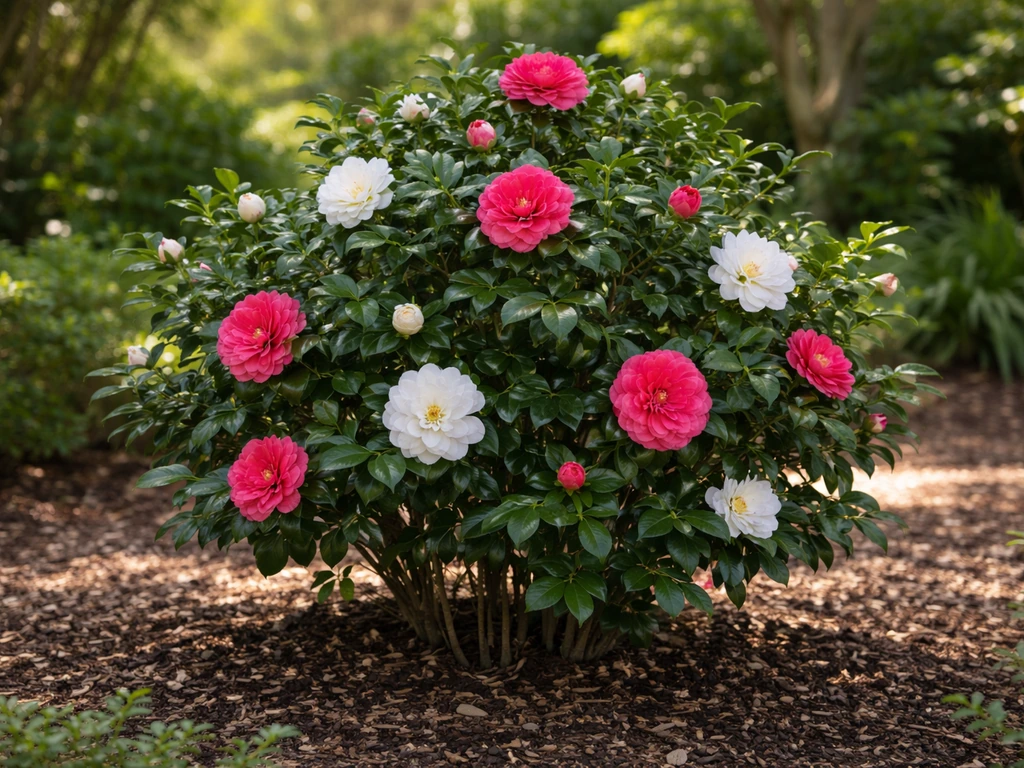
Best camellia types for Florida
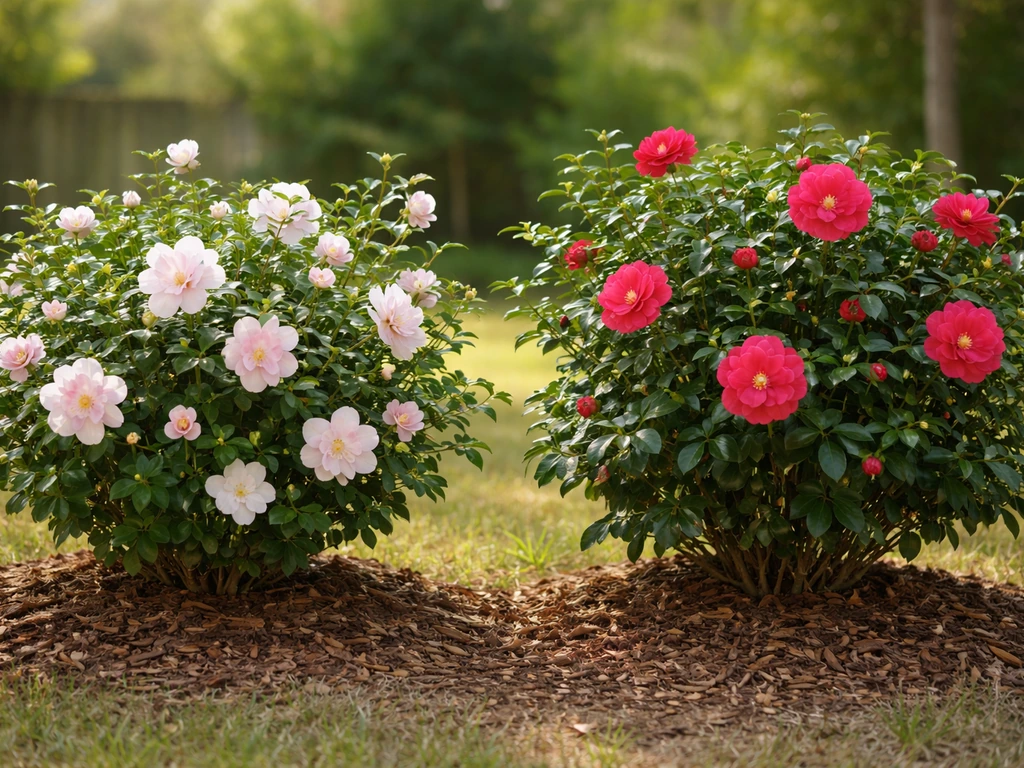
Florida gardeners primarily work with two species: Camellia sasanqua and Camellia japonica. They have meaningfully different heat tolerance, bloom timing, and care needs, so choosing the right one for your part of the state matters a lot.
Camellia sasanqua: the Florida workhorse
Sasanqua camellias are the more adaptable option for most of Florida. They handle more sun, tolerate heat better, and bloom in fall and early winter, roughly October through December. That bloom window is a huge perk in a state where summer feels endless and you're desperate for something beautiful in the landscape during cooler months. Popular sasanqua varieties like 'Setsugekka', 'Yuletide', and 'Cleopatra' are widely available at Florida nurseries and perform well from the Panhandle down through Central Florida.
Camellia japonica: the classic, mainly for North Florida
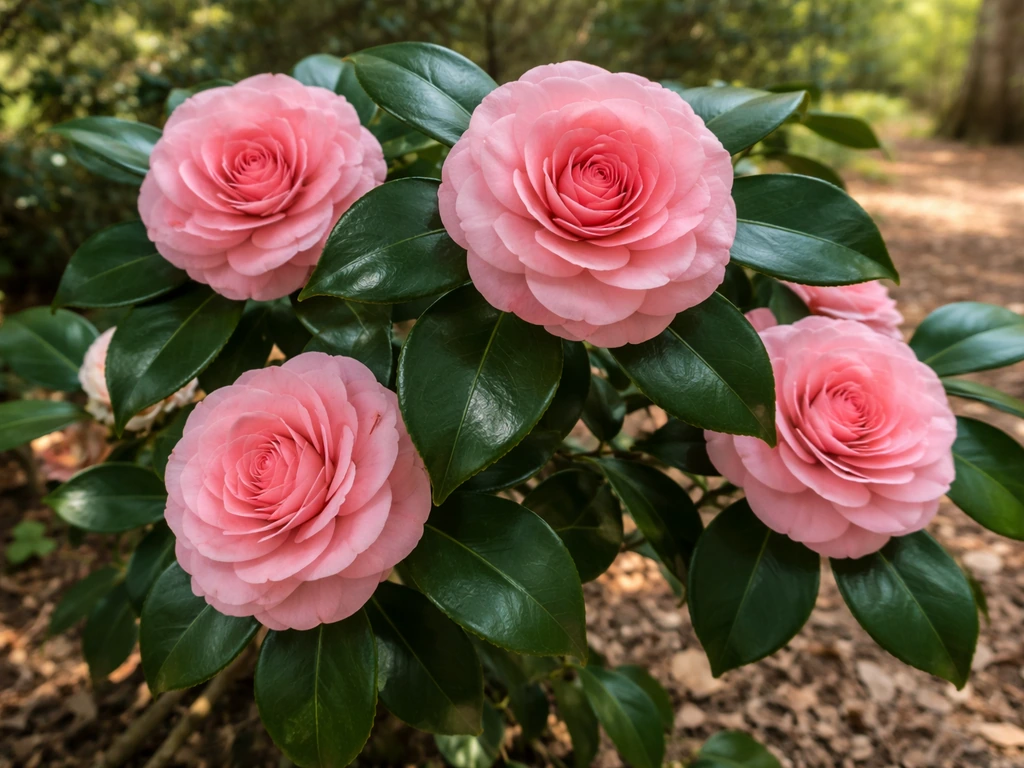
Japonica camellias are the big, formal-flowered types you see in old Southern gardens. They bloom later, typically from late December through March or early April, which lines up beautifully with Florida's dry-season cool spells. The tradeoff is that japonicas are more demanding: they need partially shaded locations and don't handle Florida's extreme summer heat as gracefully as sasanquas. They're best suited to North Florida and the Panhandle, where winters are mild enough to satisfy their cool-season blooming cues but summer temperatures don't push the plants beyond their comfort zone.
Quick comparison
| Feature | Camellia sasanqua | Camellia japonica |
|---|---|---|
| Bloom time | October to December | Late December to April |
| Sun tolerance | Full sun to part shade | Part shade; avoid harsh afternoon sun |
| Heat tolerance | Better | More sensitive |
| Best Florida region | North, Central, and parts of South Florida | North Florida and Panhandle |
| Spacing | 5 to 6 feet apart | About 10 feet apart |
| Overall ease in FL | Easier | More demanding |
If you're in Central or South Florida and you're trying to decide, start with sasanqua. Japonicas are rewarding, but they're less forgiving of Florida's summer humidity and heat stress. If you're already growing related Southern flowering shrubs like magnolias or michelia, you'll find camellias fit naturally into the same part-shade spots in a layered garden design. If you are also learning how to grow a Magnolia Little Gem, the same part-shade spots and soil-drainage habits that help camellias usually make a big difference for that evergreen tree magnolias or michelia.
Site selection: sun, shade, wind, and microclimates
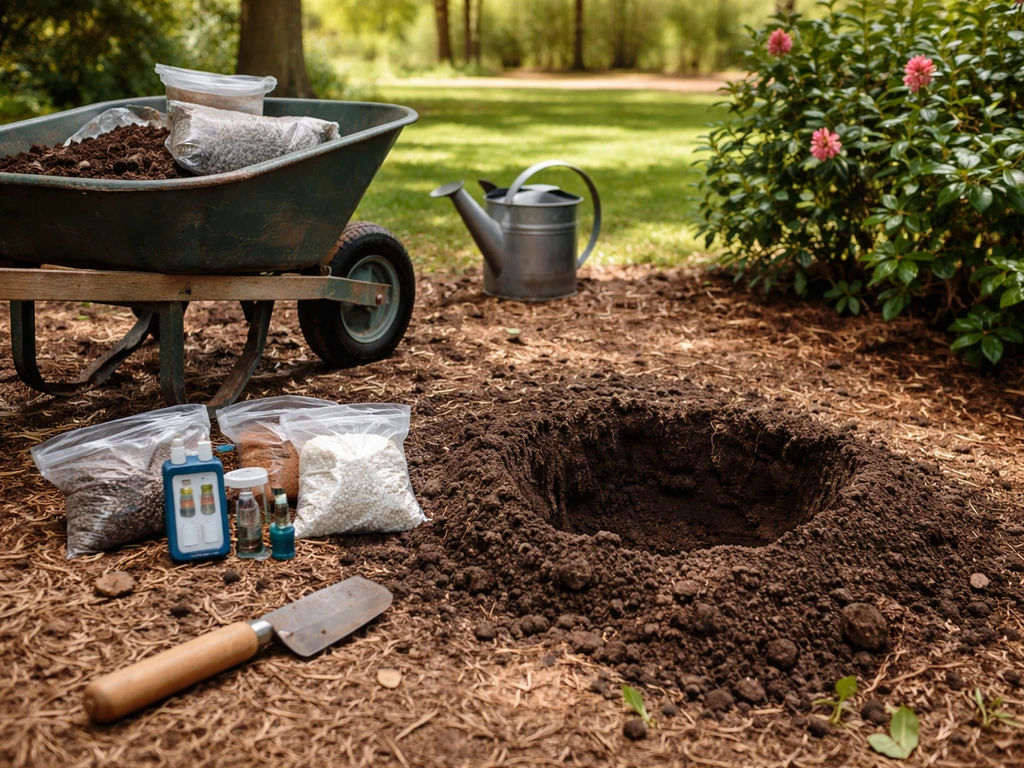
Where you plant your camellia may be the single biggest factor in whether it thrives or just survives. In Florida, that means thinking carefully about sun exposure, protection from harsh afternoon heat, and cold-wind exposure in winter.
Camellia japonica wants a partially shaded spot, ideally with morning sun and protection from the harsh afternoon sun that really beats down in Florida from March through October. A spot under tall pines or the east or north side of a building works well. Deep shade is a trap though: too little light and your blooms suffer. You want dappled light, not darkness.
Sasanqua camellias tolerate full sun, but even they perform better with some afternoon shade protection in Florida's hottest months. A spot that gets direct sun until around 1 or 2 p.m. and then filtered light is close to ideal for both species.
Wind is a real issue in Florida, both from winter cold fronts in the north and from coastal winds statewide. Avoid planting camellias in spots that funnel cold northern winds in winter. A south or southeast-facing microclimate protected by a fence, wall, or tree line can add meaningful warmth during a cold snap. UF/IFAS Extension recommends avoiding sites exposed to colder winter winds, and this is especially worth taking seriously in the Panhandle and North Florida where occasional hard freezes happen.
Soil and planting setup: pH, drainage, and amendments
Florida soils are notoriously problematic for acid-loving plants. Sandy soils drain too fast, clay soils in parts of North Florida drain too slowly, and both tend to need amendment before camellias will be happy. The good news: camellias are not impossible to please if you prepare properly.
Camellias need slightly acidic soil with a pH between 5.0 and 6.5, with the sweet spot being 5.5 to 6.0. Florida's sandy soils often fall near that range naturally, but it's always worth doing a soil test before you plant. Your county's UF/IFAS Extension office can help you test or point you to a lab. If your pH is too high, which is common in areas with limestone-based soils, work in elemental sulfur several months before planting to bring it down gradually.
Good drainage is non-negotiable. Camellias hate wet feet, and root rot from poor drainage is one of the most common ways they fail in Florida. Never plant in a spot with a high water table or where water pools after rain. If you're dealing with heavy clay or compacted soil, amend generously with organic matter, pine bark, or aged compost to improve both drainage and aeration. Camellias prefer fertile, well-drained soil that's high in organic matter, so don't be stingy with the amendments.
Before planting, incorporate a 3 to 4 inch layer of organic material like pine bark fines or composted leaves into the planting bed and till it in. Florida's sandy soils drain quickly and don't hold nutrients well, so building that organic base at the start pays dividends for years.
How to plant camellias: timing, spacing, and container vs in-ground
When to plant
The best time to plant camellias in Florida is fall, from October through early December. Planting in fall lets the roots establish during the cooler, wetter season before summer heat arrives. Follow the same fundamentals when you are growing Pink Perfection camellias, including choosing the right light and keeping the soil slightly acidic and well-drained. Spring planting works too, but you'll need to be more diligent about watering through the first hot season. Avoid planting in the peak of summer if at all possible: the heat stress on an unestablished plant is brutal and establishment failure rates go up significantly.
Spacing
Give japonica camellias about 10 feet between plants. They grow larger and need airflow to reduce disease pressure. Sasanqua varieties can be planted 5 to 6 feet apart, which makes them useful as hedges or mass plantings. Don't be tempted to crowd them: good air circulation is one of your best defenses against the fungal diseases that Florida's humidity encourages.
How to dig and plant
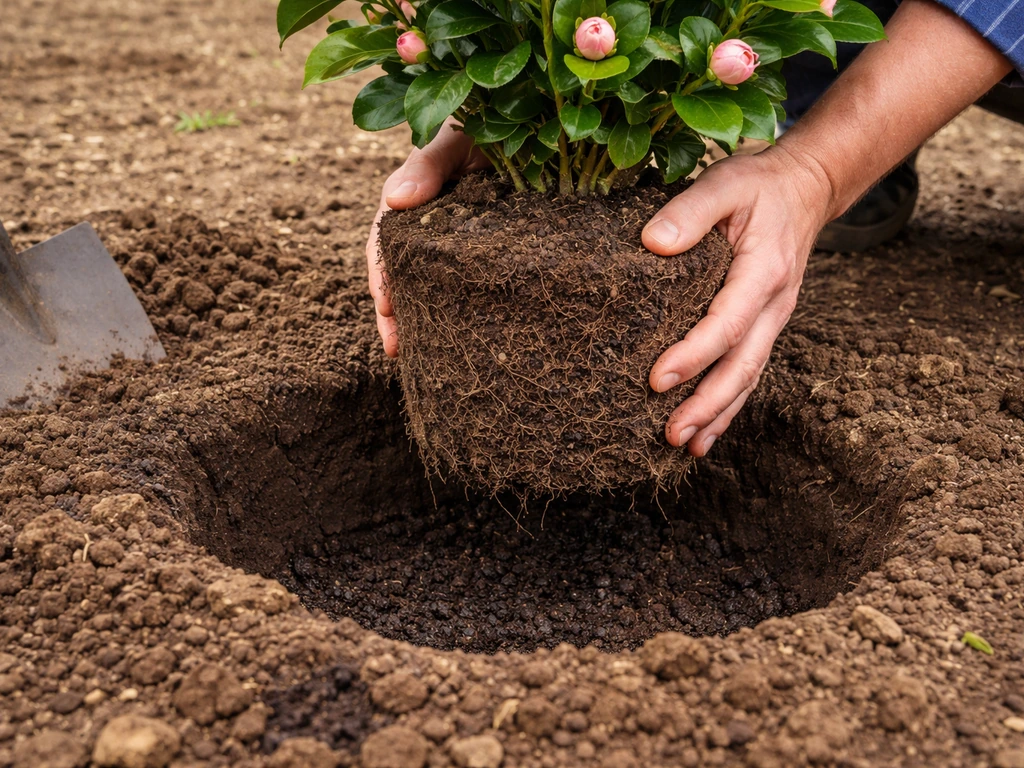
- Dig the hole two to three times wider than the root ball and slightly shallower than the ball depth, about 10% shallower. This encourages roots to spread outward and prevents the plant from sitting in a water-collecting bowl.
- Set the plant so the top of the root ball sits slightly above the surrounding soil grade. In Florida's flat, sometimes slow-draining soils, planting a little high protects against waterlogging.
- Backfill with the native soil you removed, amended with compost or pine bark if your soil is very sandy or dense. Do not pile soil over the top of the root ball itself.
- Water thoroughly as you backfill, then water deeply again after planting to settle the soil and eliminate air pockets.
- Add mulch around the plant (more on depth and placement below), keeping it away from the trunk.
Container vs in-ground planting
Growing camellias in large containers works well in Florida, especially for renters, people with poor native soil, or gardeners in South Florida who want more control over drainage and pH. Use a large container (at least 15 to 25 gallons for a mature plant), fill it with a quality acidic potting mix blended with pine bark, and make sure the pot has excellent drainage holes. Container plants dry out faster than in-ground plants, so you'll be watering more frequently, sometimes daily in summer. The upside is you can move container camellias under cover during rare hard freezes, which is a real advantage in borderline zones.
For most Florida gardeners, in-ground planting is the better long-term choice. An established in-ground camellia is more drought-resilient, less work to maintain, and will grow into a fuller, more impressive plant over time.
Watering and fertilizing for Florida conditions
Watering
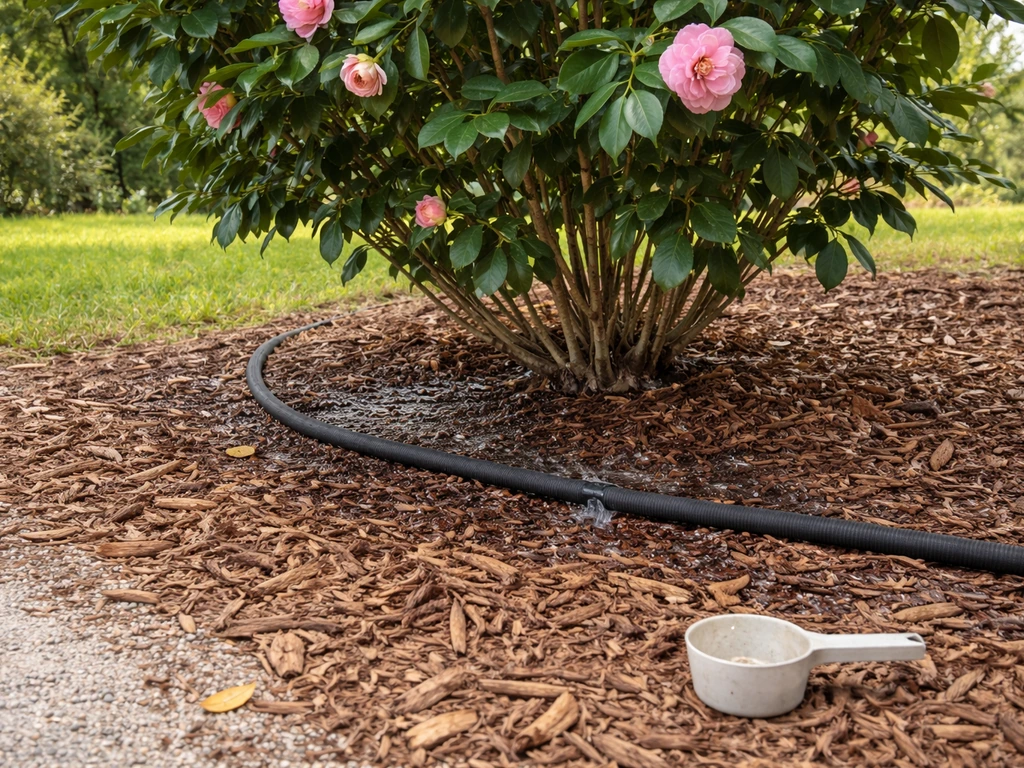
During establishment, the first 12 months after planting, water deeply two to three times per week unless you've had significant rain. You're trying to keep the root ball consistently moist without letting it stay soggy. Once established, camellias are moderately drought tolerant but still benefit from supplemental irrigation during dry spells. During active flowering, aim to give plants about 1 inch of water per week. Florida's dry season (roughly November through May) often coincides with bloom time for both sasanqua and japonica, so you'll likely need to supplement rainfall during this period.
A note on overwatering: it's the fastest way to kill a camellia in Florida. Root rot from Phytophthora and other soil-borne pathogens is directly tied to soggy conditions. If your plant sits in wet soil for extended periods, you're essentially inviting disaster. Deep, infrequent watering is far better than daily shallow watering.
Fertilizing
For established in-ground camellias, apply fertilizer one to three times per year. A standard approach is to fertilize in early spring after flowering and again in early summer. Use a balanced fertilizer like a 12-4-12 or 15-5-15 blend at about half a pound per 100 square feet of bed area. An acid-forming fertilizer labeled for azaleas and camellias works well for established landscape plants and helps maintain that critical low pH. Don't use acid-forming fertilizers on young transplants or container plants though: they can stress an already-adjusting root system.
Serious show enthusiasts sometimes fertilize up to four times a year, but for most home gardeners, two well-timed applications give great results without risk of over-fertilizing. More is not better here. Excess nitrogen pushes lush foliage at the expense of flowers and can increase susceptibility to pests. Always water before and after applying fertilizer to avoid burning roots, which is especially important in Florida's sandy, fast-draining soils.
Mulching and temperature protection
Mulching
Mulch is one of the best things you can do for camellias in Florida. A 2 to 3 inch layer of pine bark, pine straw, or shredded leaves moderates soil temperature, retains moisture, and as it breaks down, gradually acidifies and enriches the soil. Apply mulch out to the edge of the root ball canopy, but keep it away from the trunk. Leave at least 12 inches of mulch-free space around the trunk, and ideally a 24-inch clear zone. Piling mulch against the trunk traps moisture against the bark, creating perfect conditions for rot and pest problems. This is a mistake I see constantly, and it silently kills otherwise healthy shrubs.
Dealing with Florida's summer heat
Summer heat stress shows up as scorched leaf edges, wilting during the hottest part of the day, and reduced vigor. The best defense is proper siting: afternoon shade, good mulch, and consistent moisture. If you want to maximize bloom and reduce stress, follow these site and care steps when you grow michelia alba in Florida or similar climates best defense is proper siting. If you're seeing heat scorch on established japonicas in late summer, that's a sign the plant is in too much sun. You can't really move a large in-ground camellia, so consider planting a fast-growing shade tree nearby as a long-term fix.
Cold snaps and frost protection
Most of Florida doesn't get hard freezes regularly, but they do happen, especially in the Panhandle and North Florida. Sasanqua camellias are somewhat more cold-hardy than japonicas, but both can suffer damage when temperatures drop into the mid-20s Fahrenheit for extended periods. For gardeners who are specifically wondering how to grow Miss Kim lilac in Florida-like conditions, these same cold-snap basics help you plan for protection when temperatures drop.
When a freeze is forecast, water your camellias 24 to 48 hours beforehand. Moist soil holds heat better than dry soil and releases it overnight, providing a slight buffer for roots. If temperatures will dip below 28 degrees Fahrenheit, cover the plant with a fabric frost cloth, not plastic. Fabric allows some air exchange and traps ground heat more effectively. Plastic can actually cause temperature swings that damage plants. Remove covers during the day once temperatures rise above freezing. For container plants, move them to a garage, covered porch, or indoor space.
Pruning, pests, and disease management
Pruning
Camellias don't need heavy pruning, but light shaping after flowering keeps them looking good and encourages bushier growth. The timing rule is simple: prune japonica camellias right after they finish blooming in spring (no later than mid-April in Florida), and prune sasanquas right after their fall bloom ends, typically in December or early January. Pruning at any other time risks cutting off next season's flower buds, which form in summer and early fall. Remove dead or crossing branches, open up the interior for airflow, and lightly shape the outline. Avoid heavy rejuvenation pruning unless the plant is severely overgrown, and if you do it, do it gradually over two to three years rather than all at once.
Tea scale: Florida's biggest camellia pest
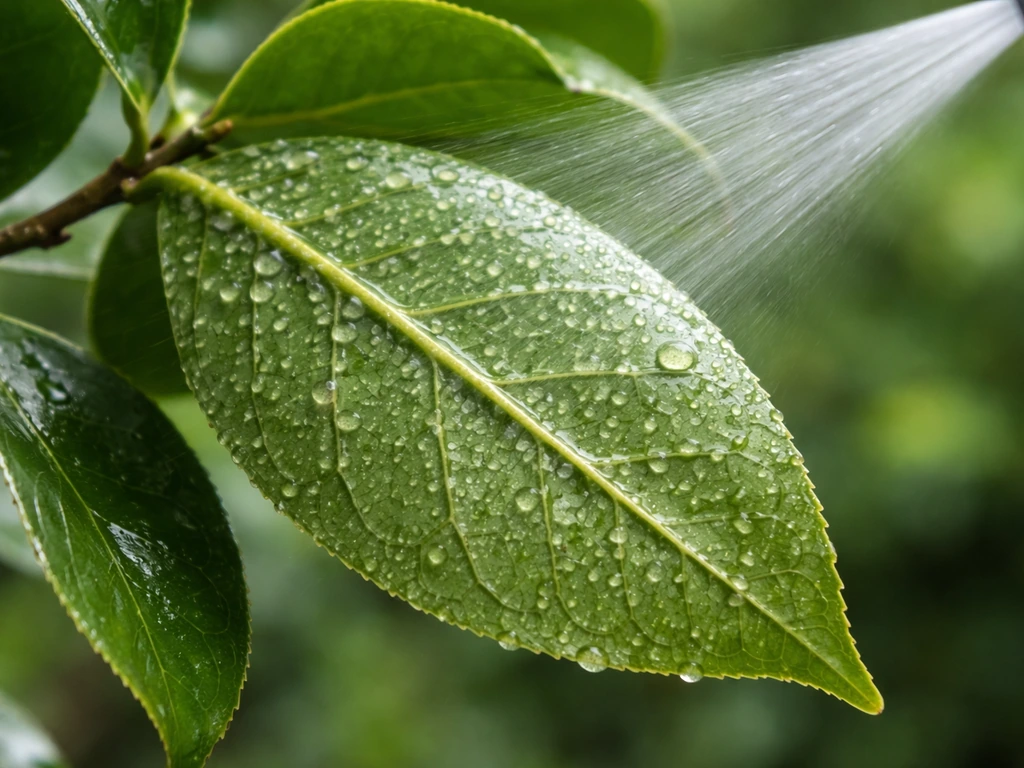
Tea scale (Fiorinia theae) is the number one pest problem you'll face growing camellias in Florida. It's a tiny armored scale insect that lives on the undersides of leaves, feeding on plant sap. The symptoms are yellowing leaves, premature leaf drop, and a general decline in vigor. If you flip a leaf and see white or tan crusty specks on the underside, that's tea scale. Don't ignore it: a heavy infestation will weaken and eventually kill branches.
For light infestations, horticultural oil spray applied to the undersides of leaves when temperatures are below 90 degrees Fahrenheit is effective. Time applications for late winter or early spring before temperatures climb. For heavier infestations, a systemic insecticide containing imidacloprid applied as a soil drench works well because it gets into the plant tissue that the scale feeds on. Repeat applications as directed since scale insects can have multiple generations per year in Florida's warm climate.
Root rot
Root rot, primarily caused by Phytophthora cinnamomi, is the other major threat to Florida camellias. It's a soil-borne pathogen that thrives in warm, wet, poorly drained conditions. Symptoms are wilting despite adequate soil moisture, yellowing leaves, and branches that die back from the tips. By the time you see above-ground symptoms, the root damage is often already extensive.
Prevention is the only real strategy. Plant in well-drained soil, never overwater, and avoid planting in low spots. If you lose a camellia to root rot, don't replant in the same spot without seriously improving drainage or treating the soil, because the pathogen persists.
Camellia petal blight
Petal blight causes flowers to turn brown rapidly, starting from the base of petals and following the veins. It's a fungal disease that spreads via spores in cool, moist conditions and can devastate an entire bloom flush in a matter of days. It's sometimes mistaken for frost damage, but frost damage tends to affect the petal tips and outer edges first, while petal blight starts near the center and spreads along vein lines. Remove and dispose of infected flowers immediately, and avoid overhead watering during bloom season. Good airflow through proper spacing and light pruning helps reduce incidence.
Seasonal care calendar for Florida
Florida's growing calendar is essentially upside down compared to northern states, with the most active camellia care happening in fall, winter, and spring rather than summer. Here's what to focus on season by season. If you want specific guidance, learn how to grow magnolia stellata in your Florida conditions, including site, watering, and soil tips.
| Season / Months | Key Tasks |
|---|---|
| Fall (September to November) | Plant new camellias in October or November. Sasanqua bloom season begins; enjoy and monitor. Apply mulch refresh if needed. Scout for tea scale on leaf undersides. Withhold fertilizer now. |
| Early Winter (December to January) | Sasanqua bloom wraps up; prune lightly after bloom. Japonica bloom begins in late December. Watch weather forecasts: prepare frost covers and pre-water before any freeze events. Reduce watering frequency as temperatures cool. |
| Late Winter (February to March) | Peak japonica bloom season. Water consistently at about 1 inch per week. Apply first fertilizer application after bloom finishes. Apply horticultural oil for tea scale control while temperatures are still cool. |
| Spring (April to May) | Prune japonica camellias no later than mid-April after bloom. Apply second fertilizer application in early summer if desired. New growth emerges; watch for pests. Begin regular watering as dry season continues. |
| Summer (June to August) | Flower buds set for next season on both species; do not prune. Water deeply but infrequently. Ensure mulch is in place to retain moisture and moderate soil temperature. Avoid fertilizing after late June. Monitor for heat stress and scale insects. |
Growing camellias in Florida is genuinely achievable, and once established, these plants are some of the most rewarding in the landscape. The honest truth is that most failures come down to three things: wrong site choice, drainage problems, and ignoring tea scale until it's out of hand. Get the site and soil right from the start, keep up with the basic seasonal care, and your camellias will give you stunning blooms for decades. If you want to use this guidance to create a garden gate display, learn how to grow kiss-me over the garden gate with the same site, soil, and drainage priorities.
FAQ
Which camellia type should I choose if I live in Central or South Florida?
If you want camellias that reliably bloom in Central and South Florida, start with Camellia sasanqua. Japonica can work there, but it is more likely to struggle with late-summer heat stress, so you need stronger afternoon shade and extra attention to watering and airflow.
How much sun is “too much” when learning how to grow camellias in Florida?
A good rule is that camellias should receive some morning light but be protected from the harshest part of afternoon sun. A practical check is to observe your site from spring through summer, if leaves scorch or the plant wilts mid-day, you are likely over-sunned.
What should I do if my soil test shows the pH is too high for camellias?
Do a soil test before planting, and then adjust pH gradually if needed. Elemental sulfur takes time to work, so apply it several months ahead rather than right before planting, and re-test afterward to avoid overshooting into too-low pH.
Can I replant camellias in the same location if one died from root rot?
Do not replant immediately in the same spot after a root-rot loss unless you can fix drainage and potentially remove and replace the affected soil. Because Phytophthora can persist, improving the entire planting zone, not just adding amendments to the hole, is the safer move.
How often should I water container camellias in Florida heat?
For containers, do not rely on “light watering” schedules. Instead, water deeply until excess drains out, then let the mix dry slightly before watering again, because container camellias dry out unevenly and can develop root problems if the mix stays soggy.
Will tea scale come back after treatment in Florida?
Yes, but treat tea scale as an ongoing watch task, not a one-time fix. Even after treatment, keep checking leaf undersides for new specks and continue follow-up applications as directed, since Florida’s warm conditions can allow multiple generations.
How can I water without increasing the risk of petal blight?
Morning or early-day watering helps reduce petal blight risk, because it gives blooms time to dry. Avoid overhead watering during bloom, and if you must irrigate, use water that does not splash onto flowers and leaves.
What early signs of tea scale should I look for?
Tea scale can be present even before you see heavy leaf drop, so inspect the undersides of leaves regularly, especially on new flush growth. Flip a few leaves, if you find white or tan crusty specks, treat promptly rather than waiting for visible decline.
My japonica shows leaf scorch in late summer, what should I do?
If your camellia gets scorch in late summer, consider it a siting warning sign. Since you generally cannot move large established shrubs easily, add long-term shade (like a fast-growing shade tree or shade cloth on the hottest side) and ensure mulch coverage and steady moisture.
What practices help prevent fungal problems in Florida’s humidity beyond watering and drainage?
Aim for ventilation by spacing, pruning lightly after the correct bloom window, and keeping the inner canopy open. If your plant is crowded, fungal issues are more likely, even if drainage and watering are perfect.
When is the worst time to prune camellias in Florida?
Prune only after the plant has finished blooming, because buds for the next season form later. If you prune at random times, you can remove those developing buds and end up with fewer or no blooms.
How do I tell if I’m fertilizing too much for camellias?
Fertilize established plants once to three times per year, and avoid aggressive feeding during the period you are expecting strong blooms. If you notice lots of soft new growth but fewer flowers, you likely have too much nitrogen, reduce the rate next season.
How should my watering routine change after the first year?
In ground, water deeply 2 to 3 times per week during the first 12 months unless you have significant rain, then switch to supplemental watering during dry spells. The key is consistent moisture without pooling, because soggy soil is a bigger threat than occasional missed days.
What’s the best way to protect camellias during a Florida freeze?
You can use frost fabric, but make sure it is breathable and placed without crushing foliage, and remove it when temperatures return above freezing during the day. Also, water 24 to 48 hours before a forecast cold snap to help buffer roots, especially in the Panhandle and North Florida.