
If you've been searching for '744T honeysuckle' because of something you saw in Grow a Garden, the Roblox gardening game, you're not looking for a real plant cultivar. '744T honeysuckle' refers to an in-game item worth 744 trillion Sheckles (the game's currency) that exploded in notoriety after a duplication glitch made it absurdly common and, according to many players, temporarily wrecked the game's economy. There is no botanical cultivar, nursery label, or horticultural product called '744T honeysuckle.' But if you landed here because you actually want to grow real honeysuckle in your yard, you're in exactly the right place, and honeysuckle is genuinely one of the most rewarding flowering vines you can plant. If you want to grow camellias in Florida, focus on heat-tolerant varieties and provide the right soil and shade conditions.
How to Get 744T Honeysuckle and Grow It Successfully
What '744T Honeysuckle' Actually Means
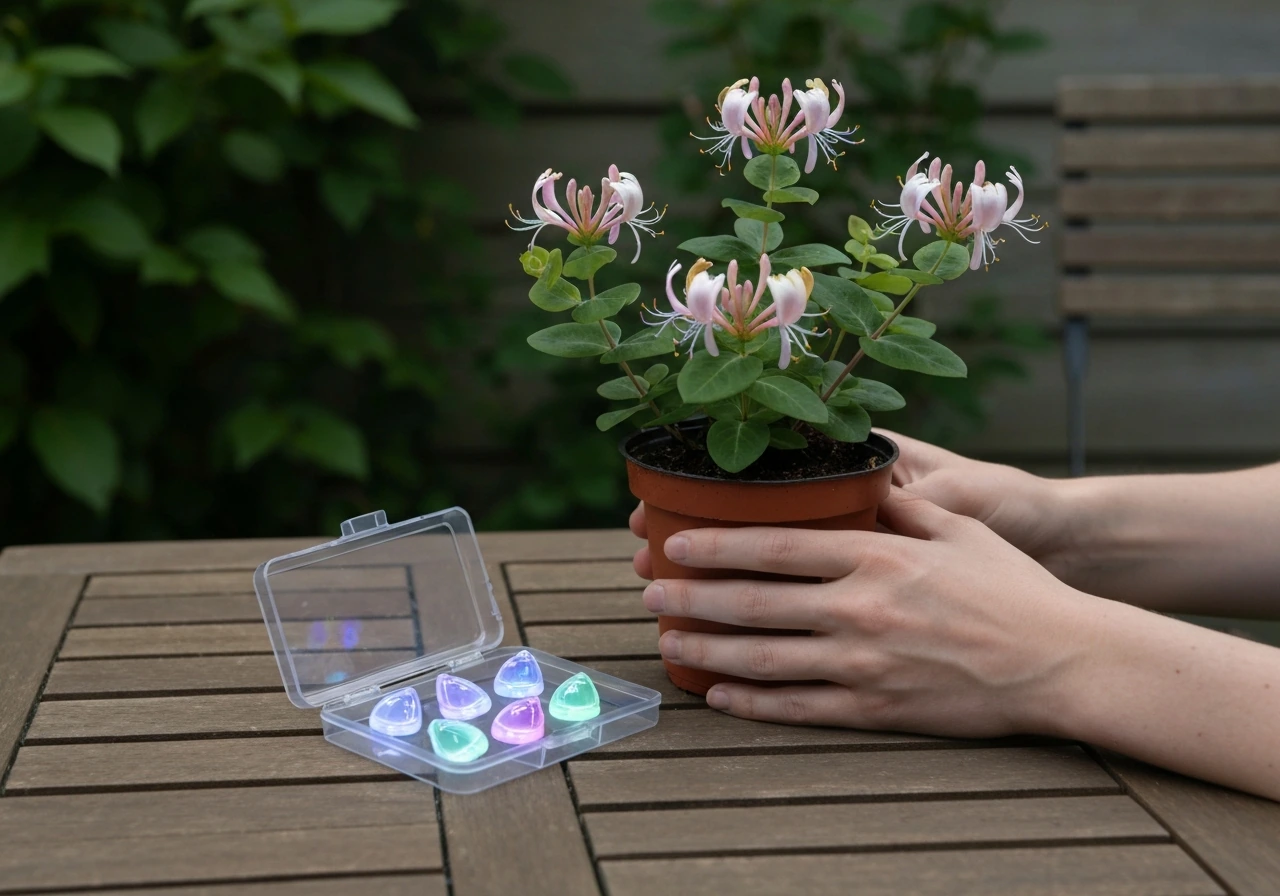
In the Roblox game Grow a Garden, Honeysuckle is classified as a limited-edition mythical crop. Grow-a-garden.wiki’s “Honeysuckle” page describes it as a blank" rel="noopener noreferrer">limited-edition mythical crop and mentions a glitch or duplication history that produced extremely high values like 744 trillion. A duplication glitch flooded the game with honeysuckle items valued at 744 trillion Sheckles, which players started calling '744T honeysuckle' as shorthand. Reddit threads complained it 'ruined the game,' and eBay listings popped up for '744T Sheckles - Honeysuckle (Grow a Garden),' showing that real money was briefly changing hands for this virtual item. For example, an eBay listing for “744T Sheckles - Honeysuckle (Grow a Garden)” shows the term being used for the in-game item/value rather than a real plant cultivar blank" rel="noopener noreferrer">eBay listings popped up for '744T Sheckles - Honeysuckle (Grow a Garden)'. None of this has anything to do with the actual plant. So if you're here for the game, check Roblox trading forums or the official Grow a Garden wiki for the latest on whether the item is still obtainable or has been patched out. If you're here to grow the real flowering vine, read on. If you want a magnolia with similar poise and blooms, check our guide on how to grow magnolia stellata.
The Real Plant: What Honeysuckle Is and What to Expect
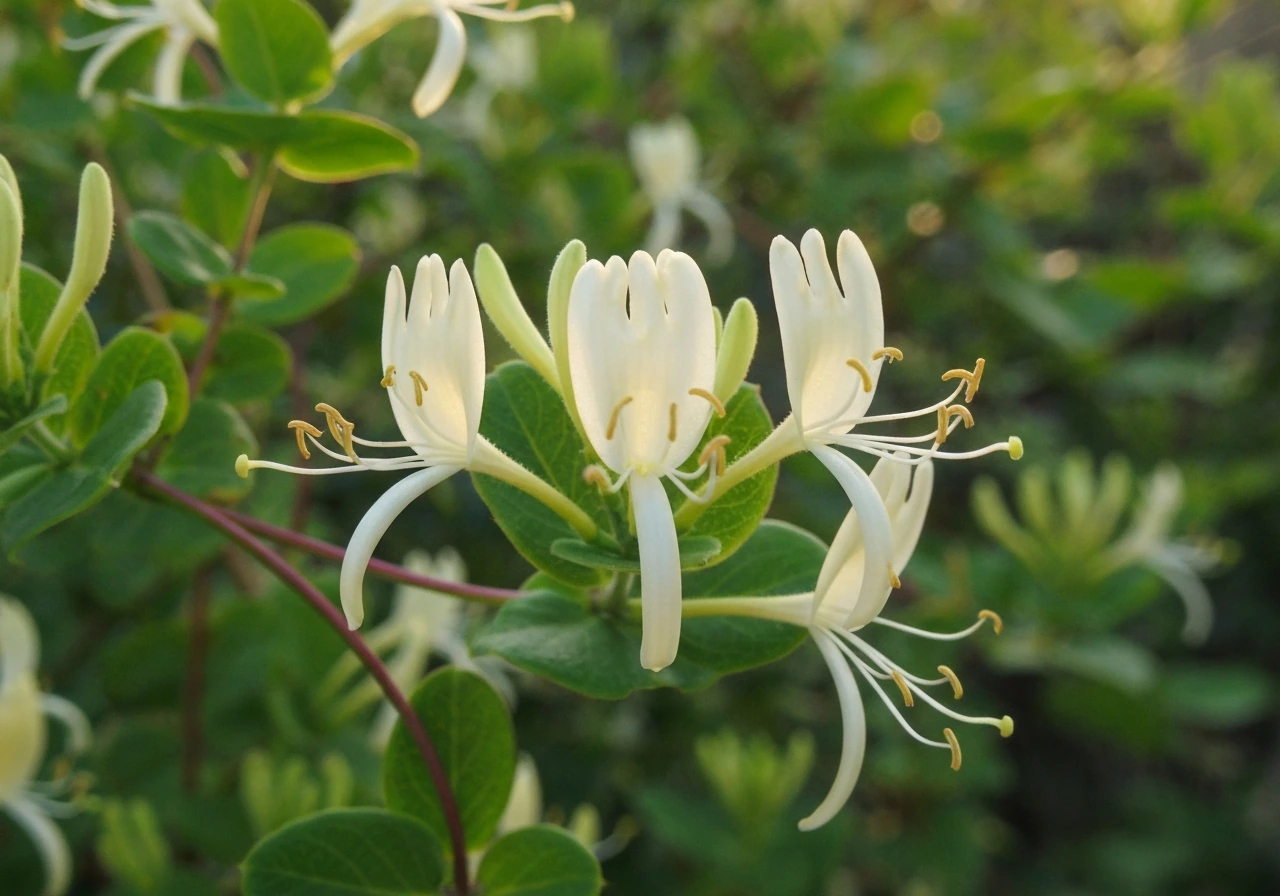
Honeysuckle belongs to the genus Lonicera, a large family that includes climbing vines, sprawling shrubs, and everything in between. The tubular, intensely fragrant flowers are magnets for hummingbirds and butterflies, and most varieties bloom in late spring through early summer with some reblooming through fall. The most commonly sold varieties include Lonicera sempervirens (trumpet honeysuckle, native to North America and non-invasive), Lonicera periclymenum (woodbine honeysuckle, popular in the UK and Europe), and Lonicera japonica (Japanese honeysuckle, fragrant but aggressively invasive in many climates, so avoid it unless you're in a contained situation). For most home gardeners, I'd point you straight to Lonicera sempervirens 'Major Wheeler' or 'John Clayton' for a well-behaved, stunning vine.
Where to Buy Honeysuckle Plants
There's no specific cultivar called '744T honeysuckle' to source, so you're shopping for the real Lonicera species that fits your climate and goals. Here's where I'd look, in order of reliability.
- Local independent nurseries: These are your best first stop. Staff can confirm what's in stock, tell you if a variety is suited to your hardiness zone, and you'll walk out with a healthy container plant ready to go in the ground. Call ahead and ask specifically for Lonicera sempervirens or Lonicera periclymenum.
- Big-box garden centers (Home Depot, Lowe's, Walmart): They reliably stock honeysuckle in spring and early summer. Labels can sometimes be vague ('honeysuckle vine' without a cultivar name), so check the tag for the Latin name before buying.
- Online specialty nurseries: Sites like Proven Winners, High Country Gardens, and Nature Hills Nursery ship named cultivars with clear botanical IDs. This is the best route if you want something specific like 'Major Wheeler' or 'Dropmore Scarlet.'
- Mail-order bare-root suppliers: Companies like Burpee and SpringHill Nurseries sell bare-root or plug honeysuckle at lower price points, typically shipped in early spring.
- Local plant swaps and garden clubs: Honeysuckle spreads readily and many gardeners propagate extras. A free rooted cutting from a neighbor is often just as good as a nursery plant.
When buying online, always verify the Latin name on the product page, not just the common name. 'Honeysuckle' can mean a dozen different things. If the listing doesn't include a species name, I'd skip it. For availability right now in July 2026, container plants should still be findable at nurseries, though selection thins out as summer heats up. If you're striking out locally, ordering online now means the plant ships in fall or early next spring when planting conditions improve anyway.
When to Plant Honeysuckle
Honeysuckle is fairly forgiving about timing compared to some flowering plants, but it does have a sweet spot. The general rule is to get it in the ground when outdoor temperatures are consistently around 55°F or above, which means spring planting after your last frost date is ideal. In most of the U.S., that's March through May depending on your zone. Fall planting (September through October) also works well because cooler temperatures reduce transplant stress and roots get time to establish before winter. Since it's currently early July, planting right now is possible but trickier: heat stress is real, and you'll need to be diligent about watering. If you have a specific variety like Magnolia “Little Gem,” focus on the right planting depth and consistent moisture during the first growing season Magnolia “Little Gem”. If you're in a hot climate like the Southeast or Southwest, I'd honestly wait until late September and plant in fall. If you're in the Pacific Northwest or upper Midwest where summer heat is more moderate, planting now with good irrigation and a bit of afternoon shade cloth is doable.
| Climate/Zone | Best Planting Window | Notes |
|---|---|---|
| USDA Zones 3-5 (Northern US, Upper Midwest) | April to late May | Wait until after last frost; fall planting by late September |
| USDA Zones 6-7 (Mid-Atlantic, Pacific Northwest) | March to May or September to October | Fall planting often easier; current July window doable with irrigation |
| USDA Zones 8-9 (Southeast, Southwest) | September to November | Avoid planting in summer heat; fall is strongly preferred |
| USDA Zones 10-11 (South Florida, Hawaii) | October to February | Skip summer entirely; cool season planting only |
Setting Up the Right Site and Soil
Honeysuckle isn't fussy, but it does have clear preferences. Get these right and the plant basically takes care of itself.
Sunlight
Full sun to part shade is the target range. If you want to grow Miss Kim lilac specifically, give it the most sun you can and aim for well-drained soil so it performs at its best Full sun to part shade. Honeysuckle blooms most heavily with at least 6 hours of direct sun per day. It tolerates part shade (3 to 4 hours of sun), but flowering will be noticeably reduced. I've seen honeysuckle planted on a north-facing fence barely flower at all, while the same variety on a south-facing wall was covered in blooms. Put it where it gets morning sun at minimum.
Soil
Honeysuckle prefers well-draining, moderately fertile soil with a pH between 6.0 and 7.5 (slightly acidic to neutral). It doesn't want to sit in wet soil, so if your ground stays soggy after rain, amend with compost and coarse grit or build up a raised planting bed. how to grow pink perfection camellias. Sandy soil is fine as long as you water more frequently. Heavy clay is the main enemy: break it up with 3 to 4 inches of compost worked into the planting area. You don't need rich soil. In fact, overly fertile soil encourages lush leafy growth at the expense of flowers, something I've noticed firsthand when gardeners go overboard with amendments.
Spacing and Support
For climbing varieties, space plants 5 to 10 feet apart and install a trellis, arbor, fence, or wire support before planting (it's much easier to do before the plant is in the ground). Honeysuckle twines rather than clinging with adhesive pads, so it needs something to wrap around: wire, thin wooden slats, or lattice all work. For a garden gate, choose a sturdy wire or lattice support so the vine can twine as it grows Honeysuckle twines rather than clinging with adhesive pads. Shrubby honeysuckle types can be spaced 4 to 6 feet apart as standalone specimens.
How to Plant Honeysuckle: Step by Step
Planting a Container-Grown Plant
- Water the container thoroughly an hour before planting so the root ball is moist and holds together.
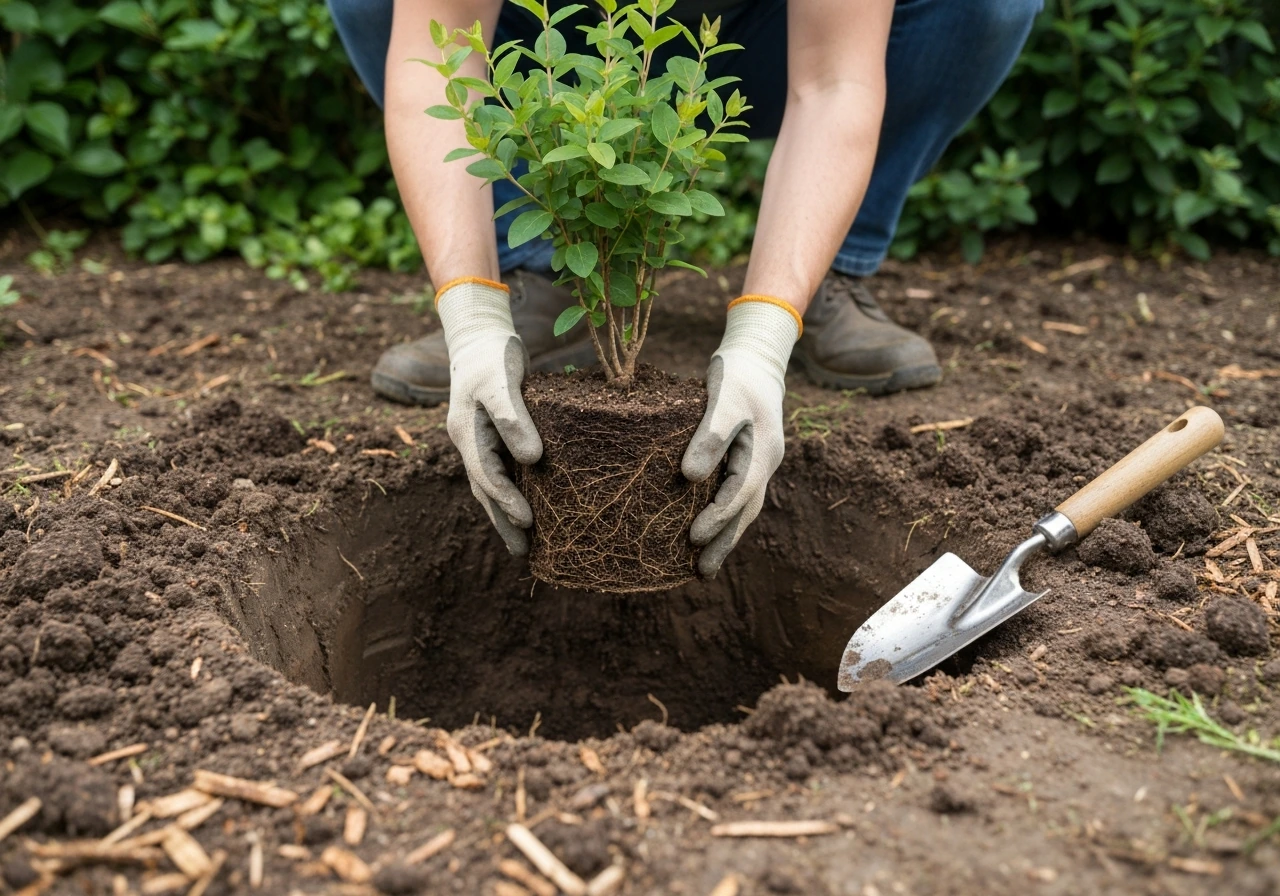
- Dig a hole twice as wide as the container and the same depth. You want the crown of the plant (where the stem meets the roots) sitting at soil level, not buried.
- Mix a shovelful of compost into the backfill soil. Skip fertilizer at planting; it can burn new roots.
- Remove the plant from the container and gently loosen any circling roots at the edges of the root ball with your fingers.
- Set the plant in the hole, backfill halfway, firm the soil around the roots with your hands, then water to settle it before adding the remaining soil.
- Create a shallow watering basin around the plant by mounding soil a few inches out from the stem in a ring. This directs water to the roots.
- Mulch with 2 to 3 inches of wood chips or shredded bark, keeping mulch a couple of inches away from the stem.
- Guide the first stems onto your support structure and loosely tie them with soft twine if needed.
Planting Bare-Root Honeysuckle
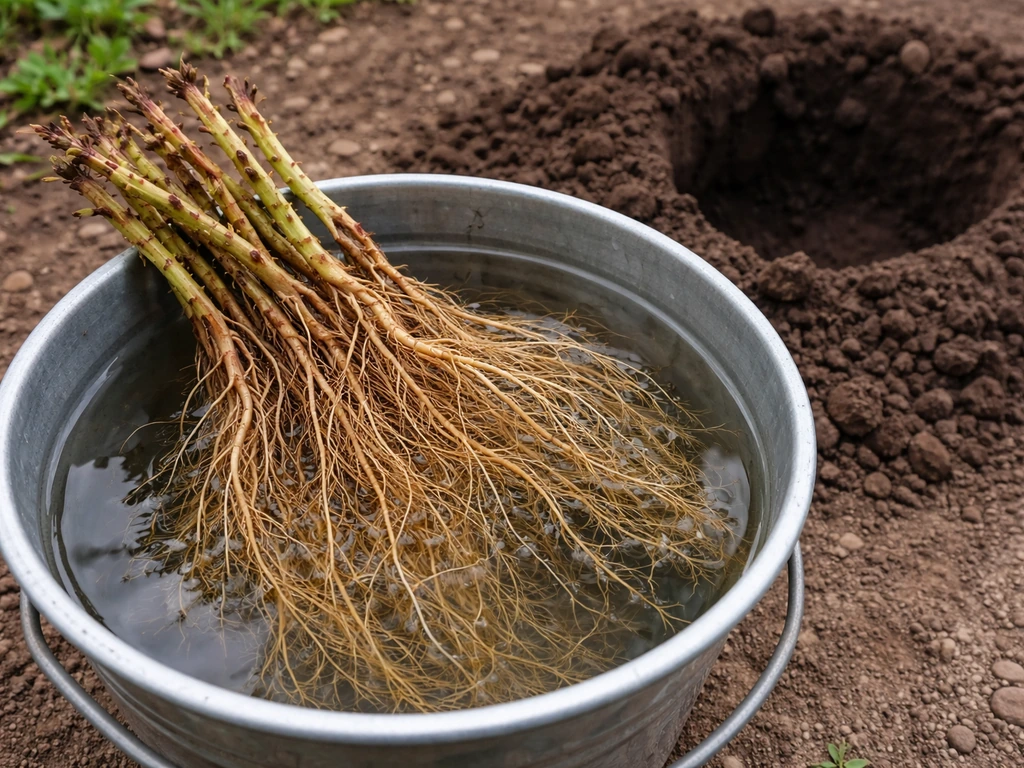
Bare-root plants arrive dormant, usually in late winter or early spring. Soak the roots in a bucket of water for 4 to 6 hours before planting. Dig a hole wide enough that roots can spread without bending, then mound a small cone of soil in the center of the hole. Set the plant on top of the mound with roots draping down naturally on all sides. The crown should sit at soil level. Backfill, firm down, and water deeply. Michelia champaca (champak) is a different flowering tree than honeysuckle, so planting and care steps will vary water deeply. Bare-root plants are slower to show leafy growth than container plants, so don't panic if nothing happens for a few weeks. The root system establishes first.
Watering, Feeding, and Pruning
Watering
For the first season, water deeply once or twice a week (more in hot weather) to keep the soil consistently moist but not waterlogged. A good rule: stick your finger 2 inches into the soil near the root zone. If it feels dry, water. Once established (usually after the first full growing season), honeysuckle is reasonably drought-tolerant and can get by on 1 inch of water per week from rain plus supplemental irrigation during dry spells. Don't overhead water if you can help it. Soaker hoses or drip irrigation at the base keeps foliage dry and reduces disease pressure.
Feeding
Honeysuckle doesn't need heavy feeding. A single application of a balanced slow-release granular fertilizer (something like a 10-10-10) in early spring as new growth emerges is usually all it needs. If your soil is already reasonably fertile and you mulch with compost annually, you may not need to fertilize at all. I'm skeptical of people who pour on fertilizer all season and then wonder why their honeysuckle isn't blooming. Excess nitrogen produces beautiful, lush leaves and almost no flowers. If you see lots of green growth but few blooms, stop fertilizing entirely and let the plant put its energy into flowering.
Pruning
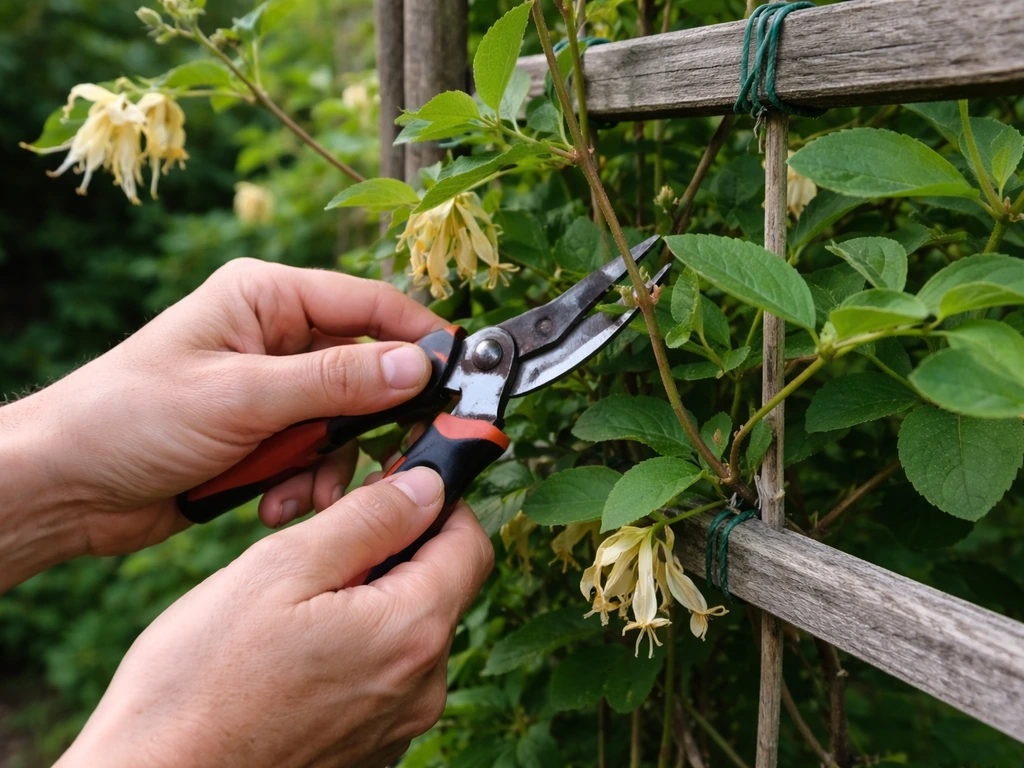
Most honeysuckle blooms on the current season's growth or on previous year's wood, depending on variety. The safest general approach: prune right after the main flowering flush, usually in late spring to early summer. This gives the plant the rest of the growing season to put on new growth that will carry next year's flowers. For overgrown or tangled vines, you can do a hard renovation prune in late winter before new growth starts, cutting stems back to about 12 to 18 inches from the ground. The plant will come back vigorously, though you'll lose that season's flowers. Annual light pruning, removing dead wood and cutting back the longest stems by a third, keeps honeysuckle from becoming an unmanageable thicket.
Troubleshooting: What Goes Wrong and Why
No flowers or very few blooms
This is the number one complaint. Nine times out of ten it comes down to one of three things: too much shade, too much nitrogen fertilizer, or pruning at the wrong time. Check all three. If you pruned heavily in late summer or fall, you likely cut off the wood that would have produced flowers. Plant in a sunnier spot next time or thin out surrounding plants that are shading your honeysuckle.
Yellowing leaves
Yellow leaves usually point to overwatering or poor drainage. If the soil around your plant stays soggy, the roots suffocate and can't take up nutrients, which shows up as yellow foliage. Cut back on watering, check that your planting site drains freely, and consider lifting the plant and replanting in a raised area if drainage is the underlying problem. Yellowing between leaf veins (with the veins staying green) can indicate iron chlorosis from overly alkaline soil. A soil pH test and an application of sulfur or chelated iron can correct this.
Pests
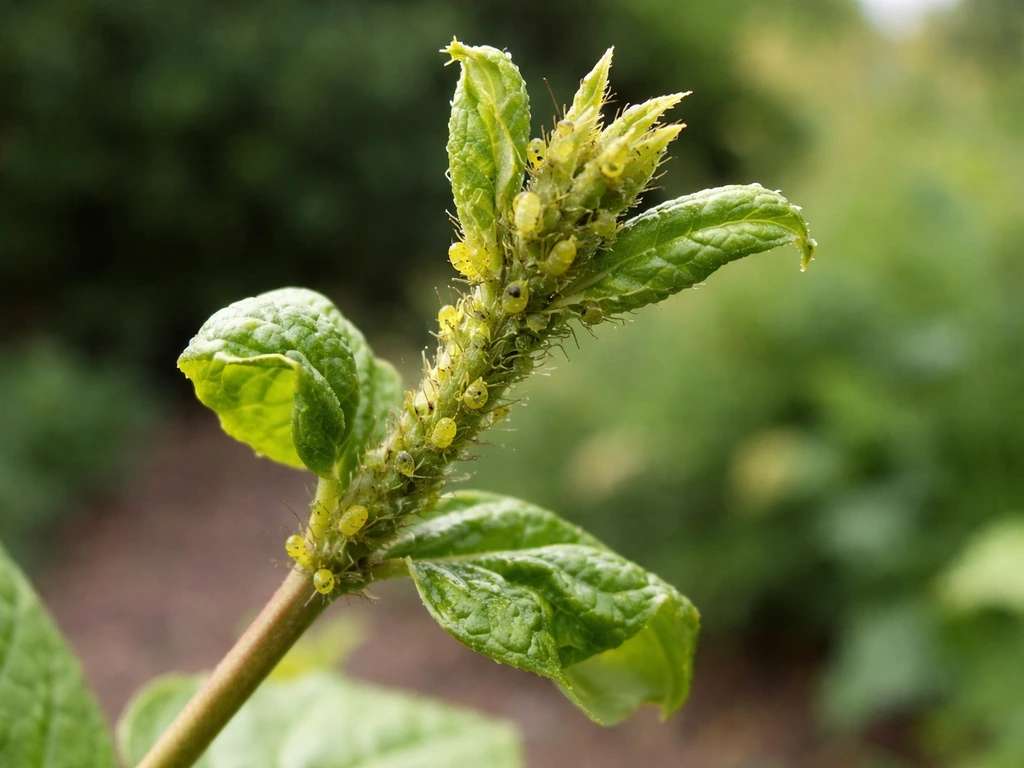
Aphids are the most common pest on honeysuckle, congregating on new growth and causing distorted, curled leaves. A strong blast of water from the hose knocks most colonies off. For persistent infestations, insecticidal soap spray applied in the early morning works well. Honeysuckle sawfly caterpillars can defoliate plants quickly in late spring: check the undersides of leaves for green caterpillars and handpick or use Bacillus thuringiensis (Bt) spray. Powdery mildew (a fungal disease showing as a white powdery coating on leaves) appears in hot, humid weather with poor air circulation. Thin out congested growth, avoid overhead watering, and treat with neem oil if it persists.
Slow or stalled growth
Brand new honeysuckle can look like it's doing nothing for weeks, especially bare-root plants. This is normal. The plant is building its root system underground before putting on top growth. As long as the stems look green and pliable (not shriveled and brown), it's alive. Keep watering consistently and resist the urge to fertilize heavily. Honeysuckle follows the classic 'sleep, creep, leap' pattern: year one it sleeps, year two it creeps, year three it leaps.
Long-Term Care: Winter Protection and Propagation
Winter protection
Most Lonicera species are hardy to USDA Zone 4 or 5 without any special protection once established. In the first winter after planting, especially if you planted in fall, mulch over the root zone with 3 to 4 inches of straw or wood chips to insulate against freeze-thaw cycles. In Zone 4 and colder, you can loosely wrap tender-stemmed vines with burlap during the worst of winter. In spring, don't rush to remove protective mulch until night temperatures stay reliably above freezing. Some dieback on the tips of stems in spring is normal after a hard winter. Just prune back to healthy green wood and the plant will flush out fresh growth.
Propagating your honeysuckle
Honeysuckle is one of the easier flowering vines to propagate, which makes it a great plant to share or multiply for free. The simplest method is softwood cuttings taken in late spring to early summer. Cut a 4 to 6 inch stem tip just below a leaf node, strip the lower leaves, dip the cut end in rooting hormone powder, and stick it into a pot of moist potting mix or perlite. Cover with a plastic bag to maintain humidity and place in bright indirect light. Roots usually form in 4 to 6 weeks. You can also try layering: pin a long stem to the ground with a U-shaped stake, cover the middle section with soil, and leave the tip exposed. After several months, the buried section will root and can be cut free from the parent plant.
If you enjoy growing fragrant flowering plants with that classic cottage-garden feel, honeysuckle sits in good company alongside other ornamental favorites. The same care principles around soil drainage, sun exposure, and seasonal pruning that make honeysuckle thrive apply to many flowering shrubs and climbers. The key is always getting the basics right from day one: the right site, decent drainage, and consistent watering through that first season. Get those three things locked in, and your honeysuckle will spend years paying you back with fragrant blooms every summer. If you want the same results with Michelia alba, plan for its specific light, soil, and watering needs rather than assuming it will behave exactly like Lonicera how to grow michelia alba.
FAQ
Is “744T honeysuckle” something I can buy as a real plant?
No. In Grow a Garden it was a virtual item tied to a duplication glitch. For real gardening, you need to shop by the Latin species or cultivar (for example, Lonicera sempervirens “Major Wheeler” or “John Clayton”), and avoid listings that do not include a proper Lonicera species name.
How can I tell if the honeysuckle I’m buying is invasive in my area?
Check the Latin name first, then compare it to your local invasive species guidance or extension recommendations. Japanese honeysuckle (Lonicera japonica) is commonly invasive in many climates, while North American trumpet honeysuckle (Lonicera sempervirens) is typically the safer choice for most home yards.
My honeysuckle gets afternoon shade. Will it still bloom?
It often will, but expect fewer flowers if you consistently get under about 6 hours of direct sun. A practical workaround is choosing the warmest wall or fence side you have, aiming for morning sun, and pruning nearby plants to reduce shading during the main flowering flush.
What’s the fastest way to improve poor flowering without changing the whole yard?
Do a quick diagnostic: reduce shade first, then check fertilizer. Overly high nitrogen is a common reason for lots of leaves and few blooms. If you’ve been feeding more than once a year, pause fertilizing and wait through the next flowering cycle after pruning right after bloom.
Can I plant honeysuckle right now in July if it’s hot where I live?
You can, but heat stress is the limiting factor. Use deep, less frequent watering that keeps the root zone evenly moist, provide temporary afternoon protection (shade cloth) if your site bakes, and avoid fertilizing until new growth is clearly underway.
How deep should I plant honeysuckle, especially in containers?
Set the crown at soil level, not buried. If you’re transplanting from a container, don’t plant it deeper than it sat in the pot, since burying the crown can worsen drainage issues and slow establishment.
Should I water with a hose on top of the leaves?
Try not to. Overhead watering increases disease risk and can promote mildew. Use drip or soaker at the base so foliage stays drier, then water deeply enough that moisture reaches beyond the top few inches.
Why are my honeysuckle leaves turning yellow but the plant still looks green elsewhere?
Yellowing often points to either soggy soil (poor drainage or overwatering) or nutrient issues from pH problems. If yellow is more pronounced while leaf veins remain greener, test soil pH for iron chlorosis (overly alkaline conditions) and correct accordingly rather than immediately adding more fertilizer.
What’s the correct pruning timing if I want flowers next year?
Prune right after the main flowering period, typically late spring to early summer. If you prune heavily in late summer or fall, you may remove the wood that would have produced next year’s blooms, leading to a disappointing cycle.
My vine looks untidy, can I train it onto a trellis from day one?
Yes, install support before planting and gently guide new shoots to twine around it. Honeysuckle typically twines rather than clings, so providing wire, lattice, or thin slats early prevents tangles and reduces the need for disruptive rewiring later.
How do I handle a bare-root honeysuckle that seems stalled for weeks?
That “doing nothing” phase is normal. It is usually forming roots first. Keep watering consistently, avoid heavy fertilization during establishment, and confirm the stems remain green and pliable before you judge success.
What’s the best emergency fix if my honeysuckle is in the wrong spot but I don’t want to lose it?
If drainage or light is the real problem, consider transplanting to a raised bed or a sunnier area rather than repeatedly fertilizing. Transplant shock is real, so move it during a cooler window (spring after frost or early fall) and keep moisture steady during the first several weeks.
How do I propagate honeysuckle if I don’t want a cutting to fail?
Use softwood tips in late spring to early summer, dip the cut in rooting hormone, and keep the medium consistently moist. Covering the cutting with a plastic bag helps humidity, and rooting usually takes about 4 to 6 weeks in bright indirect light.
How do I protect honeysuckle in winter if I’m in Zone 4 or colder?
Mulch over the root zone with 3 to 4 inches of straw or wood chips to reduce freeze-thaw stress. In colder zones, you can loosely wrap tender stems with burlap during the worst weather, then remove protection only once night temperatures are reliably above freezing.