
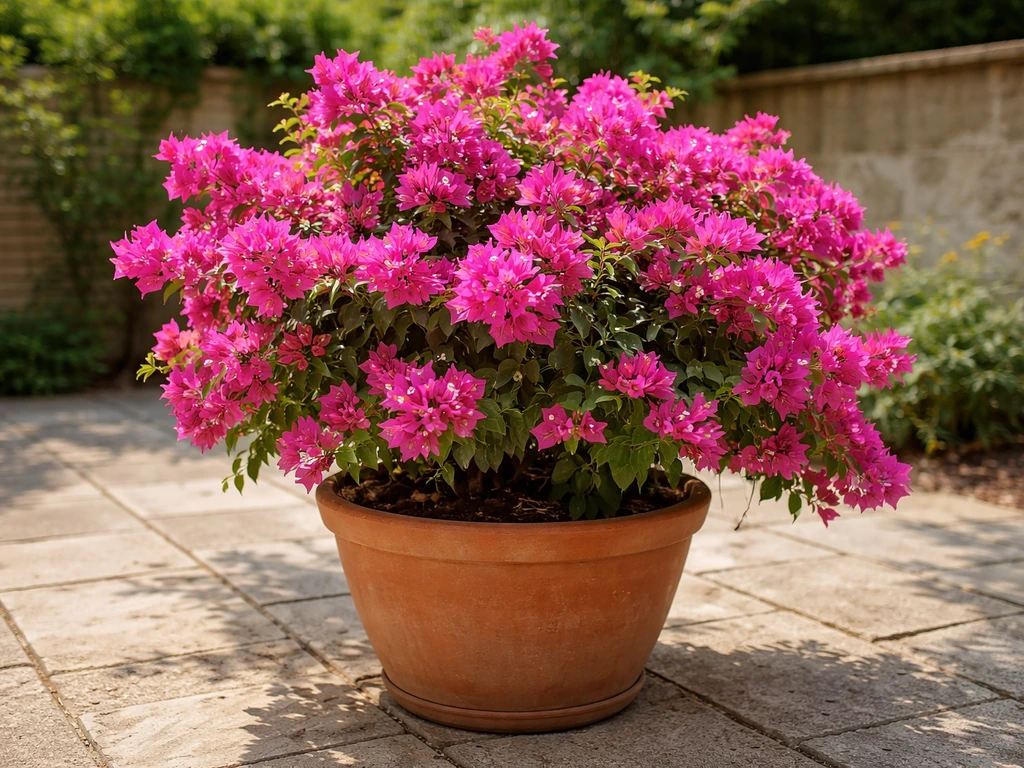
Yes, you can grow bougainvillea in the UK, but you need to go in with realistic expectations. It won't behave the way it does in Portugal or California. In Britain, bougainvillea is best treated as a container plant that spends summer outside in a warm, sunny spot and overwinters somewhere frost-free. Get that basic setup right and you'll be rewarded with those spectacular, vivid bracts that make this plant so addictive.
How to Grow Bougainvillea in the UK: Step-by-Step Care
Marcus Holloway
13 Jun 2026
Get it wrong and you'll spend winter watching it sulk and drop its leaves. This guide walks you through every step so you end up in the first camp. If you want more detail, you can follow our step-by-step guide on how to grow a bougainvillea in the UK.
Can bougainvillea actually grow in the UK? Here's the honest answer
Bougainvillea is a tropical and subtropical plant, and the UK climate is not its natural home. But that doesn't mean it's impossible. One species, Bougainvillea glabra, holds an RHS hardiness rating of H4, meaning it can technically survive temperatures down to around -5 to -10°C. In practice though, even H4 plants need the right conditions to hit that limit and recover well. For most UK gardeners, especially outside the warmest corners of the south and southwest, treating bougainvillea as a tender plant that needs winter protection is by far the safer strategy.
What success looks like in the UK is a vigorous, colourful plant in a pot that flowers from late spring through summer on the patio, then gets carried inside before the first frosts hit. You're not going to get the 10-metre wall coverage you see in Mediterranean holiday snaps. But a well-grown container bougainvillea reaching 60–90 cm and absolutely covered in bracts on a sunny terrace? That's completely achievable, and it looks stunning.
The two things that trip most UK growers up are winter cold and overwatering. Get those two elements under control and bougainvillea is actually not a fussy plant. It's drought-tolerant, loves being a bit pot-bound, and rewards neglect more than it rewards fussing.
Choosing the right variety and where to buy
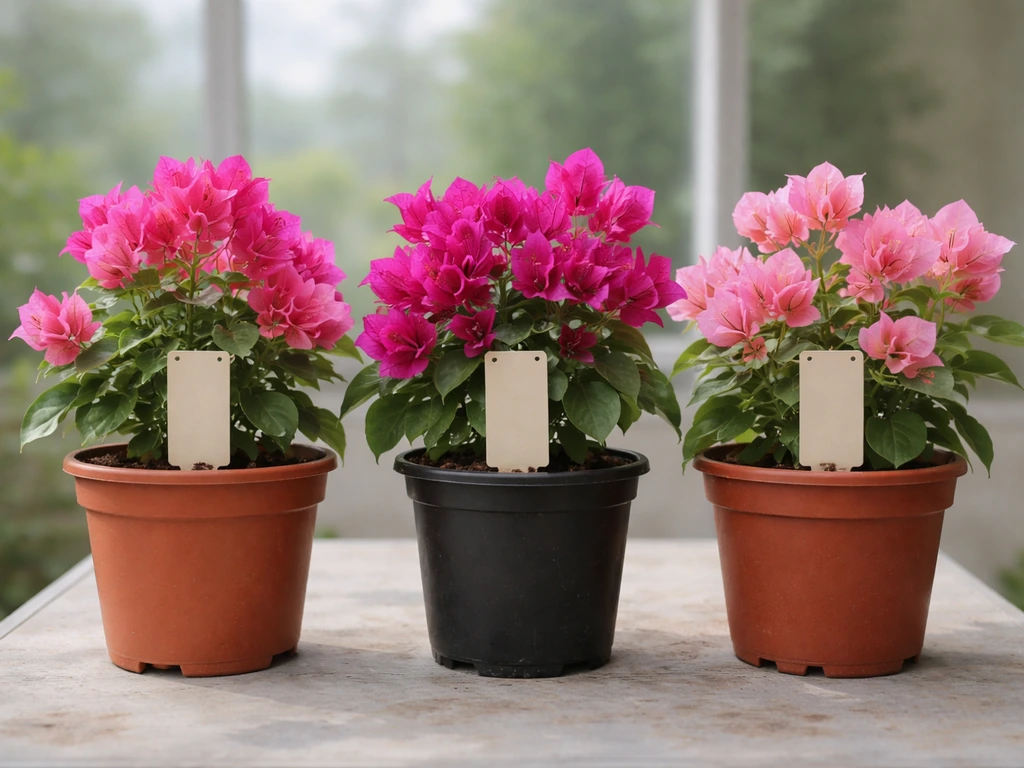
Not every bougainvillea sold in UK garden centres is equally well-suited to the container-and-overwinter lifestyle you'll be running here. The two types the RHS recommends for UK growing are Bougainvillea glabra and the hybrid Bougainvillea × buttiana. Both are noted for flowering when young, which matters a lot when you're working with a plant that only gets one British summer in your garden per year.
Within those groups, look out for named cultivars with the RHS Award of Garden Merit. Bougainvillea × buttiana 'Poulton's Special' is one worth seeking out, with its distinctive magenta-rose bracts. For a more compact, patio-friendly option, Bougainvillea 'Helen Johnson' is a good pick, typically reaching around 60–90 cm, which makes it easy to manage in a pot and store over winter without needing a huge conservatory.
Buy from a reputable UK nursery rather than a supermarket or DIY store impulse buy. A good nursery will sell you a healthy, well-established plant that's already adapted to UK conditions rather than a stressed specimen that's been sitting under artificial lights in an overheated foyer. Ask whether the plant has been hardened off at all, and check the roots aren't bursting out of the drainage holes, which usually signals the plant is already pot-bound and ready to flower rather than needing a repot immediately.
The best setup: location, sunlight, and pot vs ground
Where to put it outside
Bougainvillea is a full-sun plant. It needs as much direct light as you can give it during the British summer. The RHS's ideal night temperature for good outdoor flowering is around 18–21°C, which tells you straight away you want the warmest microclimate in your garden: a south-facing wall, a sheltered patio, or a sun trap courtyard. If your garden is exposed, windy, or predominantly shaded, bougainvillea is going to struggle. Wind damages the bracts and cools the plant faster than it can handle. A sheltered spot against a warm wall is genuinely the difference between a magnificent plant and a disappointing one.
If you have a greenhouse or conservatory, these are excellent options for extending the season at both ends. Under glass, protect the plant from the most intense direct summer sun, which can scorch the bracts. Bright but slightly diffused light is ideal in that setting.
Pot vs planting in the ground
For almost all UK gardeners, a pot is the only realistic option. Planting bougainvillea in the ground makes overwintering almost impossible unless you're in a very mild coastal area of Cornwall or the Scilly Isles. In a pot, you can move it inside in autumn and back out in late spring. In the ground, you can't. Container growing also gives you control over the soil, the drainage, and the root restriction that bougainvillea actually benefits from. The only exception might be a large conservatory or heated glasshouse where you can plant into a border permanently, but even then you're managing temperature rather than relying on the UK outdoor climate.
Choosing the right pot
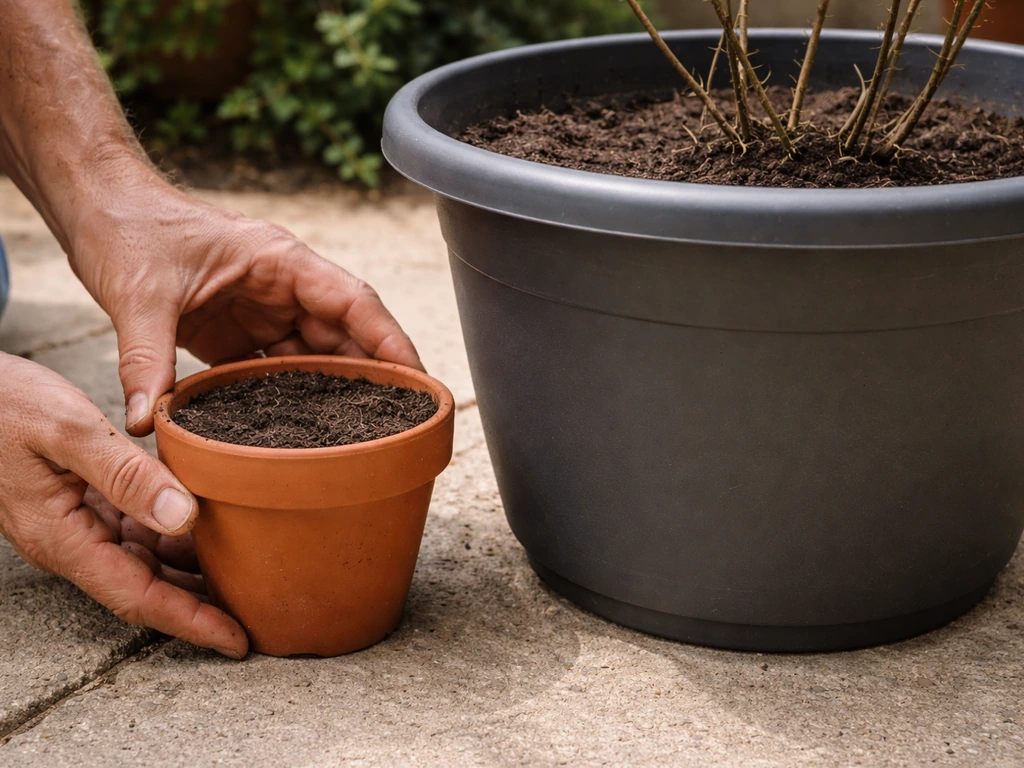
Here's something counterintuitive: bougainvillea flowers better when its roots are slightly restricted. Don't plant it into a huge container thinking you're being generous. Keep it slightly pot-bound. When you do need to repot, move up just one container size, not two or three. A terracotta pot works well because it's breathable and helps the compost dry out between waterings, which bougainvillea appreciates. Make sure there are ample drainage holes. Sitting in waterlogged compost is one of the fastest ways to kill this plant in the UK's damp climate.
Soil, watering, and feeding for UK conditions
Getting the compost right
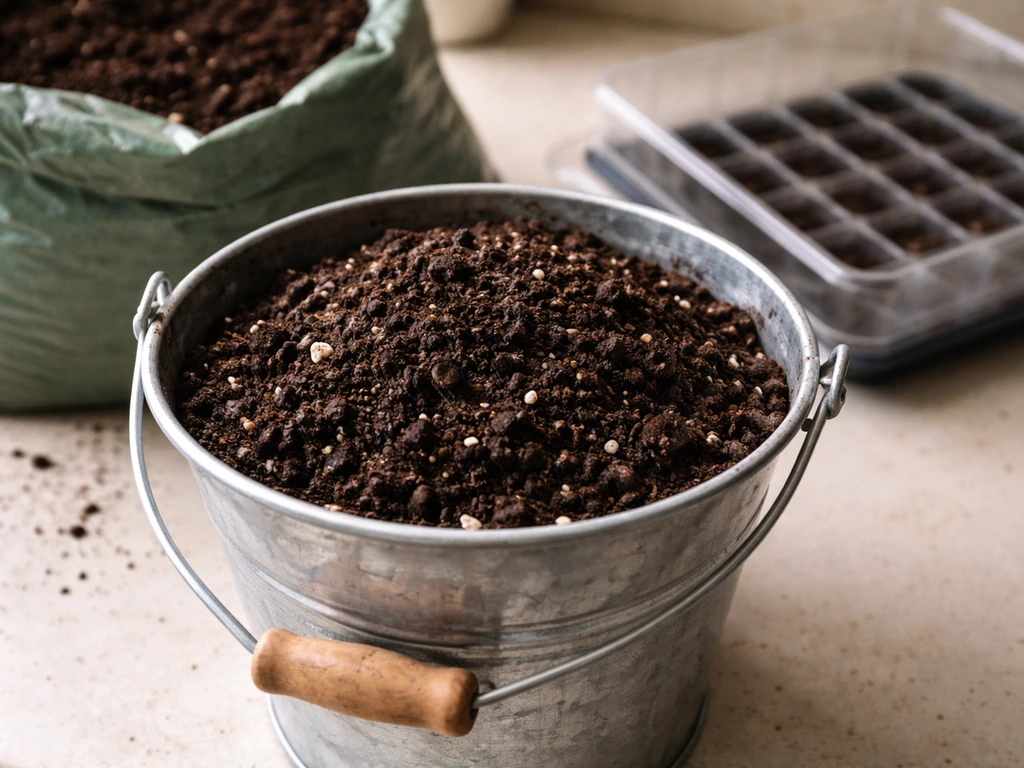
Use a free-draining, loam-based compost such as John Innes No. 3, either on its own or mixed with about 20–30% perlite or grit to improve drainage further. Bougainvillea comes from rocky, well-drained slopes and its roots hate sitting in moisture. A heavy, moisture-retentive compost that works brilliantly for hostas will slowly rot a bougainvillea from the roots up. Keep the pH around 5.5–6.5 (slightly acidic to neutral).
Watering: less is more, especially in the UK
The BBC Gardeners' World advice on watering bougainvillea is one of the most useful pieces of guidance you'll find: water thoroughly, then allow the compost to almost dry out before watering again. In a UK summer, that might mean watering once or twice a week during hot spells, but much less frequently during cooler or cloudy periods. In winter, the watering drops dramatically. You're looking at watering very occasionally, only if the compost has dried out several centimetres below the surface. Overwatering in cool weather is the single most common reason bougainvillea dies over a British winter, so when in doubt, wait.
Feeding to encourage flowering
Start feeding in spring once the plant shows signs of new growth. Use a balanced liquid fertiliser at half-strength fortnightly from early spring, then switch to a high-potassium feed (a tomato or flowering plant fertiliser works perfectly) fortnightly once you see buds forming. This potassium boost is what drives bract colour and flower production. To get multi coloured bougainvillea bracts, keep feeding with potassium once buds start and give the plant plenty of direct sun during the day.
Taper off the feeding from mid-July onward as you start preparing the plant for its eventual transition back inside. Gardening Know How recommends feeding potted bougainvillea with half-strength liquid fertiliser from the start of spring until mid-July, then tapering down later in the season.
Don't keep pushing fertiliser right to the end of summer or you'll encourage soft new growth that isn't robust enough to handle the drop in temperature.
Planting timing and a seasonal care calendar
Timing is everything with bougainvillea in the UK because the window of suitable outdoor temperatures is short. Move the plant outside too early and a cold snap will set it back weeks. Leave it outside too long in autumn and frost will cause serious damage or death. Here's how the year breaks down:
| Season / Month | What to do |
|---|---|
| Late February / early March | Prune back to encourage new growth. Cut back last year's long stems by up to half. This timing, right before growth begins, gives the best response. |
| March to April | Keep indoors or in the greenhouse. Increase watering gradually as temperatures rise and growth starts. Begin fortnightly balanced feeding once growth is clearly active. |
| Late May / early June | Move outside once night temperatures are reliably above 10°C. Place in the warmest, most sheltered spot available. Don't rush this step. |
| June to August | Full outdoor season. Water regularly but let it dry out between waterings. Feed with high-potassium fertiliser fortnightly during flowering. After each flush of bracts drops, cut back the long growth by about half to encourage a second flush. |
| Late August / September | Begin tapering off feeding. Watch night temperatures closely. Bring inside before the first frost, ideally when nights drop toward 10°C. |
| October to February | Overwinter in a frost-free, bright spot. Water very sparingly. Minimal or no feeding. Plant may go semi-dormant and drop some leaves — this is normal. |
The pruning timing is worth dwelling on. The RHS recommends pruning in late winter or early spring, just before growth begins. Aylett Nurseries, a UK nursery with good hands-on experience with this plant, pinpoints the end of February as their preferred moment. After the first flush of bracts has fallen during summer, a light cut back of the longer growth by about half can trigger a second flush later in the season, which is well worth doing.
Overwintering: the part that makes or breaks UK success
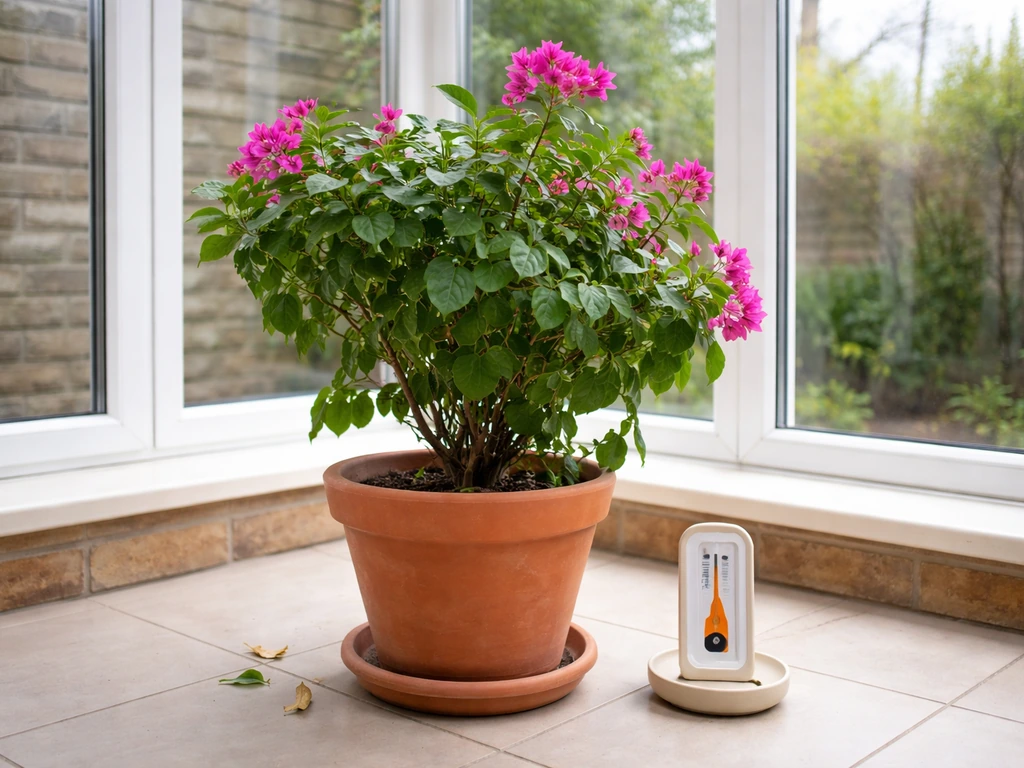
This is where most UK bougainvillea stories either succeed or end. Getting the plant through a British winter is the critical skill, and it's much more manageable than people expect once you understand what the plant needs.
When to bring it inside
Don't wait until the first frost to act. Bougainvillea starts struggling once night temperatures drop toward 10°C, and you'll see leaf drop start well before any actual frost. The rule of thumb is: bring it inside before the first frosts arrive, ideally when you see overnight temperatures in the forecast consistently dropping to 10°C or below. In most parts of the UK, that means September to early October. Have your indoor spot ready before the weather forces the issue.
Where to overwinter it
You have several options depending on what space you have available:
- Conservatory or bright porch: The best option for most UK homeowners. Aim for night temperatures no lower than 8–10°C. At this temperature, the plant may stay semi-active and could even flower a little through winter if the light is good enough.
- Unheated greenhouse: Viable if your greenhouse stays frost-free. Aim for a minimum of 4–6°C overnight. The plant will likely go dormant, lose some leaves, and look a bit sorry, but it will come back strongly in spring. Keep the compost almost completely dry.
- Cool spare room: Works if the room stays above 6–8°C and has reasonable natural light. A darker, cooler location will trigger dormancy and leaf drop, but the plant can still survive if you water almost nothing through winter.
- Heated greenhouse or bright indoor room above 10°C: The most comfortable option for the plant. Leaf drop is minimal and the plant stays more active, making the spring transition smoother.
Overwintering temperature targets at a glance
| Storage location | Min. night temp | Expected plant behaviour | Watering during winter |
|---|---|---|---|
| Heated conservatory / bright room | 10°C+ | Stays semi-active, minimal leaf drop, may flower | Water when top few cm of compost dry out |
| Cool conservatory / unheated greenhouse | 4–8°C | Semi-dormant, some leaf drop, survives well | Water very sparingly, once compost is dry several cm down |
| Cool dark room / garage | 4–6°C (frost-free) | Full dormancy, significant leaf drop, survives if dry | Water barely at all, perhaps once a month at most |
The overwintering mistakes that kill bougainvillea
Overwatering in cool conditions is the main killer. When the plant is dormant or semi-dormant and temperatures are low, the roots cannot dry out and rot sets in fast. If the plant drops leaves and you respond by watering more, thinking it's thirsty, you'll compound the problem. Leaf drop in cool conditions is normal. Trust the process, keep the compost close to dry, and wait for spring.
The other common mistake is pruning before bringing the plant inside for winter. It's tempting to tidy it up, but cutting into the wood removes the reserves the plant needs for spring recovery. Do your main prune in late February instead, just as the plant is starting to think about waking up.
Finally, avoid moving the plant through dramatic temperature swings. Going from a warm patio at 25°C straight into a cool room at 8°C overnight will trigger a leaf dump. Transition it gradually over a few days if possible, or at least acclimatise it in a cooler spot for a week before its final winter home.
A few things worth knowing before you start
If you're drawn to other statement patio plants with exotic looks, it's worth knowing that brugmansia offers a similarly dramatic, tropical feel with large hanging trumpet flowers and is also container-grown and overwintered in the UK in much the same way. And if you get the bougainvillea bug, experimenting with different bract colours in a mixed hanging basket can be a brilliant way to make the most of a small space through the summer months.
Bougainvillea in the UK rewards gardeners who are willing to manage the seasonal transition carefully. It's not a plant you can plant and forget in the ground. But if you treat it as a prized container plant with a clear summer-outside, winter-inside routine, maintain a warm frost-free space for overwintering, and resist the urge to overwater when temperatures drop, there's absolutely no reason you can't have one of the most spectacular flowering plants on the street. The bracts really are worth the effort.
FAQ
What is the best winter setup for bougainvillea in the UK if I don’t have a greenhouse or conservatory?
Use the coolest, brightest frost-free place you can (unheated porch, spare room with a window, conservatory) and aim for minimal watering. Keep the compost barely moist, not wet, and watch leaf drop, it’s normal. If you only have a warm interior (above about 15°C), reduce light-independent watering and expect slower spring recovery because the plant won’t get true dormancy.
My bougainvillea has started dropping leaves, is that a sign of overwatering?
Leaf drop can happen when temperatures fall toward 10°C or during winter dormancy, not just from soggy compost. Check the top few centimetres first, if it feels dry, don’t water, and focus on frost protection. If the compost is consistently wet and the stems feel soft or blackened, then it’s likely overwatering and root stress.
How can I tell whether my bougainvillea needs repotting in a container?
Repot only when roots are clearly circling tightly or bursting through drainage holes, and ideally do it in spring when growth resumes. A good sign you should not repot yet is steady flowering, because bougainvillea generally flowers better when slightly pot-bound. When you do repot, move up only one pot size.
What’s the safest watering schedule in UK weather during late summer and early autumn?
Water thoroughly on a dry-down cycle, then wait until the compost almost dries out. As days cool and nights drop, extend the gap between watering rather than sticking to a calendar routine. In overcast weeks, it can drop to just occasional top-ups, if the surface feels damp for days, wait longer.
Can I keep bougainvillea outside all winter under protection like a fleece or patio cover?
Usually no, because the problem is not just frost on the leaves, it’s cool, wet compost and sustained cold nights that trigger root rot. Protective covers help only if the plant stays in a genuinely frost-free zone and the container stays dry. If you cannot keep it frost-free and on the dry side, bring it indoors.
What size pot should I start with for a patio bougainvillea?
Choose a pot that’s snug for the plant, not oversized, because excess compost holds moisture too long. Many UK growers aim for a container that supports slight root restriction, then only increase by one size at a repot. If you’re using a terracotta pot, ensure it has enough drainage holes for quick emptying.
Is there a pruning mistake I should avoid in the UK?
Avoid major pruning before winter storage. Pruning too early removes stored reserves needed for spring recovery and can reduce the next flush. Aim for pruning just before growth begins in late winter or early spring, then do only light shaping after the first summer bracts have dropped if you want to encourage a second flowering cycle.
Why does my bougainvillea bloom poorly, even though it survives the winter?
Two common causes are insufficient direct sun and pot size that is too large. Bougainvillea needs the brightest south-facing, sheltered microclimate you can manage in summer, and it usually flowers best when slightly pot-bound. Also, if buds form but you haven’t switched to a high-potassium feed, bract colour and flowering can lag.
Should I fertilise during the winter indoors?
No, stop feeding once the plant is cooling down and entering dormancy (or semi-dormancy). Resume feeding in spring only when you see fresh growth starting. If you fertilise while growth is stalled, you can encourage weak soft shoots and increase the risk of decline in low-light conditions.
How do I prevent bracts from getting damaged outdoors in windy UK gardens?
Place the container in a sheltered sun trap, against a warm wall, behind a screen, or in a courtyard corner. Wind abrades bracts and speeds cooling. If you must site it in exposed areas, consider a physical barrier and keep the plant close to the wall to capture reflected warmth.
Can I grow bougainvillea from seed in the UK?
It’s possible but rarely practical for patio results, because seed-grown plants are unpredictable in bract colour, growth habit, and flowering time. Named cultivars (like compact options for pots) are usually what you want for reliable summer bracts in a single UK growing season.