
Bougainvillea is one of those plants that looks impossibly dramatic when it's thriving and impossibly stubborn when it isn't. The good news: once you understand what it actually wants, it's not that hard to grow. It needs heat, bright light, lean soil, and a bit of tough love with water. Get those four things right, and you'll have cascades of vivid bracts from spring through fall. Get them wrong, and you'll have a lot of green leaves and zero flowers. This guide covers everything from planting to pruning, whether you're growing it as a sprawling vine, training it into a tree form, or keeping it in a pot on a sunny patio.
How to Grow a Bougainvillea: Fast, Blooming Care Steps
Marcus Holloway
20 Apr 2026
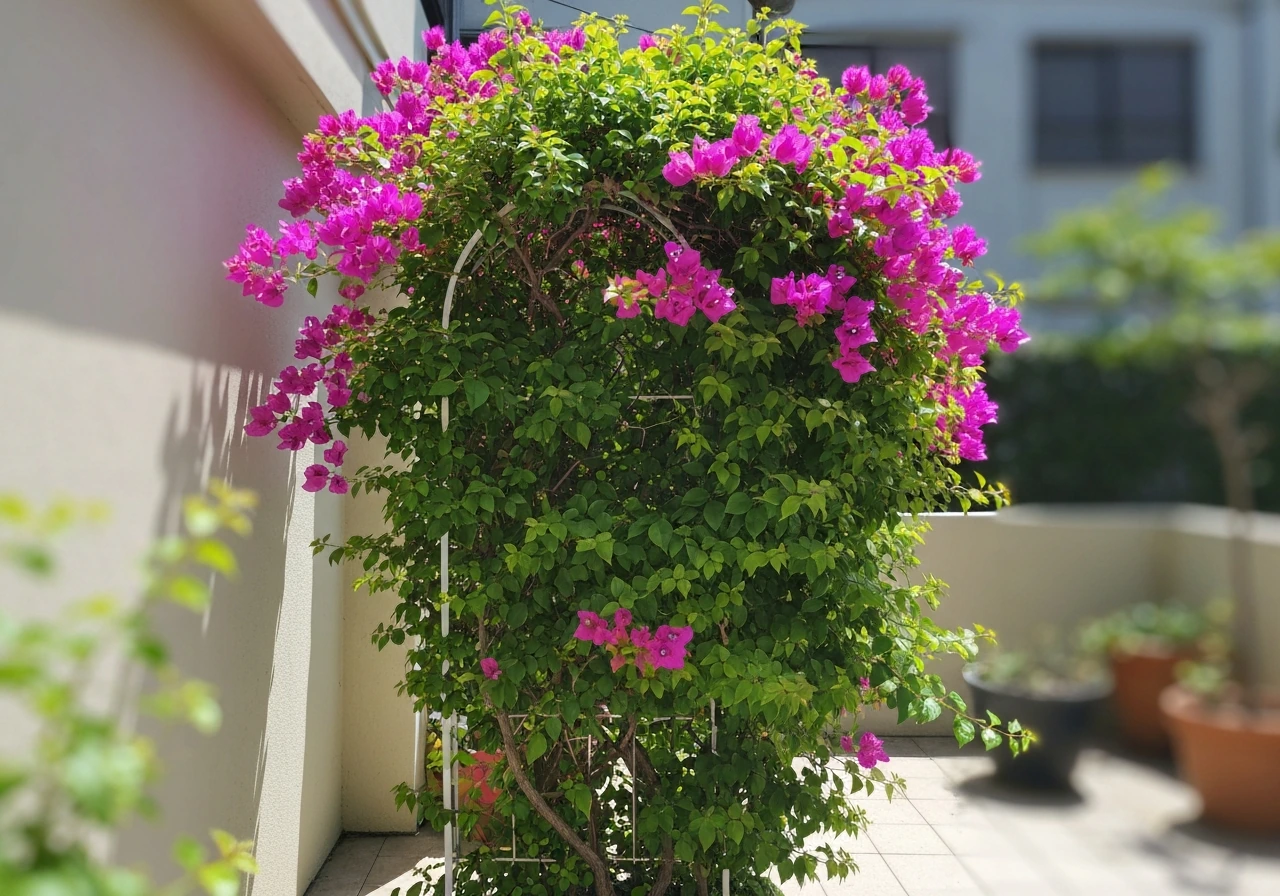
Getting the basics right: site, sunlight, warmth, and what to expect
Before you buy a plant, get honest with yourself about your climate. Bougainvillea is truly at home in USDA Zones 10 and 11, and it will survive Zone 9 if you protect it from frost. Below that, you're growing it as a container plant that comes indoors for winter, and that's a perfectly valid approach, but it changes the game significantly. The RHS pegs the absolute minimum safe night temperature at 10°C (50°F). Let it drop below that, and you risk serious damage. Freezing temperatures will kill it outright.
Sunlight is non-negotiable. If you want a different dramatic night-bloomer, see our guide on how to grow brugmansia for similar heat and light needs. Texas A&M's research is clear: bougainvillea needs at least four hours of direct sun daily just to bloom, and more is always better. Hawaii's CTAHR extension confirms that high light intensity is directly linked to how soon and how profusely it flowers. This is not a plant for a north-facing wall or a shady courtyard. Full sun, ideally six or more hours, is the baseline. If you're growing it indoors or on a covered patio, you need to be realistic, the bracts will be sparse if the light is inadequate.
Manage your expectations about the timeline. A young plant in its first season is mostly establishing roots. You may get some color, but the big floral show typically comes in year two and beyond once the root system is solid. That said, if you get the conditions right from day one, you can be surprised at how quickly bougainvillea moves.
How to plant bougainvillea: containers vs. in-ground, soil, and spacing
Planting in the ground
If you're in Zone 9B through 11, planting directly in the ground is the way to go for the most vigorous, long-term growth. In Zones 10 and 11, you can plant year-round according to UF/IFAS. Pick your sunniest spot and make sure the drainage is excellent. Bougainvillea does best in slightly acidic soil with a pH just over 6.0, per Clemson's HGIC. Avoid heavy clay or anything that sits wet. If your soil drains slowly, raise the bed or amend heavily with coarse sand and organic matter. Florida Extension (ENH 874) specifically warns against high-peat mixes that retain too much moisture. Wet roots are one of the fastest ways to kill this plant.
At planting, work a fertilizer high in phosphate into the soil. CTAHR's OF-38 guide recommends this specifically to help establish flowering early. Space vigorous varieties at least 5 to 10 feet apart if you're planting multiple plants along a fence or wall. They will fill in. Be gentle with the root ball when transplanting since bougainvillea roots are surprisingly fragile. Don't tease them apart or shake off the soil. Ease the root ball in intact and firm the soil around it.
Growing in containers
Container growing works well and is actually advantageous in cooler climates because you can move the plant indoors for winter. Use a well-draining potting mix, not a standard peat-heavy all-purpose mix. Add perlite if needed to improve drainage. Choose a pot that's proportionally sized: bougainvillea actually blooms more reliably when slightly root-bound, so don't jump straight to a giant container. A 10 to 14-inch pot is a good starting point for a young plant. Make sure there are adequate drainage holes. Terracotta pots work well because they help wick excess moisture away from the roots.
Watering and fertilizing for fast growth and abundant flowers
Watering: the drier side wins
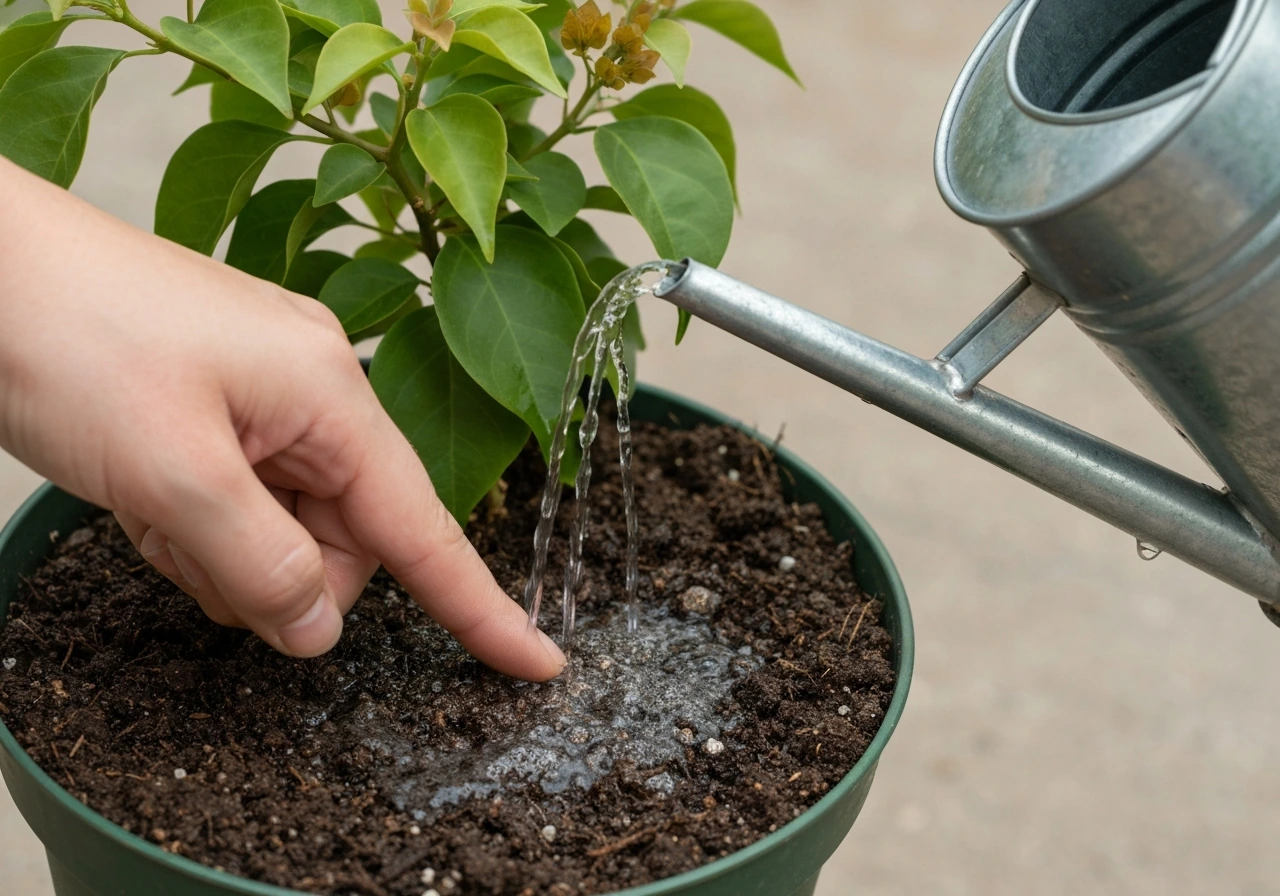
Here's where a lot of people go wrong. Bougainvillea is drought-tolerant once established, and it actually needs some drought stress to trigger heavy flowering. CTAHR's research advises keeping soil moisture on the dry side to support bract production. Water deeply when you do water, then let the top few inches of soil dry out completely before watering again. For established in-ground plants in warm climates, this might mean watering once a week in summer heat and barely at all in cooler months. For container plants, check more frequently since pots dry out faster, but still let the soil dry between waterings. Overwatering is far more common than underwatering with bougainvillea, and it's harder to fix.
During the rest period in winter, when growth slows and light levels drop, cut back watering significantly. Texas A&M recommends keeping the plant cool but above 50°F at this stage, with minimal water. This rest period is actually important for triggering the next flush of flowering.
Fertilizing: feed right for more flowers
Once your plant is established and actively growing, fertilize regularly through the growing season. A balanced fertilizer works during the vegetative growth phase, but once you want to push flowering, shift to a formula with lower nitrogen and higher phosphorus and potassium. High-nitrogen fertilizers encourage lush green growth at the expense of flowers. A slow-release granular fertilizer applied in spring, supplemented with a liquid bloom booster every few weeks through summer, is a solid routine. Don't fertilize heavily in fall or winter when the plant is resting. And a word of honest caution: fertilizer won't compensate for bad light or the wrong temperature. If your bougainvillea isn't flowering, fix the environment first before reaching for plant food.
Pruning and training: vine, tree, taller, and everything in between
Growing it as a vine
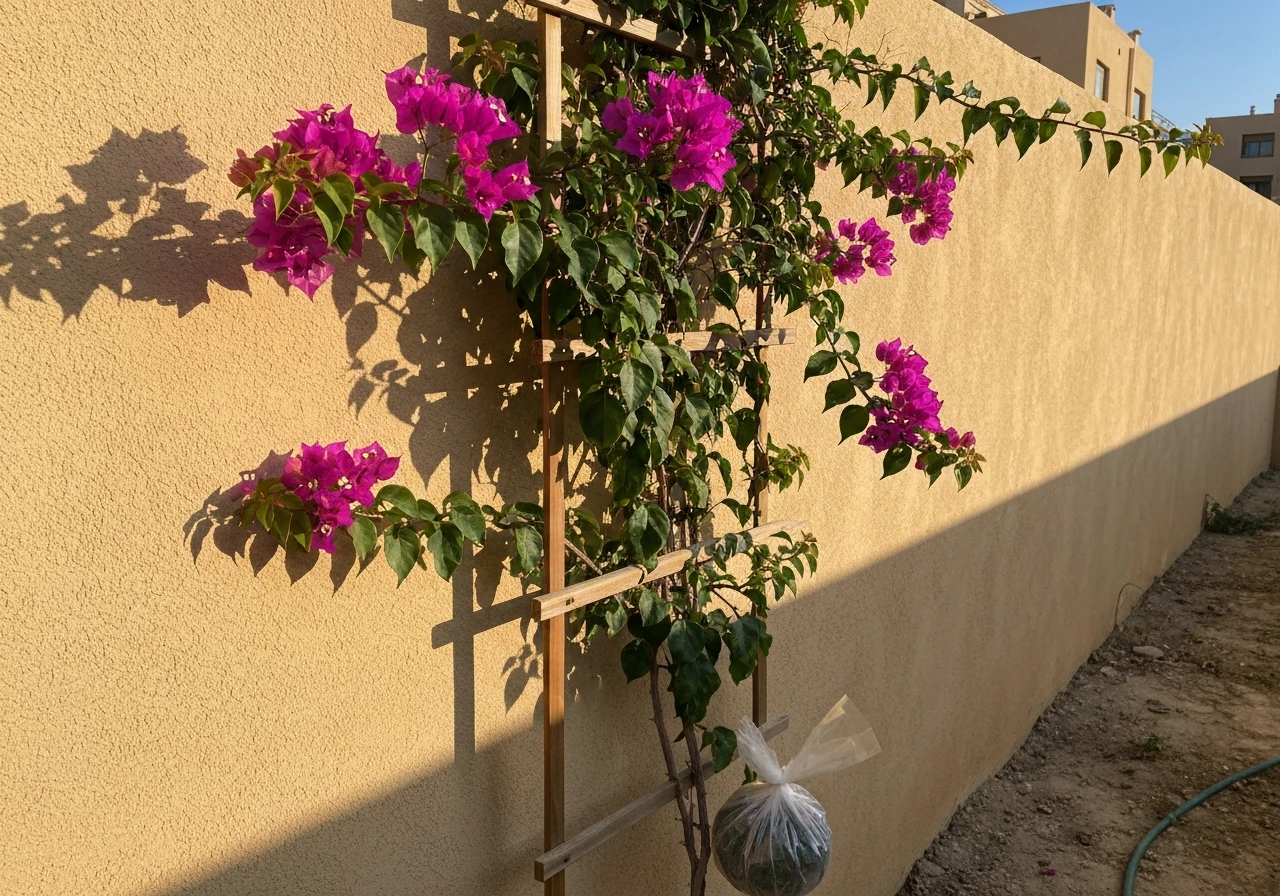
Left to its own devices, bougainvillea wants to climb and sprawl. As a vine, it's stunning on a fence, pergola, arch, or wall. The thorny canes don't have tendrils, so you'll need to tie them to a support as they grow. Use soft garden ties and attach new growth loosely every few weeks during the active season. Train the main canes in the direction you want, and let the lateral shoots develop naturally off those. The more you spread the canes horizontally rather than straight up, the more flowering shoots you'll get because horizontal growth encourages bract production more than vertical shoots shooting straight up.
Training it into a tree form
Growing bougainvillea as a standard (tree form) is absolutely doable and looks spectacular. Start with a young plant and select one strong central stem as the trunk. Remove all side shoots from the bottom portion of this stem as it grows, keeping growth only at the top to form the canopy. Stake the trunk firmly while it's establishing.
Once the trunk reaches your desired height (commonly 3 to 5 feet for a patio standard), pinch the top to encourage branching and then let the canopy bush out. Prune the canopy back by about a third after each flowering flush to keep the shape tidy and stimulate the next round of blooms.
UH, CTAHR’s L-8 extension guide explains that pruning timing should be based on growth flushes and flowering on older versus newer wood [Prune the canopy back by about a third after each flowering flush to keep the shape tidy and stimulate the next round of blooms. ](https://www. ctahr. hawaii.
edu/oc/freepubs/pdf/l-8. pdf). It takes a couple of seasons of consistent work, but the result is genuinely impressive.
Making it grow taller and directing growth upward
If you want your bougainvillea to grow taller, the key is giving it a tall support structure from the start and actively tying the lead shoots upward. Don't let them flop or twist sideways. Prune away competing growth at the base that doesn't contribute to the upward direction. Fertilize adequately in spring to fuel strong vertical growth, and make sure the plant has maximum light at the height you want it to reach. It's also worth noting that taller, more structural growth comes from plants in the ground rather than containers, which naturally limit root expansion and overall height.
General pruning timing and technique
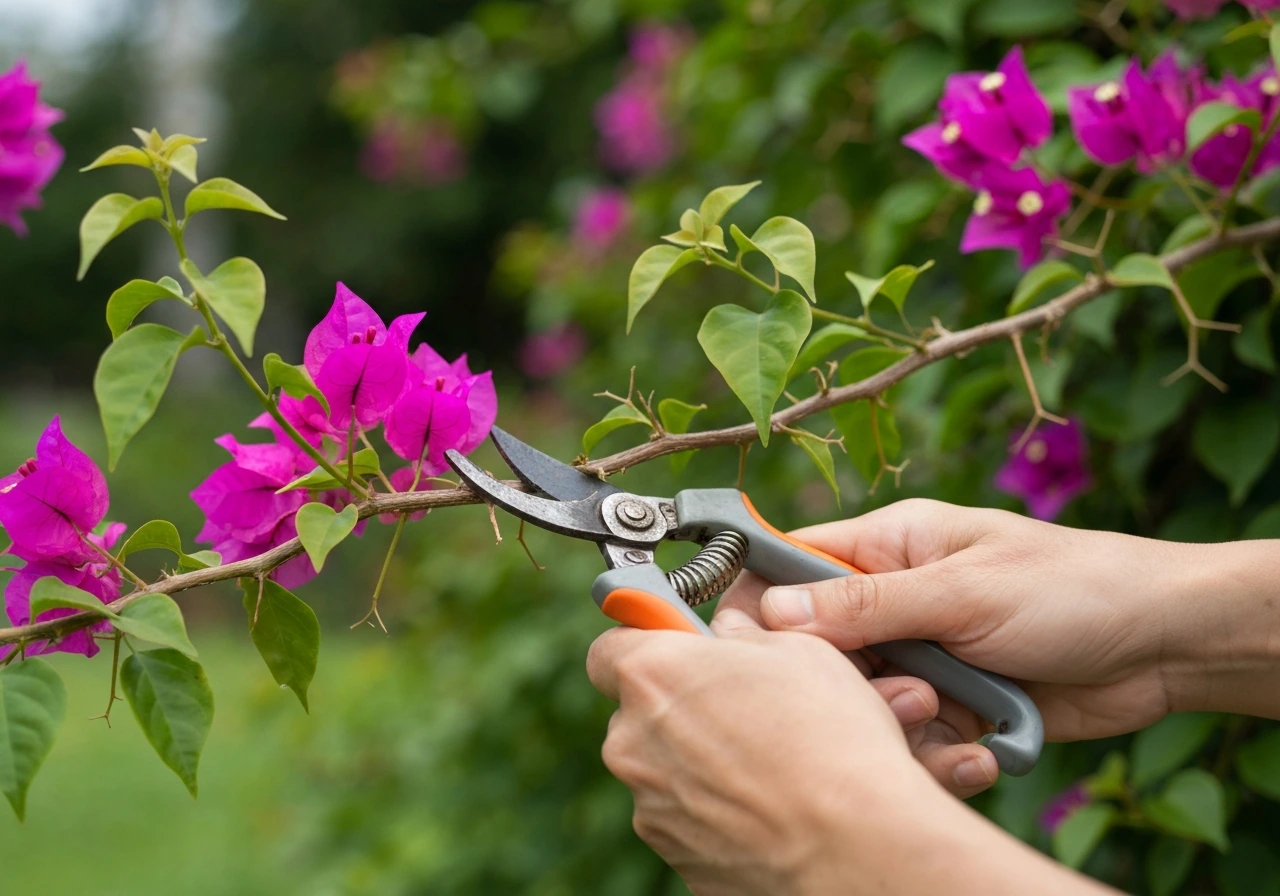
The best time for a major prune is after the main flowering flush, typically in late summer or early fall in warm climates, or just before spring growth starts. Light shaping and removal of dead wood can happen any time. Pruning hard encourages vigorous new growth, and new growth is where flowering happens. Don't be timid: bougainvillea responds well to a confident cut. Use clean, sharp secateurs and wear thick gloves because those thorns are serious. After pruning, you'll often see a fresh burst of growth and then a new wave of bracts within six to eight weeks.
Growing outdoors vs. at home: climate, overwintering, and placement
Outdoor growing in warm climates
In Zones 10 and 11, bougainvillea is essentially a no-fuss outdoor plant once established. Plant it in full sun, give it a structure to climb or space to sprawl, and it will reward you generously. Zone 9 growers can succeed outdoors but need to protect plants from frost: a layer of mulch over the root zone helps, and having a frost cloth or plan ready for cold snaps is essential. The top growth may die back in a hard frost, but established roots often regenerate in spring if the cold wasn't extreme.
Growing at home and overwintering in cooler climates
If you're in Zone 8 or below, or in the UK (where a dedicated approach is needed), container growing and bringing the plant inside before first frost is the standard approach. For a UK-focused approach, follow our guide on how to grow bougainvillea in the UK, including winter protection and indoor placement. Move it indoors before temperatures drop to 10°C (50°F) at night. Inside, put it in your brightest spot, ideally a south-facing window or under grow lights.
Reduce watering significantly during winter and don't fertilize. The plant may drop leaves, which is normal. Think of it as a rest, not a crisis. In spring, once night temperatures reliably stay above 50°F, move it back outside and gradually reintroduce it to full sun over a week or two to avoid leaf scorch.
Growing bougainvillea in the UK specifically involves managing a fairly short outdoor season, so that warrants its own detailed discussion. Similarly, growing in hanging baskets is a popular container approach that has specific care considerations worth exploring. Hanging baskets are a popular way to grow bougainvillea at home, and they require a few extra details for best blooms growing in hanging baskets.
Indoor placement tips
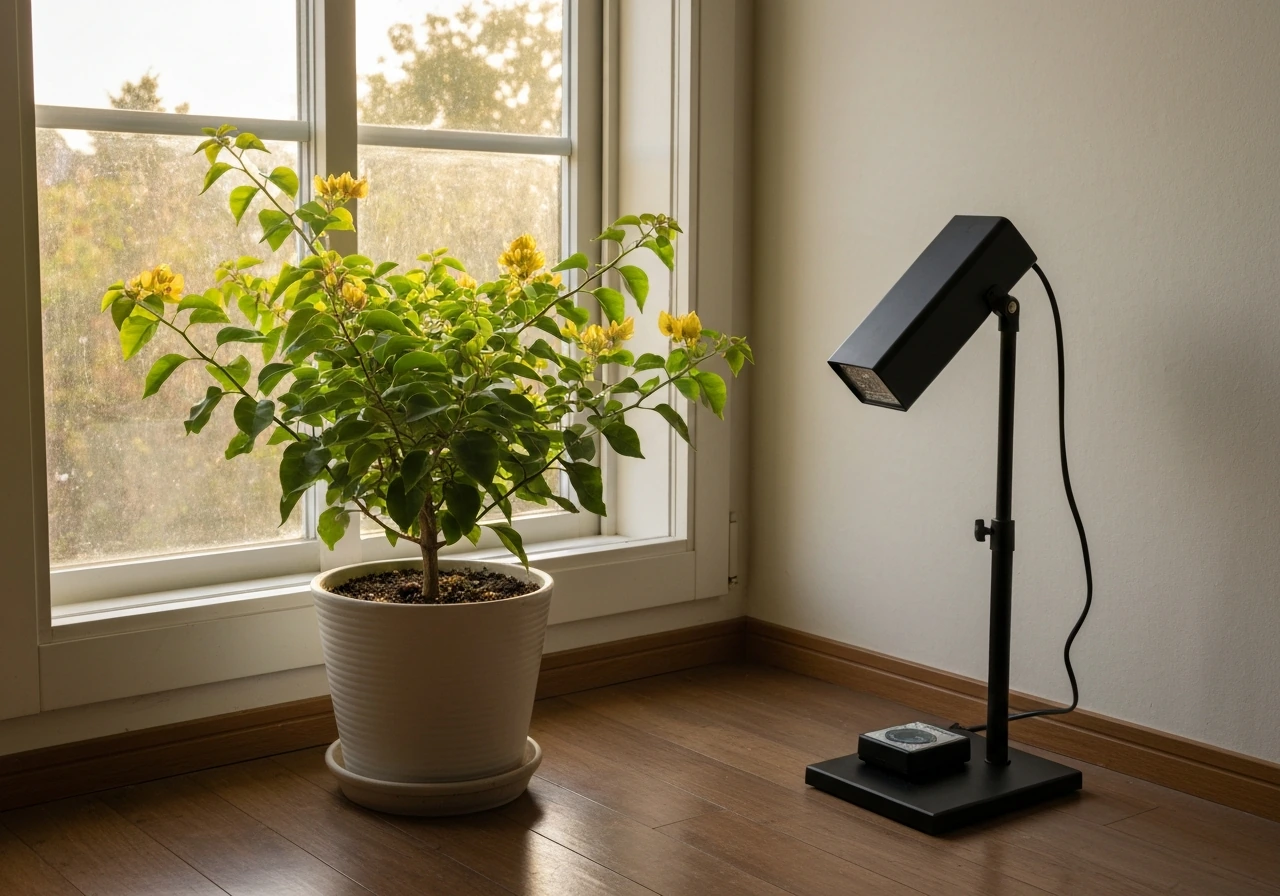
Indoors, position matters enormously. A south or west-facing window is ideal. If natural light is limited, a full-spectrum grow light placed close to the foliage for eight or more hours a day can supplement adequately. Keep it away from heating vents and air conditioning drafts. Bougainvillea also dislikes being moved frequently once it's settled, so choose your spot and commit to it rather than shifting the pot around every few weeks.
Troubleshooting: not growing, not flowering, or growing too slowly
When bougainvillea isn't performing, the cause is almost always one of four things: not enough light, temperatures too low, overwatering, or overfertilizing with nitrogen. Here's how to diagnose each.
| Symptom | Likely Cause | Fix |
|---|---|---|
| No flowers or very few bracts | Insufficient light or high-nitrogen feeding | Move to full sun (6+ hrs direct); switch to low-N, high-P/K fertilizer |
| Yellowing leaves, soggy soil | Overwatering or poor drainage | Let soil dry out; check drainage holes; reduce watering frequency |
| Lots of lush green growth, no color | Too much nitrogen fertilizer | Stop feeding with high-N products; use bloom booster instead |
| Slow or no growth overall | Too cold, or root-bound in too-small pot (or wrong pot size) | Check night temps are above 50°F; repot if roots are circling heavily |
| Plant drops leaves in winter | Normal dormancy response to low light and cool temps | Reduce watering, stop feeding, wait for spring |
| Wilting despite moist soil | Root rot from overwatering | Reduce watering immediately; check roots and repot into fresh dry mix if rot is present |
One pattern I see repeatedly: gardeners who can't get their bougainvillea to flower assume it needs more fertilizer and add more. That often makes things worse. The flowering trigger for bougainvillea is environmental, not nutritional. It wants bright sun, a little heat stress, and slightly dry soil between waterings. Once those conditions are met, flowers follow almost automatically. Fertilizer is supportive, not the driver.
If growth is genuinely very slow and the conditions seem right, consider the root situation. A severely root-bound container plant may need a one-size-up repot, done carefully in spring. Conversely, a plant in a pot that's too large for its root system can struggle to establish because the excess soil stays wet too long. Match pot size to root volume and you'll see better progress.
Finally, if you're growing a variety that's simply a slow grower (some compact varieties are bred to stay small), don't mistake slow growth for failure. Multi-colored and variegated bougainvillea types, for example, can grow at different rates depending on the variety. Identifying what you actually have planted can save a lot of frustration.
Your action plan: what to do right now
If you're planting now in spring, you're in the best possible window. Get the plant into its sunniest location, whether that's a prepared garden bed with good drainage and a pH just over 6. 0, or a well-draining container with perlite added to the mix. Amend with a phosphate-rich fertilizer at planting.
Water it in well, then back off and let the soil dry before watering again. Tie any canes to their support structure right away so growth goes where you want it. Then step back. Your main job from here is to resist overwatering, keep it in full sun, and prune after each flowering flush to encourage the next round.
Do those things consistently and you'll have a plant that turns heads every season.
FAQ
Why is my bougainvillea growing lots of leaves but no bracts?
Most bougainvillea “won’t flower” cases come from light and water habits, not fertilizer. If your plant is getting fewer than about four hours of direct sun, move it to the brightest spot you have first, then switch to deeper but less frequent watering (let the top few inches dry). Only after those changes, use a low-nitrogen, higher-phosphorus feed during active growth.
When should I prune bougainvillea so I don’t lose flowers?
Yes, but do it with purpose. If you cut before the plant has finished its current flush, you can remove flowering wood and reduce the next cycle. Plan major pruning after the main bracts fade (late summer to early fall in warm climates), then do only light deadwood or shaping cuts anytime.
How often should I water bougainvillea in a pot?
Even in warm climates, a container can be treated more like “always watch the soil” than “stick to a calendar.” Water deeply, then wait until the top few inches are fully dry, and use a pot with real drainage holes. In winter, increase the spacing further, since cool temperatures slow uptake and make soggy mix more likely.
Will repotting or using more fertilizer fix a bougainvillea that won’t bloom?
Do not chase growth with a huge fertilizer or a larger pot. Too much nitrogen pushes leaf growth, and a too-large container stays wet longer around roots. If your plant is established and not blooming, reduce fertilizer strength and ensure the pot size matches the root system, leaving it slightly snug.
What pests or problems should I watch for on bougainvillea?
Powdery mildew is uncommon on bougainvillea compared with some other ornamentals, but pests like aphids, whiteflies, and scale can cluster on new growth. Check the undersides of leaves and along stems, and address early with a targeted insecticidal soap or horticultural oil (especially during active growth), since heavy infestations can sap vigor and flowering.
My bougainvillea drops leaves indoors. Is that normal, and how can I reduce it?
If it’s indoors, choose stability. Place it in a consistently bright window or under grow lights for at least eight hours a day, keep it away from heater/AC blasts, and avoid rotating the pot constantly. Movement after it settles can trigger leaf drop and slow flowering.
Is it safe to handle bougainvillea and prune it, and what tools should I use?
Thorns are one reason, but the more important reason is that cane damage and bruised bark can lead to dieback and missed flowering wood. Use sharp, clean secateurs, wear thick gloves, and avoid pruning in cold conditions where fresh cuts can be stressed.
How do I train bougainvillea into a tree (standard) without breaking the structure?
A standard (tree form) bougainvillea can be damaged by wind if the trunk is not properly staked until it’s strong. Stake firmly while it establishes, remove lower side shoots only on the trunk portion, and pinch the top once it reaches your desired height to build branching at the canopy.
Why are my bougainvillea bracts small or pale?
If your bracts are tiny or the color is weak, the most common cause is insufficient direct sun. Next most common is soil that stays too wet, or feeding too nitrogen-heavy. Correct those first, then remember bract display can take a season to fully improve after changing conditions.
Can I grow bougainvillea from cuttings, and what should I expect?
Yes, but match the method to your goal. Bougainvillea can be grown from cuttings, but expect slower establishment than buying a rooted plant, and the first flush may be modest. Use well-draining medium, warm conditions, and avoid overwatering since cuttings are prone to rot.