
Yes, bougainvillea absolutely thrives in hanging baskets, and when you get the conditions right, it becomes one of the most spectacular flowering displays you can hang from a porch, pergola, or sunny wall. The trick is treating it like the sun-hungry, drought-tolerant, slightly rebellious plant it is: full sun all day, a big enough basket, a lean potting mix with excellent drainage, and regular pruning to keep the growth dense and the color coming. Skip any one of those, and you'll end up with a green tangle that refuses to bloom. Nail them all, and you'll have cascading bracts in hot pink, magenta, orange, or white from spring through autumn.
How to Grow Bougainvillea in Hanging Baskets: Step-by-Step
Marcus Holloway
8 Jun 2026
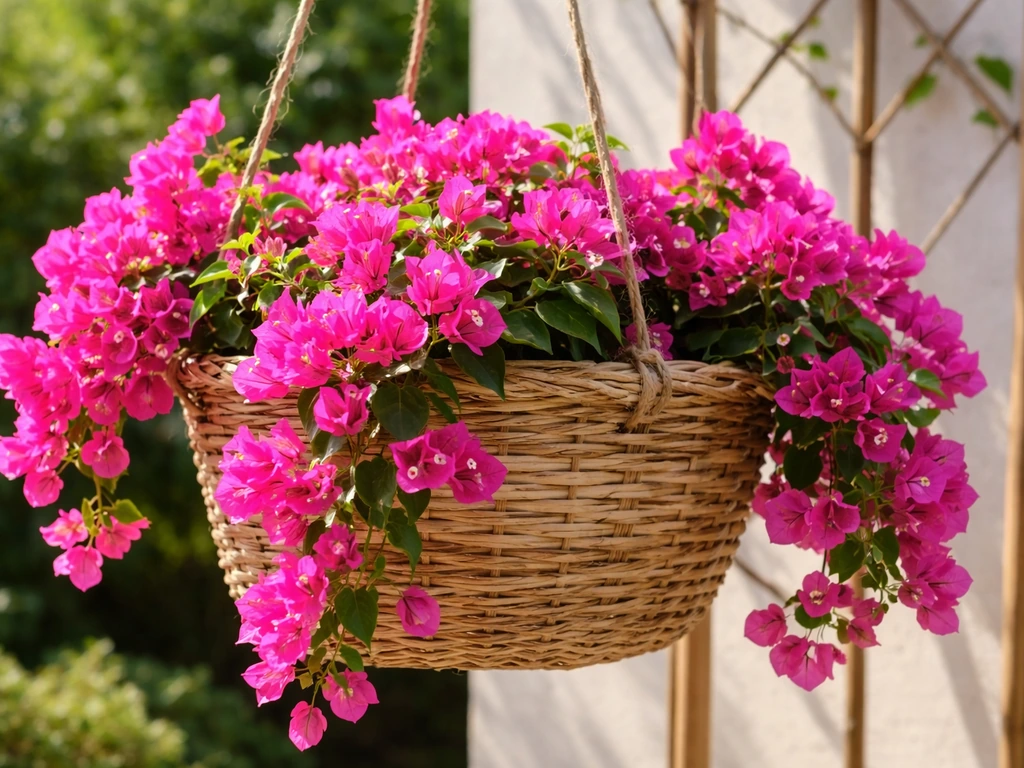
Is bougainvillea actually a good choice for hanging baskets?
It's a fair question, because bougainvillea has a reputation as a big, sprawling, slightly thorny climber that doesn't immediately scream 'hanging basket plant.' In the ground, some varieties will reach 10 metres and happily swallow a fence. But in a container, the restricted root space naturally limits growth and, here's the part most people don't realize, that stress actually encourages blooming. Bougainvillea flowers best when it's slightly root-bound and slightly water-stressed, which makes a hanging basket one of the best environments you can give it for reliable colour.
The main challenges specific to hanging baskets are heat and drying. Baskets lose moisture much faster than pots on the ground, and they're often exposed to more wind. For most plants, that would be a problem. For bougainvillea, it's almost ideal. The caveat is that you'll need to water more frequently than you might expect, and you need to be honest about your climate: bougainvillea is hardy only in USDA zones 9 through 11, so if you're anywhere colder, you need a plan for overwintering it indoors.
Choosing the right variety and basket size
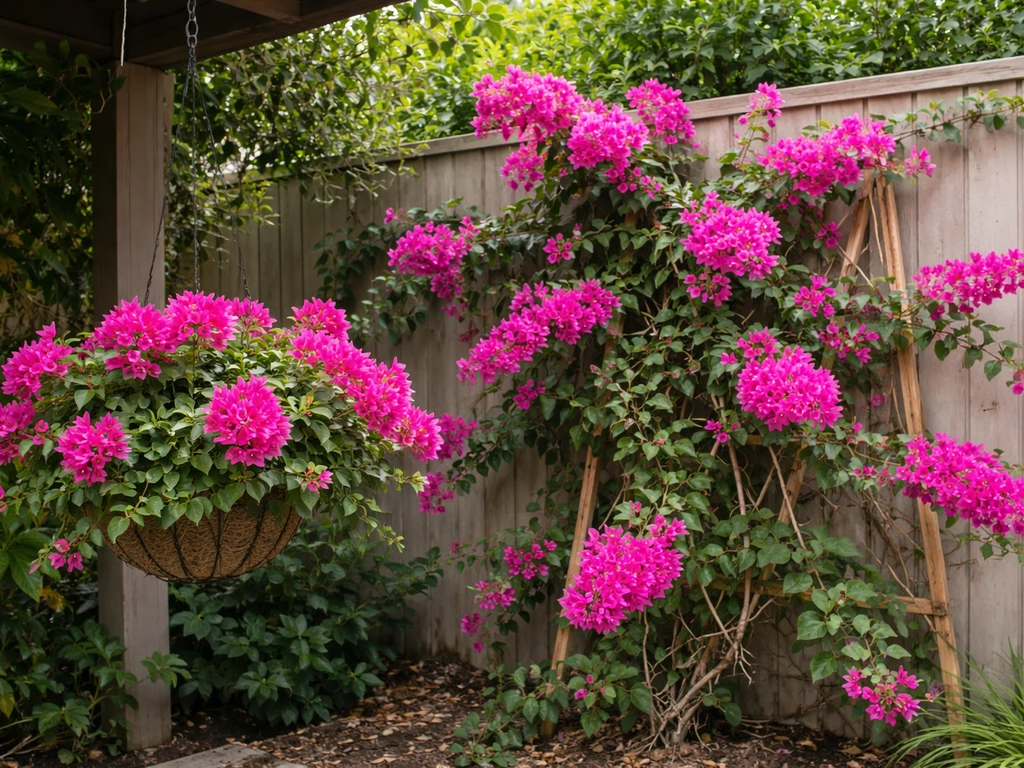
Not every bougainvillea is a great fit for a hanging basket. The large, vigorous climbers like 'Sanderiana' will fight you every step of the way. What you want are compact or semi-trailing varieties that stay manageable without constant wrestling. Two cultivars worth seeking out are 'Raspberry Ice', a variegated-leaf variety with deep pink bracts that's widely available and stays relatively compact, and 'Double Pink,' which produces fuller, ruffled bracts and handles container life well. There are dwarf bougainvillea selections specifically bred for pots and baskets, and those are worth prioritising if you find them at your local nursery.
For basket size, don't go small. A minimum diameter of 50 cm (about 2 ft) gives the root system enough room to establish without becoming so pot-bound that the plant struggles to take up water and nutrients. When you're buying the plant itself, start with one that's growing in a 15 cm (6 inch) pot, that's the ideal starting size for transitioning into a hanging basket because the rootball fits comfortably without being cramped or rattling around with too much spare soil. A basket lined with coir or moss works well because it allows air pruning of the roots and extra drainage, which is exactly what bougainvillea wants.
Potting mix, drainage, and planting setup
The potting mix you choose matters more in a hanging basket than in almost any other container setup, because you can't correct drainage problems after the fact without repotting the whole thing. Bougainvillea needs a fast-draining mix that holds just enough moisture without staying wet. A good approach is a general-purpose potting mix blended with perlite at roughly a 2:1 ratio. Avoid mixes that are heavily peat-based, too much peat retains moisture longer than bougainvillea likes, and that's a reliable route to root rot. Some gardeners add a small amount of coarse sand for extra drainage, which works well.
Your basket must have at least one drainage hole, non-negotiable. Most wire or open-sided baskets drain freely through the sides and base, which is perfect. If you're using a solid-sided decorative basket, check the drainage situation before planting. When you're setting up the basket, place a thin layer of gravel or broken pot shards at the base before adding soil if the drainage hole is large, then fill and plant at the same depth the bougainvillea was growing in its nursery pot. Don't bury the crown. After planting, water it in thoroughly and let it drain completely before hanging it.
Light, watering, and fertilizing for nonstop blooms
Getting the light right
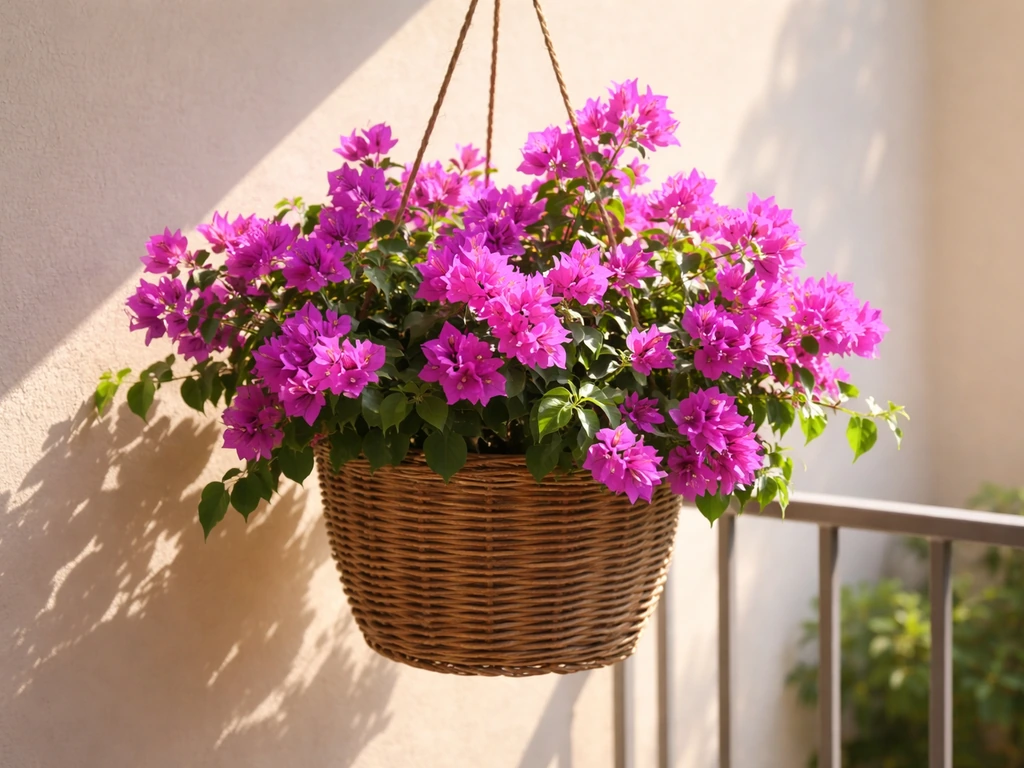
Full sun, all day. That's the bottom line with bougainvillea. It needs a minimum of six hours of direct sunlight daily to bloom reliably, and honestly, more is better. A spot that gets sun from mid-morning through late afternoon is ideal. Partial shade can keep the plant alive, but you'll get significantly fewer bracts and a much leggier plant as it reaches for more light. When hanging your basket, watch out for reflected heat from walls or pavement, bougainvillea handles heat well, but a basket baking against a south-facing white wall in peak summer can dry out in hours. Good air circulation around the basket also helps keep the foliage dry and discourages fungal issues.
Watering without overdoing it
Watering bougainvillea in a hanging basket is a balancing act that catches a lot of beginners out. If you're also wondering how to grow brugmansia, apply the same mindset: match the light and watering needs to your climate to encourage strong growth and blooms. The rule is: water when the soil is dry to the touch about 3 to 4 inches deep. In the peak of summer, for a basket in full sun, that might mean watering every day or every other day. In cooler or overcast weather, it might be every three or four days. Poke your finger into the soil, if it's still damp below the surface, wait. If it's dry, water deeply until it drains out the bottom. What you're avoiding is two extremes: a completely bone-dry rootball (a truly water-stressed plant stops blooming) and a constantly wet one (root rot moves fast in a hanging basket because the roots have nowhere to escape the moisture). Underwatering leaf symptoms can include blank" rel="noopener noreferrer">wilting or browning leaves at the top, and RHS notes that proper diagnosis depends on additional signs of ill health.
Feeding for flower production
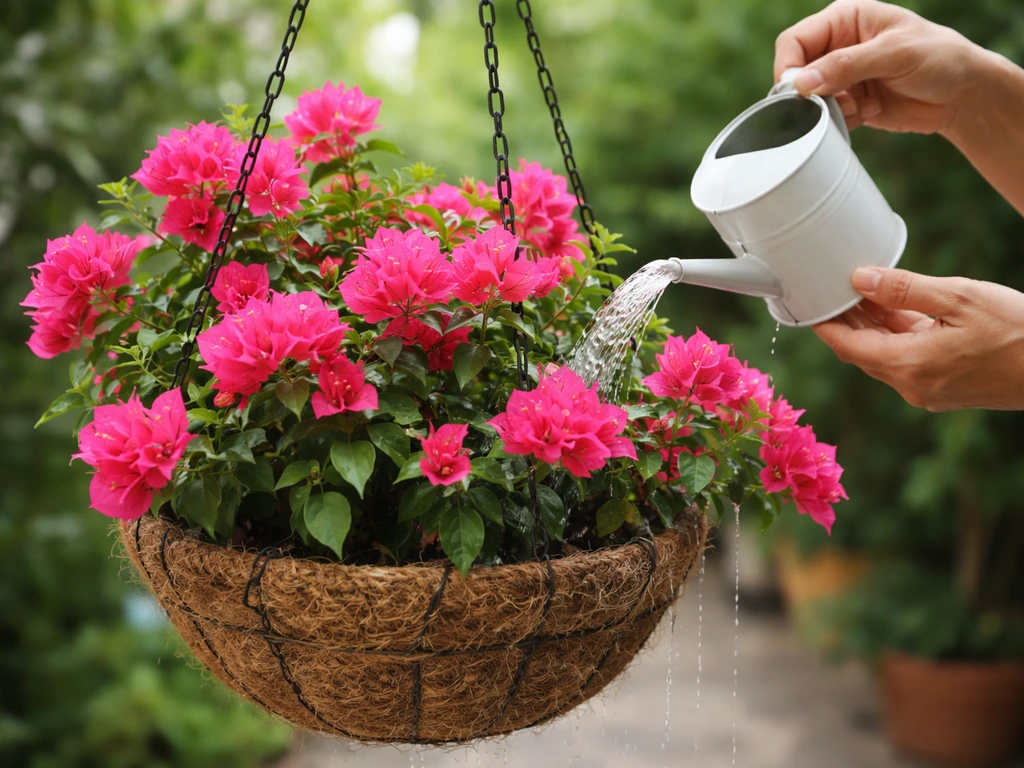
Container plants burn through nutrients much faster than plants in the ground, so bougainvillea in a hanging basket needs regular feeding. Feed every two to three weeks during the active growing and flowering season. For fertilizer, look for an NPK ratio around 5-10-10 or 10-10-10, the key is avoiding high-nitrogen formulas, because too much nitrogen pushes leafy green growth at the expense of bracts. A standard high-nitrogen all-purpose feed is exactly the wrong choice here. Liquid feeds are convenient for hanging baskets because they get nutrients to the roots quickly, and slow-release granules can supplement between liquid feeds. Back off fertilizing significantly in late autumn and stop over winter when the plant is resting.
Pruning, training, and flowering control
Bougainvillea blooms on new growth, which is the single most important thing to understand about pruning it. Every time you cut back a stem, you're encouraging the plant to push out new shoots, and those new shoots are where the bracts appear. Without pruning, you end up with long, whippy stems that produce colour only at the tips. With regular pruning, you get a dense, bushy plant covered in flowering laterals. blank" rel="noopener noreferrer">Regular pruning for container bougainvillea helps keep the plant compact and stimulates branching, so you can build a dense, colorful plant.
There are two levels of pruning to think about. The first is the major annual prune, which should happen in late winter or very early spring, just before the plant starts pushing new growth. This is when you cut back the previous season's flowering stems fairly hard, shaping the plant to the form you want in the basket and removing any dead, crossing, or diseased wood. The second is light trimming throughout the growing season: after each flush of colour fades, trim back the spent stems by a third to encourage the next round of branching and blooms. For a hanging basket specifically, you want a mix of stems that trail over the edge and a full canopy at the centre, so train some shoots outward and over the rim as the plant establishes.
If you want to take cuttings for propagation, late winter to earliest spring, just before buds swell, is the best window. Semi-hardwood cuttings taken from healthy stems root reasonably well with a rooting hormone and bottom heat.
Seasonal care and overwintering
Spring and summer
Once temperatures are consistently warm and past frost risk, your bougainvillea is in its element. Hang it in the sunniest spot you have, keep up with watering and feeding, and trim back spent flowering stems to keep the blooms cycling. This is also the right time to repot if the plant has become root-bound, though as mentioned, a little root restriction is fine and actually beneficial.
Autumn and preparing for cold weather
As temperatures start dropping in autumn, begin scaling back on watering and stop feeding entirely. Bougainvillea is frost-tender, it's only reliably hardy in USDA zones 9 to 11, and even within that range, a hard sustained freeze can kill the roots. If you're growing it anywhere colder, you need to bring it indoors before night temperatures approach 4°C (40°F). Don't wait until frost is forecast; act early. The hanging basket format is a genuine advantage here, you can simply take it down and move it.
Overwintering indoors
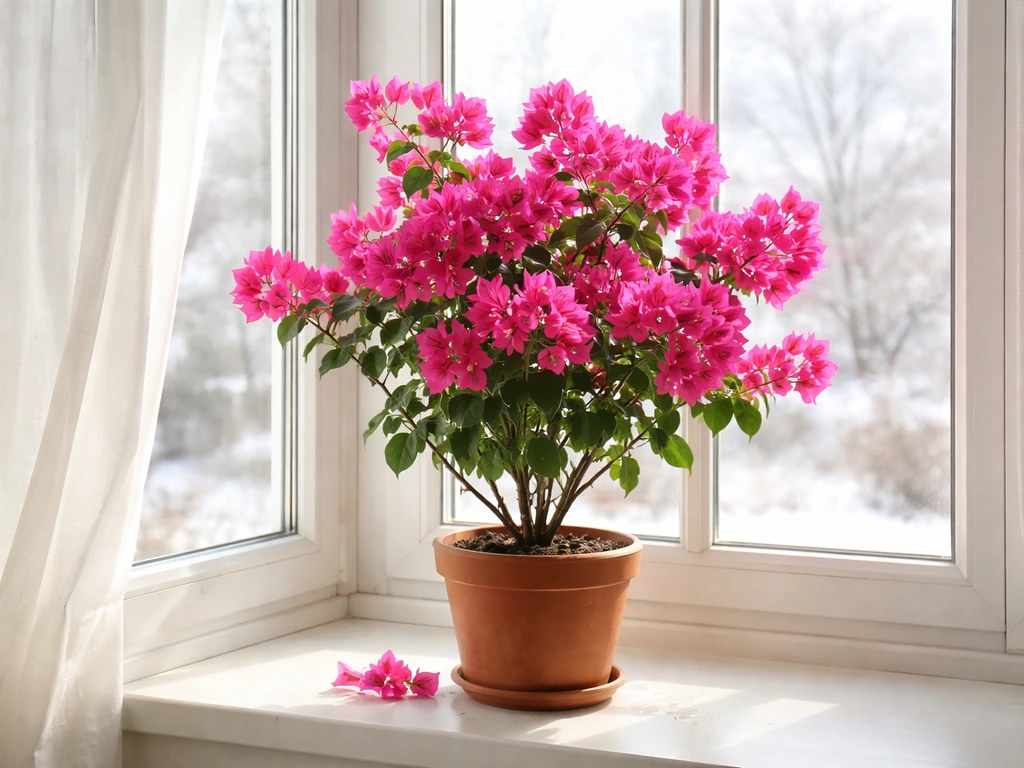
Indoors, bougainvillea needs the brightest spot you can find, a south-facing window or a conservatory is ideal. It will likely drop some or most of its leaves, which is normal and not a death sentence. During winter dormancy, water very sparingly: just enough to prevent the rootball from completely desiccating, but nowhere near the frequency of the summer routine. Don't feed. The plant is resting, and pushing growth with fertilizer in low-light winter conditions produces weak, pale stems that are vulnerable to pests. In late winter, do the major prune described above, then gradually introduce more water as growth resumes and temperatures rise. When all frost risk has passed, start hardening the plant off over a week or two before returning it to its outdoor spot.
If you're in the UK or another temperate climate and want more detail on managing bougainvillea through the cooler months, the approach for growing bougainvillea in the UK follows exactly this indoor overwintering model with a few additional cold-climate nuances worth exploring separately. If you want the full, step-by-step guidance on how to grow bougainvillea in the UK, start with these indoor overwintering tips and then tailor your light, watering, and pruning to your local conditions how to grow bougainvillea in UK.
Troubleshooting common hanging basket problems
| Problem | Likely Cause | What to Do |
|---|---|---|
| Wilting, dry brown leaf tips | Underwatering or drying out too fast | Check soil 3-4 inches deep; water deeply and immediately if dry. Consider moving basket to a slightly less exposed spot in peak heat. |
| Lots of leaves, very few bracts | Too much nitrogen, too much shade, or no pruning | Switch to a low-nitrogen fertilizer (5-10-10 or 10-10-10), ensure 6+ hours of direct sun, and trim back leggy stems to encourage new flowering growth. |
| Yellowing leaves, soggy soil | Overwatering or poor drainage | Allow soil to dry out, check drainage holes are clear, and reduce watering frequency. If root rot is suspected, inspect roots. |
| Dark, mushy, sour-smelling roots | Root rot | Cut away all dark/mushy roots with sterilized shears, prune foliage if you removed more than 30% of the root system, let the rootball dry for ~24 hours, discard old soil, and repot in fresh sterile mix. |
| Leaf drop without other symptoms | Normal winter dormancy, or sudden temperature drop | If indoors in winter, this is expected — reduce watering and wait. If outdoors, check if temperatures have dropped near 4°C (40°F) and bring inside. |
| Sticky residue, distorted growth, tiny insects | Aphids, mealybugs, whiteflies, or spider mites | Spray with a mix of 1/4 tsp horticultural oil and 1/2 tsp insecticidal soap per quart of warm water. Ensure good airflow around the basket to discourage reinfestation. |
| Plant looks healthy but won't bloom after pruning | Pruned too late into the season, cutting off forming buds | Major pruning should happen in late winter before bud swell. Mid-season, only lightly trim spent stems rather than cutting hard. |
One thing I've learned with bougainvillea in baskets: most problems trace back to two things, not enough sun or too much water. If your plant isn't performing and you're not sure why, start there. Move it to the sunniest spot available, let it dry down properly between waterings, and give it a light trim to stimulate fresh growth. Those three steps fix the majority of cases before you need to dig deeper.
FAQ
How can I tell when my bougainvillea in a hanging basket needs to be repotted? (And how big should I go?)
In most cases you can keep the basket smaller than a pot-grown bougainvillea, but you should still size up before the plant stalls. If you see roots circling densely through drainage openings, the mix drying out in under a day during hot weather, or no new growth after a light prune, it's time to repot into the next size basket (for example, 50 cm to 60 cm). Move up gradually, because an oversized jump can stay wet longer and delay blooms.
What should I do if my bougainvillea is growing leaves but not flowering in the basket?
If you get lots of leafy growth but almost no bracts, reduce nitrogen and stress the plant slightly. Switch to a fertilizer with a lower N number (still within the suggested NPK range), stop feeding earlier than you think (late autumn timing matters), and make sure it receives true full sun. Also avoid overwatering after the soil surface dries, let the rootball dry about 3 to 4 inches down, because consistent moisture can suppress bracts.
My bougainvillea is in a hanging basket, how do I protect it during unexpected cold nights?
For cold snaps, protect the roots first, not just the foliage. Move the entire basket under cover at night, wrap the container area with insulating bubble wrap or hessian, and keep it near a bright window or unheated conservatory if you can. If you leave it outside during near-freezing nights, the crown and root ball are the most likely to die back, even if leaves survive.
My basket is decorative and doesn’t obviously drain well, how can I ensure the roots don’t sit in water?
A good way to confirm drainage is to observe how fast water exits after watering. The mix should drain out within minutes, not pool for long periods. If water sits in the base (common with solid-sided decorative baskets), do not plant directly into the decorative container. Use a nursery pot or an inner liner with drainage holes, then place that inside the decorative basket for appearance.
Can I propagate bougainvillea from cuttings in a hanging basket setup, or is rooting media required?
Yes, but cuttings need a controlled setup. Use a semi-hardwood cutting from a healthy stem, keep the medium lightly moist (never soggy), and give bottom heat or a warm propagating area. If the air is very dry or windy, rooting can fail because bougainvillea cuttings lose moisture fast, so consider a clear humidity cover that still allows airflow.
Why is my bougainvillea dropping leaves after I put it outside or repotted it?
If it drops leaves after moving to a sunny porch or after repotting, it's usually transplant shock rather than a disease. Check soil moisture first, let the mix dry to your usual depth between waterings, and do not fertilize until you see fresh growth. Leaf drop is common when light levels or temperatures change, especially near the end of the growing season.
When exactly should I prune during the season to keep blooms coming in a hanging basket?
Aim for a pruning rhythm that matches the bloom cycle. After a flush fades, remove spent bracts and trim back about a third to encourage new laterals, but avoid heavy cutting during peak winter dormancy or right before you expect cold weather. For hanging baskets, train new shoots outward over the rim early, then do lighter trims later to maintain a balanced trailing shape.
How do I adjust watering if my hanging basket is in a very windy or exposed spot?
Watering by finger depth is the best method, but you also need to account for airflow and wind. A basket in a windy location can dry out faster even when the surface feels damp. If you consistently find the mix drying quickly, consider adding a thin mulch-like top dressing to reduce evaporation, as long as it does not block drainage holes.
What common pests or problems should I watch for on bougainvillea grown in hanging baskets, and how do I prevent them?
Some cultivars are more forgiving in baskets, but fruiting and pest pressure can still vary. Watch for mealybugs, aphids, and spider mites, especially when the plant is stressed from too much dryness. If you need to treat pests, target the undersides of leaves and avoid heavy pruning right before treatment, because new growth can attract insects again.