
You can grow anthuriums outdoors successfully, but only if your climate stays reliably above 50°F (10°C). If you want to grow caladiums outside, start by checking your temperatures and choosing a spot with the right light and drainage grow anthuriums outdoors. These are tropical plants that need warmth, high humidity, and bright indirect light. Get those three things right, use a chunky well-draining mix, and keep the watering discipline tight, and anthuriums will reward you with their glossy spathes for months at a stretch. Get any one of those things wrong and you'll be fighting root rot, scorched leaves, or a plant that just sits there refusing to bloom.
How to Grow Anthuriums Outdoors: Step-by-Step Guide
Marcus Holloway
5 Jul 2026
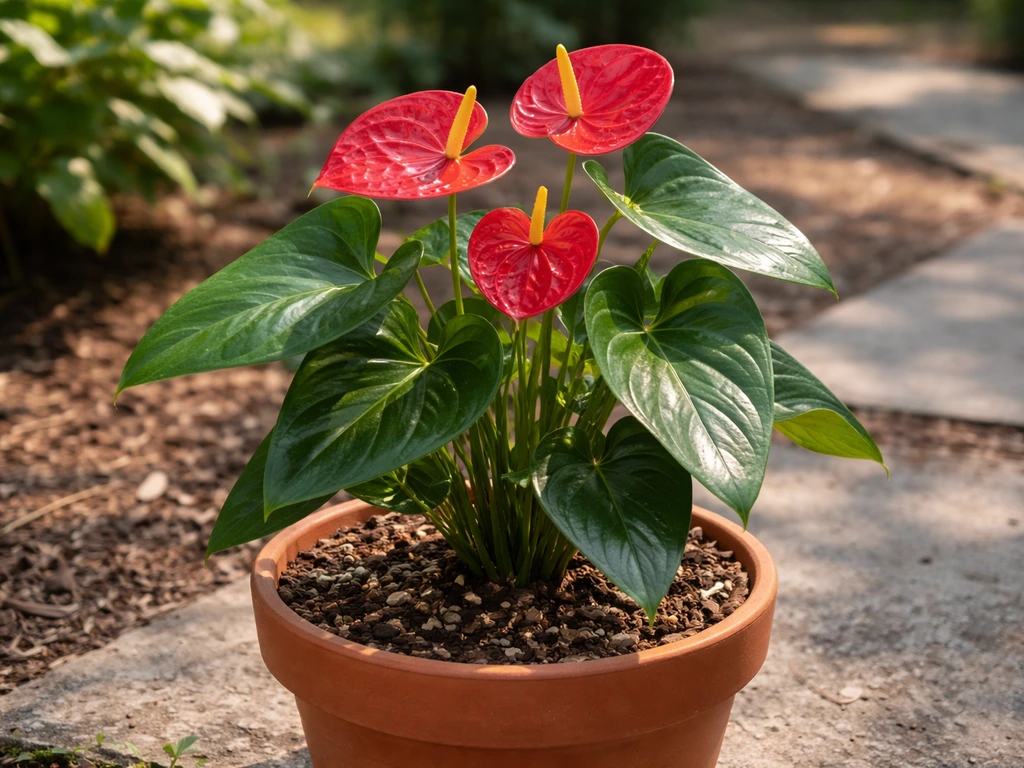
Is your climate actually suitable? Temperature and humidity thresholds
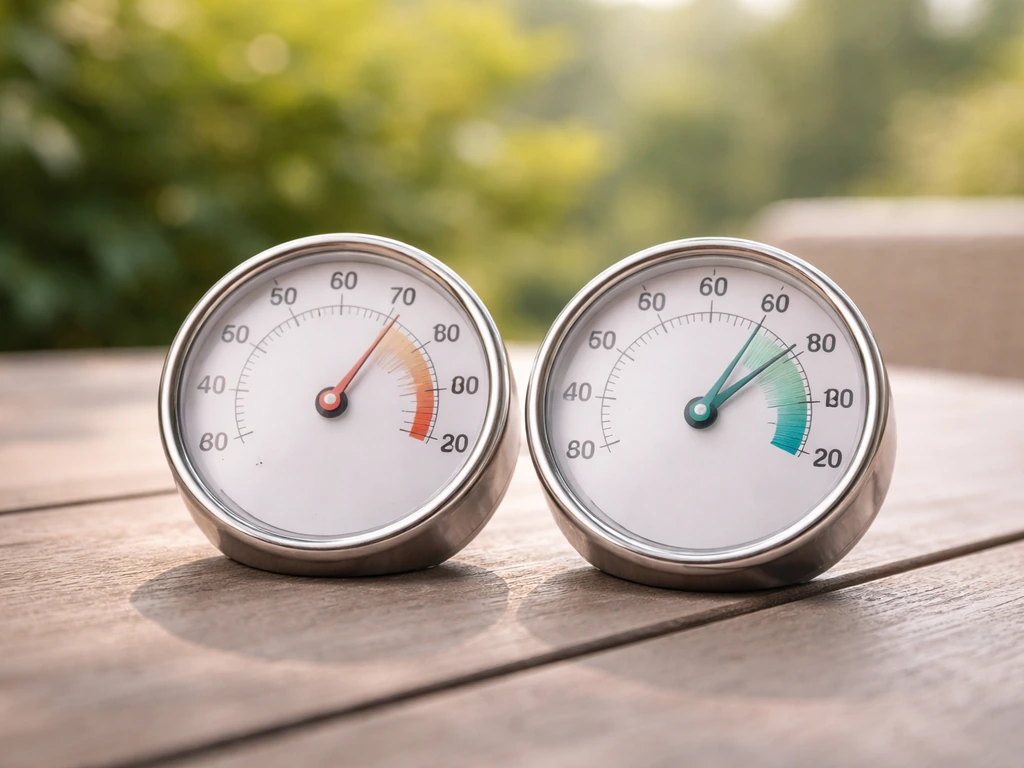
This is the first question to answer honestly, because anthuriums are less forgiving of cold than most tropical-looking plants you'd buy at a garden center. The RHS is blunt about it: temperatures at or below 10°C (50°F) can damage or outright kill them. That's not a hard frost threshold, that's just a cool night. If your nights regularly dip below 50°F for more than a few weeks of the year, outdoor growing is really only a warm-season project, not a permanent outdoor situation.
The sweet spot for outdoor anthuriums is 60 to 85°F (16 to 30°C). Within that range they grow actively and flower well. Below 60°F they slow down noticeably. Below 50°F you'll start to see the leaves turn a stressed purplish tone, a cold-stress symptom documented in anthurium cold-exposure research. Near freezing, dew can actually freeze on leaf surfaces even if the air temperature is technically just above 32°F, causing damage from the outside in. So if you're in USDA zones 10 to 12, you can treat anthuriums as true outdoor perennials. Zones 8 and 9 can work for most of the year but require winter protection or bringing containers in. Zones 7 and colder? Anthuriums are a warm-season patio plant only.
Humidity matters almost as much as temperature. Anthuriums evolved in humid tropical environments, and dry air is one of the main reasons outdoor plants underperform even in warm climates. If you're in a hot, arid region (think parts of the American Southwest), you'll need to actively manage humidity around the plant, using mulch, grouping plants together, or placing containers on trays of damp gravel. In naturally humid climates like Florida, the Gulf Coast, or Hawaii, the outdoor air does the work for you and your anthuriums will genuinely thrive.
Picking the right outdoor spot
Light is where most people go wrong with outdoor anthuriums. Cyclamen prefer cool temperatures and bright, indirect light, so choosing the right spot for your climate is key to success where to grow cyclamen. Coming from a tropical forest understory, these plants are wired for bright but filtered light. The RHS is clear: direct summer sunlight causes leaf scorch, and too little light prevents flowering. That's a pretty narrow window, but it's not hard to find once you know what you're looking for.
The best outdoor position is one that gets gentle morning sun (roughly before 10 a.m.) and then moves into bright shade or dappled light for the rest of the day. East-facing spots are often ideal. Under the canopy of a large tree, against a north-facing wall in a warm climate, or on a covered patio that still gets good reflected light all work well. What you want to avoid is the intense afternoon sun of a south or west-facing exposure in summer, where leaf temperatures can easily exceed what the plant can handle. Scorched tissue shows up as brown, bleached, crispy patches and it doesn't recover, so moving the plant is the only fix once it happens.
Wind protection matters too. Anthuriums don't like drying winds, which strip humidity from the leaves and dry out the potting medium too fast. A spot that's sheltered from prevailing winds but still has good airflow to prevent fungal problems is the goal. Think of a sheltered corner of a patio, or a spot tucked between larger shrubs or structures.
Soil and planting method: containers vs in-ground
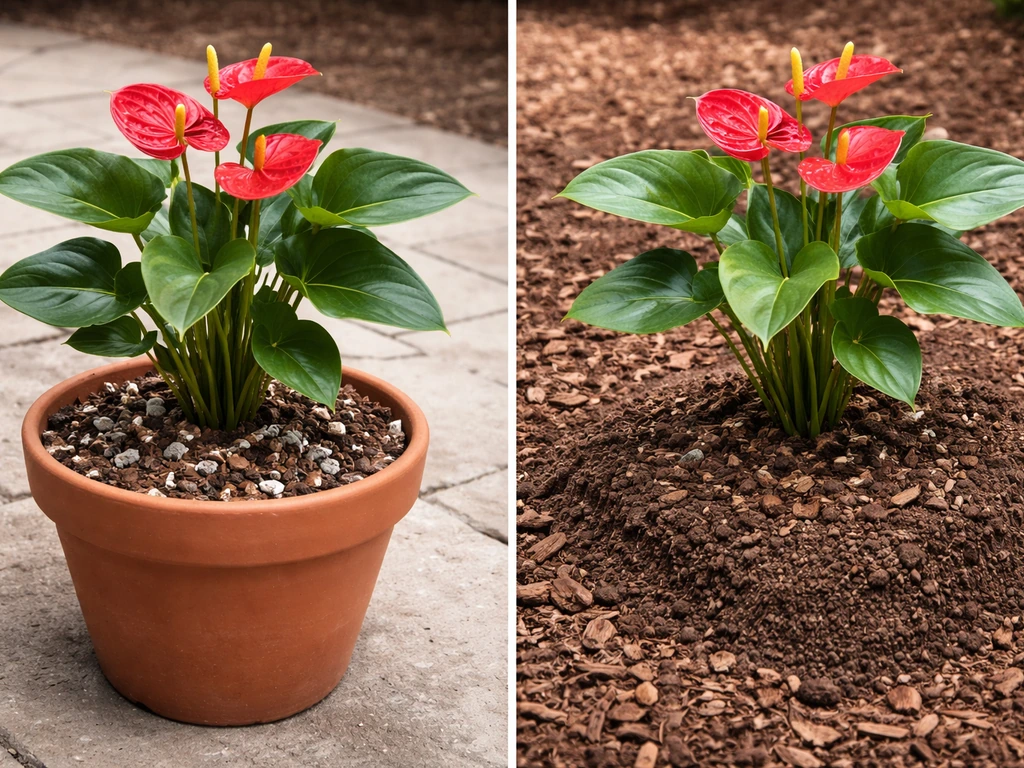
For most gardeners, containers are the smarter choice for outdoor anthuriums. The same outdoor-success strategy also applies if you're learning how to grow bromeliads outside, especially around light, airflow, and drainage outdoor anthuriums. They give you control over the mix, drainage, and most importantly, the ability to move the plant indoors when temperatures drop. If you're in a frost-free zone, in-ground planting is an option, but you still need to heavily amend the native soil because anthuriums hate sitting in dense, wet earth.
The right potting mix
blank" rel="noopener noreferrer">Standard potting soil is too dense for anthuriums. Smart Gardenist recommends a bark-heavy mix like bark, perlite, and coco coir for fast drainage and aeration instead of dense regular potting soil blank" rel="noopener noreferrer">Standard potting soil is too dense for anthuriums.. It holds too much moisture and doesn't provide the air pockets roots need to stay healthy. You want something closer to an orchid mix in texture. A good starting formula is roughly 40% orchid or pine bark, 30% perlite or pumice, and 30% coco coir. Some growers add a small amount of activated charcoal and worm castings. The bark provides aeration and structure, the perlite improves drainage, and the coco coir holds just enough moisture to keep roots hydrated without staying soggy. You can buy pre-made orchid or anthurium mixes that follow this kind of chunky approach, or build your own from these components.
Outdoors, drainage is even more critical than indoors because you have no control over rain. Every container must have drainage holes, full stop. If you're using a saucer, empty it 30 to 45 minutes after watering or after heavy rain so water doesn't wick back up into the mix. Leaving standing water in a saucer is a reliable path to root rot.
In-ground planting tips
If you're planting in-ground in a tropical or subtropical garden, dig your bed and mix in substantial amounts of orchid bark, perlite, and coarse compost to open up the structure. Raised beds work well because they naturally drain better than flat ground. Plant at the same depth the anthurium was sitting in its pot, and make sure the crown sits slightly above the surrounding soil level so water drains away rather than pooling around the base. Space multiple plants about 18 to 24 inches apart to allow airflow between them.
When to plant and how to set up for outdoor conditions
Timing your move outdoors matters. Don't rush anthuriums outside as soon as the nights start feeling warm. Wait until nighttime temperatures are consistently and reliably above 55°F, ideally 60°F, to build in a buffer against unexpected cool nights. For most temperate climates this means late May through early June. In warm climates you may be able to move them out in March or April.
Hardening off is essential if your plant has been growing indoors. Moving a plant directly from an indoor environment to outdoor conditions, even if the temperature is right, causes shock from increased light intensity, wind, and humidity changes. Start by placing the plant in a sheltered, shady outdoor spot for a few hours each day over the course of one to two weeks. Gradually increase the time outdoors and slowly move it toward its final position. This process dramatically reduces the chance of sunscorch and transplant stress.
Once established outdoors, consider adding a layer of mulch (about 2 inches of shredded bark or similar organic material) around the base of in-ground plants, or on top of the potting mix in containers. Mulch helps maintain moisture and keeps roots cooler on hot days. Just keep it away from direct contact with the plant stems to avoid rot at the crown.
Watering outdoors without inviting root rot
Root rot is the number one killer of outdoor anthuriums, and it's almost always caused by a combination of overwatering, poor drainage, and low oxygen in the root zone. The water-mold pathogens that cause it (Pythium and Phytophthora are the main culprits) thrive in waterlogged, anaerobic conditions. Outdoors, the risk is amplified because you're adding uncontrolled rainfall on top of your manual watering.
The simplest rule: water only when the top 50% of the potting medium has dried out. If your container holds 6 inches of mix, that means the top 3 inches should feel dry to the touch before you water again. In heavy summer rain periods, you may not need to water manually at all. In hot, dry spells you might water every two to three days. Check the medium, not the calendar.
During extended rainy periods, consider moving containers to a covered patio or overhang to control the amount of water the plant is receiving. If you can't move the plant, prop it at a slight angle to encourage water to drain out of the pot faster. And if you notice the mix is staying wet for more than four or five days after rain, that's a sign your mix is too dense or drainage is blocked. Repot into a chunkier mix rather than waiting for problems to develop.
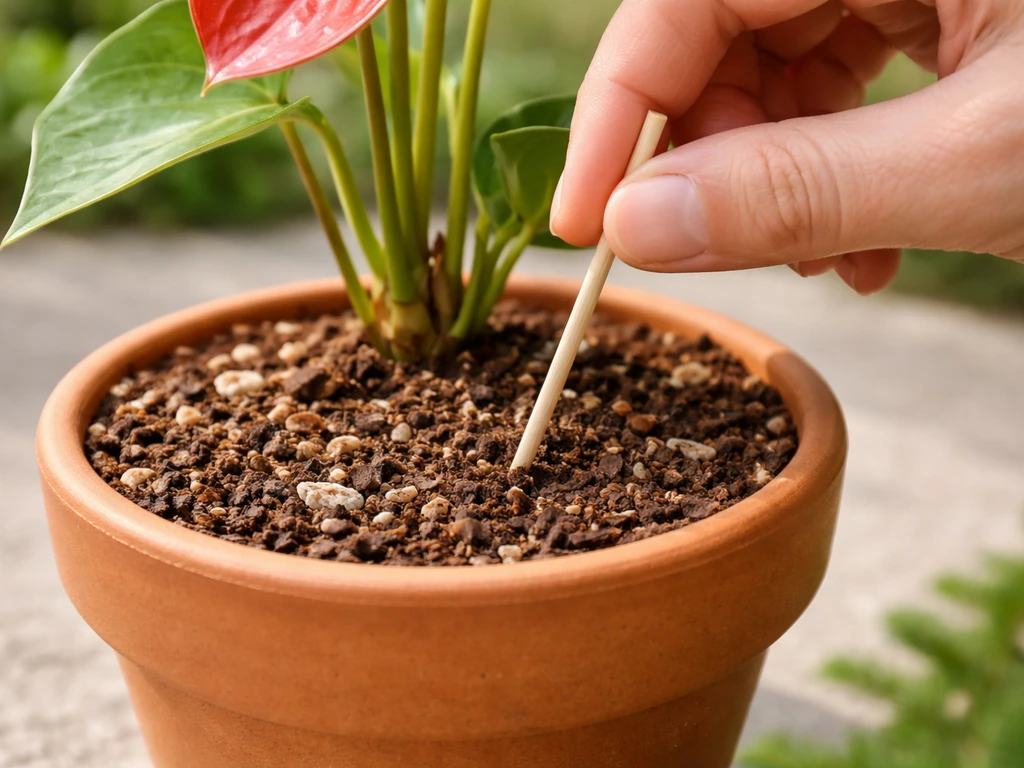
One tip I've found genuinely useful: push a finger or a wooden chopstick deep into the mix before watering. If it comes out with any damp material clinging to it, hold off. This is more accurate than just checking the surface, especially outdoors where the top of the mix can dry fast while the middle stays wet.
Feeding your anthuriums and getting them to bloom
Outdoor anthuriums benefit from regular feeding during the growing season, roughly from late spring through early fall. A balanced fertilizer with an NPK ratio around 20-20-20 works well for general growth. Feed at half the recommended strength once a month rather than full strength, as excessive fertilizer actually inhibits growth and can burn roots in the porous mix anthuriums need. More fertilizer does not equal more flowers.
If you want to encourage blooming specifically, shift toward a fertilizer with slightly higher phosphorus during the pre-bloom period. Phosphorus supports flower development, and giving the plant a small boost of it in early summer when it's actively growing can nudge it toward producing spathes. Liquid fertilizers are easier to control than granules in a chunky, fast-draining mix, since granules can sit on the surface without breaking down properly.
Stop feeding in late fall once growth slows and temperatures start dropping. Pushing new growth going into cooler weather makes plants more vulnerable to cold damage. Resume feeding in spring when temperatures are reliably warm and you see active new growth beginning.
Seasonal care: keeping plants happy through summer and protecting them from cold
Summer growing season
Summer is when outdoor anthuriums do their best work, provided light and watering are managed correctly. Check that the plant isn't drying out too fast during heat waves, since high temperatures combined with dry conditions will stress the plant quickly. Increase watering frequency during hot spells but always come back to the 'check the mix' rule rather than watering on a fixed schedule. Misting the foliage in the morning helps support humidity without wetting the leaves overnight, which can encourage fungal issues.
Cold protection and fall/winter planning
Start watching nighttime temperatures from early September onward in most temperate climates. Once nights start approaching 55°F, it's time to start thinking about moving container plants back indoors. Don't wait until you hit 50°F, that's already potentially damaging territory. Bring containers inside to a warm, bright spot before cold stress sets in.
One thing worth knowing: avoid watering heavily the day before a forecasted cold night. Cells full of water are more vulnerable to freeze damage than slightly drier cells. This is a technique used by orchid growers and it applies equally to anthuriums. Keep the plant on the drier side heading into a cold snap.
For in-ground plants in zone 10 or warmer, a light frost cloth or burlap wrap on unusually cold nights provides enough protection to get through brief cold snaps. Heap a layer of mulch around the base to insulate roots. But if your area is genuinely going to stay cold for weeks, the plant won't survive in the ground. In borderline climates, growing in containers is simply a better strategy.
Troubleshooting common outdoor anthurium problems
| Symptom | Likely Cause | What to Do |
|---|---|---|
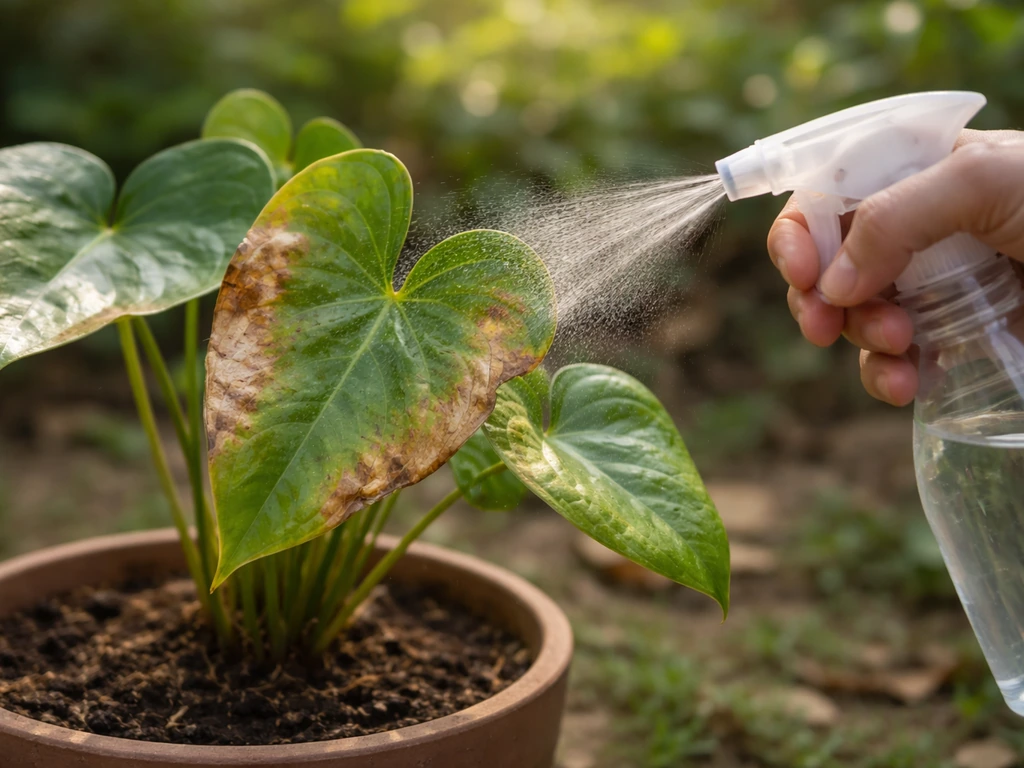
| Brown, bleached or crispy patches on leaves | Direct sun scorch | Move to bright indirect light; damaged tissue won't recover but new growth will be healthy |
| Yellow leaves (generally) | Too much direct sun or low humidity (or both) | Reposition plant; increase humidity with mulch or pebble tray |
| Wilting despite wet soil | Root rot from overwatering or poor drainage | Check roots; repot into fresh chunky mix; improve drainage; reduce watering frequency |
| Leaves turning purple or dark | Cold stress below 50°F | Move plant to warmer location immediately; don't water heavily until plant recovers |
| No flowers / slow growth | Too little light, underfeeding, or cold temperatures | Move to brighter indirect spot; resume balanced fertilizer; ensure temps stay above 60°F |
| White or fuzzy growth on roots or mix | Fungal activity from persistent overwatering and low airflow | Allow medium to dry more fully; improve airflow around pot; repot if problem continues |
| Drooping despite correct watering | Root rot (underwatering mimics this too) | Finger-test the mix deeply; if wet, hold water and check for root rot; if dry, water thoroughly |
| Crispy leaf edges (not patches) | Low humidity or drying wind | Protect from wind; increase ambient humidity; check that plant isn't drying too fast between waterings |
The single most common mistake I see outdoors is treating anthuriums like they can handle rain the same way a garden perennial can. They can't. A week of heavy rain with no drainage correction will start root rot even in a mix that drains perfectly well in dry weather, because the mix never gets a chance to dry between events. Outdoors, drainage management is an active job, not a 'set it up once' situation.
Your outdoor anthurium care checklist
- Confirm nighttime temperatures are reliably above 55°F before moving plants outdoors
- Choose a spot with morning sun and bright indirect shade for the rest of the day
- Use a chunky, fast-draining mix: approximately 40% orchid bark, 30% perlite, 30% coco coir
- Make sure every container has drainage holes and empty saucers after rain or watering
- Harden off indoor plants over 1 to 2 weeks before placing in their final outdoor spot
- Water only when the top 50% of the mix is dry, regardless of the calendar
- During rainy periods, move containers to shelter or monitor drainage closely
- Feed with a balanced 20-20-20 fertilizer at half strength once a month from late spring through early fall
- Mulch around the base of in-ground plants to retain moisture and regulate temperature
- Begin moving containers indoors once nighttime temperatures approach 55°F in fall
- Avoid heavy watering the day before a forecasted cold night
What to do right now
If you're reading this in summer and you already have anthuriums, check where they're sitting and whether they're getting any direct afternoon sun. If they are, move them. Then stick a finger deep into the potting mix and honestly assess whether it's staying too wet. Those two quick checks will tell you immediately whether you have a problem worth addressing before it escalates into root rot or permanent leaf damage.
If you're planning to buy and move anthuriums outdoors, do the temperature check first. Look up your average last frost date, check your typical overnight lows through the season, and decide now whether you'll be growing in containers (which you can move) or committing to in-ground (which locks you in). Knowing when the last frost typically occurs is also the best starting point for figuring out how to grow paperwhites outdoors in your area average last frost date. For anyone outside of a frost-free zone, containers are the right answer. Once you've got that decided, build or buy your chunky mix, choose your sheltered bright-shade spot, and harden the plant off before expecting it to perform outdoors.
Anthuriums are genuinely one of the more rewarding tropical plants to grow outdoors when conditions are right. They're not high-maintenance once the basics are dialed in. The work is front-loaded into choosing the right spot and mix. After that, it's mostly about watering discipline and paying attention when the weather changes. If you enjoy growing other tropicals outdoors, like bromeliads or caladiums, anthuriums fit naturally into the same care approach and often do well in similar sheltered, humidity-friendly garden spots. Cyclamen need cooler conditions and protection from harsh frost, so the right outdoor setup depends heavily on your local temperatures and shelter grow cyclamen outdoors.
FAQ
What should I do if a cold night is forecast for my outdoor anthurium?
If you get a sudden cold snap but the plant will be above 50°F by day, your best move is to protect the root zone and avoid extra wetness. Keep containers under a covered overhang or bring them into a warm, bright area overnight. If the plant must stay out, add mulch insulation at the base and use frost cloth for brief lows, but do not water the day before the cold night so the mix is not waterlogged when temperatures drop.
Can I plant anthuriums directly in the ground outdoors?
You can, but it is risky for outdoors unless you already have drainage under control. Start with a raised bed or amend the native soil heavily with coarse orchid bark, perlite, and compost to create air spaces. Plant slightly high so the crown sits above surrounding soil to prevent pooling, and be realistic that multi-day wet weather is what overwhelms even well-amended ground.
Are containers better than in-ground planting for outdoor anthuriums in borderline climates?
Yes, and it often solves the biggest outdoor problem, water control. Choose a pot only slightly larger than the root mass so the mix does not stay wet too long, confirm it has drainage holes, and empty saucers after watering within about 30 to 45 minutes. Move the container to a sheltered bright spot or indoors when nights near 55°F.
My anthurium’s leaves look bleached or crispy, how do I fix it?
Leaf scorch usually comes from too much direct sun, especially afternoon sun on south or west exposures. The immediate fix is to move the plant to bright shade or an east-facing spot and improve humidity. Damaged tissue will not green back, so focus on preventing new exposure rather than expecting recovery.
How do I avoid root rot when outdoor rain is unpredictable?
Inconsistent watering is the most common cause of setbacks, particularly after rain. Use the “top half of mix” rule and also check the middle of the mix with a finger or chopstick, since outdoor conditions can dry the surface while the interior stays damp. If the mix stays wet more than 4 to 5 days after rain, repot into a chunkier mix rather than watering less alone.
What humidity strategies actually help outdoor anthuriums, especially in dry regions?
Dry air can suppress growth and blooming even when temperatures are right. The most effective approach is to raise local humidity, like grouping plants, placing containers on damp gravel trays (not sitting in water), and using a light mulch layer to reduce evaporation. If you mist, do it in the morning so foliage dries before nightfall.
How should I fertilize outdoor anthuriums to encourage blooms without burning roots?
You do not need to overdo feeding, and too much fertilizer can hurt a chunky mix. Feed during active growth with a balanced fertilizer around half strength about once per month, and stop in late fall. If you want better flowering, use a fertilizer slightly higher in phosphorus in early summer, but keep the same conservative dosing.
When is the right time to move my anthurium outdoors, and do I need to harden it off?
Yes, but the timing matters. Wait until nighttime temperatures are consistently above about 55°F (ideally around 60°F) so the plant does not cycle through cold stress. Then harden it off over 1 to 2 weeks by increasing daily outdoor time in sheltered shade, gradually moving toward the final light level.
How often should I water my outdoor anthuriums in summer versus rainy periods?
Watering behavior changes with weather, so use cues instead of a calendar. During heat waves, the top of the mix may dry quickly, so check the mix frequently, and increase watering only if the medium is dry at the required depth. After heavy rain, you may need little or no additional watering until the mix dries back.
How can I tell if my outdoor anthurium is getting the right amount of light?
The most practical way is to target the plant’s light zone rather than the calendar. Start with gentle morning sun followed by bright shade for the rest of the day, commonly an east-facing location or a spot under a tree canopy. Avoid intense afternoon sun and adjust based on leaf color, if leaves look washed out or crispy, reduce direct light.
What’s the best way to transition container anthuriums back indoors in fall?
If you’re bringing a container back indoors, move it before nights reach the damaging range, typically when they start approaching about 55°F. Place it in a warm, bright spot indoors, then avoid fertilizing for a short adjustment period and monitor watering because indoor light and airflow can change how fast the mix dries.
What should I do if I suspect root or crown rot on my outdoor anthurium?
If you see yellowing plus mushy stems or a bad smell, assume root or crown rot risk and stop watering immediately. Next, check drainage and the condition of the mix, if it stays wet too long you will likely need to repot into a chunkier medium and remove any dead roots. Always keep the crown slightly above surrounding soil level outdoors for in-ground plants to reduce crown wetness.