
Heuchera (coral bells) grows best in part shade with well-drained, slightly acidic soil around pH 5.8, planted so the crown sits exactly at soil level. Get those three things right and you'll have a healthy, colorful mound of foliage for years. Get them wrong, especially the crown depth and drainage, and you'll be dealing with rot, heaving, and a plant that slowly gives up on you. This guide walks you through every step, from picking the right variety to what to do each season so your heuchera keeps thriving. how to grow hemerocallis heuchera keeps thriving (related guide: how to grow hemerocallis).
How to Grow Heuchera Coral Bells: Step by Step Guide

Marcus Holloway
2 May 2026
Choosing the right heuchera type and location
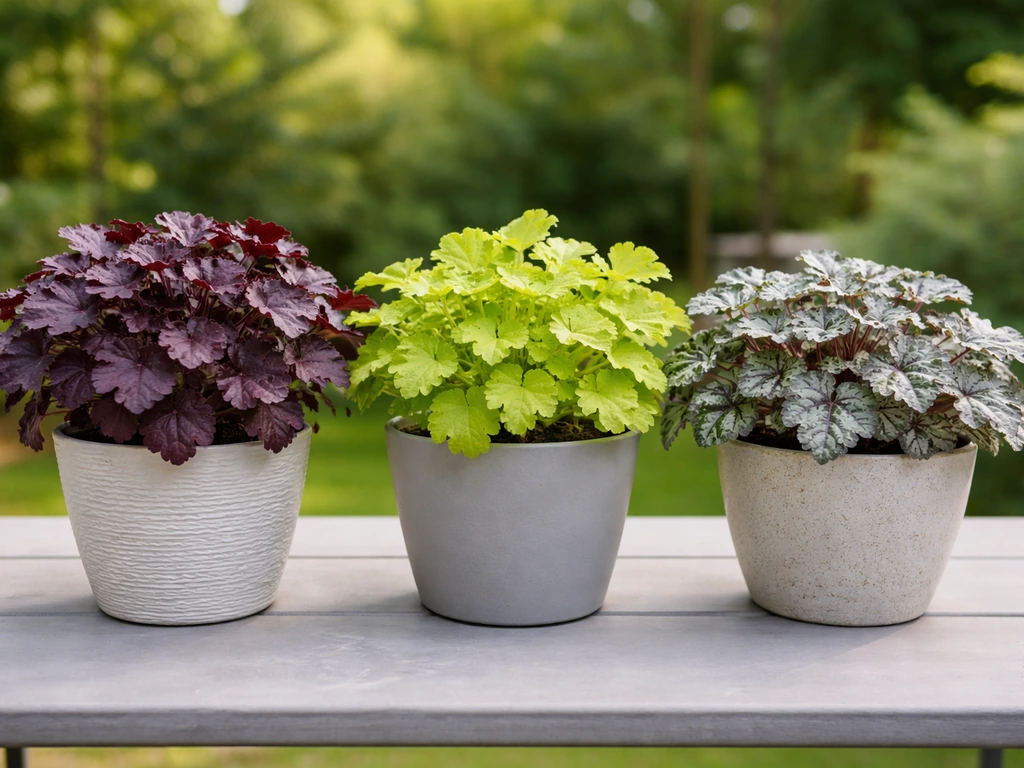
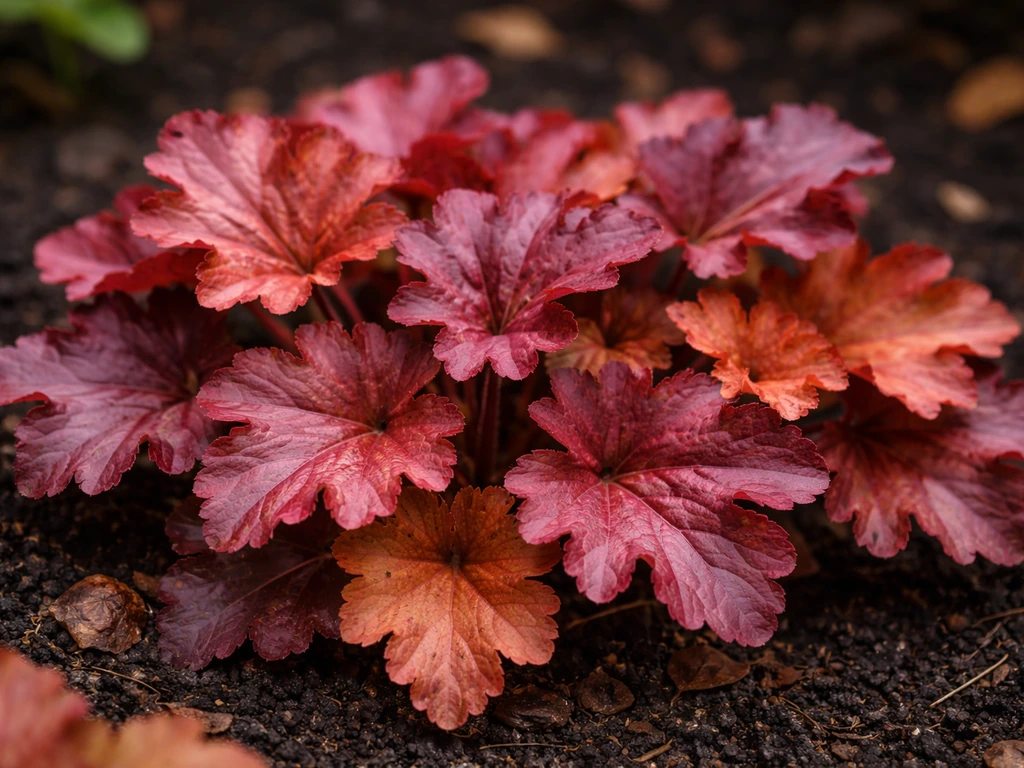
There are hundreds of heuchera cultivars available today, and the range is genuinely exciting: deep burgundy, lime green, silver-splashed, amber, and almost black foliage. But before you fall for a color at the garden center, match the plant to your actual conditions. Broadly, there are two main groups: those bred primarily for foliage interest (the vast majority of modern hybrids) and the more old-fashioned types grown partly for their airy flower spikes. Most gardeners want both, and you can get both.
'Palace Purple' (Heuchera micrantha var. diversifolia) is one of the most widely available and reliably hardy options, growing in neat mounds about 12 inches tall and wide, with flower spikes reaching up to 24 inches. It's cold-hardy through zones 4 to 8, which covers most of the continental US. Newer hybrids like 'Caramel,' 'Obsidian,' and the Dolce series push even further in terms of color drama, but always check the zone rating on the label before buying.
For location, think about two things: light and air circulation. Heuchera genuinely prefers part shade, meaning a spot that gets morning sun and afternoon shelter, or dappled light under a deciduous tree. Full shade is workable but you'll lose some foliage vibrancy. Full sun is possible in cooler climates but can stress plants in summer heat, particularly the darker-leaved varieties. Avoid planting in low spots where water pools, and make sure the spot has decent airflow to help prevent fungal issues.
Planting timing, site prep, and container vs ground
The two best planting windows are early spring, after your last frost date, and early fall, giving the plant time to establish before temperature extremes hit. In warmer regions (zone 6 and south), late fall planting also works well. Spring planting is usually safest for beginners because you can watch the plant establish in mild, improving weather. Avoid planting in midsummer heat if you can help it, since new transplants struggle when it's hot and dry.
Before planting, loosen the soil to at least 12 inches deep and work in a generous amount of compost. If your native soil is heavy clay or compacted, this step is non-negotiable. Heuchera roots need to breathe. Rake the bed so it's level and free of large clumps, and do a rough check of your drainage: pour a bucket of water into the planting hole and see how quickly it drains. If it's still sitting there 30 minutes later, you need to amend more aggressively or consider raised beds.
In-ground vs container growing
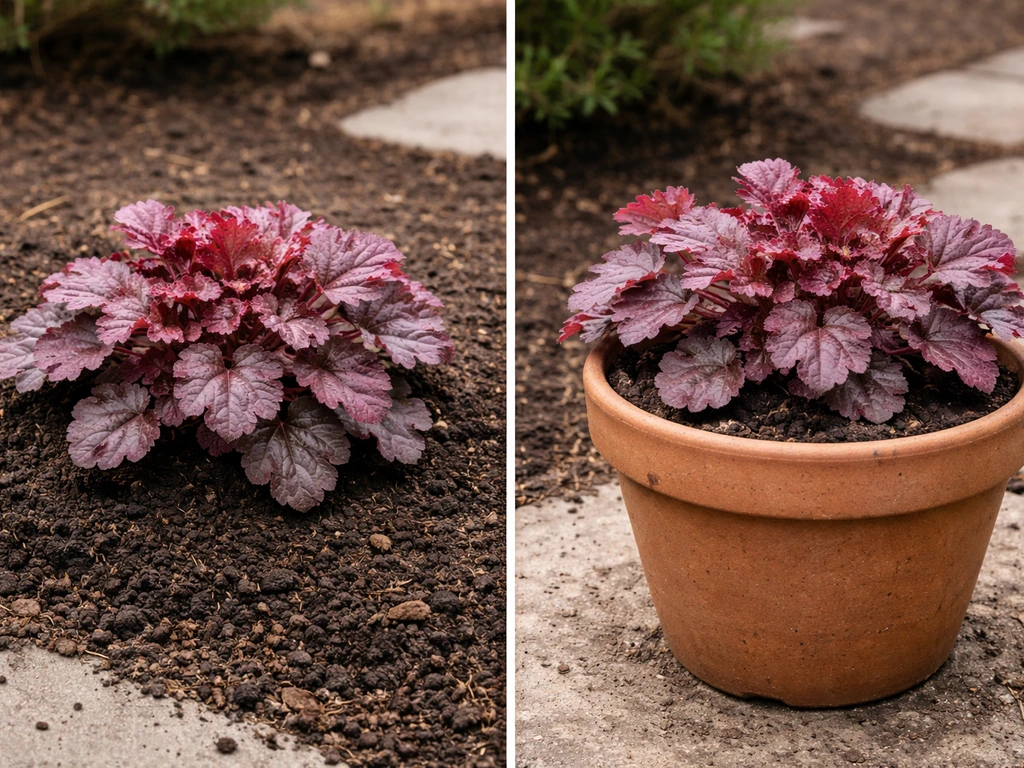
Heuchera does very well in containers, which is actually a great option if your native soil is poor or you want to move plants around for display. Use a high-quality potting mix with good drainage, and choose a pot that's at least 10 to 12 inches wide with drainage holes. The tradeoff is that container plants need more consistent watering and are more vulnerable to winter temperature swings: the roots have less insulation. In cold climates (zone 5 and below), either overwinter containers in an unheated garage or bury the pot in the ground for the season. In-ground plants are generally lower maintenance long-term and more cold-resilient.
Soil requirements and drainage (and how to improve your soil)
Heuchera wants soil that is moist but never waterlogged, well-structured, and slightly acidic. The target pH is right around 5.8. If you're not sure where your soil sits, a basic soil test from your local extension office or a garden center kit will tell you. Soils that are too alkaline can cause nutrient uptake problems even when you're feeding regularly, so it's worth checking before you plant.
To improve drainage in heavy or clay soil, work in a 3 to 4 inch layer of compost and, if needed, coarse grit or perlite before planting. Avoid adding straight sand to clay, which can backfire and create a concrete-like texture. In very sandy soil that drains too fast, more compost is again your best tool, it improves moisture retention and adds organic matter that heuchera roots love. Raised beds set at 8 to 12 inches above grade are an excellent fix for problem drainage in any soil type.
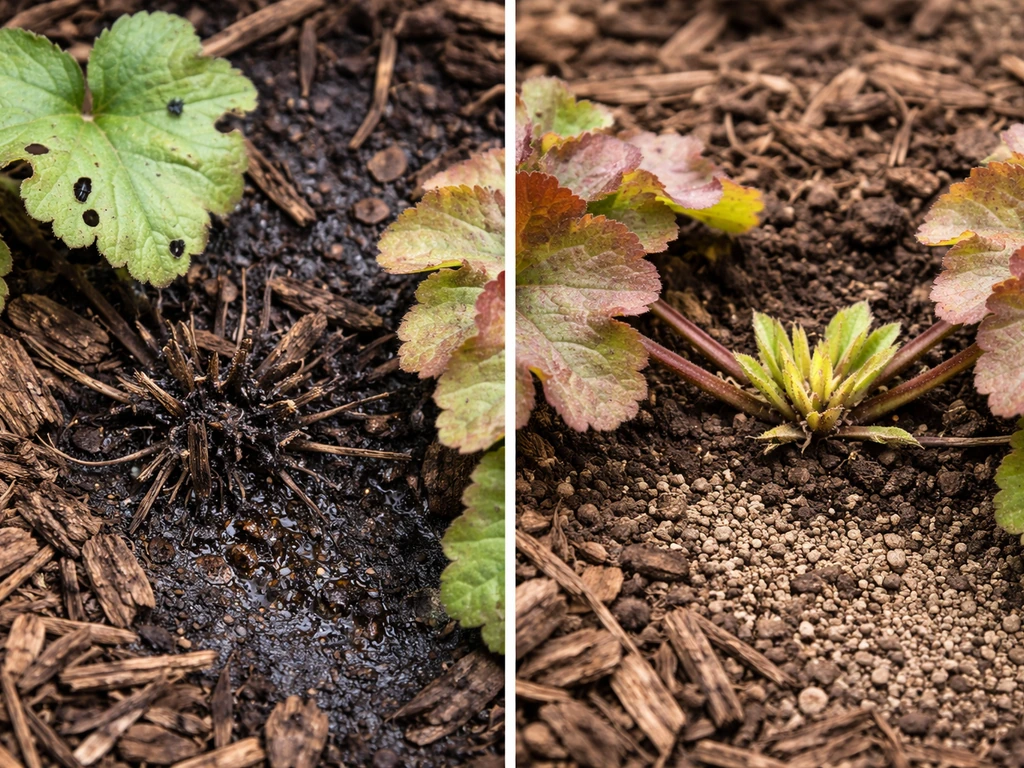
Mulching around heuchera helps regulate soil moisture and temperature, but here's where a lot of gardeners make a costly mistake: covering the crown. Keep your mulch layer 2 to 3 inches deep but pull it back to leave a clear gap of at least 3 to 4 inches around the base of the plant. Mulch sitting against the crown is one of the fastest ways to invite crown rot, especially in wet seasons.
Watering schedule and moisture management year-round
Heuchera is more tolerant of drying out than of staying wet. That's the single most useful thing to know about watering these plants. In hot, dry weather, watering once or twice a week is usually plenty. The crown and roots sitting in consistently damp soil is what leads to crown rot, so when in doubt, let the top inch of soil dry out before watering again.
During spring and fall, when temperatures are cooler and rainfall is more frequent, you may barely need to water at all if your plants are in the ground. Check the soil by hand rather than following a rigid schedule. Newly planted heuchera needs more attention in its first season: water every few days for the first two to three weeks, then back off gradually as the plant establishes. Container plants dry out faster, so check them every day in summer and water when the top inch of soil feels dry.
In winter, established in-ground plants need very little water and can largely fend for themselves. If you're in a dry-winter climate and the soil is bone dry heading into a cold snap, a single deep watering before the ground freezes can help. But never water frozen ground or leave crown areas sitting in standing water in winter: that combination is usually fatal.
Sunlight needs and temperature and hardiness tips
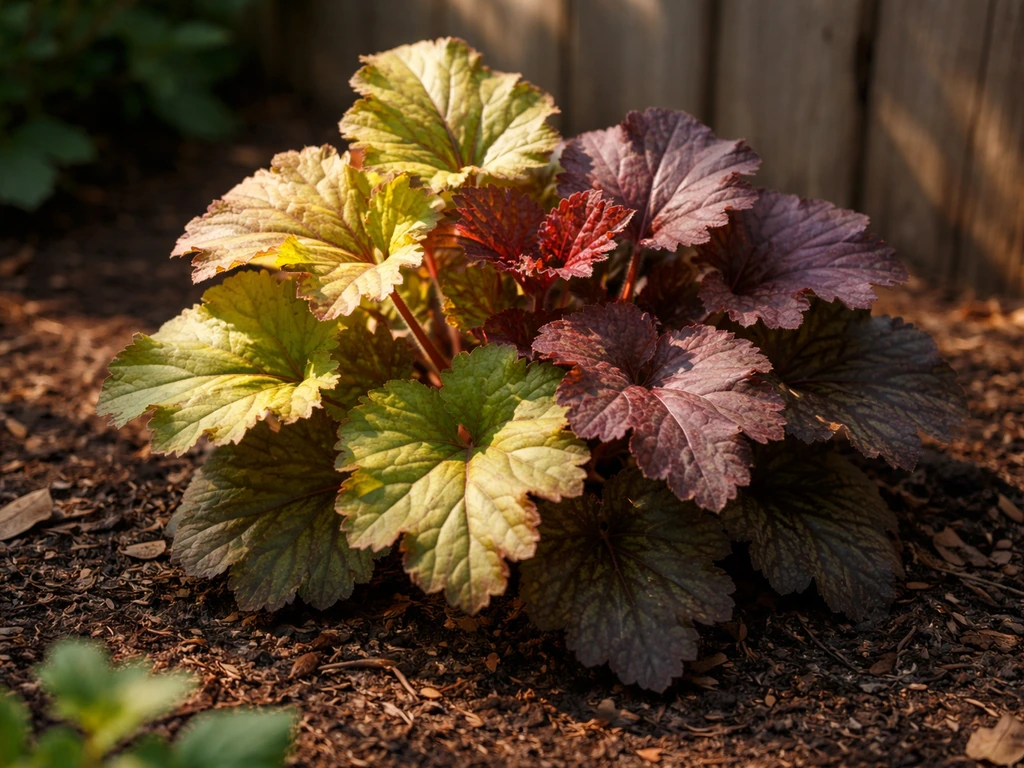
Heuchera needs about 4 to 6 hours of sunlight per day. The sweet spot is bright, indirect light or morning sun with afternoon shade. In zones 4 to 6, more sun is generally fine throughout the season. In zones 7 to 8, protect plants from the hottest part of the day (typically between noon and 3 pm) to prevent leaf scorch and stress. Darker-leaved varieties tend to handle more sun than lighter or silver-leaved types, which can bleach out.
Most commonly grown heuchera cultivars are cold-hardy from zone 4 to zone 8 or 9 depending on the variety, so check your specific plant's label. In zone 4 winters, plants may look completely dead by January, which is normal. The crown is dormant underground and will push new growth in spring. Where winters are mild (zone 7 and warmer), heuchera is semi-evergreen and may hold most of its foliage through winter, which makes it a great year-round interest plant.
One cold-weather issue worth knowing about is frost heaving: repeated freeze-thaw cycles can push the crown up out of the soil. If you notice the crown rising above soil level after a cold winter, gently press it back down and top-dress with compost. A layer of loose mulch applied in late fall (but kept away from the crown itself) can help buffer temperature swings and reduce heaving in colder zones.
Ongoing care: fertilizing, deadheading, pest and disease troubleshooting
Feeding your heuchera
Heuchera is not a heavy feeder and you can genuinely over-fertilize it. A single application of a balanced, slow-release granular fertilizer in early spring is usually all it needs for the season. Work a small amount into the soil surface around (not over) the crown. If your soil is already rich with compost, you may not need supplemental feeding at all. Excessive nitrogen pushes lush, soft growth that's more prone to pests and disease, and it won't improve the foliage color the way good light and good drainage will.
Deadheading and tidying
Deadheading the spent flower spikes won't trigger a second bloom the way it does with some perennials, but it keeps the plant looking tidy and may redirect energy to foliage. Cut the flower stalks back to the base once blooms fade. In spring, remove any dead or tatty leaves from winter. That's really the extent of routine pruning, heuchera doesn't need aggressive cutting back.
Common problems and how to fix them
| Problem | Likely Cause | What to Do |
|---|---|---|
| Crown rot / plant collapse | Poor drainage or mulch touching crown | Improve drainage, keep mulch 3–4 inches away from crown, replant with crown at soil level |
| Woody crown heaving above soil | Normal aging, freeze-thaw cycles | Press crown back down or lift and reset; divide if rhizome stems exceed 3 inches |
| Notched leaf edges | Black vine weevil adults feeding at night | Check for adult weevils at night; apply beneficial nematodes to soil for larval control |
| Poor, stunted growth | Crown buried too deep or larvae in roots | Check crown depth, look for grubs at root zone, improve drainage and soil quality |
| Powdery mildew on leaves | Poor airflow, shady damp conditions | Improve spacing, reduce overhead watering, apply appropriate fungicide if severe |
| Leaf spots | Wet weather, overcrowding | Thin planting, avoid overhead watering, remove affected leaves |
| Orange or yellow pustules on leaves | Heuchera rust (fungal) | Remove infected leaves promptly; note rust can be present before visible symptoms appear |
| Bleached or faded foliage | Too much direct sun | Relocate or provide afternoon shade |
Black vine weevil is worth a special mention because it's one of the most damaging heuchera pests and one of the least obvious. The adult weevils feed on leaf edges at night (you'll see distinctive semicircular notches), but the real damage comes from the C-shaped, legless larvae living in the soil and chewing through roots and crowns. If your heuchera wilts and collapses despite good watering and drainage, gently dig around the roots and look for white grubs. Beneficial nematodes applied to moist soil in late summer or early fall are an effective biological control.
Seasonal care calendar: what to do and when
Spring
As soon as the ground is workable, tidy up your heuchera by removing dead or winter-damaged foliage. Check whether frost heaving has pushed crowns up over winter, and if so, gently press them back to soil level or top-dress with compost to stabilize them. This is your best window to plant new heuchera or divide existing clumps. Apply a light, slow-release fertilizer around (not on) the crown. Pull mulch back from the crown to let the plant breathe as temperatures rise.
Summer
Water consistently but let the soil surface dry slightly between waterings. Deadhead spent flower spikes to keep things tidy. Keep an eye out for black vine weevil notching on leaf edges and check for powdery mildew in humid, crowded conditions. If a plant looks stressed in peak summer heat, check that it's not getting too much afternoon sun and that the soil isn't either bone dry or waterlogged. Container plants will need the most attention this season.
Fall
Early fall (September in most zones) is a great secondary window for planting or dividing heuchera in mild climates. Plan to divide any clumps that are more than 3 to 4 years old, or where rhizome stems are getting noticeably woody and elongated (longer than about 3 inches is your cue to act). To divide: lift the whole clump with a garden fork, shake off excess soil, pull or cut it into sections each with healthy roots and at least one crown, and replant the sections at exactly the right depth, crown level with the soil surface. Illinois Extension advises digging around heuchera or coral bells and replanting or making a mound of compost around the stem so the crown stays in the correct soil position and is not set too deep replant the sections at exactly the right depth, crown level with the soil surface.. Water in well. Apply a light mulch layer over the root zone (but not on the crown) before winter arrives.
Winter
In cold zones, heuchera goes dormant and may look completely dead. This is fine. Leave the foliage in place through winter as it offers some protection to the crown. In zones 4 and 5, a light mulch of shredded leaves over the root zone (again, kept away from the crown) can reduce heaving. Avoid mulching too heavily or too late in autumn, which can trap moisture and cause rot issues over winter. Container plants should be moved to a sheltered spot or the pot buried in the ground to protect roots from freezing solid.
If you get heuchera's core needs right: crown at soil level, good drainage, part shade, and not too much water, you'll find it's one of the most rewarding perennials you can grow. If you want another reliable, shade-tolerant perennial to try after heuchera, see also how to grow kniphofia for similar site-and-care considerations. If you’re also wondering how to grow hortensia (hydrangea), the basics are different, especially for sunlight and how you prune flowering stems. The foliage interest it brings across three or even four seasons is hard to match. It pairs beautifully in shaded or semi-shaded beds alongside plants like hellebores, which share similar site preferences, and it's well worth exploring as a companion or border plant once you have your heuchera established and thriving. If you want to try another twist on shade gardening, you can also check how to grow hoyas, since many of the care basics like light and watering habits carry over. If you’re pairing companions, you’ll also want to know what to grow with hellebores for the best flowering and foliage. If you want to try something similar in the shade, learn how to grow heliconia as well. Hellebores are also easy to grow, as long as you match their site to your conditions.
FAQ
Can I bury a heuchera crown deeper if I planted it too high or too low?
Yes, but timing matters. Wait until the crown is at or just above soil level, then top-dress with compost so you re-establish that correct crown depth. If the crown is deep underground, bringing it up too fast can stress the plant, so aim for a gradual adjustment over one season rather than a major lift-and-plant change.
How much fertilizer should I use for heuchera, and how do I know if I’m overdoing it?
For heuchera, more fertilizer is rarely better. A good default is one light application of a balanced slow-release product in early spring, then stop. If you see bigger leaves with duller or less intense color, back off next season, since excess nitrogen can also increase pest and disease pressure.
What should I do if my heuchera gets powdery mildew or looks crowded?
Powdery mildew is often linked to stagnant, humid air and crowded planting, not just watering habits. Improve airflow by spacing plants, removing the worst affected leaves in summer, and watering at soil level (not on the leaves). Avoid heavy late-season nitrogen, which can create soft, mildew-prone growth.
Is it harder to grow heuchera in containers than in the ground?
You can, but it changes the risk profile. In containers you must keep drainage strong and water less on rainy weeks, since containers can stay wet longer than beds. Also expect more winter movement in pots, so prevent crown heaving by insulating the root zone (sheltered placement or pot-burying in cold zones) and keeping mulch away from the crown.
When is the best time to divide heuchera, and what signs mean it’s time?
Heuchera generally does not need frequent division, but when clumps start to look woody or elongated, it is a good time. A practical cue is rhizome stems getting longer than about 3 inches, and older clumps that thin in the center. Dividing into smaller pieces also refreshes vigor and can reduce problems caused by aging crowns.
How can I tell if my soil drains too slowly for heuchera before planting?
Use a simple test: pour water into the planting area and watch. If water remains pooled after about 30 minutes, amend before planting because heuchera roots need oxygen. A raised bed set 8 to 12 inches above grade is often the easiest reliable fix when your soil drains slowly.
How should my watering schedule change in the first season after I plant heuchera?
Yes, but keep it specific. Water often enough to prevent the root ball from drying out during establishment, typically every few days for the first couple of weeks, then gradually extend the time between waterings. After that, follow the “top inch dry” rule, because consistently damp soil near the crown is the main reason for crown rot.
What’s the best way to prevent leaf scorch or faded color in heuchera?
In warm climates or hot afternoons, too much sun can bleach lighter foliage and cause leaf scorch, especially between noon and 3 pm. The fix is site adjustment, morning sun with afternoon shelter, or adding dappled shade (for example under a tree canopy). Darker varieties handle more sun, but still benefit from protection in the hottest part of the day.
My heuchera is wilting suddenly, could it be black vine weevil, and how do I confirm it?
If it wilts or collapses even though the soil isn’t dry, treat it as a possible black vine weevil issue and check for larvae by gently digging around the crown and roots. Look for the C-shaped, white grubs, then use beneficial nematodes on moist soil in late summer or early fall, when larvae are most exposed and can be targeted.
Will deadheading heuchera flowers make it bloom again later in the season?
Not exactly, since deadheading spent flower spikes is mostly cosmetic for heuchera. It keeps the plant looking tidy and may redirect energy to foliage. Plan to cut flower stalks back once blooms fade, but don’t expect a repeated bloom the way you might with true reblooming perennials.
What should I do if my heuchera crown is pushed up after winter?
Yes, especially in zones with freeze-thaw cycles. When you notice the crown rising after winter, press it back gently to soil level, then top-dress with compost for stability. In late fall, add a loose mulch over the root zone (not against the crown) to buffer temperature swings and reduce heaving.
My heuchera looks completely dead in January, should I cut it back right away?
If foliage looks dead in winter, that’s often normal in colder zones because the crown can be dormant underground. Leave the plant in place through winter for protection, then wait for spring to see new growth. Only remove dead or tatty leaves once new growth begins, so you don’t accidentally disturb the crown too early.