
Yes, azaleas absolutely grow in Oklahoma, but they won't just survive on their own terms. Oklahoma's alkaline soils, brutal summer heat, and occasional hard freezes are the three obstacles standing between you and a reliable bloom. Get those three things right, and azaleas will reward you with some of the most spectacular spring color in any Oklahoma yard. If you’re specifically wondering how to grow azaleas in the UK, you’ll want to focus on matching your soil acidity and choosing sheltered spots similar to Oklahoma’s best practices grow in Oklahoma.
How to Grow Azaleas in Oklahoma: Step-by-Step Guide
Marcus Holloway
2 Jul 2026
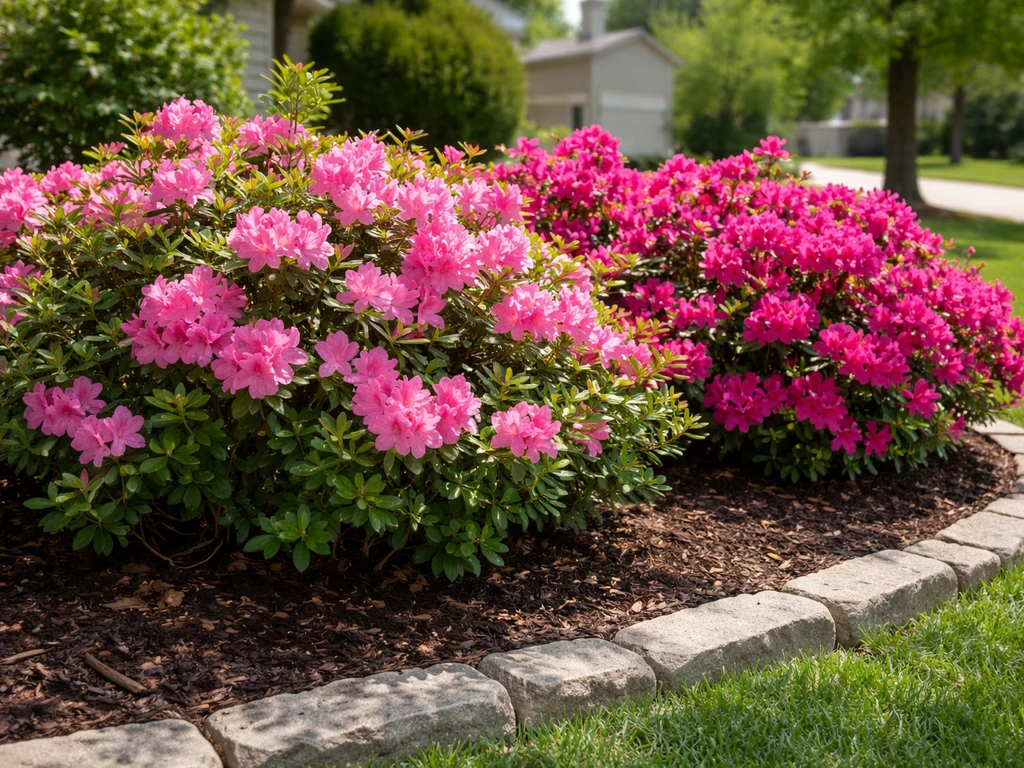
Do azaleas grow well in Oklahoma?
Oklahoma sits mostly in USDA hardiness zones 6a through 7b, which is well within the cold-hardiness range for most popular azalea varieties. OSU Extension lists the Kurume azalea as suited to zone 6, and many of the newer reblooming types are rated even tougher. So the winters alone won't stop you. The real challenge is Oklahoma's soil. Most of the state has naturally alkaline or neutral-to-alkaline clay-based soil, which is essentially the opposite of what azaleas want. Pair that with scorching July temperatures and unpredictable dry spells, and you can see why azaleas in Oklahoma live or die by how carefully you set them up. OSU Extension formally recommends azaleas (Rhododendron spp.) as landscape shrubs for Oklahoma, which means with the right prep they genuinely belong here.
The best results in Oklahoma tend to happen in the eastern part of the state, where soils are naturally more acidic and rainfall is higher. Tulsa eastward is prime azalea territory. In central Oklahoma and especially the western half, you're working harder against the soil chemistry, but container-amended beds and consistent care still get the job done.
Picking the right azalea for Oklahoma
Variety selection is where most Oklahoma gardeners either win or lose before they even break ground. You want varieties that handle zone 6 to 7 cold, bounce back from heat, and ideally rebloom so you're not limited to that one spring window.
Encore azaleas: the Oklahoma workhorse
Encore azaleas are the single best choice for most Oklahoma home gardeners. They're bred specifically to rebloom in spring, summer, and fall, which stretches your color season dramatically. They've been tested in zone 7 gardens with dappled shade conditions and performed well with proper placement. Most Encore varieties are rated for zones 6 through 10, meaning they handle Oklahoma's winters and summers without you losing sleep. Look for varieties like Encore Autumn Embers, Autumn Coral, or Autumn Fire for reliable performance.
Kurume and other traditional types
Kurume azaleas are classic spring bloomers that OSU Extension specifically profiles for Oklahoma. They're cold-hardy to zone 6 and produce that dense, covered-in-blooms look in April and May. If you're in eastern Oklahoma and want a traditional azalea mass planting, Kurume types like 'Coral Bells' or 'Hino Crimson' are proven performers. They're not reblooming, but the spring display is hard to beat.
Quick comparison of the main types
| Type | Bloom Season | Cold Hardiness | Heat Tolerance | Best For Oklahoma |
|---|---|---|---|---|
| Encore (reblooming) | Spring, summer, fall | Zones 6–10 | High | Statewide, best all-around pick |
| Kurume (evergreen) | Spring only | Zone 6 | Moderate | Eastern Oklahoma, mass plantings |
| Native azaleas (e.g., R. canescens) | Spring only | Zones 5–9 | High | Eastern/wooded settings, naturalistic look |
| Southern Indica hybrids | Spring only | Zones 7–9 | High | Southeast Oklahoma, sheltered spots |
When and where to plant
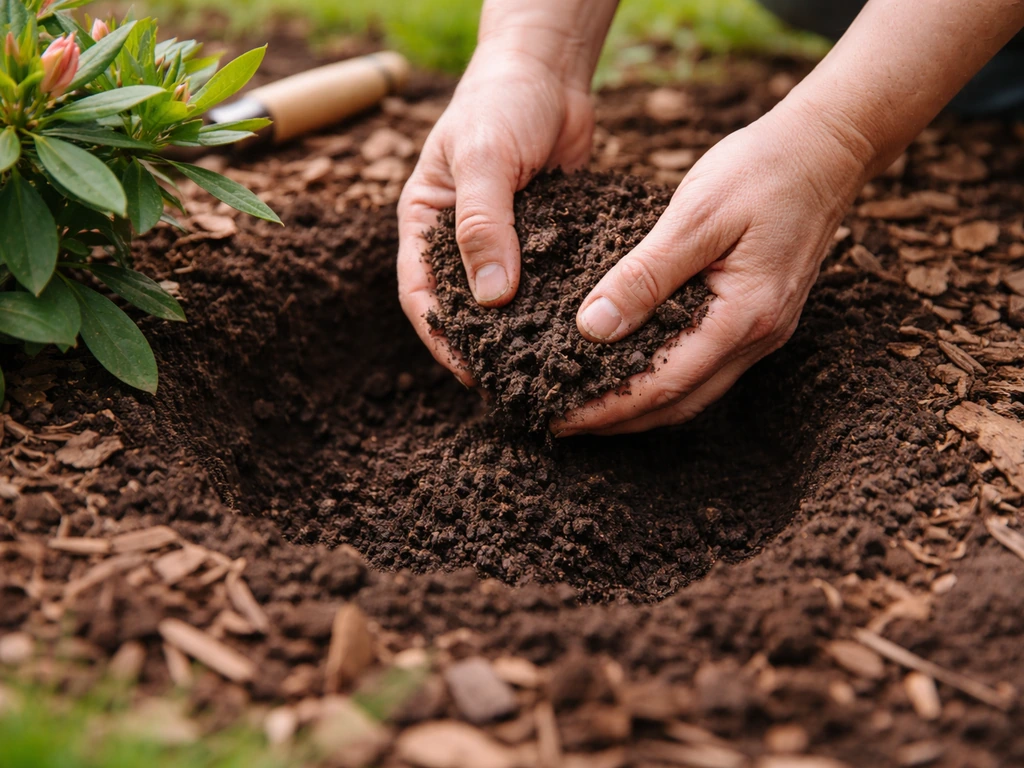
Planting time
Spring is your best window, specifically mid-March through May before the real heat arrives. Early summer works if you're committed to watering, but newly planted azaleas without consistent moisture during an Oklahoma summer will fail quickly. University of Arkansas Extension, working in a nearly identical climate zone, strongly recommends spring and early summer planting and cautions that summer-planted azaleas without water simply won't make it. Fall planting in September through October is a solid second option because cooler temperatures reduce transplant stress and roots have time to settle before winter.
Site selection
Azaleas in Oklahoma want morning sun and afternoon shade, full stop. That east-facing bed along the side of your house, or under the high canopy of a large oak, is exactly right. Full sun in Oklahoma's afternoon heat causes leaf scorch and stress, while too much shade leads to weak, sparse growth and poor flowering. Clemson Extension is direct about this: heavy shade reduces flowering significantly. Aim for a spot that gets 4 to 6 hours of direct morning light with shade protection from about 1 p.m. onward.
Avoid low spots, areas near downspouts, or anywhere water pools after rain. Standing water is one of the fastest ways to kill an azalea through root rot. Also avoid exposed, windy locations, especially in western Oklahoma. Wind desiccates the shallow roots and foliage, particularly in winter. University of Vermont Extension specifically recommends protected sites with reduced wind exposure for evergreen azaleas for exactly this reason.
How to dig and space
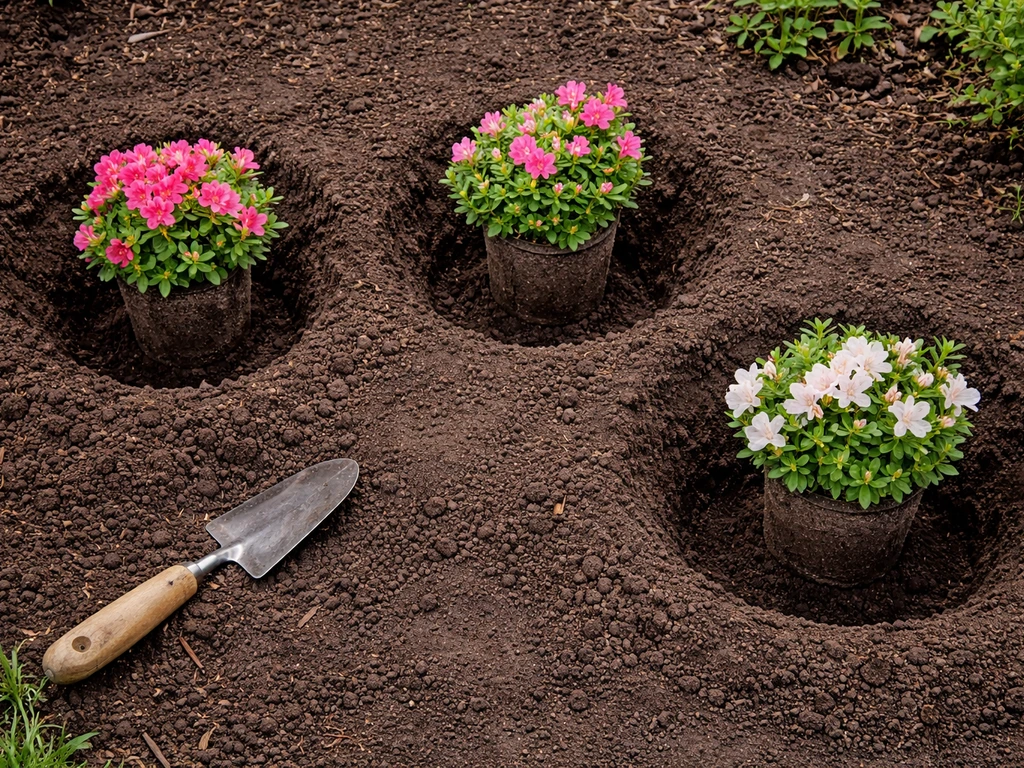
Dig your planting hole the same depth as the root ball and 2 to 3 times wider than the root ball. Then here's the part that surprises most people: plant high. The top of the root ball should sit roughly 2 inches above ground level. The Azalea Society of America is emphatic about this, and it matters especially in Oklahoma's heavier soils where drainage can be imperfect. Deep planting suffocates azalea roots, which need both moisture and oxygen to function. The Azalea Society of America notes that azalea roots need both moisture and oxygen, and it recommends planting high to help prevent suffocation and poor drainage plant high. After planting, mound amended soil around the exposed root ball and mulch generously.
Space plants based on mature size. Most Encore types reach 3 to 4 feet wide, so 3 to 4 feet apart works well for mass plantings. Kurume types are more compact, around 2 to 3 feet, so you can plant them somewhat closer. Cramming them together looks full for one season and then becomes a problem.
Getting the soil right: Oklahoma's biggest azalea challenge
This is the make-or-break piece in Oklahoma. If you want to fine-tune your plan for local conditions, use these steps as your guide for how to grow azaleas in Florida This is the make-or-break piece in Oklahoma.. Azaleas need a soil pH between 4.5 and 6.0. Most Oklahoma soils run from neutral (pH 7.0) to alkaline (pH 7.5 or higher). At those pH levels, iron becomes chemically unavailable to the plant even if it's physically present in the soil, leading to iron chlorosis, where leaves turn yellow with green veins. OSU Extension, Missouri Botanical Garden, and UF/IFAS all connect high soil pH directly to iron chlorosis in azaleas. It's one of the most common failures, and it's completely preventable.
Start with a soil test
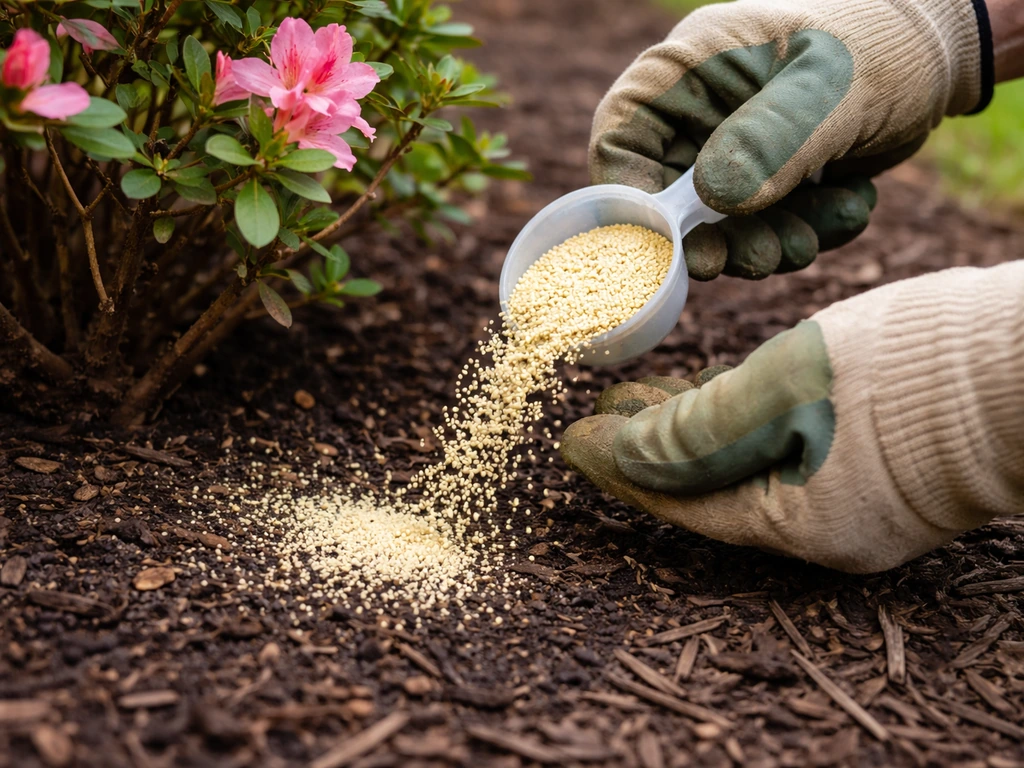
Before you spend a dime on amendments, get a soil test through your local OSU Extension office. This tells you your baseline pH and nutrient levels so you're not guessing. OSU Extension specifically recommends this step for acid-loving ornamentals. If you want to apply those same principles for how to grow rhododendrons and azaleas, start with the soil test and adjust pH and nutrients before planting acid-loving ornamentals. You can submit samples for a modest fee and get results within a couple of weeks.
Lowering pH with elemental sulfur
Elemental sulfur is the standard tool for acidifying Oklahoma soil for azaleas. OSU Extension explicitly recommends it for acid-loving ornamentals including azaleas. The amount you need depends entirely on your starting pH and soil texture, which is another reason the soil test matters first. Work sulfur into the bed before planting, and understand that it works slowly, often taking several months to meaningfully shift pH as soil bacteria convert it. Do not try to rush the process by over-applying. Follow your soil test recommendations, and plan to retest and reapply as needed on a seasonal cycle.
Building the planting bed
Mix generous amounts of organic matter into your planting area: peat moss, pine bark fines, aged compost, or a combination. These materials lower pH over time, improve drainage in clay soils, and create the loose, well-aerated root zone azaleas need. If your native soil is heavy clay or very alkaline, consider building a raised bed or berm with a custom mix rather than fighting the native soil. For the bed itself, aim for a well-draining mix with a significant organic component, roughly 50 percent organic matter by volume is not excessive for a dedicated azalea bed.
Mulch is non-negotiable
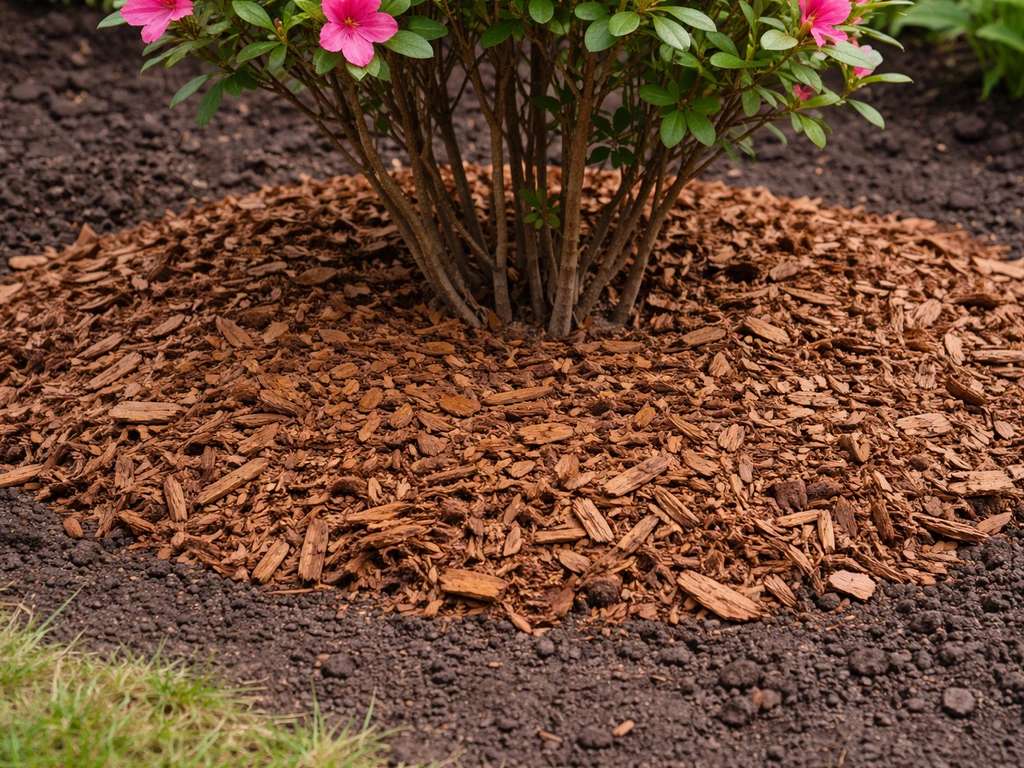
Apply 3 to 4 inches of organic mulch, pine bark, pine needles, or shredded wood, over the entire root zone. This does several things at once: it conserves moisture, moderates soil temperature, gradually acidifies the soil as it breaks down, and protects those shallow azalea roots. Keep mulch a few inches away from the base of the stems; piling it up against the trunk invites rot. The Azalea Society of America is clear on this point. Refresh your mulch layer every year, and add more after the ground freezes in winter.
Watering: matching Oklahoma's feast-or-famine weather
Oklahoma doesn't give you consistent rainfall. You'll have weeks of normal spring moisture followed by weeks of dry heat in July and August. Azaleas are not drought-tolerant, especially in the first two years, and they won't tell you they're struggling until leaves start curling or browning. You need to stay ahead of that.
In the first year, plan on watering twice a week during hot, dry weather. Clemson Extension specifically recommends this frequency for newly planted azaleas in warm conditions. Each watering session should be slow and thorough enough to wet the entire root zone, not just the surface. The goal is to water until you see it soaking in and staying, not running off.
After the first year, established plants need less hand-holding but still need consistent moisture during heat waves. Check soil moisture by pushing a finger 2 to 3 inches into the mulch and soil near (but not directly at) the root ball. If it's dry at that depth, water. Don't follow a rigid calendar schedule. Oregon State Extension makes this point well: observe the plant and check soil conditions rather than watering on a fixed schedule, because your actual conditions vary week to week. That advice translates directly to managing Oklahoma's unpredictable summers.
One thing to watch: don't overwater. Soggy, poorly drained soil causes root rot just as reliably as drought causes stress. If your bed drains slowly, this circles back to why raised planting and amended soil structure matter so much.
Protecting azaleas from Oklahoma sun, heat, and wind
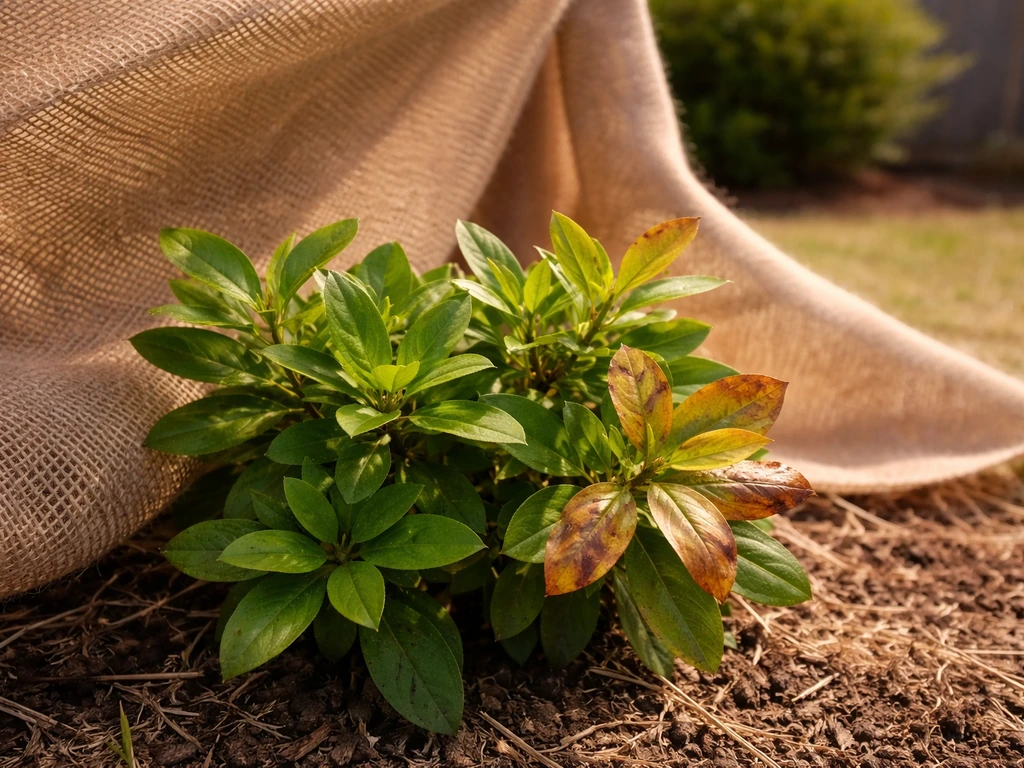
Summer heat above 95 degrees F is stressful for azaleas, and Oklahoma regularly serves those temperatures for weeks at a stretch. The best protection is preventive: good site selection (afternoon shade), adequate mulch, and consistent soil moisture. An azalea that's well-sited, properly mulched, and watered during dry stretches will handle Oklahoma heat far better than one planted in full sun with bare soil.
If you notice leaf scorch (brown leaf edges) during extreme heat, increase watering frequency temporarily. Adding an extra inch of mulch mid-summer also helps buffer soil temperatures. Avoid fertilizing during peak summer heat because pushing new growth during a heat wave only adds stress.
Wind protection matters more than most people realize, especially in western and central Oklahoma. A physical windbreak, whether a fence, a row of taller evergreens, or a building wall, dramatically reduces winter desiccation on evergreen azalea foliage. If your plants are in an exposed location, consider burlap wrapping for the first couple of winters until they establish deeper root systems.
Month-by-month seasonal care for Oklahoma azaleas
Spring (March through May): prep and bloom
This is the most active season. As soon as nighttime temperatures stay consistently above freezing, check your mulch layer and refresh it if it's thinned out over winter. This is also the right time to fertilize. OSU Extension recommends using an acid-based azalea fertilizer, applying about a quarter to a half cup scattered in a circle starting roughly 12 inches away from the base of the plant. Don't fertilize right at the trunk, and don't dig fertilizer in deeply since azalea roots are very shallow. A light surface broadcast followed by watering in is the right approach.
Spring is also planting time if you're adding new plants. Get them in the ground after your last frost date, which in most of Oklahoma is mid-March to mid-April depending on your zone. Water thoroughly at planting and keep consistent moisture through the establishment period.
Prune right after bloom if needed, and only then. Azaleas set their flower buds for the following year during summer, so pruning later removes next year's blooms. Keep pruning light and shape-focused rather than aggressive cutbacks.
Summer (June through August): heat management
Your main job in summer is moisture management. Water deeply during dry spells, check soil moisture regularly, and make sure your mulch layer is intact. Skip fertilizing once temperatures are consistently above 90 degrees F. If you have Encore azaleas, you'll see a secondary bloom flush in late summer, which is one of the best reasons to grow them in Oklahoma's long season.
Watch for spider mites, which become a problem during hot, dry conditions. A strong spray of water from a garden hose knocks them back in mild cases. Avoid overhead watering in the evening since wet foliage overnight invites fungal problems.
Fall (September through November): setting up for winter
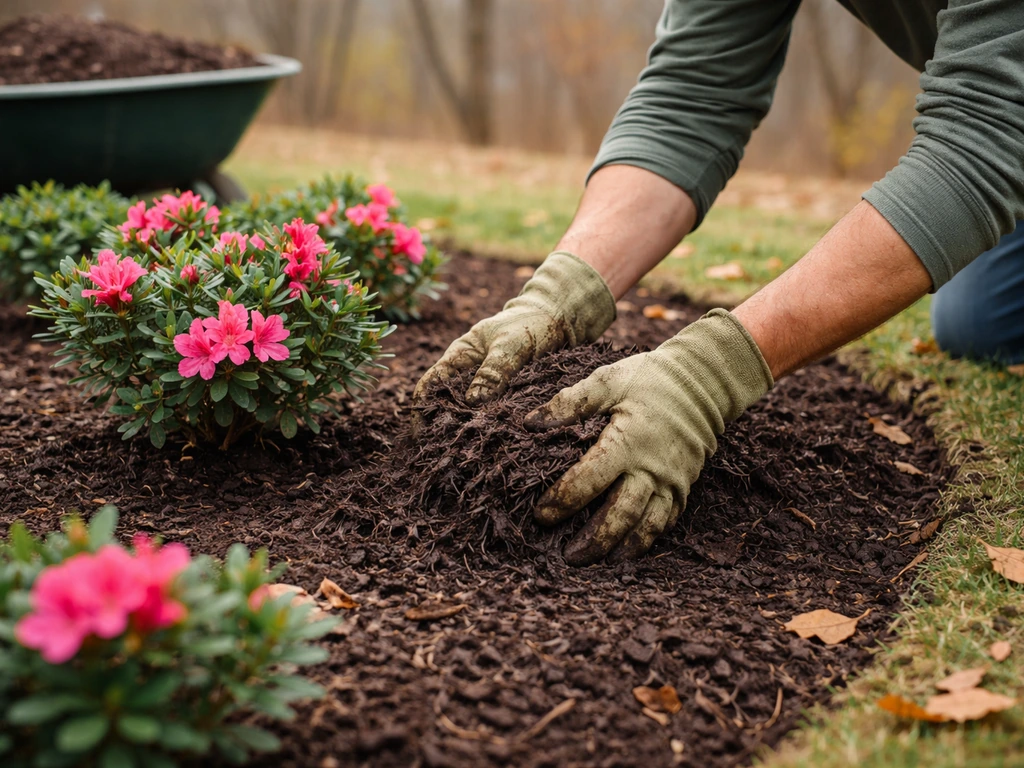
Early fall brings another bloom flush on Encore varieties. This is also a good time to do a light fertilization in September, giving plants a chance to harden off before winter. Water well going into October, especially if fall has been dry. Azaleas heading into winter with dry roots are much more vulnerable to freeze damage and winter desiccation.
Replenish your mulch layer in late October or early November before the first hard freeze. OSU Extension's winter protection guidance specifically notes that mulch prevents fluctuation in soil temperatures, which is exactly the mechanism that protects azalea root zones during Oklahoma's freeze-thaw cycles. Aim for a consistent 3 to 4 inch layer across the entire bed.
Winter (December through February): minimal intervention
Well-established azaleas in zone 6 or 7 Oklahoma generally don't need elaborate winter care beyond mulch and a windbreak. During hard cold snaps below 10 to 15 degrees F, a burlap wrap or even a frost cloth draped over the plant provides extra insurance, particularly for newer plantings. The Azalea Society of America recommends reapplying mulch after the ground freezes to lock in soil temperature rather than prevent freezing, which keeps roots more stable through the thaw cycles.
If you get a late-winter ice storm, which Oklahoma absolutely delivers, don't shake ice off branches. Let it melt on its own. You're more likely to break branches trying to remove ice than the ice itself is to damage the plant.
Fertilizing: keep it simple and seasonal
Use a fertilizer specifically formulated for azaleas and acid-loving plants, labeled as such on the bag. These typically contain ammonium-based nitrogen that helps maintain soil acidity over time. Apply in spring right after bloom and optionally again in early fall. OSU Extension's guidance of a quarter to a half cup scattered in a circle starting 12 inches from the base is a practical, easy-to-follow measure. More is not better here. Over-fertilizing pushes leafy growth at the expense of blooms and can burn shallow roots.
Troubleshooting the most common Oklahoma azalea problems
Yellow leaves with green veins almost always mean iron chlorosis from high soil pH. Don't reach for iron chelate spray as a permanent fix. It helps short-term, but the real solution is lowering soil pH with elemental sulfur and organic matter over time. Get a soil test and address the root cause.
No flowers typically points to one of three things: pruning at the wrong time (removing next year's buds), too much shade, or a plant that never fully established due to poor soil or inconsistent water. Walk through each possibility before giving up on the plant.
Root rot shows up as wilting that doesn't improve with watering, followed by branch dieback. It's almost always caused by planting too deep, poor drainage, or overwatering. Unfortunately, severe root rot is usually fatal. Prevention through high planting and well-amended, draining soil is far easier than treatment.
If you're also growing or considering rhododendrons, which are closely related, many of these same principles apply. The soil pH management and site selection strategies for azaleas translate directly, though rhododendrons tend to be larger and may need slightly more shade in Oklahoma's climate.
Your next steps
If you're starting fresh, here's the practical sequence: get a soil test first, then select an Encore azalea variety suited to your zone, prepare a raised or amended bed with organic matter and sulfur based on your test results, plant high in spring, mulch thoroughly, and water consistently through the first growing season. For a deeper walkthrough, see this guide on how to grow syringa vulgaris from planting through bloom your next steps. That foundation handles the three main Oklahoma challenges, alkaline soil, summer heat, and freeze-thaw winters, before they become problems. Do those things right, and you'll be troubleshooting far less and enjoying blooms far more.
FAQ
Can I grow azaleas in containers in Oklahoma?
Yes, but only if you can control drainage and soil chemistry. Use a wide container with drainage holes, fill with an azalea rhododendron potting mix that includes pine bark (not plain topsoil), and keep the mix slightly acidic. In Oklahoma, container roots dry out faster, so check moisture more often than in beds and plan on watering during hot spells even if the plant looks healthy.
What should I do if my azaleas get yellow leaves with green veins?
Iron chelate can reduce yellowing temporarily, but it does not solve the underlying high pH problem. If you see yellow leaves with green veins, do a soil test and lower pH gradually using sulfur plus organic matter. Also check whether the planting depth is correct, because deep planting can worsen root stress and mimic nutrient issues.
Why do I see white residue on the soil around my azaleas, and will it harm them?
White, crusty salt-like buildup usually points to fertilizer or water quality issues. Flush the container or bed area with plain water occasionally to move excess salts below the root zone (avoid if drainage is poor), stop fertilizing for a season, and use an azalea-specific fertilizer at the recommended rate. For beds with alkaline water, soil pH management through sulfur and organic matter still matters.
What if I already planted my azalea too deep?
Use the root ball’s top as your guide, in Oklahoma you generally want the crown slightly above grade (about 2 inches above ground level as in the planting steps). If you suspect you planted too deep, avoid disturbing roots aggressively. For serious deep-planting, you may need partial corrective action by carefully exposing the crown and improving drainage, but it is best done when plants are dormant or just after bloom.
How do I know whether I’m overwatering or underwatering in Oklahoma summer?
Newly planted azaleas usually need less frequent but more thorough watering than you might expect. Water slow enough to soak the entire root zone, then let the top few inches of mulch dry slightly before the next session. If you water on a rigid schedule without checking moisture 2 to 3 inches down, you can accidentally cause root rot.
If my Encore azalea only blooms once, what are the most likely causes?
Encore azaleas can bloom in additional flushes, but they are not guaranteed to bloom if buds were removed or if the plant is stressed during bud formation. Avoid heavy pruning after spring bloom, keep consistent moisture from late spring through summer, and do not fertilize during peak heat because it can reduce bloom set.
How far from the stem should mulch be, and how thick should it stay?
Mulch that touches the stems or trunk can lead to rot, and too little mulch leaves the shallow roots exposed to heat and freeze-thaw swings. Keep mulch a few inches away from the base, maintain 3 to 4 inches across the root zone, and refresh after winter so the layer remains consistent before summer heat.
When is the safest time to prune azaleas so I do not lose next year’s flowers?
Wait until azaleas finish blooming for the season. Pruning in late summer or fall can remove next year’s flower buds that were already set, reducing the following spring show. If you only need cleanup, you can remove dead or broken tips lightly right after bloom, then stop.
Is it possible to propagate azaleas locally, and what timing works best in Oklahoma?
Yes, you can propagate, but keep expectations realistic. Azaleas are often propagated from semi-hardwood cuttings in late spring to early summer or by layering, and results vary by variety. For Oklahoma conditions, timing and moisture control are critical during rooting, and you still need to match soil acidity and drainage in the new plant’s growing site.
My azaleas get leaf scorch in summer, what should I check first besides watering?
Watch for sunburn stress signs like brown crisp edges and faded leaf color, then immediately adjust the site conditions rather than just watering more. Add or improve afternoon shade, increase mulch depth if it is below target, and ensure the soil is acidic enough for healthy root function. Persistent leaf scorch despite good moisture often indicates too much sun or a pH problem.