
Syringa vulgaris, the common lilac, is one of the most rewarding shrubs you can plant in a temperate garden. Give it full sun, well-drained soil at roughly pH 6.5–7.0, and winters cold enough to satisfy its chilling requirement (USDA zones 3–7), and it will reward you with intensely fragrant panicles every May for decades with almost no fuss. The single biggest mistake gardeners make is planting it in too much shade or too-acidic soil, then wondering why it never blooms. Get those two things right from the start and you're most of the way there.
How to Grow Syringa vulgaris: Complete Guide for Gardeners

Marcus Holloway
14 Jul 2026
What exactly is Syringa vulgaris?
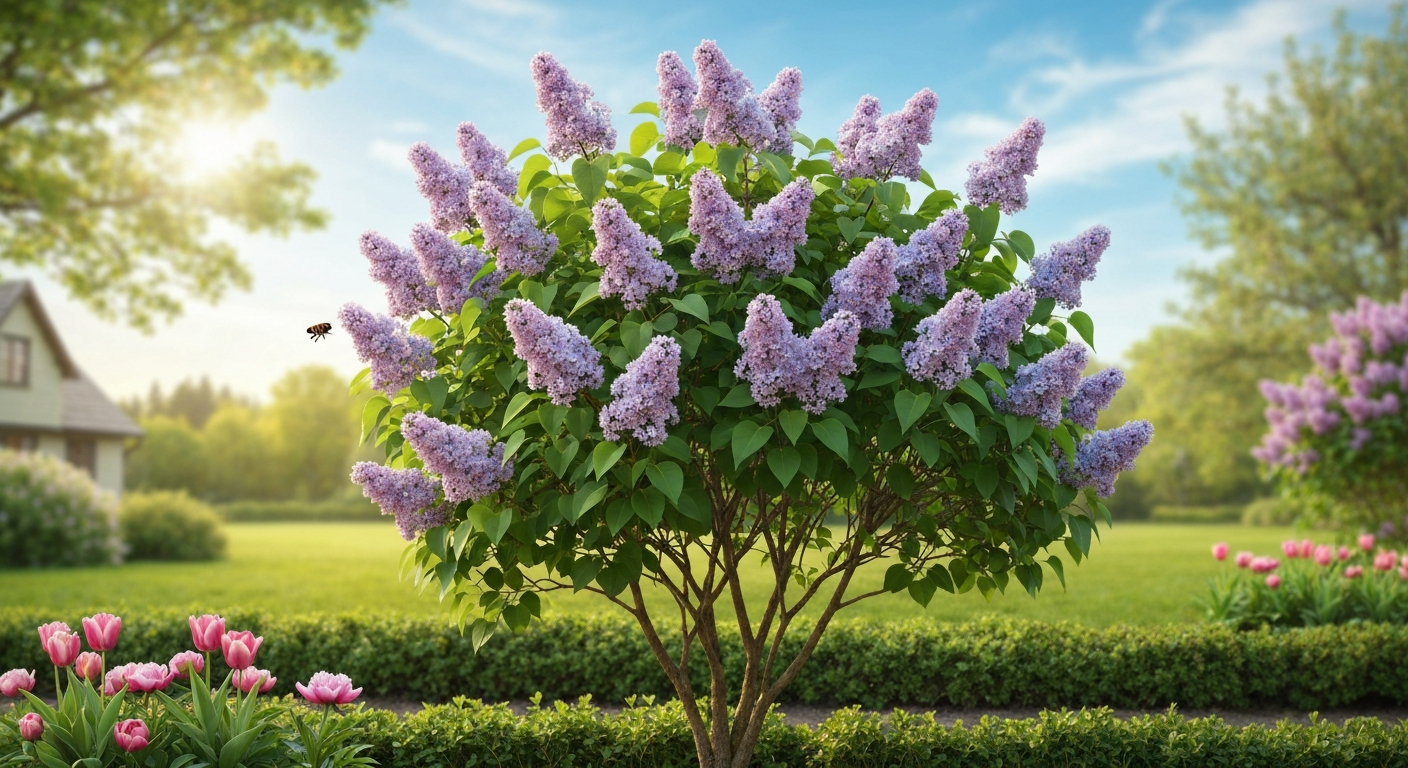
Syringa vulgaris is a deciduous shrub in the olive family (Oleaceae), native to the rocky hillsides of southeastern Europe. Its botanical name means 'common pipe-reed lilac,' a nod to the hollow stems ancient shepherds used to make pipes. In garden terms it's the classic cottage-garden lilac: large, upright to arching shrubs carrying opposite, heart-shaped leaves and terminal, cone-shaped panicles of tiny, four-lobed tubular flowers. The fragrance is unmistakable and, for many people, tied directly to childhood memories of grandmothers' gardens.
Mature plants typically reach 10–20 feet tall with a spread of 8–12 feet, though most named cultivars stay closer to the 10–15 foot range. The species itself produces the familiar soft lavender flowers, but centuries of selection have given us hundreds of cultivars in shades ranging from pure white to deep wine purple, single and double-flowered forms, early- and late-blooming selections, and compact dwarfs suited to smaller gardens. Nearly all of the cultivated lilacs you'll find at a nursery are selections or hybrids of S. vulgaris.
From a landscape standpoint, common lilac punches well above its weight. It functions beautifully as a specimen shrub, a privacy screen or hedge, a backdrop in a mixed border, or a naturalized mass planting on a slope. The blooms are excellent cut flowers, and the dense summer foliage provides reliable screening even after bloom season ends.
Climate, hardiness, and when to expect blooms
Common lilac is cold-hardy to USDA Zone 3, meaning it tolerates winter lows down to around -40°F (-40°C). That cold hardiness is not just a survival trait, it's actually a requirement. Lilacs need a significant period of winter chilling (roughly 6–8 weeks below 45°F) to break dormancy properly and set flower buds. This is why they fail or bloom poorly in warm-winter climates like the Deep South and most of California. Zones 3 through 7 are the sweet spot, with some low-chill cultivars pushing into Zone 8 in the right microclimate.
Bloom timing varies considerably by region. In cool northern climates like Minnesota, S. vulgaris typically blooms in May, with peak bloom lasting roughly two weeks. In milder Zone 6–7 locations, you might see the first flowers in late April. At the New York Botanical Garden, peak bloom for common lilacs lands somewhere between late April and early May most years. Altitude, microclimate, and the specific cultivar all shift that window, which is part of what makes lilac festivals such a gamble for exact-date planning.
| USDA Zone | Approximate Bloom Window | Notes |
|---|---|---|
| Zone 3 (e.g., MN, ND) | Mid to late May | Full chill requirement easily met; strong, reliable bloom |
| Zone 4–5 (e.g., NY, MI, WI) | Early to mid May | Classic lilac country; most cultivars thrive |
| Zone 6 (e.g., VA, KS, OR) | Late April to early May | Most cultivars perform well; some may need low-chill selections |
| Zone 7 (e.g., NC, TN, OK) | Mid to late April | Choose low-chill or S. vulgaris × hybrids; monitor summer heat stress |
| Zone 8+ | Unreliable or no bloom | S. vulgaris not recommended; consider low-chill species alternatives |
Choosing the right cultivar
There are hundreds of named S. vulgaris cultivars, and it can feel overwhelming at a nursery. In practice, narrow your choice down by four criteria: fragrance intensity, flower color, mature size, and cold-hardiness. If you're gardening in Zone 4 or colder, virtually any named S. vulgaris cultivar will be reliably hardy and you have maximum freedom of choice. If you're pushing into Zone 7, look specifically for cultivars noted as low-chill or heat-tolerant.
On fragrance: not all cultivars are equally scented, and double-flowered forms sometimes sacrifice some fragrance for petal density. If fragrance is your primary reason for growing lilac, single-flowered selections and the straight species tend to carry the strongest scent. Doubles like 'Katherine Havemeyer' and 'Charles Joly' are still very fragrant but lean more toward the ornamental side.
| Cultivar | Flower Color | Form | Mature Height | Notable Trait |
|---|---|---|---|---|
| 'Sensation' | Purple with white picotee edge | Single | 10–12 ft | Unique bi-color; strong focal point |
| 'Katherine Havemeyer' | Lavender-pink | Double | 10–12 ft | Very fragrant; classic cottage look |
| 'Charles Joly' | Deep magenta-purple | Double | 10–12 ft | Rich color; long-lasting blooms |
| 'President Lincoln' | Blue-lavender | Single | 10–15 ft | Closest to true blue among lilacs |
| 'Madame Lemoine' | Pure white | Double | 10–12 ft | Iconic white; excellent fragrance |
| 'Bloomerang Purple' | Purple | Single | 4–6 ft | Re-blooming dwarf; good for small gardens |
| 'Miss Kim' | Pale lilac-blue | Single | 4–5 ft | Compact; good fall foliage; Zone 3–8 |
A quick note on dwarf and re-blooming types: 'Bloomerang' is technically a S. × hyacinthiflora hybrid but behaves very similarly to S. vulgaris in the garden and is worth mentioning because it fills the gap for gardeners who want a smaller footprint. 'Miss Kim' (S. pubescens subsp. patula) is another compact option often shelved alongside S. vulgaris in nurseries. Both work well in smaller spaces where a full-sized common lilac would quickly dominate.
Finding the right spot in your garden
Full sun is non-negotiable for reliable flowering. That means a minimum of six hours of direct sunlight per day, and honestly eight hours is better. I've seen gardeners plant lilacs in dappled shade under trees and then spend years wondering why they get leaves but no flowers. The plant survives in shade but dedicates its energy to stem and leaf growth rather than flower bud formation. If your yard is mostly shaded, this is not the shrub for that spot.
Air circulation matters almost as much as sun. Good airflow around the shrub significantly reduces powdery mildew pressure in late summer, which is one of the few things that genuinely bothers S. vulgaris. Avoid planting it right up against a fence or wall where air stagnates. A spot with a gentle prevailing breeze is ideal.
For spacing, Cornell Cooperative Extension recommends 10–15 feet between individual plants when growing as specimens or in informal masses, and about 6 feet apart when planting a formal hedge or screen. These aren't arbitrary numbers. Crowded lilacs compete for light and water, create the still-air conditions that encourage mildew, and require much more aggressive pruning to stay manageable. Give each plant the room it needs from day one.
Companion plants work well around the base of lilacs because the shrubs have a somewhat bare lower stem as they age. Perennials like peonies, catmint (Nepeta), and bearded iris are classic pairings that share similar sun and soil preferences. Spring bulbs (tulips, alliums) naturalized beneath lilacs look spectacular when they bloom together. If you also garden with acid-loving shrubs, see how to grow rhododendrons and azaleas for compatible site and soil tips. Low-growing ground covers like creeping phlox can soften the base without competing aggressively for nutrients.
Soil: getting the chemistry and drainage right
Common lilac has two non-negotiable soil requirements: good drainage and near-neutral pH. It thrives in well-drained, fertile loam at pH 6.5–7.0. If your soil is acidic (which is common in the eastern US, the Pacific Northwest, and many woodland gardens), you need to raise the pH before planting. If you prefer acid-loving shrubs such as rhododendrons, see how to grow rhododendron plant (6744cb66-b770-4ef5-a4d6-d7f27171e281). If you garden in the UK and need guidance on caring for acid-loving shrubs, see how to grow azaleas UK for region-specific soil and care tips. Ground limestone (calcitic or dolomitic) is the standard amendment. Don't guess: get a soil test first. Your local cooperative extension office can typically process a soil test for under $20, and it tells you exactly how much lime to apply to hit your target pH. Adding limestone blindly is how people overcorrect and end up with alkaline soil.
Drainage is the other half of this equation. S. vulgaris will not tolerate waterlogged roots. If you have heavy clay soil that holds water after rain, the solution is not to load up the planting hole with amendments and hope for the best. That approach actually creates a 'bathtub effect,' where the hole fills with water and the roots drown. Instead, either raise the planting bed by 6–8 inches, work compost and coarse grit through a wider area of soil, or choose a naturally better-drained spot.
- Test soil pH before planting; target 6.5–7.0 for S. vulgaris
- Apply ground limestone if pH is below 6.5 (rate per soil test result)
- Work amendments into a broad area, not just the planting hole
- Avoid heavy clay that holds standing water after rain
- If drainage is poor, raise the bed or select a different site rather than amending just the hole
- Fertile loam with moderate organic matter content is ideal; no need to over-enrich
- Avoid areas where lawn fertilizer high in nitrogen regularly overspray
How to plant Syringa vulgaris: step by step
When to plant
The best time to plant container-grown lilacs is early spring or fall. Early spring planting lets the plant establish roots before summer heat arrives. Fall planting (at least 6 weeks before hard frost) gives roots time to settle before winter dormancy. Field-dug or bare-root stock is best planted in spring at or just before bud break, when the plant is beginning to wake up but hasn't yet leafed out fully.
Preparing the planting hole
Dig the hole no deeper than the root ball and at least twice as wide, ideally three times as wide. Shallow but wide is the rule: most feeder roots grow outward, not down, and a wide hole with loosened surrounding soil lets those roots spread easily. Resist the urge to dig a deep, amended hole and set the plant into a rich pocket. That approach encourages circling roots and can cause the plant to sink as amended soil settles.
Planting bare-root stock
Soak bare roots in water for 12–24 hours before planting. Examine the roots and trim any broken or circling ones cleanly with sharp pruners. Mound a small cone of native soil in the center of the hole, set the plant on the mound with roots spread outward and downward, and check that the root flare (where stem meets root system) will sit at or just slightly above the surrounding soil level. Backfill with the native soil you removed from the hole. Per Cornell's guidance, the only amendments worth adding to the hole itself are ground limestone (if pH needs correction) and superphosphate to encourage root development. Tamp gently as you backfill to eliminate large air pockets, then water deeply.
Planting container-grown lilacs
Slide the plant from its container and check the root ball. If roots are circling around the edges, score them vertically in 3–4 places with a knife or tease them loose with your fingers. This step is easy to skip and genuinely makes a difference to long-term establishment. Set the plant in the hole so the root flare sits at or slightly above grade to account for settling. Backfill with native soil, firm it in, and water thoroughly to collapse any air pockets.
Aftercare in the first weeks
Water deeply immediately after planting, then aim for about 1 inch of water per week throughout the first growing season whenever rainfall falls short. Apply a 2–3 inch layer of mulch (wood chips, shredded bark) over the root zone, keeping it at least 3–4 inches away from the stem to prevent crown rot. Mulch conserves moisture, moderates soil temperature, and reduces weed competition. Wait four weeks after planting before applying any fertilizer. Cornell recommends applying a slow-release 18-6-12 fertilizer at a rate of 2 ounces per 4 square feet at that four-week mark, surface-applied around the drip line.
Planting calendar and seasonal care overview
| Month / Phase | Key Task | Details |
|---|---|---|
| Early spring (Mar–Apr) | Plant bare-root or container stock | Prepare site, test/adjust pH, dig wide shallow hole |
| 4 weeks after planting | First fertilizer application | 2 oz slow-release 18-6-12 per 4 sq ft, surface-applied |
| Spring bloom (Apr–May) | Deadhead spent flower clusters | Cut panicles back to the first pair of leaves immediately after blooms fade |
| Late spring / early summer | Prune for shape if needed | Remove only what's necessary — no more than 1/3 of the plant |
| Summer (Jun–Aug) | Irrigate if dry; monitor for mildew | 1 inch/week during drought; increase air circulation; avoid wetting foliage |
| Late summer (Aug) | Stop fertilizing; do NOT prune | Next year's flower buds are forming now — any pruning removes them |
| Fall (Sep–Oct) | Optional maintenance fertilization | ½ lb of 5-10-10 per 25 sq ft; also good time for fall container planting |
| Late fall (Nov) | Apply fresh mulch for winter | 2–3 inch layer; keep clear of stem |
| Winter | Dormancy; plan any major rejuvenation pruning | Assess any very old, thick stems for removal over the next 3 years |
| Second year onward | Annual spring fertilization | Same 5-10-10 rate in early spring; water as needed; prune immediately post-bloom only |
Watering and mulching
During the establishment year (roughly the first 12–18 months), your lilac needs consistent moisture to develop a strong root system. Aim for about 1 inch of water per week from rainfall and supplemental irrigation combined. Deep, infrequent watering is far better than frequent shallow sprinkles. A slow soak that penetrates 8–12 inches encourages roots to grow deep; shallow watering keeps roots near the surface where they're vulnerable to drought and temperature swings.
Once established, common lilac is genuinely drought-tolerant and rarely needs supplemental irrigation in typical temperate zones. Extended droughts in summer are the exception. Water at the soil level rather than overhead when you do irrigate, both to conserve water and to keep foliage dry, reducing the mildew risk. The 2–3 inch mulch layer you applied at planting is doing a lot of quiet work here, slowing evaporation and keeping soil temperature steady.
Fertilizing: less is usually more
Lilacs are not heavy feeders, and excess nitrogen is one of the most reliable ways to get a plant full of lush green leaves and zero flowers. See Lilac Care | Penn State Extension, which warns that excess nitrogen promotes vegetative growth over flower bud formation and advises testing soil before fertilizing and avoiding high‑N lawn overspray near lilacs. Nitrogen pushes vegetative growth; lilacs need phosphorus to support root development and flower bud formation. This is where the instinct to give a 'struggling' lilac a dose of all-purpose lawn fertilizer (typically very high in nitrogen) genuinely backfires. I've seen it happen many times, and the result is a vigorous, leafy, flowerless shrub.
For established plants, Cornell's practical recommendation is about ½ pound of a balanced 5-10-10 fertilizer per 25 square feet, applied in early spring or in mid-to-late October. Apply it as a surface dressing around the drip line, not piled against the stem, and water it in. If your soil test comes back with good nutrient levels, you may not need to fertilize at all. Trust the test over the instinct to feed.
Pruning: the make-or-break task for annual blooms
Pruning is the topic where most people go wrong with lilacs, and getting it right transforms a sporadically blooming shrub into one that flowers reliably every spring. The core rule is simple: prune immediately after bloom, never in late summer, fall, or winter. Here's why that matters so much, S. vulgaris sets next year's flower buds in late summer (roughly July through August), shortly after the current season's flowers have faded. Any pruning you do after August removes the buds that would have been next May's flowers. This is almost always the explanation when someone says 'my lilac hasn't bloomed in years.'
Deadheading spent blooms
As soon as the flower clusters fade (typically within a week or two of peak bloom in May), cut the spent panicles back to the first pair of leaves or lateral shoots just below the cluster. This is not a cosmetic task. If you let the plant put energy into forming seed heads, it redirects resources away from root and bud development. Deadheading consistently is one of the simplest things you can do to improve the following year's bloom. Use clean, sharp pruners, and work quickly while the flowers are still fresh rather than waiting until they're brown and dry.
Shaping and thinning
Any shaping cuts, thinning of crossing branches, or removal of suckers should also be done in this same immediate post-bloom window. Remove no more than one-third of the plant in any single year. Thin out the oldest, thickest stems at the base to encourage new growth and better air circulation through the canopy. Lilacs naturally produce a lot of suckers (shoots from the base), and these should be removed by cutting or pulling them cleanly from the root system unless you specifically want to propagate the plant.
Rejuvenation pruning for old, overgrown plants
If you've inherited a massively overgrown lilac with thick, tree-like trunks and few flowers, you have two options. The gentler approach is a three-year rejuvenation: each year, right after bloom, remove one-third of the oldest, thickest canes at or near ground level. By year three you've replaced the entire framework without ever losing the plant entirely. The aggressive approach is to cut the whole plant back to 6–8 inches above ground all at once, sacrificing 1–2 years of bloom in exchange for a fresh, compact structure. Most gardeners prefer the three-year method because you still get some flowers each season.
Propagating Syringa vulgaris
If you want more lilacs, or want to share the plant with a neighbor, you have several options. Suckers are the easiest: common lilac naturally throws up shoots from its root system, and in spring you can dig around a sucker, sever it with its own roots attached, and transplant it. Give it the same care as a new transplant (deep watering, mulch) and it usually establishes readily. Note that if your plant is a grafted cultivar, suckers from below the graft union will be the rootstock, not the named variety. Always identify where the sucker originates before committing to this approach.
Softwood cuttings taken in early to midsummer (when new growth is slightly firm but not yet woody) are another reliable method. Take 4–6 inch cuttings just below a leaf node, strip the lower leaves, dip in rooting hormone, and stick into a moist, well-drained rooting medium like perlite and peat moss mixed 50:50. Keep them humid and out of direct sun. Expect roots in 4–8 weeks. Hardwood cuttings taken in late fall or winter are less reliably successful for S. vulgaris but work for some gardeners. Growing from seed is possible but very slow (expect 5–7 years to first bloom) and seedlings will not be true to the parent cultivar.
Container growing vs. planting in the ground
Standard S. vulgaris grows into a substantial shrub and is not well-suited to long-term container growing. In a pot, the root system becomes restricted, the plant is far more vulnerable to freeze-thaw damage (roots in containers experience more extreme temperature swings than in-ground roots), and you'll be fighting the chill requirement issue as well. If you want a lilac in a container on a patio, stick to genuinely compact cultivars like 'Bloomerang' or 'Palibin' in a container that is at least 15–20 gallons, use a well-draining potting mix, and plan to protect it over winter in zones below 6 (moving it to an unheated garage or burying the container in mulch).
In-ground planting is almost always the better long-term option for S. vulgaris. The plant's natural size and root spread means it's happiest with unrestricted soil, and a well-sited in-ground lilac can thrive for 100 years or more with minimal intervention. Containers make more sense for dwarf types or as a temporary nursery situation before a plant goes into the ground.
Common pests, diseases, and how to handle them
Powdery mildew
This is by far the most common issue with S. vulgaris, appearing as a white powdery coating on leaves in mid-to-late summer. Cosmetically it looks terrible, but it rarely causes serious long-term harm to an established plant. Prevention is the best strategy: full sun, wide spacing, and good air circulation reduce mildew pressure dramatically. Once it appears, a spray of neem oil or a potassium bicarbonate-based fungicide slows its spread. Avoid overhead watering. After bloom season, you can remove and dispose of heavily affected leaves. Resistant cultivars are increasingly available if mildew is a persistent problem in your garden.
Bacterial blight (Pseudomonas syringae)
Bacterial blight causes brown, water-soaked blotches on leaves and can kill young shoots, particularly during cool, wet springs. Infected tissue often turns dark and wilts rapidly. The management approach is sanitation: prune out affected shoots at least 4–6 inches below visible symptoms, sterilize your pruners between cuts with a 10% bleach solution or isopropyl alcohol, and dispose of infected material (do not compost it). Avoid working around wet plants, which spreads the bacteria mechanically. There are no curative treatments, but copper-based sprays applied preventively in early spring can reduce infection pressure.
Lilac borers and scale
Lilac borers (Podosesia syringae) are the larvae of a clearwing moth that tunnel into stems, causing dieback of individual canes. You'll notice sawdust-like frass at entry holes in the bark and wilting or dead shoots on otherwise healthy plants. The best control is to prune out and destroy affected canes promptly. Timing insecticide applications to target egg-laying adults in spring (typically when lilacs are in bloom) is more effective than trying to reach established larvae inside stems. Oystershell scale can also appear on older bark as grayish encrustations. A dormant horticultural oil spray applied before buds break in early spring smothers overwintering scale effectively.
Troubleshooting the most common problems
| Problem | Most Likely Cause | What to Do |
|---|---|---|
| No flowers despite healthy foliage | Pruned at the wrong time (late summer/fall/winter); too much shade; excess nitrogen | Prune only immediately post-bloom; ensure 6+ hrs sun; avoid high-N fertilizer |
| Leggy, sparse stems with few leaves | Insufficient light; overcrowding; old unrenewd framework | Relocate if possible; begin 3-year rejuvenation pruning post-bloom |
| Wilting and brown water-soaked spots in spring | Bacterial blight (Pseudomonas syringae) | Cut out affected tissue 4–6 in below symptoms; sterilize tools; apply copper spray next spring |
| White powder on leaves in late summer | Powdery mildew fungus | Improve airflow; apply neem oil or potassium bicarbonate; plant resistant cultivars |
| Sawdust frass on stems; wilting canes | Lilac borer larvae | Prune out affected canes; target adults with insecticide at bloom time next year |
| Slow establishment; yellow leaves after planting | Transplant shock; compacted or waterlogged soil; pH too low | Check drainage; test and adjust pH; water consistently 1 in/week; mulch well |
| Stunted growth with good sun and water | Soil pH too low (acidic); nutrient lockout | Test soil pH; apply ground limestone to raise toward 6.5–7.0 |
Quick-care checklist for Syringa vulgaris
- Plant in full sun (minimum 6 hours direct sun per day)
- Ensure well-drained soil at pH 6.5–7.0 — test before planting
- Amend soil pH with ground limestone if below 6.5
- Dig planting hole wide (2–3x root ball width) but no deeper than the root ball
- Set root flare at or just slightly above grade
- Water deeply immediately after planting; maintain 1 inch/week during establishment
- Mulch 2–3 inches deep around root zone, keeping mulch away from the stem
- Apply slow-release 18-6-12 fertilizer 4 weeks after planting at 2 oz per 4 sq ft
- For established plants, use ½ lb of 5-10-10 per 25 sq ft in early spring or mid-October
- Never fertilize with high-nitrogen products near lilacs
- Deadhead spent flower clusters immediately after bloom (May)
- Do all pruning immediately after bloom — never in summer, fall, or winter
- Remove suckers unless using for propagation
- Space plants 10–15 ft apart (specimens) or 6 ft apart (hedge)
- Monitor for powdery mildew in late summer; improve airflow as first defense
- Check for borer frass and scale on older stems; treat with dormant oil in early spring
- Stop any pruning by mid-June at the latest to protect forming flower buds
A plant worth the patience
Common lilac has been a garden staple for centuries for good reason. It's genuinely tough, long-lived, and when well-sited it needs almost nothing from you once established. The learning curve is real but short: get the pH right, plant in full sun, and learn the post-bloom pruning window. I've watched gardeners struggle with the same plant for five years once one of those fundamentals was off, then fix the single problem and suddenly have a shrub covered in flowers the following May. If you enjoy shrubs with bold structure and outsize sensory impact, rhododendrons and azaleas (which share the preference for acidic, well-drained conditions, making them interesting counterparts to lilac) are worth exploring too. For gardeners in warm climates, see our guide on how to grow azaleas in Florida for region-specific advice on varieties, soil preparation, and care. But for sheer cold-hardy reliability, old-fashioned charm, and that irreplaceable fragrance drifting across a yard on a warm May morning, Syringa vulgaris is hard to beat.
FAQ
What is Syringa vulgaris (common lilac) and which varieties are available?
Syringa vulgaris is the common lilac, a deciduous shrub in the olive family with opposite ovate leaves and fragrant terminal panicles of tubular 4‑lobed flowers. It’s hardy and widely cultivated; cultivars vary by flower color (white, pink, purple, blue‑violet), bloom timing, fragrance, and growth habit. Popular cultivars include ‘Mme. Lemoine’ (double white), ‘Charles Joly’ (deep purple, very fragrant), ‘Katherine Havemeyer’ (pink), and ‘Charles Roode’ (lilac‑purple). Choose by flower color, fragrance strength, bloom date and mature size.
Which USDA hardiness zones and bloom timing apply to common lilac?
Syringa vulgaris is generally hardy in USDA Zones 3–7 (some sources extend to zone 8 with winter protection). In temperate climates it typically blooms in mid‑ to late spring — often April–May — with a bloom window of roughly two weeks depending on local climate and microclimate.
How do I choose the right site and spacing for a lilac?
Select full sun (minimum ~6 hours direct sun/day) and good air circulation to maximize flower bud set and reduce powdery mildew. Plant where drainage is good and soil is neutral to slightly alkaline. Allow 10–15 ft (3–4.5 m) between shrubs for single‑plant spacing (6–8 ft for tight hedges if pruning regularly). Use as specimen, screen, mixed border or informal hedge.
What soil pH and drainage do lilacs prefer?
Aim for well‑drained, fertile soil with pH roughly 6.5–7.0 (acceptable range ~6.0–7.5). Lilacs tolerate a range but can perform poorly in compacted, waterlogged, or very acidic soils — add lime if soil is acidic and improve drainage in heavy clay before planting.
How and when should I plant Syringa vulgaris?
Plant container‑grown lilacs in early spring or fall; field‑dug stock is best set in spring at bud break. Dig a hole no deeper than the root ball and at least twice as wide. Set the crown/root flare at or slightly above grade, backfill with native soil (minimal amendment), firm gently, and water deeply. Mulch 2–3 inches but keep mulch away from the stem to prevent rot.
What soil preparation and amendments are recommended at planting?
Do minimal in‑hole amendments for healthy loam. If soil is heavy clay, improve drainage by blending in coarse sand or screened compost to improve texture, but avoid creating a water‑retaining pocket. If pH is low, apply garden lime according to soil test. Avoid high‑nitrogen or heavy organic loads in the planting hole that encourage vegetative growth over blooms.