
If you want reliable blooms in Canada, especially in Ontario, your safest bet is to start with a panicle hydrangea (Hydrangea paniculata) or a smooth hydrangea (H. If you want the Georgia version of this, focus on heat-tolerant varieties, morning sun, and consistent watering through summer to keep blooms coming how to grow hydrangeas in georgia. arborescens).
How to Grow Hydrangea in Canada: Ontario Guide
Marcus Holloway
16 Jun 2026
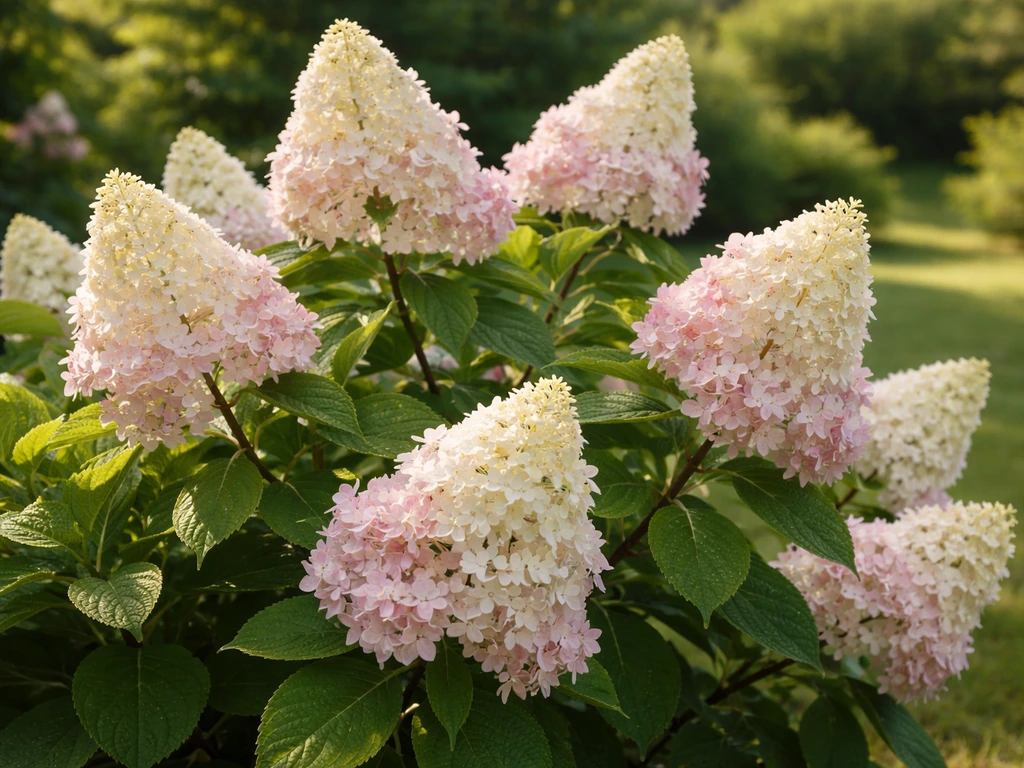
Both bloom on new wood grown each season, which means a harsh Canadian winter can kill them right to the ground and they'll still flower that summer. Once you understand that one principle, everything else about growing hydrangeas in Canada becomes a lot less frustrating. (For more step-by-step help specific to your zone, see how to grow hydrangeas in zone 5. ) growing hydrangeas in Canada.
Choosing the right hydrangea type for Canada
Canada spans multiple hardiness zones, and Ontario alone runs from Zone 5 in the south to Zone 3 further north. That range matters enormously when picking a hydrangea. Here's a quick breakdown of the four species you'll most commonly encounter and how they hold up in Canadian conditions.
| Type | Blooms On | Hardiness Zone | Best For Canada |
|---|---|---|---|
| Panicle (H. paniculata) | New wood | Zones 3–7 | Excellent — most reliable choice across Canada |
| Smooth (H. arborescens) | New wood | Zones 3–9 | Excellent — very forgiving, great for beginners |
| Bigleaf (H. macrophylla) | Old wood | Zones 5–9 | Risky in most of Ontario — buds easily winter-killed |
| Oakleaf (H. quercifolia) | Old wood | Zones 5–9 | Marginal in Zone 5, unreliable north of that |
Panicle hydrangeas like 'Limelight', 'Bobo', and 'Little Lime' are genuinely the workhorses of the Canadian garden. They're rated hardy to Zone 3, handle cold winds, shrug off late spring frosts better than other types, and pump out large blooms from midsummer right into fall. Smooth hydrangeas like 'Annabelle' are equally tough and similarly hard to kill. I've seen 'Annabelle' come back reliably year after year in gardens that got down to -25°C, producing those big white mophead flowers every single summer.
Bigleaf hydrangeas (the classic pink or blue mopheads you see everywhere at garden centres) are a different story in Canada. They bloom on old wood, meaning the flower buds form in late summer and must survive the winter on the cane. In most of Ontario outside of the mildest microclimates around Toronto or the Niagara Peninsula, those buds get killed by cold temperatures or drying winter winds before spring arrives. You'll get lush green leaves and zero flowers.
Some newer reblooming cultivars like Endless Summer are marketed as more reliable, but even these require significant winter protection in Zone 5 and colder to deliver consistent results. If you're new to hydrangeas in Canada, I'd honestly steer you away from bigleaf until you've had a season or two of success with the hardier types.
Best planting time and location
When to plant
Plant hydrangeas in spring after your last frost date has passed, but before the heat of summer kicks in. In Toronto, the average last frost lands in April, so late April to mid-May is your target window. Further north in Ontario (think Sudbury, Sault Ste. Marie), last frost can stretch into late May, so adjust accordingly. You can check interactive frost date maps for your exact municipality to nail the timing for your location. Fall planting (late August to September) is also workable for panicle and smooth types, giving roots time to establish before freeze-up, but spring planting is more forgiving if you're a beginner.
Sunlight and shelter
Most hydrangeas thrive in morning sun with afternoon shade, especially in the warmer southern Ontario summers. Direct afternoon sun increases watering needs dramatically and can scorch leaves or fade flowers. A spot that gets four to six hours of morning light is ideal. That said, too much shade is also a problem: excessive shade reduces bloom performance, so the goal is bright, indirect or dappled light for most of the day. North-facing beds that never get direct sun will disappoint you.
Shelter from wind matters more in Canada than in warmer climates. Cold drying winds in winter are one of the main reasons old-wood types lose their flower buds. Even for new-wood types, a planting spot sheltered by a fence, hedge, or building on the north and west sides extends the season and reduces winter stress. Avoid low-lying frost pockets where cold air settles overnight in spring and fall.
Spacing
Give panicle hydrangeas at least 1.5 to 2.5 metres between plants depending on the cultivar. Compact varieties like 'Bobo' stay around 90 cm wide, while 'Limelight' can reach 2 metres across. Smooth hydrangeas spread by suckers and need about 1.2 to 1.5 metres. Overcrowding reduces airflow and invites fungal issues, so err on the generous side.
Soil and pH: getting the foundation right
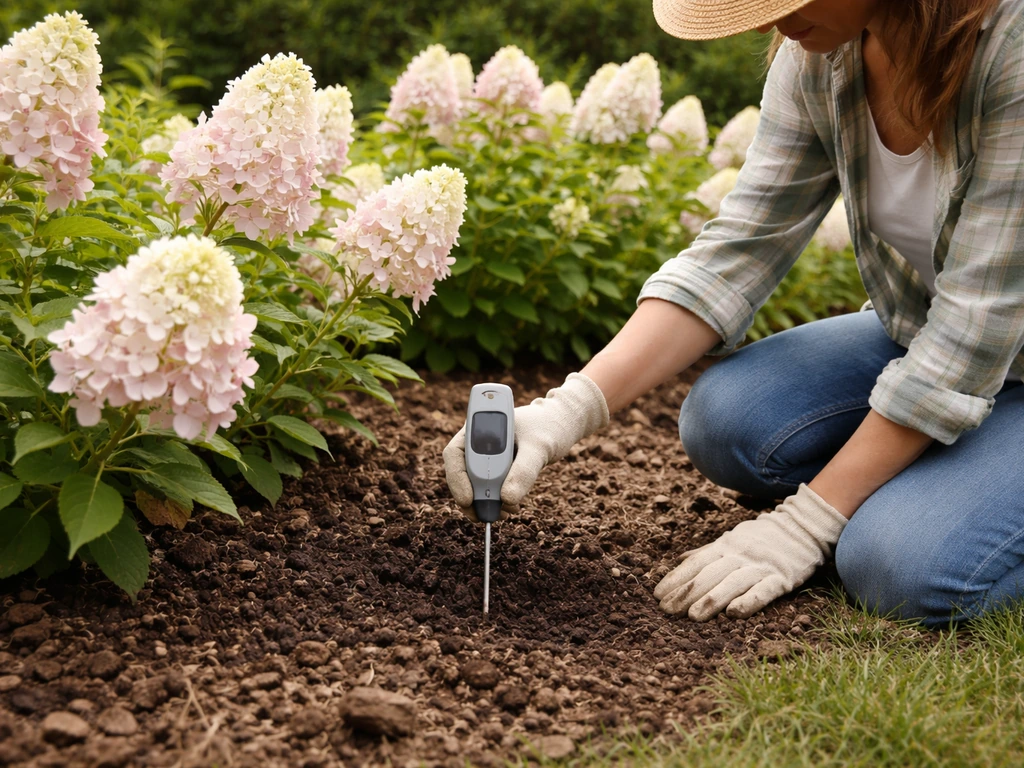
Hydrangeas prefer slightly acidic, moisture-retentive soil with good drainage. A pH of roughly 5.5 to 6.5 suits most types well. If you're growing panicle or smooth hydrangeas, you don't need to obsess over pH too much. These types are adaptable and perform well in the slightly acidic to near-neutral soils common across much of Ontario. Where it really matters is if you want to grow bigleaf hydrangeas and influence flower colour.
Colour and pH for bigleaf hydrangeas
Blue flowers on bigleaf hydrangeas require acidic soil (pH below 5.5) because that's when aluminum in the soil becomes available to the plant. Pink flowers result from higher pH (above 6.0 to 6.5) where aluminum is locked out. To push toward blue, you lower the pH using sulfur or aluminum sulfate. To push toward pink, you raise the pH with garden lime. This sounds simple, but the exact amount you need depends on your starting soil pH and soil type, so always test before amending. Don't just dump aluminum sulfate on a hunch. White-flowered bigleaf varieties don't change colour regardless of what you do to the pH.
For the average Ontario garden, the soil is often slightly acidic already, but if you're on limestone-rich or heavily amended soil (very common in newer subdivisions with imported fill), you may need to work compost and sulfur in before planting. Adding a generous 5 to 8 cm layer of organic compost at planting improves drainage in heavy clay soils and moisture retention in sandy ones. This is the single best soil amendment you can make.
Watering and fertilizing for strong growth and blooms
Watering
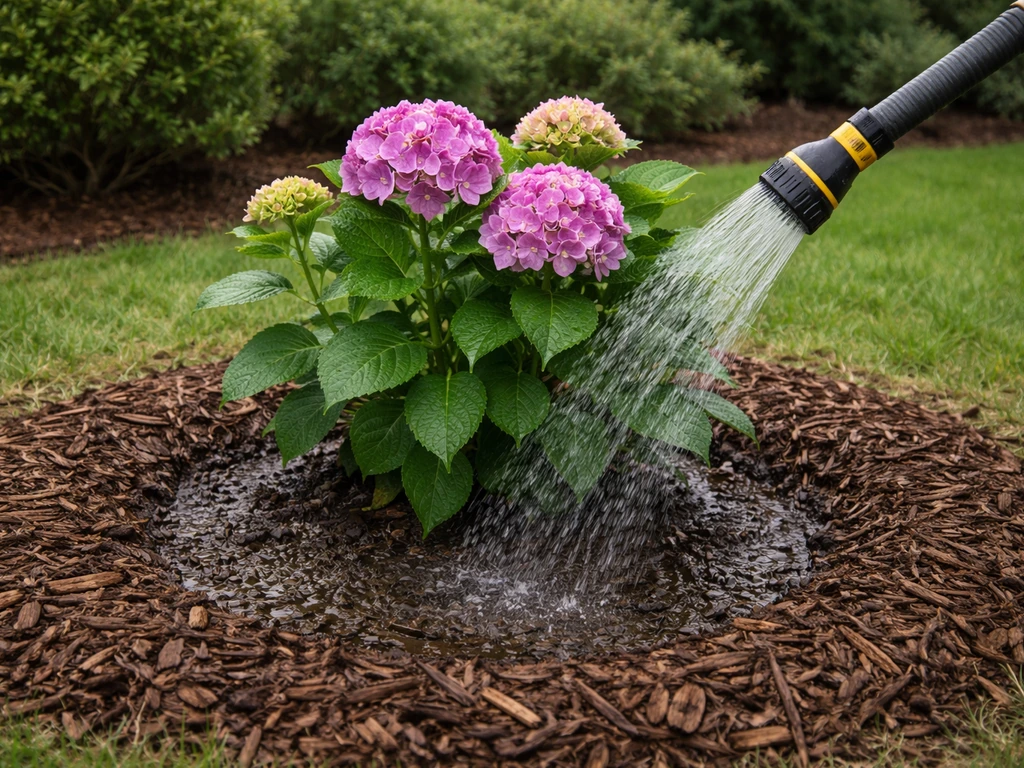
Hydrangeas need consistent moisture, especially during establishment and through the first summer. A newly planted hydrangea should be watered deeply two to three times per week for the first several weeks, tapering off as it roots in. Once established, water deeply once or twice a week during dry spells rather than shallow watering every day. The more sun your plant gets, the more frequently you'll need to water. Wilting leaves in the afternoon heat are often just heat stress, but wilting in the morning is a clear signal the plant needs water. Mulching around the base with 5 to 8 cm of shredded bark or wood chips goes a long way toward holding soil moisture through hot Ontario summers.
Fertilizing
A balanced slow-release fertilizer applied once in spring as growth begins is usually all a healthy hydrangea needs. Something in the range of 10-10-10 works well for panicle and smooth types. Avoid high-nitrogen fertilizers or repeated feeding through summer: too much nitrogen promotes lush leafy growth at the expense of flower bud formation. One application in May and possibly a light follow-up in June is plenty. Stop feeding entirely by midsummer so the plant can start hardening off for the Canadian winter. Late-season fertilizing encourages soft new growth that won't have time to harden before frost.
Pruning rules by hydrangea type
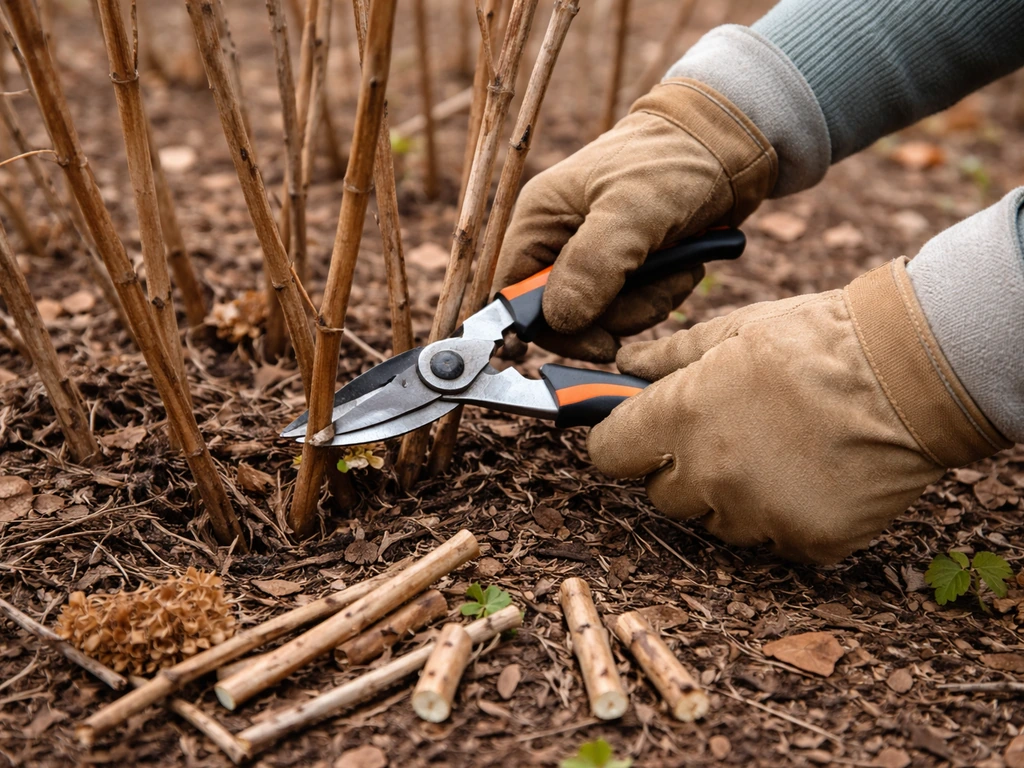
Incorrect pruning is the number one reason hydrangeas fail to bloom. The rule is straightforward once you know which type you have: new-wood bloomers are pruned in late winter or early spring before growth starts, and old-wood bloomers are pruned right after they finish flowering in summer. Prune them at the wrong time and you cut off next season's buds.
Panicle hydrangeas (H. paniculata)
Prune panicle hydrangeas in late winter or early spring before the new growth flushes out, typically late March to April in southern Ontario. You can cut them back hard (by one-third to one-half) to keep the plant compact and encourage larger individual flower heads. Don't be timid: they bloom on that year's new growth, so cutting them back in spring can't remove this year's buds because they haven't formed yet.
Smooth hydrangeas (H. arborescens)
Smooth hydrangeas like 'Annabelle' also bloom on new wood and can tolerate heavy pruning. Cut them back hard in late winter or early spring, right to 30 to 60 cm above the ground. This encourages strong new stems that support the flower heads without flopping. If you leave old stems, the plant gets woody and the flowers get smaller.
Bigleaf and oakleaf hydrangeas (old wood)
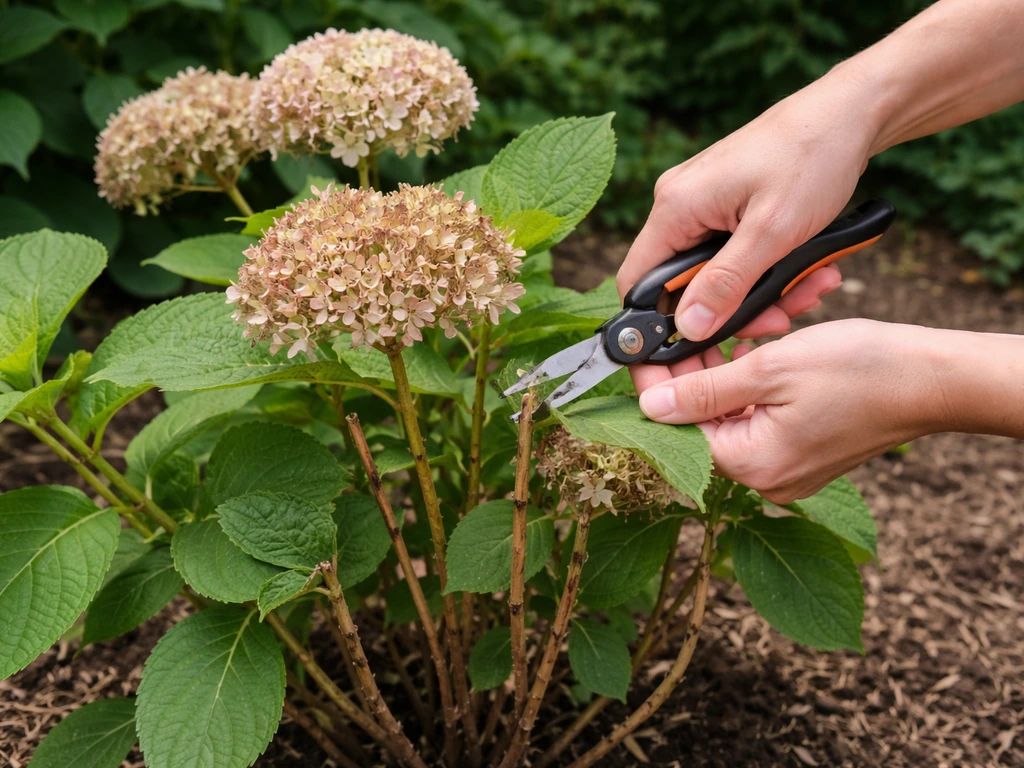
If you are growing bigleaf or oakleaf hydrangeas, prune them only right after flowering, before August. Bigleaf hydrangea flowers on old wood, so pruning should be done after it finishes blooming and before August bigleaf or oakleaf hydrangeas, prune them only right after flowering, before August.
The plant starts setting next year's flower buds in late summer, so any pruning after August risks removing those buds. In Canadian winters, this is also where things go wrong: even if you prune at exactly the right time, a harsh winter can still kill those buds on the cane before spring. In the spring, wait until you see where new growth is emerging before cutting anything back.
Dead wood can be removed, but leave any cane that's leafing out alone. Never do a hard spring cutback on bigleaf hydrangeas the way you would with panicle or smooth types.
Seasonal care calendar
Spring (April to May)
Once temperatures are consistently above freezing, remove winter mulch gradually rather than all at once to avoid exposing new growth to a late frost. For panicle and smooth hydrangeas, this is your pruning window: cut back before buds break. Apply a balanced slow-release fertilizer once the plant is actively growing. If you're growing bigleaf hydrangeas, wait patiently before cutting anything: look for green buds swelling on the canes before you decide what's dead. In Ontario, a late frost in May is entirely possible, so keep row cover or old bedsheets handy to throw over newly leafed-out plants if a frost warning comes through.
Summer (June to August)
This is your main blooming season. Water consistently, especially during dry stretches. Keep mulch topped up to conserve moisture. If you have bigleaf hydrangeas that finish blooming in July, this is when you do any light tidying pruning, before the end of July at the latest. Deadheading spent blooms on bigleaf types is optional but won't hurt. On panicle hydrangeas, you can leave spent blooms on the plant because they dry beautifully and provide winter interest. Stop fertilizing by late July.
Fall (September to October)
Reduce watering as temperatures cool and the plant winds down. Do not prune in fall, no matter the type. Fall pruning removes next year's buds on old-wood types and exposes new-wood types to winter dieback earlier than needed. Once the ground is frozen solid (usually November in southern Ontario), apply a thick 10 to 15 cm layer of mulch around the base of the plant to insulate the root zone. For bigleaf hydrangeas, consider building a simple chicken-wire cage around the canes and filling it with dry leaves to protect the buds from cold and drying wind.
Winter (November to March)
Panicle and smooth hydrangeas need minimal intervention in winter. The root zone mulch is sufficient protection in most of Ontario. For bigleaf hydrangeas, the cane protection (cage of dry leaves or burlap wrapping) is your main tool for preserving flower buds. Do not remove winter protection until after your last frost date has reliably passed in spring. Removing it too early in Ontario, where late frosts in late April or May are common, can kill the flower buds you worked all winter to protect.
Troubleshooting common problems in Canadian gardens
Lots of leaves but no flowers
This is the most common complaint from Canadian hydrangea growers, and it almost always comes down to one of three causes: winter bud kill on an old-wood type, pruning at the wrong time, or too much nitrogen. If your bigleaf hydrangea leafs out beautifully but produces no flowers, the buds were almost certainly killed over winter by cold temperatures or desiccating winds. The fix is either better winter protection (cane wrapping, sheltered location) or switching to a new-wood type. If you're over-pruning in spring or fall, you're removing the buds before they ever get a chance. And if you've been heavy-handed with high-nitrogen fertilizer, dial that back to a balanced formula and cut to a single spring application.
Winter dieback and slow spring emergence
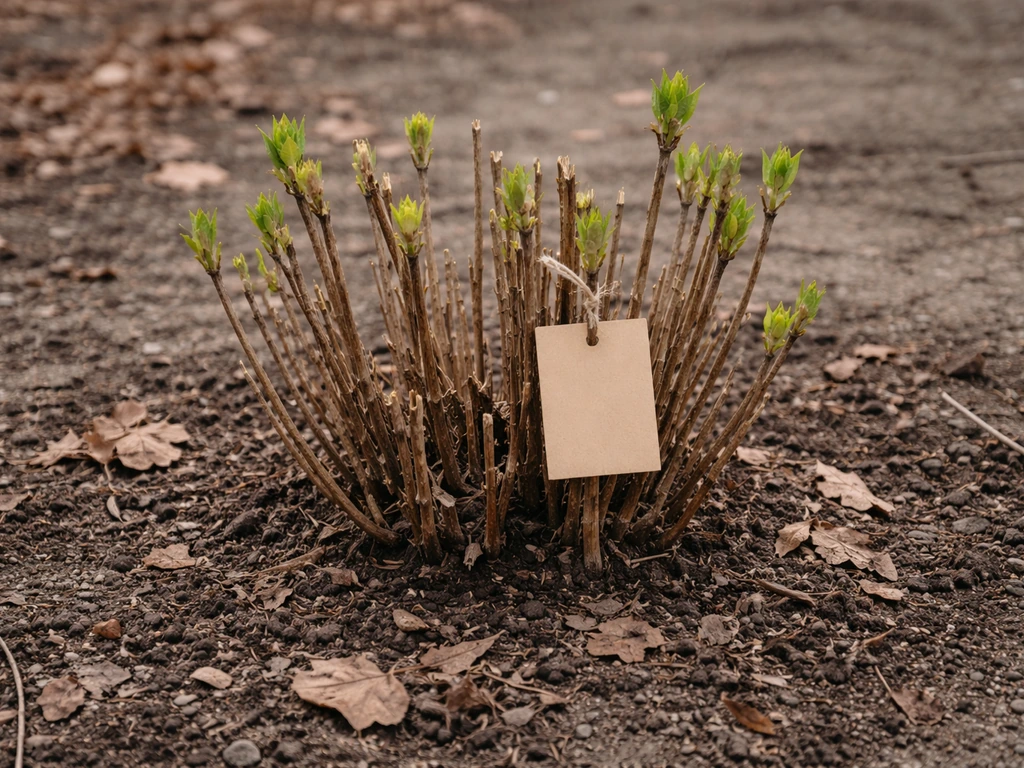
Panicle and smooth hydrangeas often look completely dead in early spring in Canada. The canes may be brown and brittle all the way down. This is normal. Wait until late April or even May before you panic: new growth emerges from the base or from lower on the canes. Scratch the bark with your fingernail: green underneath means it's alive. Brown and dry all the way through means that portion is dead wood and can be removed. Even if a panicle hydrangea dies back to the ground in a brutal winter, it'll grow back from the roots and bloom the same summer.
Late spring frost damage
New spring growth on hydrangeas is soft and frost-sensitive. A late frost in May (which happens in Ontario more often than people expect) can blacken new leaves and damage developing flower buds. For bigleaf types, this is especially damaging because those buds won't regenerate until the following year. If a frost is forecast after your plants have leafed out, cover them with row cover, a frost blanket, or even an old sheet overnight. Remove the covering the next morning once temperatures rise.
Leaf scorch and wilting
Crispy brown edges on leaves in summer usually mean the plant is getting too much direct afternoon sun or not enough water, or both. Move a container plant, add shade cloth, or adjust your watering schedule. If leaves are wilting even with adequate water in well-drained soil, check for root rot caused by consistently waterlogged conditions. Hydrangeas need moisture but they do not like sitting in water.
Your local next steps: buying, planning, and a first-year checklist
If you're buying hydrangeas at an Ontario garden centre, look for panicle or smooth hydrangea cultivars labelled as Zone 4 or Zone 3 hardy. 'Limelight', 'Little Lime', 'Bobo', 'Quick Fire', and 'Pinky Winky' are panicle varieties that consistently perform well across Ontario. 'Annabelle', 'Incrediball', and 'Incrediball Blush' are smooth hydrangea picks that rarely disappoint. If you want a zone 9 approach, focus on heat and afternoon sun management, steady moisture, and choosing varieties that perform well in warmer climates warm hydrangea varieties. Avoid purchasing plants just labelled as 'hydrangea' without species information: you need to know what you're getting before you can manage it properly.
Garden centres in southern Ontario (Toronto, Hamilton, London, Ottawa) typically have the best selection from late April through June. Buy early in the season for the best stock. If you're in a colder part of the province, check with a local nursery about what they carry that's proven in your zone rather than relying on what the big box stores stock.
First-year checklist
- Choose a panicle or smooth hydrangea variety rated for your hardiness zone (Zone 3 or 4 for most of Ontario).
- Pick a planting spot with morning sun, afternoon shade or dappled light, and shelter from north and west winds.
- Test soil pH if possible; amend with compost before planting regardless of pH.
- Plant after your last frost date (late April to mid-May in southern Ontario, late May further north).
- Water deeply two to three times per week for the first month, then weekly during dry spells.
- Apply a balanced slow-release fertilizer once in May. Stop fertilizing by late July.
- Do not prune in the first year. Let the plant establish and direct energy into roots.
- Mulch the root zone before freeze-up (November) with 10 to 15 cm of bark mulch or shredded leaves.
- In spring of year two, prune panicle or smooth types back before growth begins, then watch them bloom.
Growing conditions in Canada vary quite a bit depending on where you are. Ontario's southern border gardens near Windsor or Niagara have much more flexibility than gardens in Muskoka or Thunder Bay. If you're gardening in a colder province or a high-altitude region, the same basic principles apply but with an even stronger emphasis on new-wood types and generous winter mulching.
Gardeners growing hydrangeas in other challenging climates face some of the same trade-offs around choosing between old-wood and new-wood types, winter protection, and frost timing. If you're in Louisiana, use the same basics but focus on heat-tolerant varieties and protect blooms through hot, humid summers. The core rules stay consistent: match the plant to your zone, understand whether it blooms on old or new wood, and protect accordingly.
The honest truth is that once you pick the right hydrangea for your climate and understand the old-wood vs new-wood pruning distinction, most of the frustration disappears. These are not fussy plants. Give a panicle hydrangea the right spot, decent soil, and consistent water through its first summer, and it will reward you with blooms from July right through to the first hard frost, year after year, with very little fuss.
If you live in Michigan, you can use the same approach: pick a hardy panicle variety, plant it in part shade with good soil, and water consistently during establishment Give a panicle hydrangea the right spot. If you want a hands-on guide for your specific conditions, see our step-by-step tips for how to grow hydrangeas in Colorado.
FAQ
Can I grow hydrangeas in containers in Ontario or other Canadian zones?
Yes, but only if you can control moisture and winter exposure. Use a pot with drainage holes, keep the soil evenly moist during summer (more frequent watering than in-ground), and bury the pot or insulate it heavily before winter. Panicle and smooth types are your safest choices for containers in Canada because they bloom on new wood.
What if I miss the pruning window in spring, can I prune after leaves start?
For panicle and smooth hydrangeas, a hard spring cutback is generally fine, but you should stop all major pruning after mid-summer. If you notice new growth already emerging in late spring, do not cut back again, wait until next late winter/early spring for the next structural prune.
My hydrangea leafs out but doesn’t bloom, what should I check first?
If your hydrangea has green leaves but no blooms, the most common causes are old-wood bud loss (bigleaf) from winter, incorrect pruning timing, or too much nitrogen from repeated feeding. Check the plant type first, then review whether it was pruned after the wrong event (wrong season) or fertilized too late.
How do I protect hydrangea buds and new leaves from late frosts in May?
Even with the right variety, late frosts can blacken tender new leaves and flower buds. When frost is forecast after leaf-out, cover the plant overnight with row cover or a breathable frost blanket, remove it the next morning, and avoid leaving plastic sealed on overnight (it can overheat).
What does it mean when hydrangea leaves get brown, crispy edges during summer?
If leaves turn crispy brown at the edges in summer, first rule out sun and inconsistent watering. Then check drainage, because hydrangeas need moisture but will rot if soil stays waterlogged. A quick test is to see if the soil is soggy for more than a day after watering; if yes, improve drainage with compost and avoid frequent shallow watering.
How do I tell whether spring dieback on a hydrangea is normal or a real problem?
Do not assume winter dieback is always bad for new-wood types. For panicle and smooth hydrangeas, the top can die back and the plant still flowers on new growth the same year. Wait until late spring, scratch a cane with your fingernail to confirm green tissue, then remove only clearly dead sections.
What fertilizer should I use (and what should I avoid) for hydrangeas in Canada?
Use a balanced slow-release fertilizer and avoid repeated nitrogen boosting. If you want stronger flowers rather than more leaves, stop feeding by late July and do not top-dress with high-nitrogen lawn fertilizer. Too much nitrogen can delay or reduce blooms by encouraging lush growth.
Do hydrangeas in Canada need heavy feeding to bloom well?
Not much, if you choose panicle or smooth types and mulch well. If the plant is a hydrangea that normally blooms on new wood, you can generally focus on consistent watering and spring fertilizing rather than constant liquid feeding. Bigleaf types often need extra winter protection instead of extra feeding.
Why are my hydrangea leaves getting spotty or mildewy, and does spacing matter?
Yes, and it’s a common way to speed up problems. Overcrowding reduces airflow, increasing the chance of fungal leaf spotting and powdery mildew, especially in humid summers. Follow spacing guidance, and if plants are already tight, thin and prune only at the correct time for that type.
Can I reliably change bigleaf hydrangea flower color in Ontario, and how fast does it happen?
For bigleaf hydrangeas, color tuning works only when you can influence soil chemistry and when the variety produces colored flowers (not always white). Also, color adjustments change gradually, so expect some year-to-year variation. The safest route is to test soil pH before amending, then adjust only if you are targeting blue or pink.
How often should I water hydrangeas after planting, without overwatering?
Water deeply after planting, then taper as roots establish. A simple rule is to water when the top few centimeters of soil start to dry, rather than on a strict daily schedule. Morning watering is best, and avoid watering late evening if airflow is poor to reduce disease risk.