
You can absolutely grow hydrangeas in Colorado, but the honest truth is that not all hydrangeas are built for Colorado's brutal winters, dry air, and swinging temperatures. The ones that thrive here are panicle hydrangeas (Hydrangea paniculata) and smooth hydrangeas (Hydrangea arborescens), both of which bloom on new wood each year, so even if Colorado's weather kills back the stems, you still get flowers. Bigleaf hydrangeas (Hydrangea macrophylla) can work in the right spot, but they're risky. Pick the right type first, and everything else falls into place.
How to Grow Hydrangeas in Colorado: Step-by-Step Guide
Marcus Holloway
27 May 2026
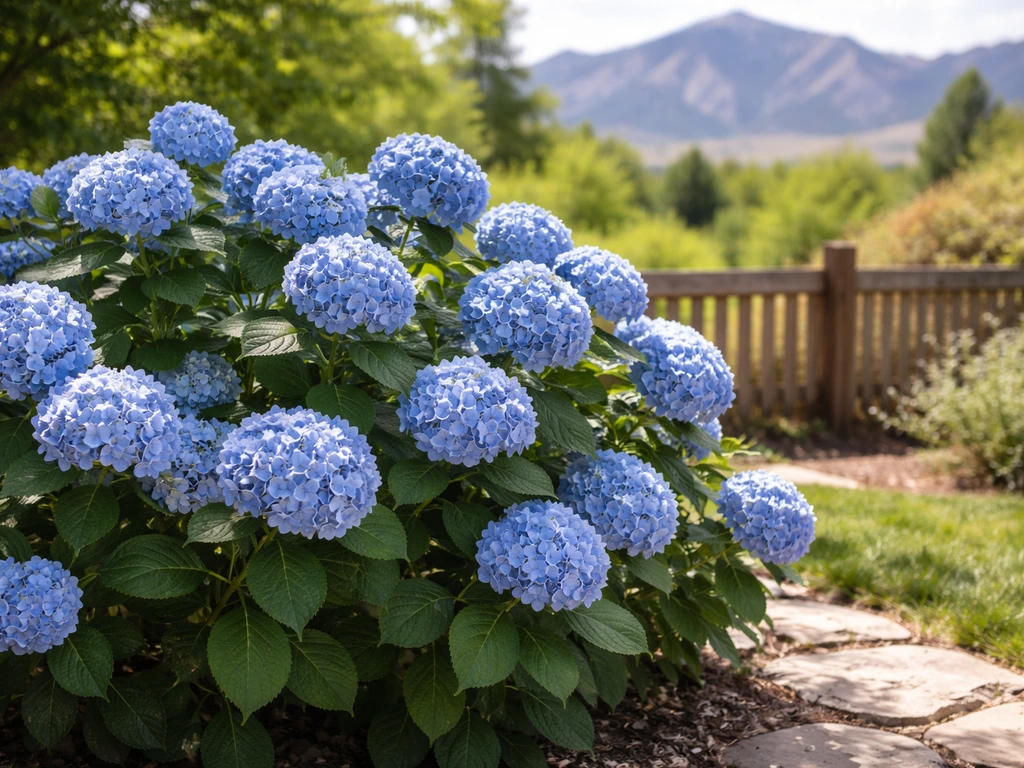
Best hydrangea types for Colorado climates
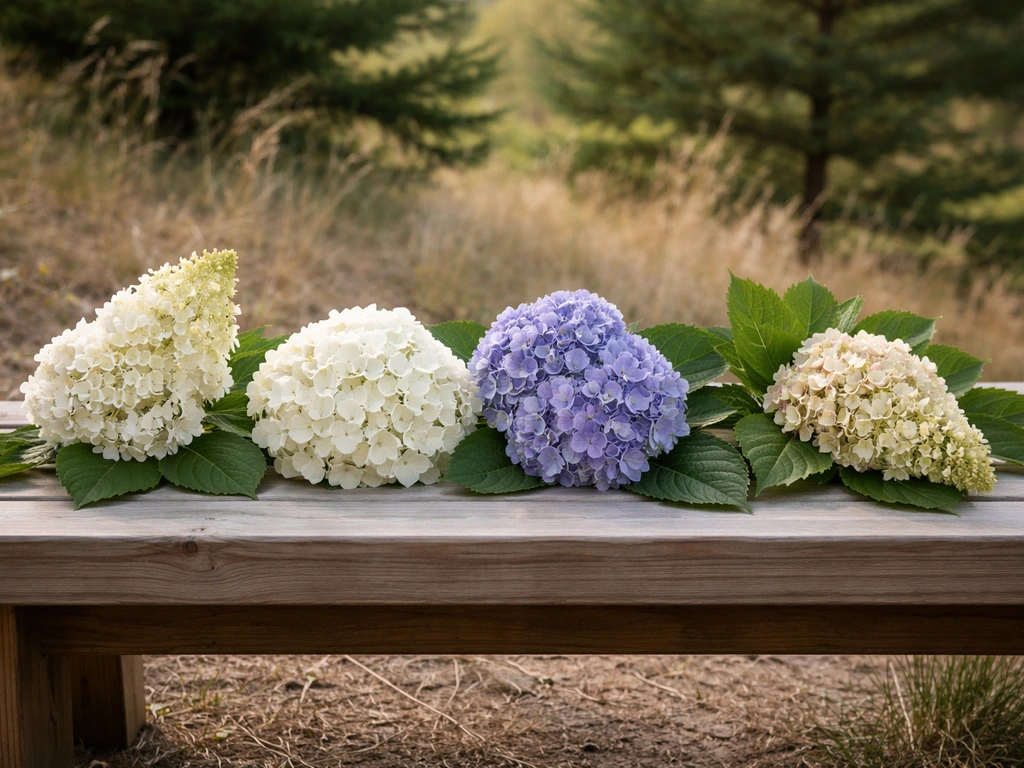
Colorado spans USDA hardiness zones 3b through 7a depending on where you live, from the Eastern Plains to the mountain foothills to the Western Slope. That range matters enormously when choosing a hydrangea. Here's how the main types stack up.
| Hydrangea Type | Hardiness Zone | Blooms On | Colorado Suitability | Best Pick For |
|---|---|---|---|---|
| Panicle (H. paniculata) | Zones 3–8 | New wood | Excellent | Front Range, high-altitude gardens, Eastern Plains |
| Smooth (H. arborescens) | Zones 3–9 | New wood | Excellent | All Colorado regions, shade-tolerant spots |
| Bigleaf (H. macrophylla) | Zones 5–9 | Old wood (mostly) | Risky to moderate | Protected spots in Zones 6–7, south-facing walls |
| Mountain (H. serrata) | Zones 5–9 | Old wood | Risky | Sheltered urban gardens in warmer zones |
| Oakleaf (H. quercifolia) | Zones 5–9 | Old wood | Moderate | Zones 6–7 with wind protection and consistent moisture |
Panicle hydrangeas are the workhorses of Colorado hydrangea gardening. Cultivars like 'Limelight', 'Little Lime', and 'Pinky Winky' are cold-hardy to Zone 3 and shrug off hard winters that would wipe out a bigleaf. Smooth hydrangeas, especially 'Annabelle' and the 'Incrediball' series, are nearly as tough and handle partial shade beautifully, which matters in Colorado where afternoon sun can be brutal.
Bigleaf hydrangeas are a real gamble in most of Colorado. They bloom on old wood, meaning the buds set in late summer and need to survive winter intact to produce flowers. In Colorado's dry, cold winters, those buds often die, and you end up with a healthy-looking plant that never blooms. If you're in Denver or a warmer protected area in Zone 6 or 7, try reblooming cultivars like 'Endless Summer' or 'Incrediball Blush' that push both old and new wood blooms. But go in knowing you might lose a season.
When to plant hydrangeas in Colorado (timing by zone)
Colorado's last frost dates vary dramatically by location. If you're trying to match these same care principles to a warmer climate, see how to grow hydrangeas in zone 9 for zone-specific timing and protection tips. Denver (Zone 6a) typically sees its last frost around May 7. Colorado Springs (Zone 5b) is closer to May 15. Fort Collins (Zone 5b–6a) is similar to Denver. High-altitude areas like Aspen, Breckenridge, and Durango can see frost well into June. Use these as your anchor dates and don't rush planting.
| Colorado Region | Approx. USDA Zone | Last Spring Frost | Best Planting Window |
|---|---|---|---|
| Denver Metro | 6a | ~May 7 | Mid-May to early June |
| Colorado Springs | 5b | ~May 15 | Late May to mid-June |
| Fort Collins / Greeley | 5b–6a | ~May 10–15 | Mid-May to early June |
| Grand Junction | 7a | ~April 15 | Late April to mid-May |
| Durango / Montrose | 6a–6b | ~May 10 | Mid-May to early June |
| High altitude (7,000+ ft) | 3b–5a | Late May to June | Early to mid-June at the earliest |
Container-grown hydrangeas from a nursery can go in any time after your last frost, but late spring through early summer (May to early June for most Front Range gardeners) gives them the longest runway to establish roots before winter hits. Planting in late summer or early fall is possible if you're in Zone 6 or warmer, but give the plant at least six weeks before your first fall frost to settle in. Bare-root hydrangeas should be planted in early spring as soon as the soil is workable.
One thing I always remind Colorado gardeners: don't be fooled by a warm April. A late May or even early June cold snap can hammer newly planted hydrangeas. Keep an eye on the forecast for at least two weeks after planting, and have frost cloth on hand.
Soil, site selection, and sunlight for strong growth
Picking the right spot
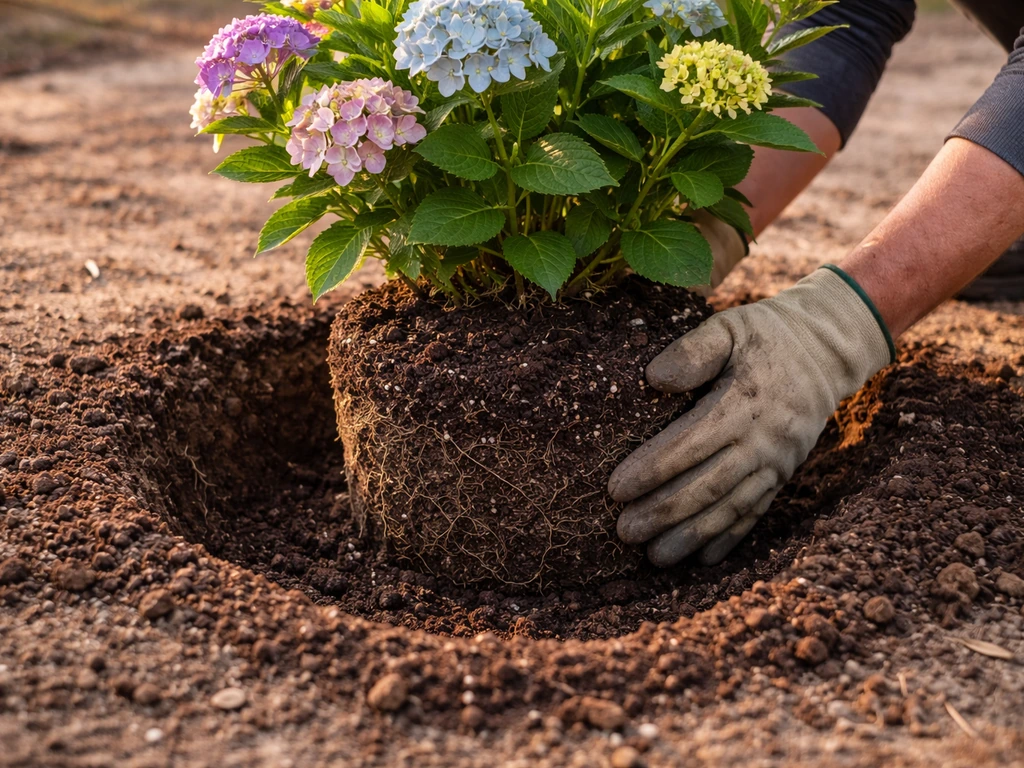
In most of the country, hydrangeas want morning sun and afternoon shade. In Colorado, this is almost mandatory. Colorado's high-altitude UV and dry air mean that full afternoon sun will stress your plants hard, especially in July and August. An east-facing location is ideal, east-to-southeast is close to perfect. North-facing spots work for smooth hydrangeas but may not give panicle types enough sun to bloom well. Avoid planting against south or west-facing walls where heat reflects and soil dries out in hours.
Wind protection matters more in Colorado than most gardening guides acknowledge. A windbreak from a fence, hedge, or structure on the prevailing wind side (usually west or northwest) can be the difference between a plant that thrives and one that scorches and desiccates every summer. This is especially important for bigleaf and oakleaf hydrangeas.
Soil preparation: the big Colorado challenge
Colorado soils are typically alkaline, often with a pH of 7.5 to 8.5, and frequently clay-heavy or low in organic matter. Hydrangeas prefer slightly acidic soil in the 5.5 to 6.5 range. This gap is real, and you need to address it. The best approach is to amend your planting area generously before planting: work in 3 to 4 inches of compost, aged pine bark fines, or well-aged leaf litter across a wide area (not just in the planting hole). This improves drainage, lowers pH slightly over time, and builds the organic matter that supports healthy roots.
Here's what not to do: don't pour in aluminum sulfate to quickly drop your pH. CSU Extension explicitly warns against this because of aluminum toxicity risk to plants. Elemental sulfur is a safer option for modest pH adjustment, but be patient since it works slowly, typically over one to two seasons. Acidifying fertilizers and consistent use of organic mulch year after year will do more for your soil long-term than any one-time chemical fix.
If your soil is extremely clay-heavy, raise your planting area by 4 to 6 inches using amended soil or build a simple raised bed. Waterlogged clay roots are a death sentence for hydrangeas, especially through winter freeze-thaw cycles.
Sunlight summary by type
- Panicle hydrangeas: 4 to 6 hours of direct sun, morning preferred; can tolerate more sun than other types but still benefit from afternoon shade in Colorado
- Smooth hydrangeas: 2 to 4 hours of direct sun; the most shade-tolerant type and a great choice for north or east sides of buildings
- Bigleaf hydrangeas: morning sun only; dappled shade in the afternoon is ideal to reduce stress and protect developing buds
- Oakleaf hydrangeas: partial shade; tolerates more sun than bigleaf but still appreciates afternoon protection in Colorado's dry climate
Watering and temperature protection (winter hardiness included)
Watering through the growing season
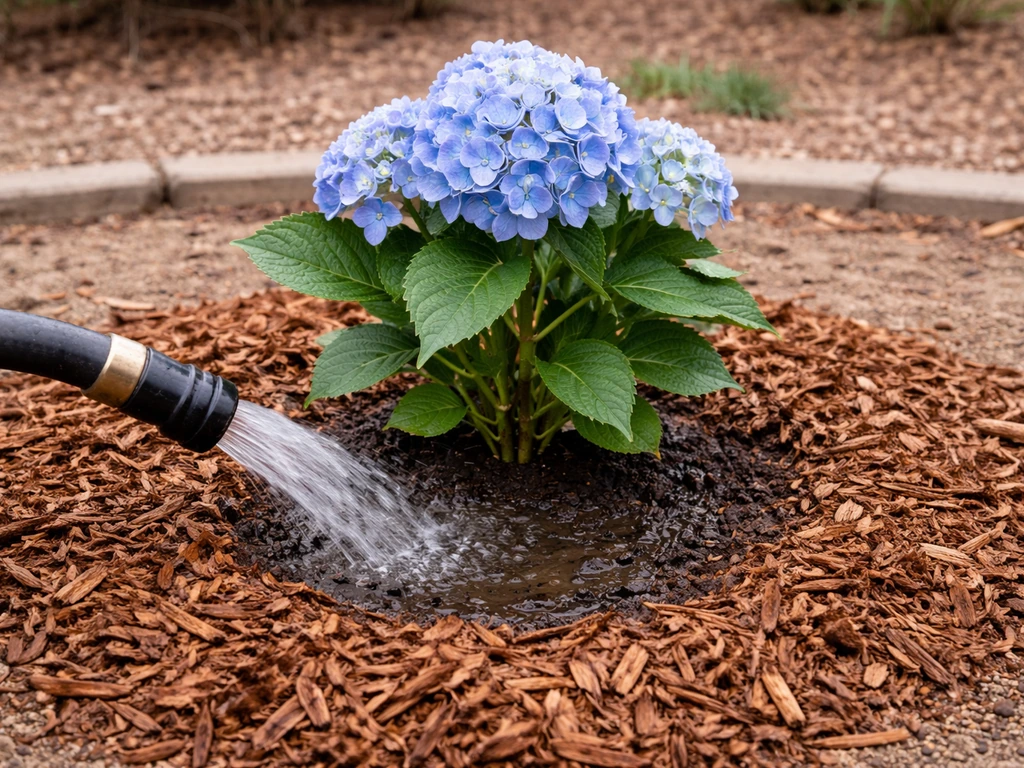
Hydrangeas are thirsty plants, and in Colorado's dry climate they need consistent moisture more than almost anywhere else. A newly planted hydrangea needs deep watering two to three times per week for the first growing season. An established plant (two or more years in the ground) typically needs deep watering once or twice a week during summer, more frequently during heat waves above 90°F. 'Deep' means soaking the soil to at least 8 to 10 inches, not a light sprinkle. Drip irrigation or a soaker hose is far better than overhead sprinklers, which promote fungal issues and don't deliver water efficiently to the root zone.
Mulch is one of your best tools here. A 3-inch layer of organic mulch (shredded wood, pine bark, or straw) around the root zone retains moisture, moderates soil temperature, and slowly builds soil quality. Keep mulch a few inches away from the main stems to prevent rot. Do not use black plastic mulch under hydrangeas: CSU Extension notes it can heat soil far beyond what roots can tolerate and cause damage.
Watering in fall and winter
This is where Colorado gardeners often drop the ball. Most people shut off their irrigation systems in October or November and assume rain and snow will handle things. CSU Extension specifically flags the window between November (when irrigation is typically shut off) and February (when meaningful snow usually begins) as a period of dangerous low soil moisture. Your hydrangea's roots are still alive and vulnerable during this time, and dry freezing conditions can desiccate and kill stems and root tissue.
During dry spells in fall and winter when temperatures are above freezing (ideally above 40°F), give your hydrangeas a deep watering every three to four weeks. Yes, in winter. It feels counterintuitive but it genuinely matters, especially in Colorado's dry air. CSU Extension's advice on perennial gardening backs this up directly.
Winter protection strategies
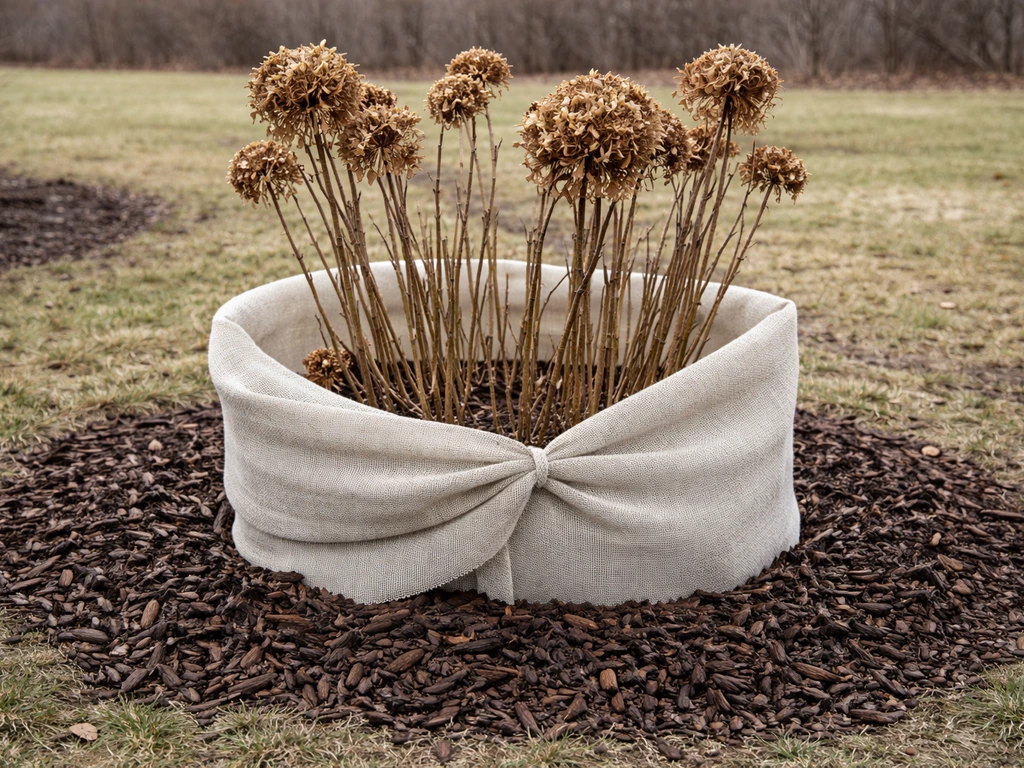
For panicle and smooth hydrangeas, winter protection is mostly about mulch and leaving old stems in place. Don't cut them back in fall: the old stems provide some wind protection and insulation for the crown. Wait until spring to prune.
For bigleaf, mountain, and oakleaf hydrangeas, winter protection becomes more critical because you're trying to protect the buds that carry next year's flowers. After the ground starts to freeze (typically November in most Front Range areas), mound 4 to 6 inches of loose mulch or shredded leaves over the crown. Some gardeners build a simple wire cage around the plant and fill it with straw for extra insulation in colder zones. In Zone 5 and colder, this kind of protection gives bigleaf hydrangeas their best shot at producing blooms, though there are no guarantees. For more detailed guidance specifically for Zone 5, follow the steps for choosing varieties, protecting buds, and timing your planting.
- Apply 3 to 4 inches of organic mulch over the root zone before the ground freezes
- Leave old stems on panicle and smooth hydrangeas through winter for insulation
- For bigleaf types, wrap or cage the plant with straw mulch after hard frost to protect buds
- Water deeply once a month during warm-enough dry spells in winter (above 40°F)
- Plant on the north or east side of a windbreak or structure to reduce desiccating wind exposure
- Avoid south- or west-facing walls that amplify heat and dry conditions
Fertilizing and pruning rules by hydrangea type
Fertilizing
In Colorado, less fertilizer is often more. CSU Extension points out that nitrogen needs depend heavily on your soil's organic matter content, and if you've been amending with compost, your soil may need very little added nitrogen. Overfertilizing hydrangeas, especially with high-nitrogen fertilizers, pushes leafy green growth at the expense of flowers and can stress roots in already-challenging soil. A balanced slow-release granular fertilizer (something like 10-10-10 or a formula specifically for flowering shrubs) applied once in early spring as growth begins is usually sufficient. A second light application in early June is fine if your plant is pale or slow-growing.
Don't fertilize after July. Late-season fertilizing pushes soft new growth that won't harden before frost, and that's a real problem in Colorado where fall cold snaps come early and hard. I've seen gardeners lose two to three years of root establishment from one late-August fertilizer application.
For iron deficiency (chlorosis, covered more in the troubleshooting section below), use chelated iron as a soil drench or foliar spray rather than trying to fix your entire soil's pH all at once. Chelated iron stays available to plants even in high-pH soils and produces results within a few weeks.
Pruning: the old wood vs. new wood rule
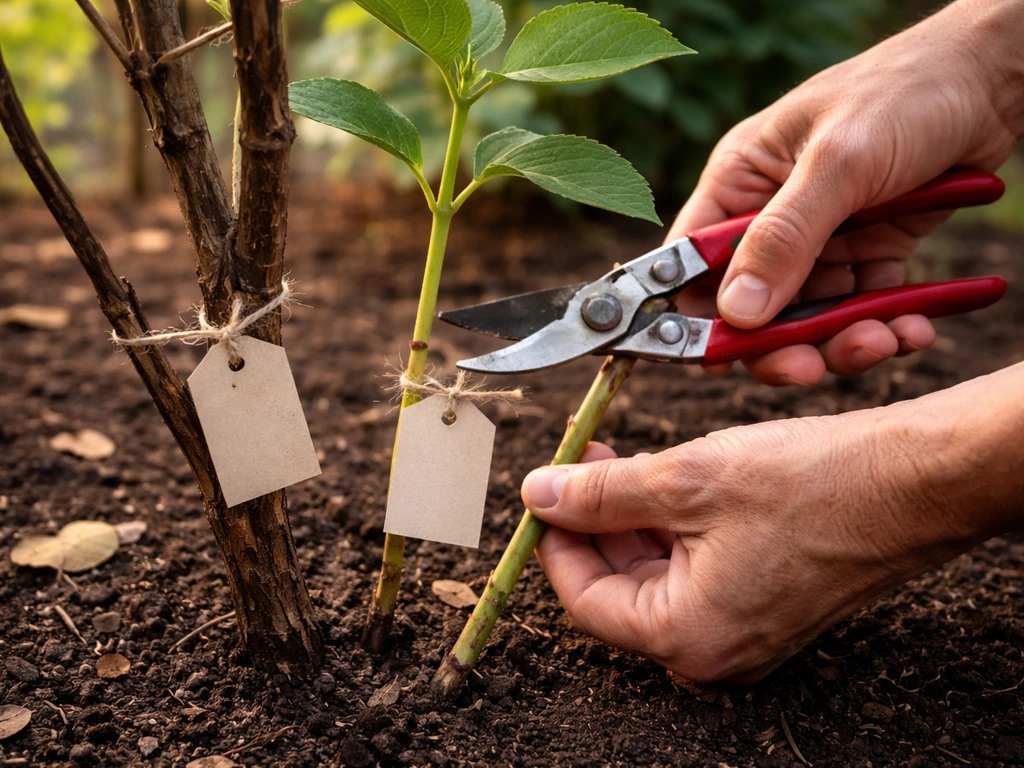
Pruning hydrangeas wrong is probably the single most common reason Colorado gardeners never see blooms. The rule is simple once you know it: prune new-wood bloomers (panicle and smooth types) in late winter or early spring before growth starts. Prune old-wood bloomers (bigleaf, mountain, oakleaf) only immediately after they bloom, if at all, because next year's buds are already forming by late summer.
| Hydrangea Type | Blooms On | When to Prune | How Much to Cut |
|---|---|---|---|
| Panicle (H. paniculata) | New wood | Late winter to early spring (March–April) | Up to one-third of height; remove weak or dead stems |
| Smooth (H. arborescens) | New wood | Late winter to early spring (March–April) | Can cut back hard to 12–18 inches from ground |
| Bigleaf (H. macrophylla) | Old wood (mostly) | Immediately after blooming (July–August) | Remove only spent blooms and dead stems; minimal cutting |
| Oakleaf (H. quercifolia) | Old wood | Immediately after blooming (July–August) | Light shaping only; avoid heavy cutting |
| Mountain (H. serrata) | Old wood | Immediately after blooming (July–August) | Remove spent flowers; minimal shaping |
For smooth hydrangeas like 'Annabelle', many gardeners cut them back hard to about 12 to 18 inches each spring and get spectacular large blooms as a result. For panicle types, you don't need to cut them all the way back, just remove dead wood and shape them. Heavy pruning on panicle types will actually reduce your flower count since they bloom on short new shoots from existing woody structure.
Pest and disease troubleshooting in Colorado
Iron chlorosis
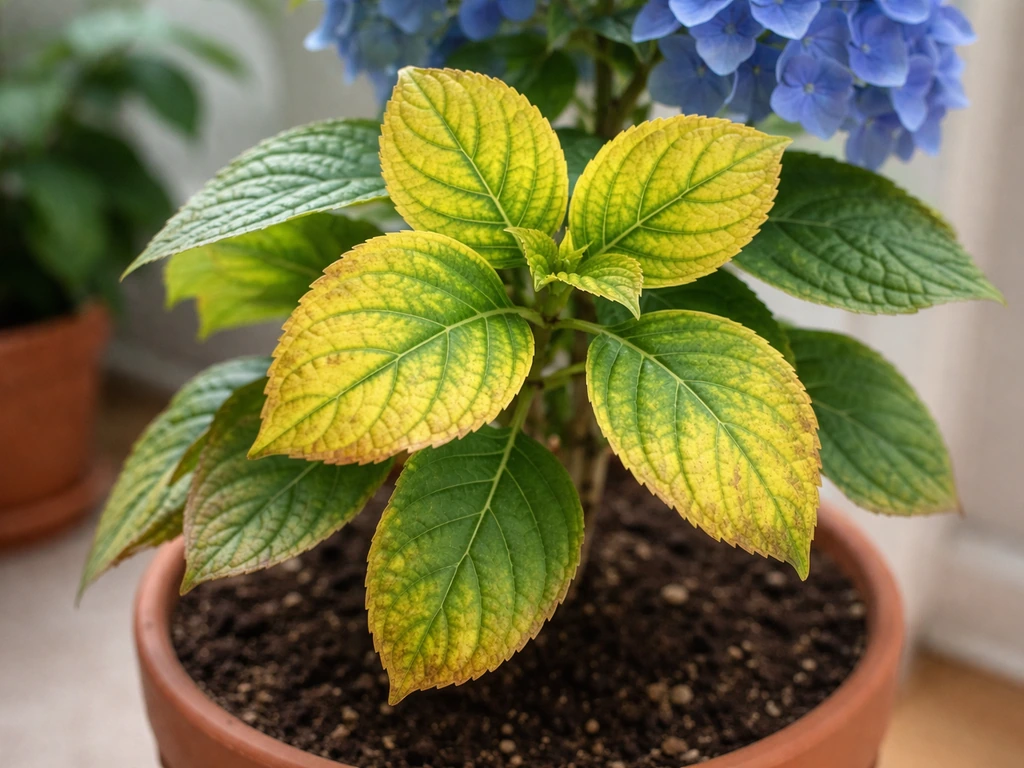
This is the most common and most frustrating problem Colorado hydrangea growers face. You'll notice it as yellowing leaves with green veins, starting on younger leaves first. In advanced cases, the leaf tissue dies and turns brown and scorched-looking. It's caused by high soil pH (which is the default in most of Colorado) locking iron into forms plants can't absorb. CSU Extension is direct about this: the best long-term solution is to choose plants tolerant of high pH soils. For hydrangeas that you're committed to growing, apply chelated iron as directed and continue improving soil with acidifying amendments and organic matter over time. Don't reach for aluminum sulfate, the toxicity risk is real.
Spider mites
Spider mites thrive in hot, dry Colorado summers. CSU Extension confirms they're common across Colorado landscapes, and twospotted spider mites in particular can explode in population during heat waves. You'll see fine webbing on leaf undersides and stippled, dull-looking foliage. The fastest effective treatment is a hard spray of water to physically knock mites off the plant, repeated every few days. For heavier infestations, horticultural oil (applied in the evening to avoid sun damage and leaf burn) controls mites effectively according to CSU Extension. Avoid broad-spectrum pesticides that kill off the beneficial predatory mites that naturally keep populations in check.
Aphids
Aphids cluster on new growth and flower buds, sucking sap and leaving sticky honeydew residue. A firm blast of water from a hose handles minor infestations well. For persistent problems, horticultural oil or insecticidal soap are both effective and recommended by CSU Extension for aphid control. Check new growth weekly in spring when aphid pressure is highest.
Powdery mildew
Powdery mildew shows up as a white, powdery coating on leaves, usually in late summer when days are warm and nights cool down, a pattern that happens reliably in Colorado. CSU Extension lists it as one of the most widespread and recognizable plant diseases in Colorado landscapes. Good airflow around your plants is the best prevention: don't crowd hydrangeas against walls or fences, and keep overhead watering to a minimum. If you get mildew, horticultural oil is effective against it, though cosmetic damage to existing leaves won't reverse. Remove and dispose of heavily affected leaves.
Heat stress and wilting
Hydrangeas in Colorado will wilt on hot afternoons even when adequately watered. This is normal and usually temporary: the plant is losing moisture through its large leaves faster than roots can supply it. If leaves perk back up by evening or morning, the plant is fine. If wilting persists into the cool of the day, increase watering frequency. Persistent wilting combined with dry, browning leaf edges is drought stress and needs immediate deep watering and additional mulch.
Season-by-season care checklist and common mistakes
Your Colorado hydrangea calendar
| Season | Key Tasks |
|---|---|
| Early Spring (March–April) | Prune new-wood types (panicle, smooth) before bud break; apply slow-release fertilizer; pull back winter mulch as temps warm; check for winter dieback and cut to healthy green wood |
| Late Spring (May–June) | Plant new hydrangeas after last frost; water deeply 2–3x per week for new plants; watch for aphids on new growth; apply fresh mulch layer to root zone |
| Summer (July–August) | Water established plants 1–2x per week (more in heat waves); treat spider mites and powdery mildew as needed; prune old-wood types after blooming; apply chelated iron if chlorosis appears; stop fertilizing by end of July |
| Fall (September–October) | Water deeply through October; apply 3–4 inches of mulch over root zone before freeze; cage and stuff bigleaf types with straw after hard frost; do NOT prune old-wood types |
| Winter (November–February) | Water once monthly during dry warm spells above 40°F; monitor mulch layer; leave stems on all plants for insulation and structural protection |
The mistakes that trip up Colorado gardeners most often
- Planting bigleaf hydrangeas and expecting consistent blooms without serious winter bud protection: in Zone 5 and colder, this almost always fails. Start with panicle or smooth types instead.
- Pruning old-wood hydrangeas in fall or early spring and removing all the buds that would have become flowers: if you don't know what type you have, don't prune until immediately after it blooms.
- Shutting off irrigation in October and assuming Colorado winters provide enough moisture: they don't. Your plant needs occasional deep watering through the dry winter months.
- Planting in full western sun exposure: Colorado's afternoon sun is intense. Even sun-tolerant panicle hydrangeas struggle in a blasting west-facing spot with no shade relief.
- Using aluminum sulfate to lower soil pH: the toxicity risk is real, per CSU Extension. Use elemental sulfur, acidifying fertilizers, and organic amendments instead.
- Over-fertilizing with high-nitrogen products: this produces soft, lush growth that's prone to frost damage and actually reduces flowering. A single early-spring balanced application is usually enough.
- Not mulching through winter: bare soil dries out faster and experiences wider temperature swings. A consistent mulch layer over the root zone is one of the highest-return things you can do for your hydrangeas in Colorado.
Colorado isn't the easiest place to grow hydrangeas, but it's far from impossible. If you want the same kind of success in Canada, start by choosing cold-hardy hydrangea varieties and then match the planting spot to your local conditions grow hydrangeas in Colorado. Pick tough varieties like 'Limelight' panicle or 'Incrediball' smooth hydrangea, set them in a protected eastern exposure, keep the soil moist and well-mulched year-round, and skip the aggressive pruning. Gardeners in other tough climates, like those growing hydrangeas in Michigan or navigating the cold end of Zone 5, face similar challenges with old-wood bloomers and winter bud protection. If you want more tailored guidance for warmer, more humid conditions, see our tips on how to grow hydrangeas in Louisiana Hydrangea in Michigan. If you're learning how to grow hydrangeas in Michigan, focus on the right hydrangea type for your winter conditions and protect old-wood varieties during cold weather. If you’re wondering how to grow hydrangeas in Georgia, focus on heat-tolerant varieties, consistent moisture, and smart site selection to prevent stress and leaf problems. The same principle applies everywhere: match your plant to your conditions first, then work with it. Do that in Colorado and you'll have hydrangeas that flower reliably for decades.
FAQ
Can I grow hydrangeas in containers in Colorado? How do I winterize them?
Yes, you can, but not all hydrangeas respond the same in Colorado containers. Use a large pot with drainage holes, keep the plant in an east or sheltered spot, and water based on soil moisture (containers dry out far faster than in-ground beds). For winter, protect the root ball by insulating the pot and not letting it fully freeze solid, and avoid heavy late-season fertilizing so new growth hardens in time.
My hydrangea got killed back by winter. Will it bloom again, and what should I do now?
If your hydrangea’s new growth dies back after winter, the fix depends on the type. Panicle and smooth hydrangeas usually rebloom because they flower on new wood, so prioritize spring pruning and summer care. For bigleaf types, you may lose next year’s buds if winter protection is inconsistent, so mound mulch and consider a cage before deep freezes begin.
When is the safest time to prune hydrangeas in Colorado if I want blooms next season?
Yes, but take timing seriously. For panicle and smooth hydrangeas, you can prune in late winter or early spring before active growth. For bigleaf, mountain, and oakleaf, pruning should wait until right after bloom, because buds form in late summer. Cutting old-wood types too early is a common reason for “no flowers” the following year.
My hydrangea leafs out but doesn’t bloom. What are the most likely causes in Colorado?
Hydrangea blooms often fail due to pruning at the wrong time, winter bud loss (bigleaf types), extreme afternoon sun, or iron unavailability from high pH. If your leaves look yellow with green veins, treat for chlorosis with chelated iron rather than trying to change soil pH overnight. If leaves are green and the plant grows but doesn’t flower, first verify the hydrangea type and whether you accidentally removed next year’s buds.
What’s the best way to correct alkaline Colorado soil for hydrangeas, and do I need to test pH?
Start with soil testing, especially if your yard has been amended or you’re replanting near concrete, which can raise pH. If pH is high, use the soil-building approach, organic mulch, and chelated iron for quicker results. Avoid aluminum sulfate, and for sulfur-based pH adjustment expect slow change, usually over one to two seasons, not weeks.
How do I know if my watering is actually reaching hydrangea roots in Colorado?
A light sprinkle can keep the surface damp but still leave roots dry, especially in Colorado’s wind and dry air. Aim for deep watering so moisture reaches at least 8 to 10 inches down, and verify by checking soil a few inches below the surface. Use drip or a soaker line positioned near the root zone, and adjust during heat waves.
My hydrangea wilts in the afternoon. Is that always a watering problem?
Expect partial wilting on hot afternoons even with correct watering, especially in full sun. The decision point is persistence: if the plant perks up by evening or morning, it’s usually normal. If it stays wilted into cooler hours and leaf edges look brown or crispy, increase deep watering and add or refresh mulch to reduce evaporation.
Should I cut hydrangea stems back in fall, or leave them until spring in Colorado?
It depends on your hydrangea type and the year. For panicle and smooth types, cut back dead stems and shape lightly in early spring, then let new wood develop. For bigleaf types, avoid cutting stems in fall, and do minimal spring cleanup after the risk of hard freezes passes and you can see what actually survived.
What’s a “good prevention plan” for pests and powdery mildew on hydrangeas in Colorado?
Most hydrangea issues start with heat and drought stress, then follow with pests or disease. Give the plant morning sun, afternoon shade, and wind protection, and keep airflow good. If you see powdery mildew or pests, respond early with the specific approach (knock off mites with water, use horticultural oil where appropriate, and remove heavily affected leaves for mildew) rather than switching to broad-spectrum pesticides that harm beneficial predators.
Can I keep growing bigleaf hydrangeas in Denver or the Front Range if I’m willing to do extra care?
You often can, but it’s not as reliable as changing the plant’s genetics. Hydrangeas can improve over time as you amend soil and mulch, but iron chlorosis may persist if pH is stubbornly high. For committed growers, combine long-term soil improvement with targeted chelated iron applications, and revisit the planting location for heat and sun exposure because stress can make nutrient issues look worse.
How do I harvest hydrangea blooms in Colorado without reducing next year’s flowering?
If you want cut flowers, harvest early in the morning and use clean tools. For panicle and smooth types, stems often hold up well once flowers are fully colored. For old-wood bloomers, avoid aggressive pruning and keep harvest light so you do not remove stems that might contain next year’s buds.
Do hydrangeas need fertilizer in Colorado, and what’s the latest I should feed them?
Most hydrangeas prefer consistent moisture, so pause and read soil conditions rather than calendar-feeding. If compost and mulch already supply organic matter, you may need little to no extra nitrogen. Apply a balanced slow-release fertilizer in early spring, a light second dose in early June only if growth looks pale or slow, and skip any fertilizer after July to prevent soft late-season growth.