
You can grow purple hydrangeas reliably at home, but the path to those blue-purple blooms runs through soil chemistry, not just planting technique. The color comes down to one thing: whether your soil is acidic enough for your plant to absorb aluminum, and whether you've chosen a cultivar that can actually respond to that chemistry. Get those two things right, and purple is very achievable. Skip them, and you'll spend seasons wondering why your shrub keeps blooming pink.
How to Grow Purple Hydrangeas: Bigleaf Guide, Soil & Care

Marcus Holloway
16 Jul 2026
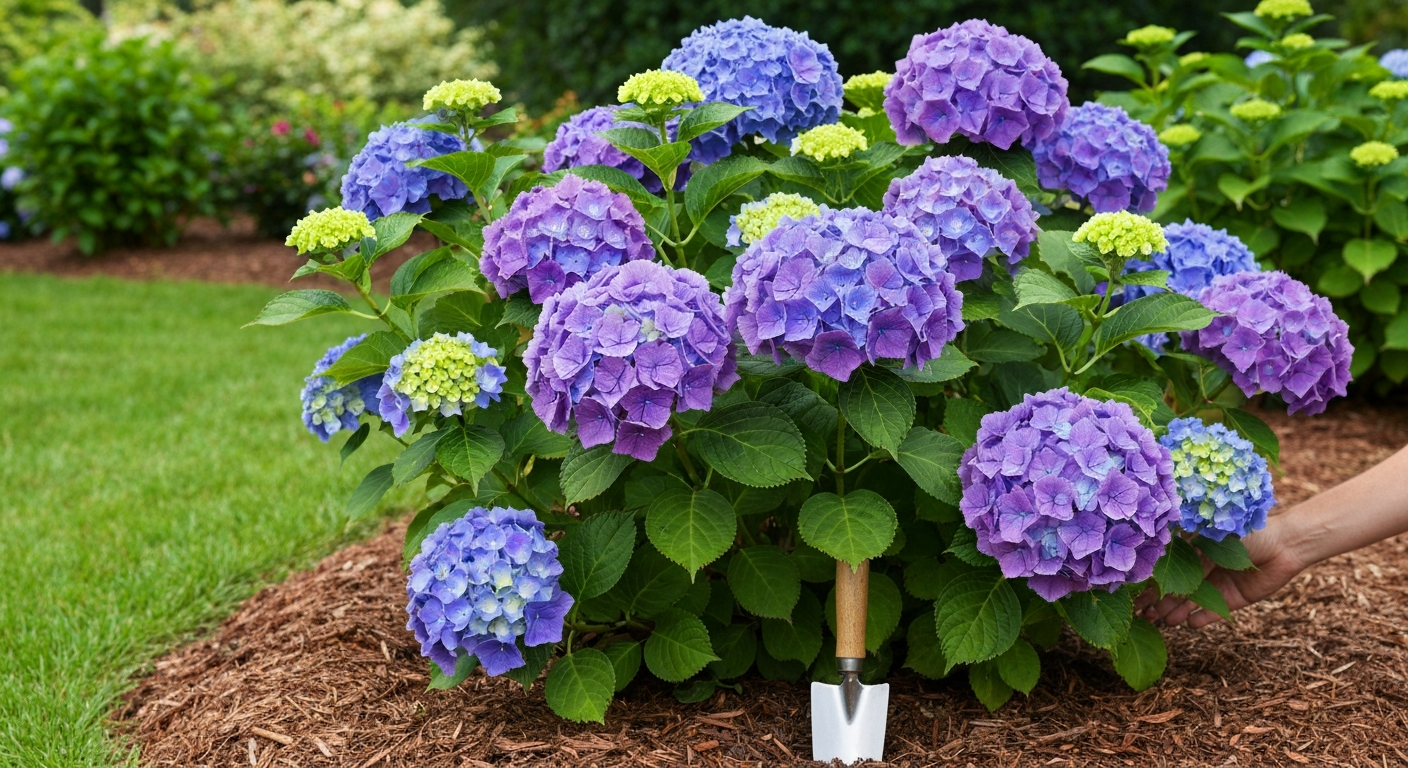
Why hydrangeas turn purple (or blue, or pink)
The color of a hydrangea sepal isn't painted on, it's the result of a biochemical reaction happening inside the flower tissue. Here's the plain-language version: bigleaf hydrangeas (Hydrangea macrophylla) contain pigment molecules called anthocyanins, specifically delphinidin-type compounds. On their own, those pigments produce pink or red hues. But when aluminum ions (Al3+) enter the plant and travel into the sepals, they bind with those anthocyanins (along with co-compounds like caffeoylquinic acids), and that binding shifts how the pigment absorbs light. Insight into chemical mechanisms of sepal color development and variation in hydrangea, NCBI PMC (peer‑review) documents that acidic soil solubilizes Al3+, which the plant takes up and forms complexes with delphinidin-type anthocyanins and co-ligands (e.g., 5‑O‑caffeoylquinic acids), shifting pigment absorption and producing blue to purple hues Insight into chemical mechanisms of sepal color development and variation in hydrangea — NCBI PMC (peer‑review). The result is blue or purple instead of pink.
The soil connection is direct: aluminum becomes plant-available mainly when soil pH drops below about 6.0. In acidic soil, Al3+ dissolves out of soil minerals and becomes something roots can take up. In neutral or alkaline soil, aluminum locks into compounds the plant can't access, and the sepals stay pink. So the flower color you see is essentially your soil's pH reading expressed as a bloom. Purple lands in the middle range, around pH 5.0 to 6.0, where aluminum is partially available. Vivid blue pushes toward 5.0 to 5.5 or lower. Pink and rose mean pH is at 6.0 or above.
Not every hydrangea will change color, know your species first
This is where a lot of gardeners get stuck, and I've seen it cause real frustration. They buy a gorgeous panicle hydrangea, spend a season amending the soil, and wonder why the flowers never went blue. The answer is that panicle hydrangeas (H. paniculata) simply don't respond to soil pH or aluminum availability in the same way. Their flower color is genetically fixed and won't shift regardless of what you do to your soil. The same goes for smooth hydrangeas (H. arborescens, like 'Annabelle') and oakleaf hydrangeas (H. quercifolia). These species don't have the same anthocyanin-aluminum chemistry in their sepals.
The species you want for color-shifting purple or blue blooms are bigleaf hydrangea (H. macrophylla) and mountain hydrangea (H. serrata). These are the only ones reliably responsive to soil chemistry. If your tag says anything other than H. macrophylla or H. serrata, set realistic expectations before you reach for the pH meter.
| Species | Common Name | Color Response to Soil pH | Notes |
|---|---|---|---|
| H. macrophylla | Bigleaf hydrangea | Yes — responsive | Primary candidate for purple/blue blooms |
| H. serrata | Mountain hydrangea | Yes — responsive | Smaller flowers, similar chemistry to macrophylla |
| H. paniculata | Panicle hydrangea | No | Creamy white to pink tones; color is genetically fixed |
| H. arborescens | Smooth hydrangea | No | White or pale green blooms; no aluminum response |
| H. quercifolia | Oakleaf hydrangea | No | White blooms turning parchment; pH changes nothing |
Choosing a cultivar that can actually go purple
Even within H. macrophylla, not every cultivar responds equally. Some are highly responsive and shift easily with modest soil adjustment. Others have been bred for color stability and will stay pink no matter what you do. And all white-flowered varieties are a non-starter, white sepals lack the anthocyanin pigments entirely, so there's nothing for the aluminum to bind with. No amount of soil amendment will turn a white hydrangea purple.
The Endless Summer series (including 'Bailmer' and related introductions) is one of the most popular responsive options. These are reblooming cultivars, which means they flower on both old and new wood, that matters for pruning, and I'll get to it later. They can produce blue to purple tones in acidic, aluminum-available soil. Nikko Blue is a classic landscape workhorse that's been turning blue in acidic gardens for decades. It's highly responsive, though some gardeners find it takes a bit more coaxing than Endless Summer to hit a true deep blue. Both are widely available and a solid starting point for anyone targeting purple blooms.
Responsive cultivars worth growing
- Endless Summer 'Bailmer' and series: reblooming, responsive, broadly available, does well across USDA zones 4–9
- Nikko Blue: classic mophead, very responsive, can reach deep blue-purple in acidic soil, zones 6–9
- Let's Dance series: reblooming like Endless Summer, responsive to pH adjustment
- Cityline series (some varieties): check cultivar description — most are responsive but color intensity varies
- H. serrata cultivars like 'Bluebird' and 'Preziosa': smaller blooms, very responsive, slightly more cold-hardy
Cultivars that won't turn purple, and why that matters
Vanilla Strawberry (H. paniculata 'Renhy') is one of the most searched hydrangeas on the market, and it's beautiful, but it will never turn purple or blue. It's a panicle hydrangea, which means it belongs to the non-responsive species group. Its signature strawberry-pink color develops from sun exposure and maturation of the bloom, not from soil chemistry. Amending your soil for aluminum availability with Vanilla Strawberry is wasted effort and potentially harmful to the plant. For specific care and planting tips, see how to grow vanilla strawberry hydrangea (resource ID 02bb0756-60f2-4675-9a78-1f9166289a5c). If you’re focused on red or deep‑pink varieties instead, see advice on how to grow red hydrangeas for cultivar choices and care tailored to those colors.
Similarly, many red and deep-pink cultivars of H. macrophylla (like 'Ruby Slippers' or certain Cityline varieties marketed as red) have been selected specifically to hold those warm tones. Some are genetically stabilized and won't shift blue regardless of pH. Always read the cultivar description before you invest time and money in soil amendments. If the tag or breeder description says 'color stable' or doesn't mention blue potential, treat it as non-responsive for your planning purposes.
When color change is possible, and when to stop trying
Here's the honest decision point most guides gloss over. Color change is possible when: you have a confirmed H. macrophylla or H. serrata cultivar, the cultivar description indicates responsiveness (or it's a known responsive variety like Nikko Blue or Endless Summer), and your current soil pH is somewhere in the 6.0–7.0 range with room to move downward. In that scenario, targeted amendment makes complete sense and can produce dramatic results within one to two seasons.
Color change is not possible (or not worth pursuing) when: you have a panicle, smooth, or oakleaf species; your cultivar has been bred for color stability; you have a white-flowered variety; or your soil is heavily alkaline (pH above 7.5) with high natural lime content, which makes it extremely difficult and expensive to achieve lasting acidification. In that last case, container growing with purpose-mixed acidic media is genuinely a better path than fighting your native soil.
Testing your soil before you do anything else
I can't stress this enough: test before you amend. I've watched gardeners dump aluminum sulfate onto soil that was already at pH 5.2 because it 'looked like it needed it,' and they ended up with root damage and no improvement in bloom color. Knowing your starting point is the whole game.
How to take a good soil sample
A single scoop from one spot in your garden bed isn't enough. Take 10 to 20 small subsamples from around the root zone of your plant (or across the planting area), going down 6 to 8 inches deep. Mix them together in a clean bucket, then pull your test sample from the mix. This composite approach averages out the natural variability in your soil and gives you a meaningful reading. Don't sample when the soil is waterlogged or immediately after heavy rain. For container plants, pull samples from the root zone of the potting mix.
Which test to use
- DIY pH test kit: inexpensive, fast, widely available at garden centers — good enough for a quick baseline reading, but accuracy varies by brand
- Digital pH meter: more precise than strip kits if calibrated properly; calibrate with buffer solution before each use
- University or extension lab test: the most reliable option, typically $15–25, returns pH plus nutrients and sometimes organic matter; results take 1–3 weeks
- If you plan to use aluminum amendments, request extractable aluminum (Mehlich-3 or DTPA extraction) specifically — most routine home tests only report pH, so ask for it explicitly
The lab test is worth the small cost if you're serious about color. Extension labs often flag whether your soil needs lime, sulfur, or nothing, and they'll tell you how much, which saves you from guessing.
pH targets and how to hit them
Once you know where your soil sits, you can set a clear target. For purple blooms (that blue-pink middle ground), aim for pH 5.0 to 6.0. For deeper, more vivid blue, push toward 4.5 to 5.5. Pink and rose tones hold when pH stays at 6.0 or above. These ranges give you a practical framework, but don't chase exact numbers obsessively, a consistent 5.5 will produce good purple results in most responsive cultivars.
| Target Color | Recommended Soil pH Range | Aluminum Availability |
|---|---|---|
| Vivid blue | 4.5–5.5 | High — Al3+ readily available |
| Purple / blue-purple | 5.0–6.0 | Moderate — partial Al availability |
| Mauve / transitional | 5.5–6.0 | Low-moderate |
| Pink / rose | 6.0–6.5+ | Very low — Al effectively locked out |
If your current pH is above 6.5 and you want purple blooms, you'll need to lower it. The two practical tools are aluminum sulfate (fast-acting) and elemental sulfur (slower but longer-lasting). Both work, but they work differently and carry different risks.
Using aluminum sulfate and elemental sulfur safely
Aluminum sulfate is the go-to quick fix because it does two things at once: it lowers pH and delivers aluminum directly. A commonly used extension recipe is roughly 1 tablespoon of aluminum sulfate dissolved in 1 gallon of water, applied as a root-zone drench. Do this in early spring (March through May), repeating monthly while new growth is actively forming. You can see results within the same growing season, which makes it appealing.
The risk with aluminum sulfate is real, and I want to be direct about it. Overapplication can cause aluminum toxicity, which damages roots and stunts growth. It can also lead to long-term aluminum accumulation in your soil. Always test pH before each application, never apply to dry soil (water first), and stop as soon as you hit your target pH. Keep applications away from lawn areas and do not let runoff reach streams or ponds, soluble aluminum is harmful to aquatic life.
Elemental sulfur is the better choice for longer-term, larger-area pH adjustment. It works through a slower biological process: soil bacteria oxidize the sulfur into sulfuric acid, which gradually lowers pH over weeks to months. You won't see results in a week, but the change is more stable and carries less acute toxicity risk. Purdue Extension and others publish rate tables based on soil type and target pH, for most home garden beds, starting with 1 to 2 pounds of finely ground sulfur per 100 square feet is a reasonable starting point, but always check a region-specific extension table for your soil type.
Side-by-side comparison of amendment options
| Amendment | Speed of Action | Primary Use Case | Key Risk | Best For |
|---|---|---|---|---|
| Aluminum sulfate | Fast (weeks) | Lower pH and add Al simultaneously | Root burn and Al toxicity if overapplied | Established plants needing a quick shift; small areas |
| Elemental sulfur | Slow (months) | Gradual, lasting pH reduction | Takes time; ineffective in cold or dry soils | New beds; large areas; longer-term plans |
| Acidic mulch (pine bark, pine needles) | Very slow (years) | Maintain low pH over time | Minimal, but not suitable as primary amendment | Top-dressing to reinforce acidification over time |
| Chelated aluminum products | Moderate | Deliver Al directly to roots | Cost; can still overapply | Soils where pH is already low but Al uptake is poor |
A practical approach for most gardeners: use elemental sulfur in fall or early spring to establish a lower baseline pH in the bed, then use diluted aluminum sulfate drenches during the growing season if you want to boost color more immediately. Retest pH every 4 to 6 weeks during the amendment period so you don't overshoot.
Site selection and planting
Even before pH, getting the site right matters. H. macrophylla performs best with morning sun and afternoon shade, that means an east-facing bed or a spot that gets direct sun until around noon and then shade through the hottest part of the day. Full sun in a hot climate stresses the plant, fades bloom color, and dries the soil faster than most gardeners can keep up with watering. Deep shade on the other hand reduces bloom quantity. Protect plants from strong, drying winds, which can desiccate buds and leaves quickly.
Plant in spring or early fall. Spring planting (after last frost) gives roots a full growing season to establish before winter. Fall planting works well too, especially in zones 6 through 9, but give the plant at least 6 weeks before the ground freezes so roots can anchor. In zone 5 or colder, spring planting is safer for first-year success.
Dig a hole twice as wide as the root ball and about the same depth. Mix compost into the backfill, this improves drainage, adds organic matter, and helps lower pH slightly over time. Set the plant so the crown is at or just above the soil surface. Water in thoroughly and mulch with 2 to 3 inches of pine bark or wood chips to retain moisture and buffer soil temperature.
Soil requirements and ongoing amendments
Beyond pH, H. macrophylla wants well-drained soil with plenty of organic matter. It does not like sitting in waterlogged conditions, consistent moisture is the goal, not soggy roots. If your native soil is clay-heavy, raise your bed slightly or amend generously with compost and perlite before planting. Sandy soils drain fast and need more organic matter to hold moisture and nutrients.
Replenish organic matter each spring with a 1 to 2 inch layer of compost around the base of the plant (keep it away from the stem). Pine bark mulch as a top layer not only retains moisture but contributes to mild, ongoing acidification as it breaks down, which helps you maintain that lower pH you've worked to achieve.
Watering schedule
Hydrangeas are heavy drinkers, and H. macrophylla in particular will tell you immediately when it's thirsty, the leaves droop dramatically, sometimes within hours on a hot afternoon. That temporary wilt in afternoon heat isn't always a crisis (it often recovers by morning), but consistent underwatering leads to poor bloom development and washed-out color.
During the growing season (spring through early fall), water deeply once or twice a week in average conditions, enough to wet the soil 6 to 8 inches deep. In hot weather above 85°F or periods without rain, water every 2 to 3 days. Always water at the base of the plant rather than overhead, which reduces fungal disease risk. Reduce watering in fall as the plant goes dormant, but don't let newly planted shrubs dry out before the ground freezes.
Fertilizing for bloom and color
Use a fertilizer formulated for acid-loving plants, look for products labeled for azaleas, rhododendrons, or blueberries, which have similar pH preferences. These typically have an acidifying effect over time and supply iron, magnesium, and other micronutrients that support color development. A balanced slow-release granular fertilizer (like 10-10-10) applied once in spring as growth begins is a reasonable baseline.
Be cautious with high-phosphorus fertilizers. Phosphorus competes with aluminum uptake, which can counteract your efforts to get Al into the plant for blue/purple color. If you're actively trying to push color, avoid fertilizers with very high middle numbers (the P in N-P-K) during the color-development period. A low-phosphorus formula like 25-5-30 or similar is more appropriate.
Skip the Miracle-Gro for color goals. A general all-purpose fertilizer like that will feed your plant fine, but it does nothing to support the soil chemistry you need for purple, and some formulations can actually raise pH slightly over time with repeated use. It's not the tool for this job.
Pruning: the rule that matters most for blooms
More hydrangeas fail to bloom because of incorrect pruning than almost any other reason. For traditional H. macrophylla (old-wood bloomers), the flower buds for next year form on this year's stems in late summer and fall. If you cut those stems back in fall or early spring before buds break, you remove the flower buds along with them. The plant looks healthy, puts out lush foliage, and produces zero blooms. It's one of the most common and most fixable mistakes in hydrangea growing.
For old-wood bloomers, prune immediately after flowering (typically July or August) and only remove dead or crossing stems. Never do a hard cutback in fall or spring. For reblooming cultivars like Endless Summer (which bloom on both old and new wood), the stakes are lower, even if old-wood buds are lost to pruning or a late frost, new-wood buds will still produce blooms. This makes Endless Summer more forgiving in colder climates.
| Cultivar Type | When to Prune | What to Remove | Risk of Removing Buds |
|---|---|---|---|
| Old-wood H. macrophylla (e.g., Nikko Blue) | Right after flowering, summer | Dead stems, spent flowers | High if pruned in fall or spring |
| Reblooming H. macrophylla (e.g., Endless Summer) | After flowering or light spring cleanup | Dead stems, winter-damaged wood | Lower — new wood also produces buds |
| H. paniculata and H. arborescens | Late winter or early spring | Up to one-third of total growth | Low — bloom on current season's growth |
Seasonal and winter care
In fall, stop fertilizing by late August so the plant can harden off before frost. Continue watering until the ground freezes to help roots survive the winter. In zones 5 and colder, old-wood H. macrophylla buds are vulnerable to late spring frosts and harsh winters, even if the roots survive, frozen buds mean no blooms the following year. Protect buds by wrapping the plant loosely in burlap after the first hard frost, or use a tomato cage filled with dry leaves around the stems. Remove the protection in spring once temperatures are reliably above freezing.
In spring, wait until you see new growth emerging before deciding what to cut. Stems that look dead may still be alive below the tip, scratch the bark with a fingernail to check for green tissue before cutting. Remove only confirmed dead wood. This patience pays off in bloom count.
Growing purple hydrangeas in containers
Containers are actually a great option for purple hydrangeas, especially if your native soil is alkaline or you want precise control over pH. Use a large pot (at least 15 to 20 gallons for a mature plant) with excellent drainage holes. Fill with an acidic potting mix designed for ericaceous plants, or blend standard potting mix with peat moss, composted pine bark, and perlite to achieve starting pH around 5.5.
Container hydrangeas need more frequent watering than ground-planted ones, check daily in hot weather and water when the top inch of soil feels dry. Nutrients also leach out faster from containers, so fertilize more frequently with a diluted acid-formulated fertilizer. Test the pH of your container media every 4 to 6 weeks because it can drift upward over time, especially with tap water that has high pH or mineral content. If it climbs, a diluted aluminum sulfate drench or acidic fertilizer will bring it back down.
In cold climates, containers need protection from hard freezes, unlike roots in the ground, roots in a pot don't have the insulation of surrounding soil. Move containers to an unheated garage or shed once temperatures drop consistently below 20°F (-7°C).
Propagating hydrangeas
The easiest and most reliable way to propagate H. macrophylla is through softwood stem cuttings taken in early to midsummer (June through July). Cut a 4 to 6 inch stem just below a leaf node, remove the lower leaves, and dip the cut end in rooting hormone powder. Stick it into moist perlite or a 50/50 mix of perlite and potting mix, cover with a plastic bag or dome to hold humidity, and place in bright indirect light. Roots typically form in 3 to 5 weeks. Once rooted, pot up into your acidic mix and treat as a young plant.
Layer stems in summer for an even easier no-fuss approach: bend a low stem to the ground, bury a 6-inch section of it a few inches deep (keep the tip above ground), anchor it with a landscape pin or a rock, and leave it attached to the parent plant. Roots form over the summer; by fall you can sever the stem and transplant the new plant.
Troubleshooting: when things go wrong
No blooms
The most likely cause is pruning at the wrong time, followed closely by late frost damage to buds. Confirm your pruning timing first. If you're in zone 5 or colder with an old-wood bloomer, frost is probably the culprit even if you never see visible damage, buds can freeze and fail internally without obvious signs. Switch to a reblooming cultivar like Endless Summer for better cold-climate reliability.
Blooms are pink when you want purple
Test your pH. If it's above 6.0, your soil is locking out aluminum and the anthocyanins have nothing to bind with. Start an amendment program (elemental sulfur for long-term adjustment, aluminum sulfate drench for faster action). If your pH tests below 5.5 and blooms are still pink, check whether your cultivar is actually responsive, some modern varieties simply don't shift, and no amendment will change that.
Leaf yellowing (chlorosis)
Yellow leaves with green veins (interveinal chlorosis) usually signal iron or manganese deficiency, often because pH is too high and locks out these micronutrients. Lower the pH and the problem often resolves. If pH is already low and yellowing persists, test for actual nutrient deficiencies and apply chelated iron as a foliar spray or soil drench.
Wilting and poor root health
If a plant wilts even when soil is moist, suspect root rot from poor drainage or overwatering. Check for soggy, poorly drained soil conditions. Aluminum sulfate overapplication can also cause root injury that looks like drought stress, if you've recently applied aluminum sulfate heavily and your plant is struggling, stop all amendments, flush the root zone with clean water, and wait. Root damage from aluminum toxicity can take several weeks to show up.
Common pests and diseases
- Powdery mildew: white powdery coating on leaves, usually in humid or overcrowded conditions — improve air circulation, reduce overhead watering, and apply neem oil or a sulfur-based fungicide if severe
- Botrytis (gray mold): fuzzy gray rot on flowers and buds in wet, cool weather — remove affected material, improve air circulation, avoid wetting flowers when watering
- Aphids: clusters of small soft insects on new growth and undersides of leaves — knock off with a strong jet of water or apply insecticidal soap
- Spider mites: fine webbing and stippled/bronzed leaves in hot dry weather — increase humidity, apply neem oil or miticide
- Leaf spot (Cercospora or Phyllosticta): brown or purple spots on leaves — usually cosmetic, not life-threatening; remove heavily affected leaves and avoid overhead irrigation
- Root weevil: notched leaf edges from adult feeding; larvae damage roots — apply beneficial nematodes to soil in spring and fall
Quick-reference growing guide
| Factor | Recommendation |
|---|---|
| Best species for purple | H. macrophylla or H. serrata (responsive cultivars only) |
| Target soil pH for purple | 5.0–6.0 |
| Target soil pH for vivid blue | 4.5–5.5 |
| Sunlight | Morning sun, afternoon shade; minimum 4–6 hours direct light |
| Watering frequency | 1–2 times per week deeply; more in heat above 85°F |
| Fertilizer type | Acid-formulated, low phosphorus; apply spring through midsummer |
| Pruning time (old-wood bloomers) | Right after flowering, summer only |
| Pruning time (reblooming types) | Light cleanup after flowering or early spring |
| Planting time | Spring (after last frost) or early fall |
| Container minimum size | 15–20 gallons for mature plant |
| Amendment for fast color shift | Aluminum sulfate: 1 tbsp per gallon water, monthly drench, spring |
| Amendment for long-term pH drop | Elemental sulfur; rate by soil type and target pH from extension table |
| Test frequency during amendment | Every 4–6 weeks; stop at target pH |
FAQ
Which hydrangea species will reliably change color to purple/blue with soil pH and aluminum adjustments?
Bigleaf hydrangeas (Hydrangea macrophylla) and mountain hydrangeas (H. serrata) are the species that reliably shift color with soil pH and available aluminum. Species such as H. paniculata, H. arborescens and H. quercifolia are effectively non‑responsive (their flower color is genetically fixed). White cultivars generally cannot turn blue because their sepals lack the necessary anthocyanin chemistry.
How do genetics limit color change (when is changing to purple not possible)?
Some cultivars are bred to be color‑stable or pink/red and will not respond even in acidic, Al‑rich soils. White‑flowering varieties cannot turn blue. Even among responsive H. macrophylla, cultivars vary in ease of shifting: ‘Endless Summer’ and ‘Nikko Blue’ are generally responsive but differ in the intensity and consistency of blue/purple produced. Always check cultivar descriptions and trial reports before planning amendments.
What pH targets should I aim for to produce purple hydrangea blooms?
Practical target ranges: for stronger blue tones aim for pH ≈ 4.8–5.5; for purple/mauve aim for pH ≈ 5.0–6.0; for pink/rose aim for pH ≥ 6.0. Adjust gradually and retest—very low pH (below ~4.5) risks root stress.
How do I test soil correctly for pH and available aluminum?
Take a composite sample (mix 10–20 subsamples from the root zone) at 6–8 inches depth for in‑ground plants, or sample container medium directly. Avoid sampling when saturated. Submit to a horticultural lab and request pH plus plant‑available aluminum (Mehlich‑3 or DTPA extractable‑Al). Home pH meters or kits are OK for rough checks but not for Al quantification.
What safe methods and rates can I use to acidify soil and increase plant‑available aluminum?
Two common approaches: 1) Quick acidifier/Al source: aluminum sulfate (soluble) — a commonly used drench is about 1 tablespoon (≈15 g) aluminum sulfate per gallon of water applied to the root zone monthly during early spring/while new growth forms. Start conservatively, test pH after 2–4 weeks, and avoid repeated heavy use (risk of Al toxicity). 2) Long‑term acidifier: finely ground elemental sulfur — applied to the planting area at rates based on soil texture and buffering (see extension tables); sulfur is converted microbially to sulfuric acid over weeks–months for gradual, stable pH lowering. Use sulfur for large beds; use alum for quicker effect in containers or individual shrubs. Always follow label directions and lab recommendations.
How do I decide between aluminum sulfate (fast) and elemental sulfur (slow)?
Use aluminum sulfate when you need quicker, short‑term change (seasonal color shift) and for individual plants; use elemental sulfur for long‑term, landscape‑wide pH change. Sulfur is slower (months) and safer for large areas; aluminum sulfate acts fast but can cause root injury or long‑term Al accumulation if overapplied. Test before and after any application and avoid runoff to water.