Endless Summer hydrangeas are the most forgiving bigleaf hydrangeas you can grow, but they still have one deal-breaker: protect those buds, prune at the right time, and keep the soil pH dialed in, and you'll get waves of blooms from early summer through fall. Get those three things wrong and you'll spend the season staring at a green shrub that refuses to flower. This guide walks you through everything, from picking the right spot to figuring out why your plant went mysteriously bloomless. For Endless Summer’s official watering instructions for their hydrangeas, see the brand’s dedicated Hydrangea Watering Guide This guide walks you through everything.
How to Grow Endless Summer Hydrangea: Step by Step

Marcus Holloway
21 May 2026
What makes Endless Summer different from other hydrangeas
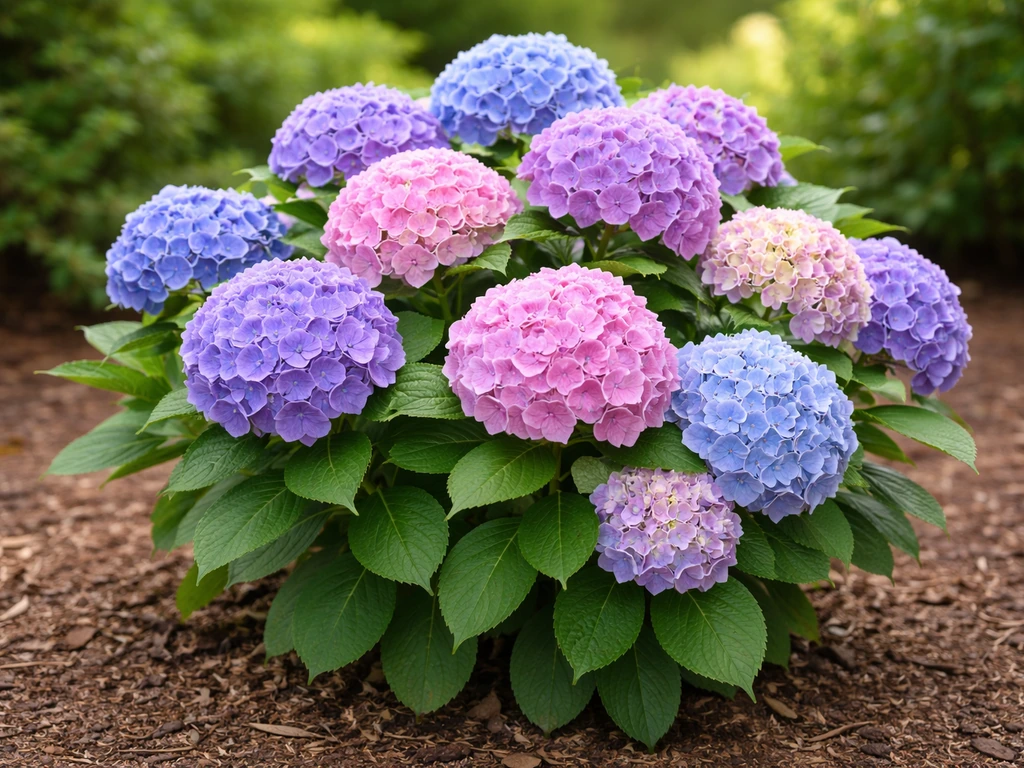
Endless Summer is a brand of reblooming bigleaf hydrangeas (Hydrangea macrophylla), and the original cultivar is 'Bailmer.' The key thing that separates it from older H. macrophylla types is its ability to bloom on both old wood (stems that grew last season) and new wood (stems that grew this season). Traditional bigleaf hydrangeas only bloom on old wood, so a hard winter that kills the canes means zero flowers that year. Endless Summer sidesteps that trap by also setting buds on new growth, giving you a second shot at blooms even after winter damage.
The plant matures to about 4 feet tall and 4 feet wide, making it a manageable, rounded shrub for most residential gardens. It's rated for USDA zones 4 through 9, though performance in zones 4 and 5 depends heavily on bud protection over winter (more on that below). The bloom cycle, when everything goes right, starts in early summer on last year's wood and continues through summer and into fall as new wood buds up and opens. That repeated flush is exactly what the 'endless' name promises.
The Endless Summer lineup has expanded over the years to include several varieties beyond the original, including Bloomstruck, Twist-n-Shout, and Summer Crush. All share the reblooming trait, but they vary in flower color range and foliage. For the purposes of this guide, the care principles apply across the whole series.
Picking the right spot
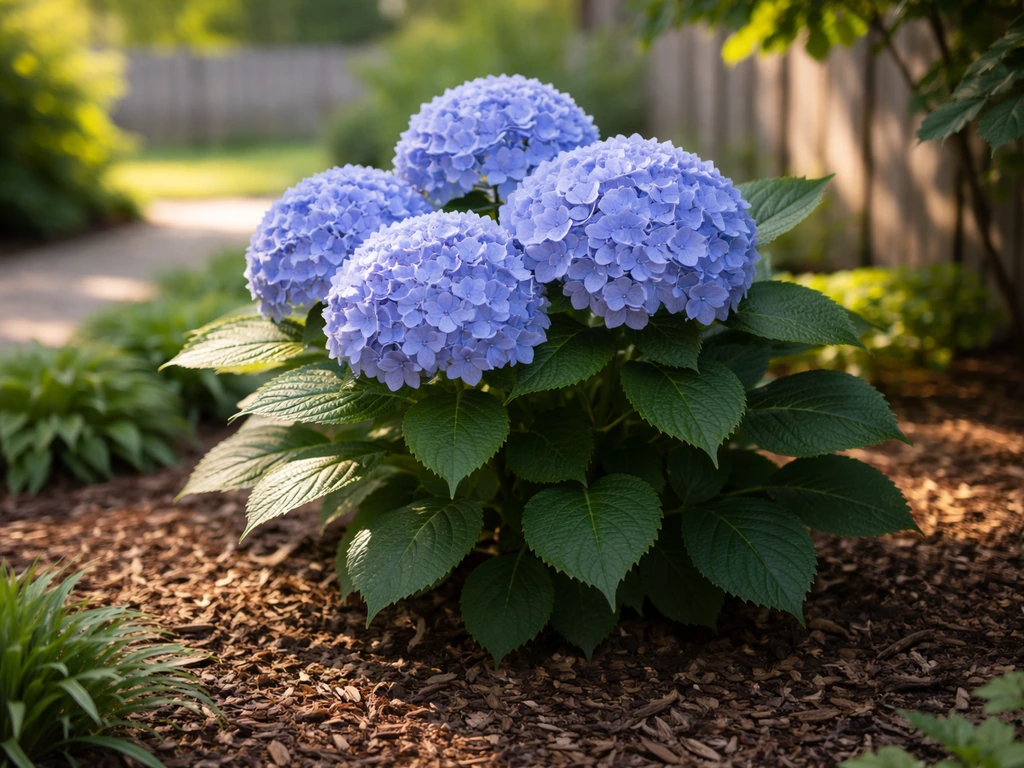
Endless Summer hydrangeas want morning sun and afternoon shade, especially in warmer climates. In zones 7 through 9, afternoon sun will stress the plant, scorch the leaves, and cause dramatic wilting every afternoon even when the soil is moist. Morning sun with dappled or open shade from noon onward is the sweet spot. In cooler zones (4 through 6), you can get away with more sun exposure, and the plants will actually appreciate the extra light to fuel repeat blooming.
Temperature matters beyond just hardiness zone. Late spring frosts are a real threat in zones 4 through 6 because Endless Summer starts pushing new growth early, and those tender buds on old wood can be wiped out by a freeze after you thought winter was over. Planting near a wall or fence that buffers north winds helps, and avoiding frost pockets (low spots where cold air settles) is worth thinking about when you're choosing a location.
Give each plant at least 4 to 5 feet of space in every direction. At mature size, this shrub hits roughly 4 feet in diameter, and overcrowding invites poor air circulation, which leads to the fungal problems you'll read about in the troubleshooting section. If you're planting a row as a hedge or border, space them 4 feet apart on center.
Soil prep, pH, and planting setup
Soil pH is probably the single most interesting variable with Endless Summer because it controls flower color, not just plant health. blank" rel="noopener noreferrer">In acidic soil around pH 5.0 to 5.5, aluminum becomes more available to the plant and you get blue flowers. At pH 5.5 to 6.0, you'll get purple tones. Push the pH up to 6.0 to 6.5 and the flowers shift to pink. Above 6.5 and you're firmly in pink-to-red territory. To grow red hydrangeas, keep the soil on the pink-to-red side and recheck pH as it changes over time pink-to-red territory. If you have a color preference, test your soil before you plant and amend accordingly. Adding sulfur lowers pH toward blue; adding lime raises it toward pink.
Beyond color, soil texture matters for plant health. Endless Summer wants consistently moist but well-draining soil. Heavy clay that stays waterlogged will rot roots; pure sand that dries out fast will stress the plant constantly. If your native soil is clay-heavy, work in 2 to 3 inches of compost and consider raising the bed slightly to improve drainage. Sandy soil benefits from the same compost addition to help retain moisture. Compost is the amendment that improves both drainage and water retention depending on what you're starting with.
When you're ready to plant, dig a hole about twice as wide as the root ball and the same depth. You don't want to bury the crown deeper than it was in the nursery pot. Backfill with your amended soil, firm it gently, and water thoroughly right away. Then apply 2 to 3 inches of mulch over the root zone, keeping it a few inches away from the stem. Mulch is not optional here: it regulates soil temperature, holds moisture, and in colder zones provides an extra layer of insulation for the roots over winter.
Watering and feeding through the seasons
Watering
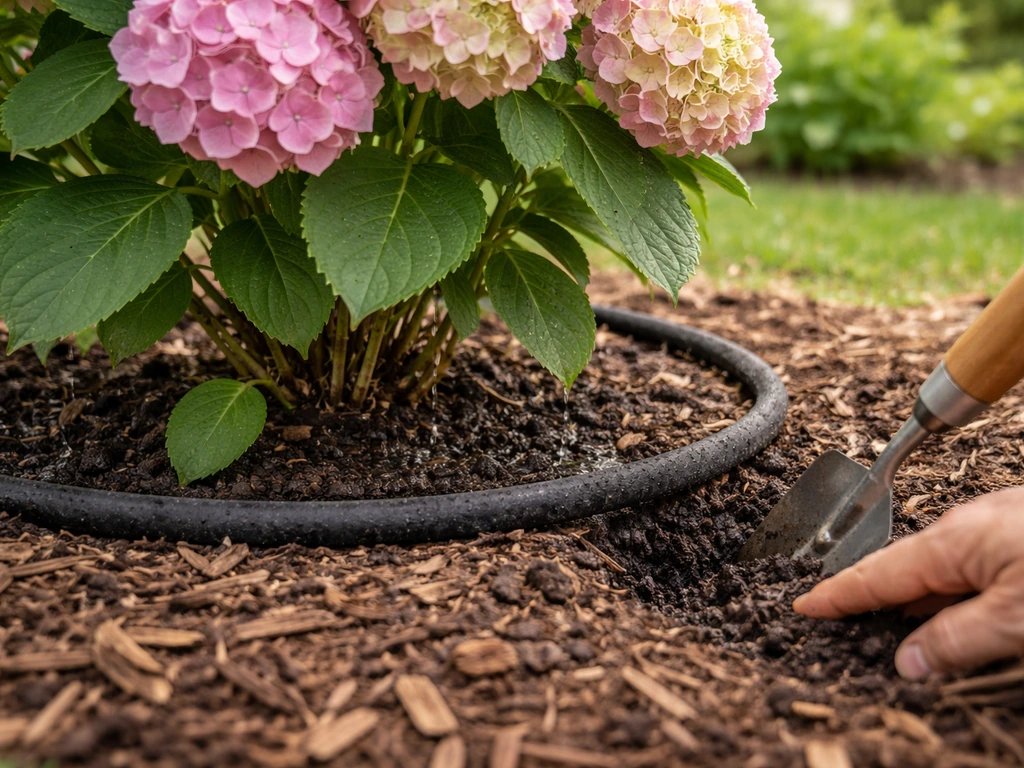
Hydrangeas are dramatic wilters and will slump dramatically in afternoon heat even when the soil is fine, which fools a lot of gardeners into overwatering. Check the soil at 2 inches depth before you water. If it's still moist, hold off. During the first growing season, you'll likely need to water deeply two to three times per week to establish roots. Once established, weekly deep watering (enough to soak 6 to 8 inches down) is usually sufficient unless it's hot and dry. Always water at the base of the plant, not overhead. Wet foliage is an invitation to powdery mildew and leaf spot.
Signs of overwatering include brown, mushy leaf edges and leaf drop. Signs of underwatering are limp, wilting leaves that don't recover overnight. If the plant wilts in the morning before heat sets in, it needs water. If it only wilts in afternoon heat and perks up by evening, it's probably just reacting to temperature and the soil is fine.
Fertilizing
Start feeding in spring when you see new growth emerging. A slow-release balanced fertilizer applied once in early spring gives the plant a steady nutrient base without forcing a flush of soft, winter-vulnerable growth. If you want to give blooming a boost, choose a fertilizer with a higher middle number (phosphorus) rather than a high first number (nitrogen). High nitrogen drives leafy growth at the expense of flowers, which is one of the most common reasons for a healthy-looking plant that never blooms.
You can apply a second light feeding in early summer to support the reblooming cycle, but stop fertilizing by midsummer. Late-season fertilization pushes tender new growth right before winter, and that soft growth is the first thing to get killed when temperatures drop. Oregon State Extension specifically flags late-season feeding as a hardiness risk, and in my experience that advice holds up. Resist the urge to do a fall feeding.
Pruning and protecting buds for reliable reblooming
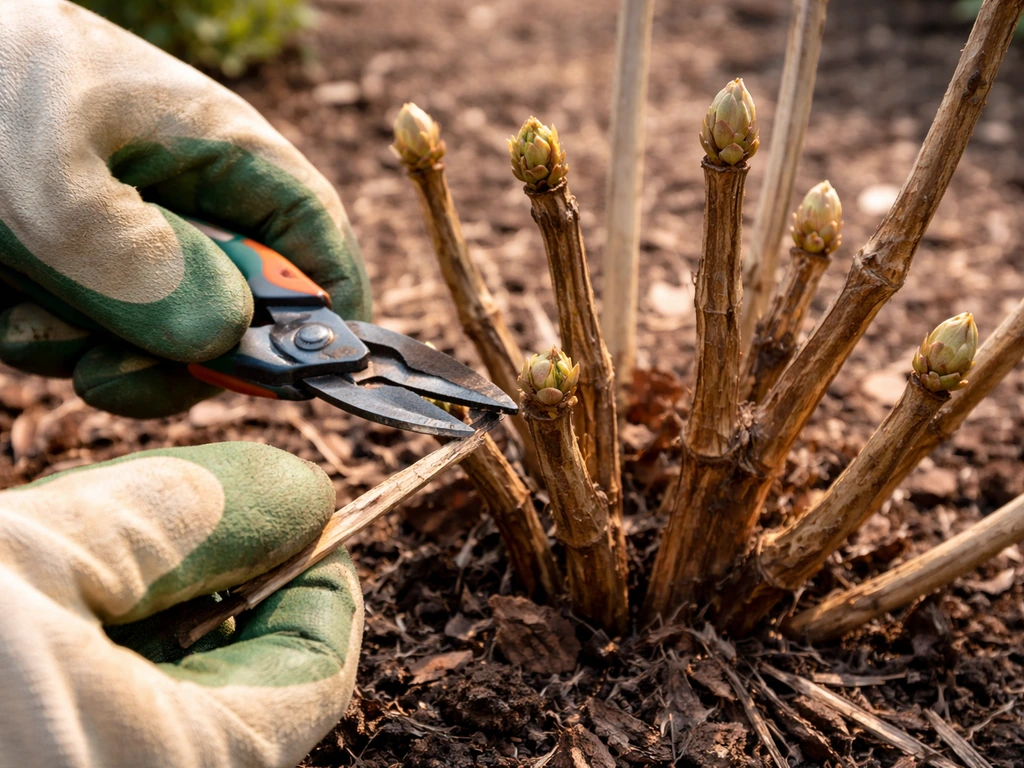
This is where most gardeners go wrong with Endless Summer, and it's worth being direct about it: the number one reason these plants don't bloom is incorrect pruning timing. Pruning in late summer, fall, or early spring removes the old wood buds that were set the previous season, cutting off your early-summer bloom flush before it ever starts.
The right approach is to wait until mid- to late spring, when you can clearly see which canes are alive (they'll have leaves or swelling buds) and which are dead (dry, brown, hollow). Only remove the dead canes. Leave everything else alone. If the whole plant looks dead in early spring, wait longer before giving up: Endless Summer is known for breaking dormancy later than you expect, especially in colder zones.
During the growing season, you can deadhead spent blooms to encourage more new-wood bud formation and keep the plant tidy. Clip just below the spent flower head to a healthy leaf node. This is light work, not hard pruning, and it's perfectly safe to do all summer long.
If you want to reduce the plant's size, do it immediately after the first flush of blooms in early summer, not in fall. That gives new stems time to grow, set buds, and still contribute to the season's later blooms. Hard pruning in fall is the single fastest way to guarantee a flowerless plant next year.
Protecting buds through winter
In zones 4 through 6, winter bud protection is not optional if you want old-wood blooms. After hard frost kills the foliage in fall, loosely tie the canes together and surround the plant with a wire cage filled with straw or shredded leaves. This insulates the canes and the buds that formed on them. You can also use burlap wrapping if you prefer. Remove the protection gradually in spring once consistent freezing temps are behind you. The goal is to protect those old-wood buds so your plant blooms in early summer rather than waiting for new-wood buds to form later in the season.
Late spring frost is a separate threat. If a freeze is predicted after your plant has already leafed out in spring, cover it overnight with a frost cloth or even an old bedsheet. Losing those early buds to a late frost is frustrating but common in zones 4 and 5.
Why your Endless Summer isn't blooming (and what to do about it)
Here's the honest troubleshooting breakdown. Most problems with Endless Summer come down to a short list of causes, and once you identify which one applies, the fix is usually straightforward.
| Problem | Likely Cause | Fix |
|---|---|---|
| No blooms at all | Pruned at wrong time or winter killed old-wood buds | Stop fall pruning; protect canes over winter; wait for new-wood blooms |
| No blooms, healthy foliage | Too much nitrogen fertilizer | Switch to a lower-nitrogen, higher-phosphorus fertilizer; skip fall feeding |
| No blooms, weak or leggy plant | Too much shade | Move to a spot with more morning sun or thin overhead trees |
| Yellow leaves with green veins | Iron chlorosis from high soil pH | Test pH; acidify with sulfur; avoid lime near the plant |
| Tan or gray leaf spots with purple halos | Cercospora leaf spot (fungal) | Improve air circulation; avoid overhead watering; apply fungicide if severe |
| White powdery coating on leaves | Powdery mildew | Increase air circulation; avoid wetting foliage; apply appropriate fungicide |
| Brown leaf edges, wilting | Overwatering or poor drainage | Check drainage; reduce watering frequency; check soil at 2-inch depth before watering |
| Entire canes dead in spring | Winter kill | Wait until mid-spring; remove only confirmed dead canes; protect better next winter |
One thing worth calling out separately: if your plant leafs out beautifully every spring but never blooms even after several years, take a hard look at your pruning habits and your fertilizer. Those two factors account for the vast majority of bloomless Endless Summer complaints. A soil test is a cheap, definitive way to rule out pH problems, and it's worth doing every two to three years even if things seem fine.
Pest problems like aphids, spider mites, and scale can weaken the plant and reduce its vigor, but they rarely cause outright bloom failure on their own. Spider mites tend to show up during hot, dry weather and cause stippled, dull-looking foliage. A strong spray of water from a hose can knock them back, and that's usually enough for a minor infestation. Scale insects look like small bumps on the stems and can be scraped off or treated with horticultural oil.
Seasonal care checklist
Planting year
- Test soil pH before planting and amend for your target color (sulfur to lower, lime to raise).
- Plant in spring after the last frost date, or in early fall at least 6 weeks before first frost.
- Dig hole twice as wide as root ball, same depth; work compost into backfill.
- Water deeply at planting and two to three times per week for the first season.
- Apply 2 to 3 inches of mulch over root zone, keeping it off the stem.
- Apply slow-release fertilizer once in spring; skip fall feeding.
- In zones 4 to 6, protect canes with a wire-and-straw cage after first hard frost.
Winter prep (late fall)
- Stop all fertilizing by midsummer.
- After hard frost kills foliage, loosely tie canes and surround with an insulating cage of straw or leaves.
- Top up mulch to 3 to 4 inches to protect roots.
- Do not prune. Leave everything standing until mid- to late spring.
Spring start-up
- Wait until mid- to late spring before touching the plant.
- Remove winter protection gradually once consistent frost is unlikely.
- Scratch or gently nick canes to check for green tissue; wait longer if uncertain.
- Remove only confirmed dead canes all the way to the base.
- Apply slow-release fertilizer as new growth emerges.
- Refresh mulch layer if it has thinned over winter.
- Cover with frost cloth if a late freeze is forecast after leaves appear.
Growing season (summer through early fall)
- Deadhead spent blooms throughout summer to encourage reblooming on new wood.
- Water deeply once per week; adjust for heat and rainfall.
- Watch for powdery mildew and leaf spot; correct if needed.
- If size reduction is needed, prune lightly immediately after the first bloom flush.
- Stop fertilizing by midsummer.
- Begin planning winter protection for zones 4 to 6 as temperatures drop in fall.
If you're comparing Endless Summer to other hydrangeas for your garden, it's worth knowing it behaves quite differently from panicle types like Vanilla Strawberry, which are much more cold-tolerant and bloom reliably on new wood only. Bigleaf types like Nikko Blue share the old-wood bloom limitation without Endless Summer's reblooming advantage, which is why Endless Summer is often the better choice if you're in a zone with unpredictable winters. If you’re also trying to grow Nikko Blue hydrangea, the same old-wood bud protection and soil pH steps are crucial for getting reliable blue blooms. Once you understand the pruning rules and bud protection needs, it's a genuinely rewarding plant to grow.
FAQ
How long does it take for an Endless Summer hydrangea to bloom after planting?
In many gardens you can get flowers in the first year, but if the plant was newly transplanted or stressed, expect more reliable blooming in year two. Focus on consistent moisture and avoid pruning during that first season, since buds form on stems during the previous growth cycle.
What should I do if my hydrangea gets leafed out in spring but the buds still turn brown and fail?
That usually points to late frost damage on old-wood buds. Don’t prune back immediately, wait until mid- to late spring when you can tell which canes are truly dead, then remove only the dead sections and let the plant carry through its new-wood rebloom.
Can I grow Endless Summer in a container, and how does care change?
Yes, but choose a large pot (roughly 18 to 24 inches or larger) with drainage holes and use a quality potting mix amended with compost. Container plants freeze more quickly, so insulate the pot in winter and be ready for more frequent watering during hot weather.
If my hydrangea blooms heavily in early summer but not at all later, what’s the likely cause?
Most often it’s not enough new-wood bud development. This can happen when pruning was too aggressive, late feeding pushed soft growth that got damaged, or the plant experienced a prolonged dry spell after the first flush. Keep mulch on and water deeply at the base through summer.
Do I need to deadhead Endless Summer hydrangeas, or will they rebloom without it?
They can rebloom without deadheading, but removing spent flowers helps redirect energy into forming new buds and keeps the plant from wasting resources on seed heads. Clip just below the spent bloom to a healthy leaf node, and avoid cutting back deeper than needed.
What’s the safest way to do a size reduction if my plant has gotten too big?
Limit size reduction to right after the first flush of blooms in early summer, when the plant is actively setting new growth. Avoid fall and winter pruning because it can remove the buds you need for early-summer flowering next year.
How can I tell whether my “bloom problem” is caused by pruning versus soil pH?
If stems were cut or pruned in fall, winter, or very early spring, pruning timing is the likely culprit for missing early blooms. If you rarely see buds at all and the timing seems correct, then test soil pH and nutrient status, since extreme pH or nutrient imbalance can reduce bud set or flower quality even when buds are present.
My hydrangea looks healthy but the flowers are the wrong color. Should I change fertilizer or soil amendments?
Start with a soil test before changing anything, since pH drives color. For color shifts, adjust pH (sulfur to move bluer, lime to move pinker) and avoid overcorrecting. If you use a high-phosphorus fertilizer for blooming, keep nitrogen moderate so you don’t trade flowers for leaf growth.
What watering schedule prevents both overwatering and underwatering?
Use the finger test at about 2 inches deep. Water deeply when that depth is dry, typically 2 to 3 times per week during establishment, then about once per week when mature (more during heat waves). Always water at the base, and let the soil drain well to prevent root rot.
Will powdery mildew or leaf spot cause Endless Summer to stop blooming completely?
Usually not completely, but heavy disease can reduce overall plant vigor and bud formation. Improve airflow by spacing plants correctly, avoid overhead watering, remove badly infected leaves, and focus on consistent moisture so the plant can still form buds for the rebloom.
How do I protect old-wood buds if I live in a windy area or near a cold wall?
Use the wire cage plus straw or shredded leaves method, but also secure the cage so it doesn’t loosen in wind. If the plant sits in a cold, sheltered microclimate, add burlap windbreak layers around the cage and remove them gradually in spring to avoid sudden temperature swings.
When should I start removing winter protection in spring?
Remove insulation gradually once consistent freezing nights are behind you, typically after you’ve passed the worst cold snaps. Removing too early can expose old-wood buds to freeze or thaw cycles, which can trigger bud damage even if new leaves look fine at first.
Can I propagate Endless Summer from cuttings to preserve blooming ability?
You can, but success varies, and plants grown from cuttings may take time to build strong stems that reliably set buds. If you’re trying to preserve a specific color, remember that flower color still depends on your soil pH, so you’ll still need to manage pH after propagation.