
Growing azaleas successfully comes down to a few non-negotiable conditions: the right soil pH, good drainage, appropriate light, and pruning at the right time of year. Get those four things right and azaleas are actually pretty low-maintenance shrubs that reward you with spectacular spring color, this is also the foundation of how to grow azaleas outdoors. Get them wrong and you'll spend years wondering why your azalea looks miserable and refuses to bloom. This guide walks you through every step, from picking the right type to keeping it blooming year after year.
How to Grow an Azalea: Planting, Care, and Bloom Tips
Marcus Holloway
24 Mar 2026
Choosing the right azalea for your yard
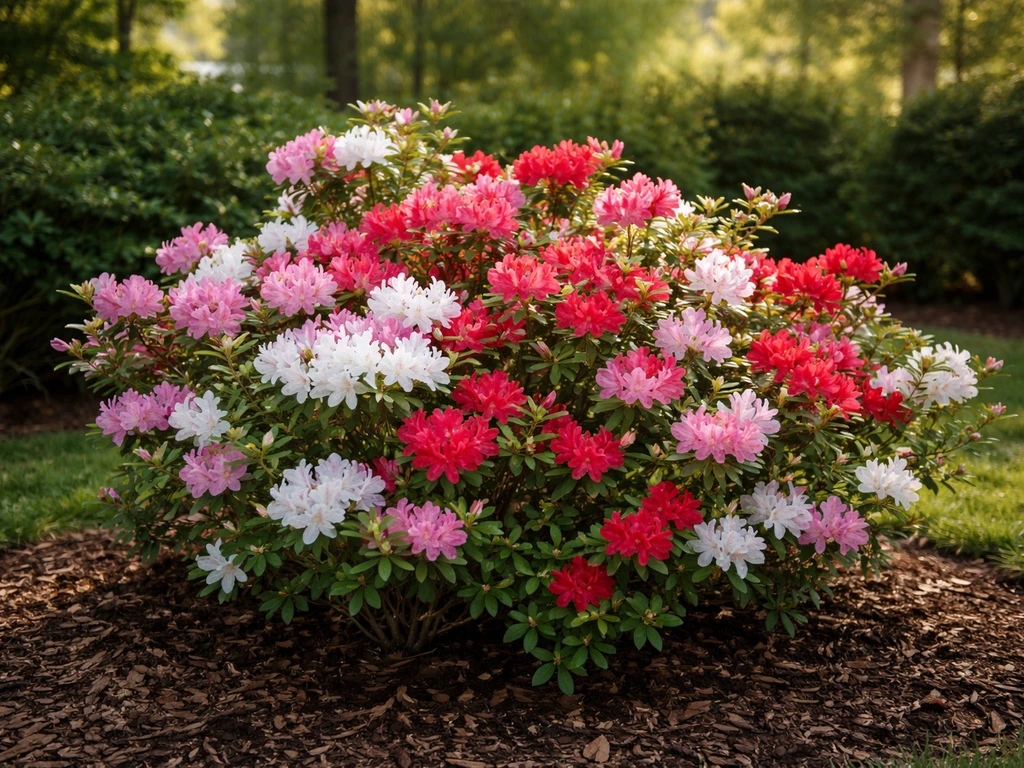
Before you plant anything, it helps to know what you're actually dealing with. Azaleas (Rhododendron spp.) thrive across USDA hardiness zones 5 through 9, so most home gardeners in the continental US are in play. But within that range, your choice of variety matters a lot for what kind of plant you end up managing.
Bush form vs. tree form
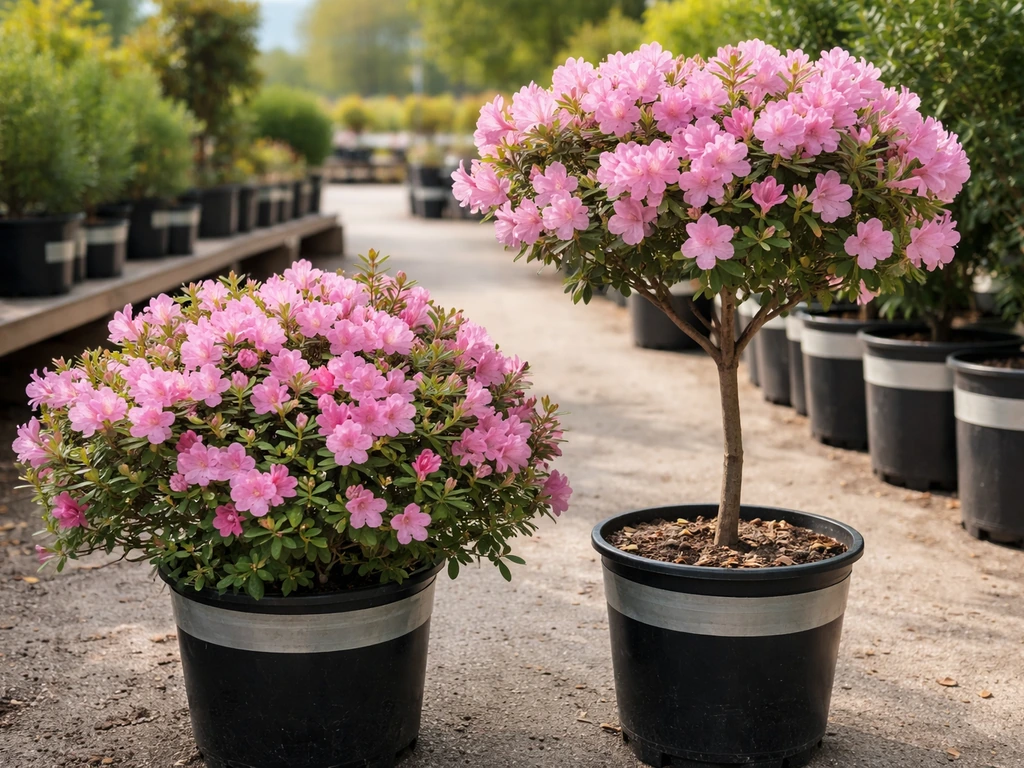
Most azaleas sold at garden centers are the classic mounding bush form, typically topping out between 2 and 8 feet depending on the cultivar. These are your Kurume hybrids, Encore azaleas (which rebloom in fall, which is worth knowing about), and the familiar Southern Indian hybrids. If you're interested in Encore azaleas specifically, those have some unique care quirks worth a deeper look. Tree-form azaleas are the same plants trained to a single central leader by nurseries, giving them an upright, small-tree silhouette. They're mostly a pruning and training difference, not a different species. The care is nearly identical, but you'll want to continue removing lower side shoots to maintain that tree form, and they tend to be more exposed to sun and wind, so moisture management matters even more.
Native azaleas vs. non-native hybrids
Native azaleas are a different experience entirely. Species like flame azalea (Rhododendron calendulaceum), pinkshell azalea, and swamp azalea are deciduous, often fragrant, and bloom at different times from spring through summer. They naturally prefer cool, partially shaded sites with rich, moist woodland soil, though some species can handle full sun to part shade when water is consistently available. If you're in the Southeast or Mid-Atlantic and have a woodland garden or a shaded slope, native azaleas are genuinely exciting plants and they support local pollinators in a way that hybrid evergreen azaleas can't match. For a traditional landscape planting with reliable, dense spring color, the evergreen hybrids are the workhorse choice. Either way, the core care principles in this guide apply to both.
Light requirements: how much sun is enough
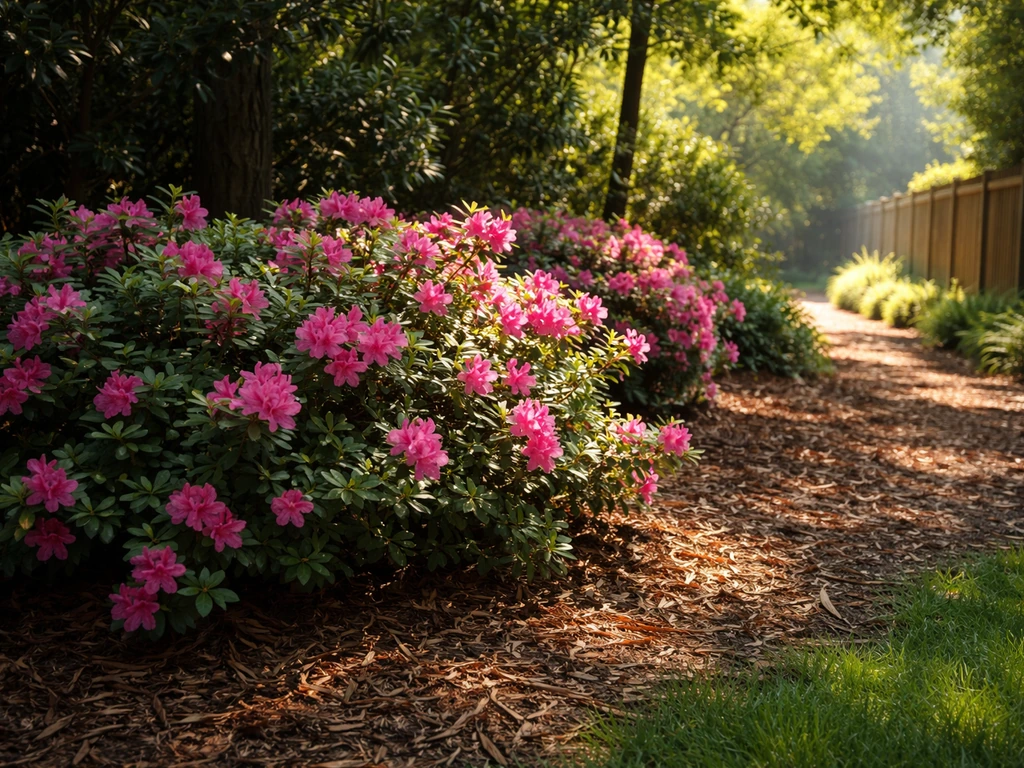
Azaleas do best in dappled shade or morning sun with afternoon shade. A spot under a high tree canopy, on the east side of a building, or along a lightly shaded fence line tends to produce the healthiest plants with the richest bloom color. Direct afternoon sun in summer causes stress, bleaches flowers, and makes your plants far more vulnerable to insect pests. This is not theoretical: azalea lace bugs, one of the most common and damaging azalea pests, are far more severe on plants growing in full sun. That said, they are not shade plants. Too little light and you get leggy, sparse growth with minimal flowering. You're aiming for bright, indirect light or about 4 to 6 hours of gentle direct sun, preferably in the morning.
Native azaleas can be slightly more flexible here. Some species handle more sun if they're getting consistent moisture, but in general they perform best in partial shade that mimics their native woodland edge habitat. If you're gardening in a hot climate (zones 7 through 9), err strongly toward more shade. If you're in zones 5 or 6 where summer heat is less intense, your azaleas can handle a bit more sun without suffering.
Soil and planting setup: this is where most people go wrong
Soil prep is honestly the step that makes or breaks azaleas, and it's also where I see beginners skip ahead too fast. Azaleas have very specific needs: acidic soil, high organic matter, and excellent drainage. They are shallow-rooted plants with delicate feeder roots that can be destroyed by soggy conditions. Get this part right before you ever put a plant in the ground.
pH: the number that controls everything
Azaleas need a soil pH between 4.5 and 6.0, with the sweet spot around 5.0 to 5.5. Outside that range, plants can't properly absorb the nutrients already in your soil, which is why you'll sometimes see yellowing leaves on an azalea that's been fertilized but is growing in soil that's too alkaline. If you're not sure of your soil's pH, test it before planting. It's a $15 to $20 kit from any garden center or an inexpensive lab test through your county extension office. If your soil pH is too high (above 6.0), work in elemental sulfur or acidic organic matter like pine bark fines or peat moss. Research has shown that the right amendments can drop soil pH significantly, for example from 7.0 down to around 5.4, so amendments genuinely work when applied correctly. If you have heavy clay soil, the challenge is a bit more specific and may warrant a closer look at <how to grow azaleas in clay soil> clay-specific strategies.
Drainage and organic matter
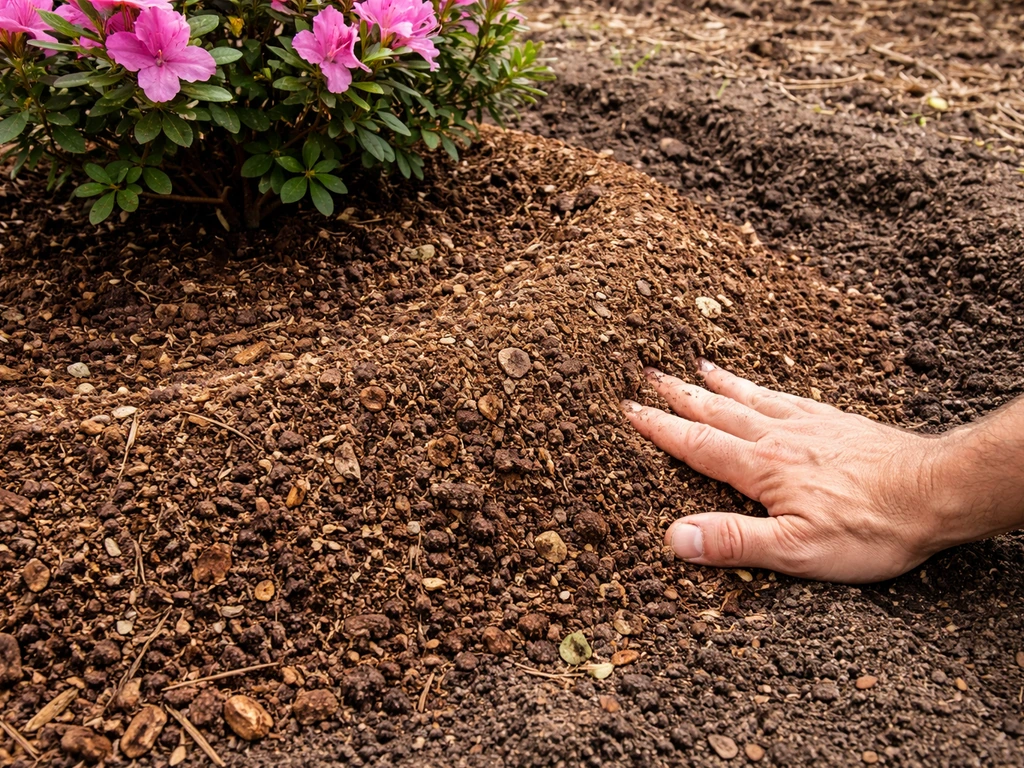
Azaleas will not tolerate waterlogged roots. If your soil stays wet after rain or irrigation, you need to address that before planting, not after. Raised beds or slightly mounded planting areas work well in heavy soils. Work in generous amounts of organic matter, compost, pine bark fines, or aged leaf mold, to improve both drainage and the biological richness of the soil. Azaleas love soil that mimics the floor of a deciduous or pine woodland: loose, slightly acidic, full of decomposing organic material, and consistently moist but never soggy.
How to plant azaleas correctly
When to plant
In most of zones 5 through 7, fall planting (September through October) is ideal because it gives roots time to establish before summer heat stress arrives. Spring planting works well too, especially in cooler climates. In the Deep South (zones 8 to 9), fall planting is really the preferred window since it lets plants establish during the mild season rather than going immediately into brutal summer. Avoid planting in the heat of summer unless you're fully committed to watering daily and providing shade protection.
Planting depth and spacing
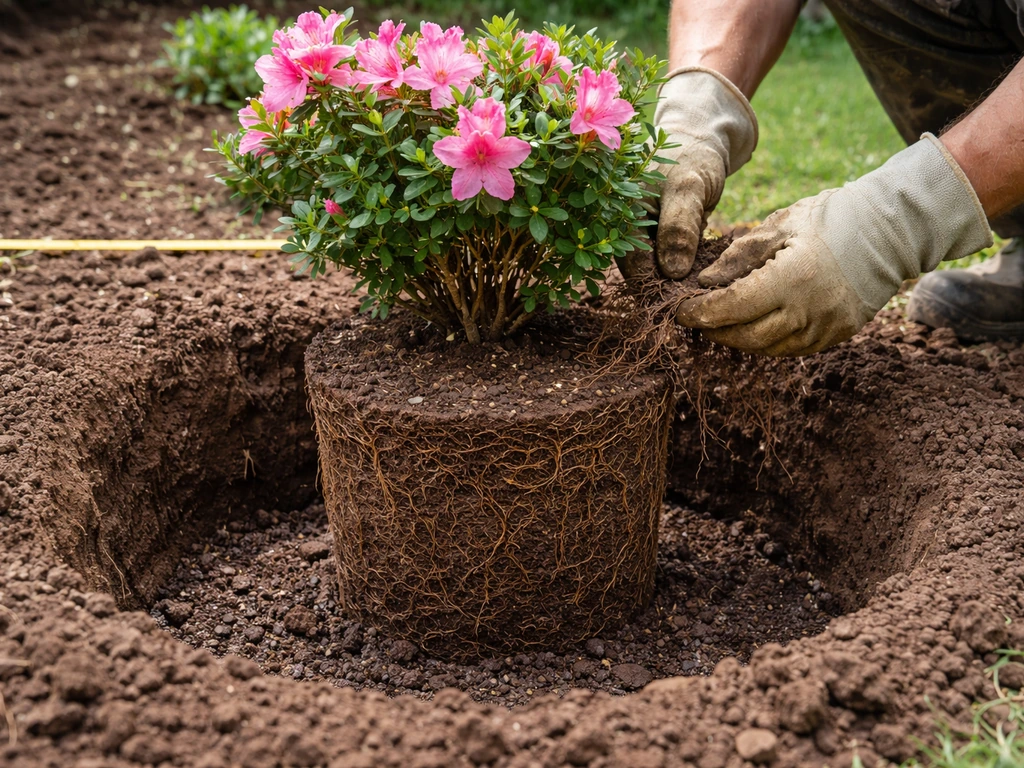
Planting depth is critical and this is a common mistake. Set the plant so the top of the root ball is at or very slightly above the surrounding soil level, never buried. Sinking the crown leads to crown rot and a slow decline that's hard to diagnose. Don't dig your hole so deep that the plant settles down over time. A good rule: dig wide rather than deep, making the hole two to three times the width of the root ball but only as deep as the root ball itself.
Before backfilling, loosen any pot-bound roots so they can grow outward into the surrounding soil. If your plant came balled and burlapped, loosen and remove the burlap and any twine from the top and sides of the root ball before backfilling. Roots can't push through burlap quickly, and leaving it in place can stall establishment. Spacing depends on the variety: compact types (2 to 3 feet mature width) can be planted 2 to 3 feet apart; larger varieties that reach 6 to 8 feet wide need 5 to 6 feet of spacing. It's tempting to plant close for an instant full look, but azaleas need airflow to stay healthy.
Watering routine that keeps azaleas healthy
Consistent moisture is essential for azaleas, especially in the first year while roots are establishing. Water deeply after planting and then check soil moisture regularly. In general, azaleas need about 1 inch of water per week during the growing season, either from rain or irrigation. The key word is consistent: wet-dry cycles stress the shallow root system more than almost anything else.
Here's the failure mode I see most often: overwatering. The soil should stay moist, not soggy. If you press a finger an inch into the soil and it feels wet and cold, hold off on watering. If it feels barely damp to dry, water thoroughly. During heat waves, if the soil is already saturated, resist the urge to water again; a brief afternoon misting can offer some relief without adding to waterlogged conditions. In winter, especially in colder zones, roots can't absorb water from frozen soil. This leads to foliage dehydration even though the plant isn't technically dry. A deep watering before the ground freezes in late fall, combined with a good mulch layer, protects against this winter desiccation.
Drip irrigation or a soaker hose is genuinely worth it for azaleas. Keeping foliage dry reduces fungal issues, and delivering water directly to the root zone is far more efficient than overhead sprinklers.
Fertilizing, mulch, and keeping pests in check
Fertilizing: less is more, timing is everything
Wait until after your azaleas finish blooming before fertilizing, typically in May for spring bloomers. Fertilizing too early or too aggressively pushes leafy growth at the expense of flowers and can damage the delicate roots. Use a fertilizer formulated for acid-loving plants (azalea/camellia specialty fertilizers are the standard recommendation) and apply lightly, following package directions. Sprinkle it on the soil surface, not worked in, and water it in gently before you lay mulch. Avoid fertilizing after mid-summer because late-season growth won't harden off before winter.
Mulch: don't skip this step
A 2 to 3 inch layer of organic mulch (pine bark, shredded leaves, or wood chips) around your azaleas is one of the highest-value things you can do for them. It conserves moisture, moderates soil temperature, slowly acidifies the soil as it breaks down, and protects those shallow feeder roots from temperature extremes. One important detail: keep mulch a few inches away from the base of the stems. Piling mulch up against the trunk (the classic "mulch volcano" mistake) traps moisture against the bark and invites rot and pests. Replenish mulch annually, especially before winter.
Common pests and disease to watch for
Azalea lace bugs are the pest you most need to know about. These tiny insects feed on the undersides of leaves, causing a stippled, grayish appearance on the top surface. Flip a leaf and you'll see the small bugs plus distinctive brown fecal spots. Lace bugs are most severe on plants growing in full sun and under heat stress, which is yet another reason proper siting matters. Check leaf undersides regularly from late spring through summer. Insecticidal soap or neem oil applied to the undersides of leaves handles light infestations well. For serious infestations, a systemic insecticide labeled for lace bugs can be more effective.
On the disease side, watch for petal blight (flowers turn brown and mushy during wet springs), leaf gall (odd fleshy growths on new leaves in early spring), and root rot in poorly drained soils. Petal blight is mostly a cosmetic problem solved by removing affected flowers. Leaf gall looks alarming but rarely does serious damage; remove and dispose of affected growth. Root rot, caused by soggy soil, is the one that kills plants. If you see sudden wilting or decline after wet periods, drainage is almost always the culprit.
Pruning for shape and more flowers
Timing is everything with azalea pruning, and it's where a lot of gardeners accidentally sabotage next year's bloom. Azaleas set their flower buds for the following spring during late summer and fall. If you prune in late summer, fall, or winter, you're cutting off those buds and you'll wonder why your azalea didn't bloom. The rule is simple: prune right after flowering, typically in May or early June for spring bloomers. That gives the plant the rest of the growing season to set new buds.
For light cleanup and shaping, you can snap off spent flower stalks after bloom by simply bending them until they break away cleanly. This tidies up the plant without any tool needed. For shaping or reducing size, use hand pruners or loppers and cut selectively just after bloom. If you need to significantly reduce a large overgrown azalea, do it in stages over two to three years rather than all at once. Hard renovation pruning is a shock to the plant; spreading it out gives the roots time to adjust.
For tree-form azaleas, continue removing any shoots that emerge below the graft or along the main trunk through the growing season to maintain the shape. This is mostly a summer task and doesn't affect flowering since you're only removing non-flowering basal growth.
Seasonal care calendar
| Season | Key Tasks |
|---|---|
| Early Spring (March–April) | Check for winter damage; water if soil is dry; hold off on fertilizing until bloom finishes |
| Late Spring (May–June) | Prune and shape immediately after bloom; apply acid-loving plant fertilizer lightly; replenish mulch |
| Summer (July–August) | Monitor for lace bugs; water consistently; no pruning; stop fertilizing by mid-July |
| Fall (September–October) | Best window for planting new azaleas; water deeply before ground freezes; check mulch layer |
| Winter (November–February) | No active care needed; ensure mulch is in place; water in late fall if soil is dry before freeze |
Comparing popular azalea types at a glance
| Type | Deciduous or Evergreen | Bloom Time | Light Preference | Best For |
|---|---|---|---|---|
| Evergreen hybrids (Kurume, Southern Indian) | Evergreen | Spring only | Part shade to morning sun | Traditional landscape borders, mass plantings |
| Encore azaleas | Semi-evergreen | Spring and fall | More sun-tolerant | Gardeners wanting extended color season |
| Native azaleas (deciduous species) | Deciduous | Spring through early summer (varies) | Part shade, woodland edge | Naturalized areas, pollinator gardens, woodland gardens |
If you're planting your first azalea and want reliable, low-fuss results, a compact evergreen hybrid suited to your zone is the most forgiving choice. If you have a more naturalistic garden or a woodland setting, a native deciduous azalea will give you something more unique and ecologically valuable. Encore azaleas are worth considering if you want fall color, but note they have slightly different pruning timing since they bloom in both seasons.
Quick troubleshooting for common problems
- No flowers: You pruned too late in the season (after summer bud set), or the plant is in too much shade. Prune only right after spring bloom.
- Yellow leaves: Almost always a soil pH problem. Test your soil. If pH is above 6.0, acidify with sulfur or acidic amendments.
- Wilting despite watering: Check drainage immediately. Wilting in wet soil usually means root rot from waterlogged conditions, not drought.
- Stippled, grayish foliage: Flip the leaves and look for lace bugs. Treat with insecticidal soap or neem oil on the undersides of leaves.
- Leggy, sparse growth: Too much shade or the plant has not been pruned in years. Prune right after bloom and evaluate the light conditions.
- Flower buds but no bloom: Winter damage to buds is common in zone 5 to 6. Mulch and siting in a protected spot help; choose hardier varieties for colder zones.
Growing azaleas really does come down to working with their preferences rather than against them, just like how to grow forsythia successfully. Respect the soil pH, give them the right light, keep moisture consistent without waterlogging, prune at the right time, and you'll have healthy, floriferous shrubs that look better every year. The gardeners who struggle with azaleas are usually fighting one of those fundamentals, and once you identify which one, the fix is almost always straightforward. how to grow forsythia hedge
FAQ
Can I grow an azalea in a container, and how do I keep it from drying out or staying too wet?
Yes, but only if you match the container conditions closely to what azaleas need in the ground. Use a pot with drainage holes, an acidic, high-organic potting mix, and plan for more frequent checks because containers dry out faster. Keep the plant in dappled shade, water when the top layer feels barely damp to dry, and avoid letting the pot sit in runoff. For overwintering, mulch the pot’s surface and protect it from repeated freeze-thaw cycles (for example, by sinking the pot into the ground or wrapping it).
My azalea looks yellow even after fertilizing, what does that usually mean and what should I do next?
The fastest clue is leaf color pattern and growth rate. Pale yellow leaves with normal green veins often point to iron deficiency, which is common in soil that is too alkaline even if you fertilize. If the yellowing comes with weak growth and soggy soil, root stress from poor drainage is more likely. If you have a pH test, use it before adding more nutrients, because fixing pH usually solves multiple symptoms at once.
Why did my azalea produce lots of leaves but no flowers?
A classic cause is pruning at the wrong time, but there are others. Azaleas also won’t bloom well if they are too shaded, too nitrogen-rich, or stressed by drought or heat during bud formation (late summer through fall). Check whether the plant has healthy, dense growth after bloom, test soil pH if possible, and review light exposure in summer. If buds keep failing for two seasons, reassess pruning timing first, then adjust light and watering consistency.
My azalea is getting leggy, is that a fertilizer problem or a light problem?
If you have a leggy azalea, adjust light before you try to force it with fertilizer. Most leggy growth is from insufficient light rather than a nutrient lack. Move the plant to brighter morning sun or thinner canopy shade, and keep watering consistent during warm months. Once light improves, reduce pruning to post-bloom shaping, because heavy cutting at the wrong time can remove next year’s buds.
How do I transplant an azalea without losing it or delaying blooms for years?
Expect slower results, but it can work if the root ball is properly unpacked and the planting hole is prepared for drainage and acidity. The key is to avoid disturbing roots while they establish and to keep moisture consistent without waterlogging. Water deeply after transplant, then monitor weekly, and maintain a mulch layer with a gap at the trunk. In many cases, the best time is fall in many climates, but if winter is harsh where you are, focus on spring planting so the plant has the full season to settle.
If my azalea soil pH is off, can I just add sulfur or peat moss repeatedly without testing?
Yes, but use a targeted approach. Start with the lightest intervention that matches the issue, which is usually pH adjustment and drainage first. Do not apply sulfur or peat-like acidic materials on top of an unknown pH because you can overshoot into overly acidic conditions. A soil test is especially important if you also use fertilizers regularly. After amendments, retest after a few months to confirm the pH change actually stuck.
What causes azalea buds to drop, and how can I prevent it?
New growth that looks fine but buds dropping before they open is often stress-related. Common triggers include inconsistent watering (dry spells or waterlogged roots), late spring freezes, or too much heat and direct afternoon sun. The fix is to stabilize moisture, maintain morning light and afternoon shade, and avoid fertilizing late in the season. If bud drop happens only in wet springs, consider petal blight timing, remove affected flowers, and improve airflow.
How much should I water an azalea after the first year, and how do I avoid overwatering?
In-ground, focus on watering during establishment, then reduce gradually as roots spread. Overwatering is more harmful than slight dryness, but azaleas still need dependable moisture during warm growth periods. A practical method is to water deeply when the top inch feels dry and the plant is showing subtle stress, then stop once the soil stays moist on its own. In winter, prioritize a deep watering before freeze-up if the soil tends to dry out.
Can I prune my azalea anytime, or are there any exceptions?
Most pruning should be done right after flowering. If you need to remove dead or damaged wood, you can remove it any time, but avoid major cutting late in the season because it can remove next year’s buds. For shaping, do selective cuts after bloom and use a staged renovation approach for very overgrown plants to reduce shock and protect bud development.
What are the best non-chemical steps for controlling azalea lace bugs before they get out of hand?
Typically, yes, you can manage lace bugs without chemicals if you catch them early. Check leaf undersides regularly starting in late spring, rinse off small populations with a strong water spray, then use insecticidal soap or neem oil on the undersides. Avoid spraying only the top surfaces, because the insects feed underneath. For severe infestations, a systemic option labeled for lace bugs can work better, but always follow label timing and avoid applying when temperatures are extremely high.