
Encore azaleas bloom in spring, take a short break, push out new growth, then bloom again in summer and fall. That three-season flowering cycle is what sets them apart from standard azaleas, which put on one spring show and call it a year.
How to Grow Encore Azaleas: Plant, Care, and Rebloom Guide

Marcus Holloway
5 May 2026
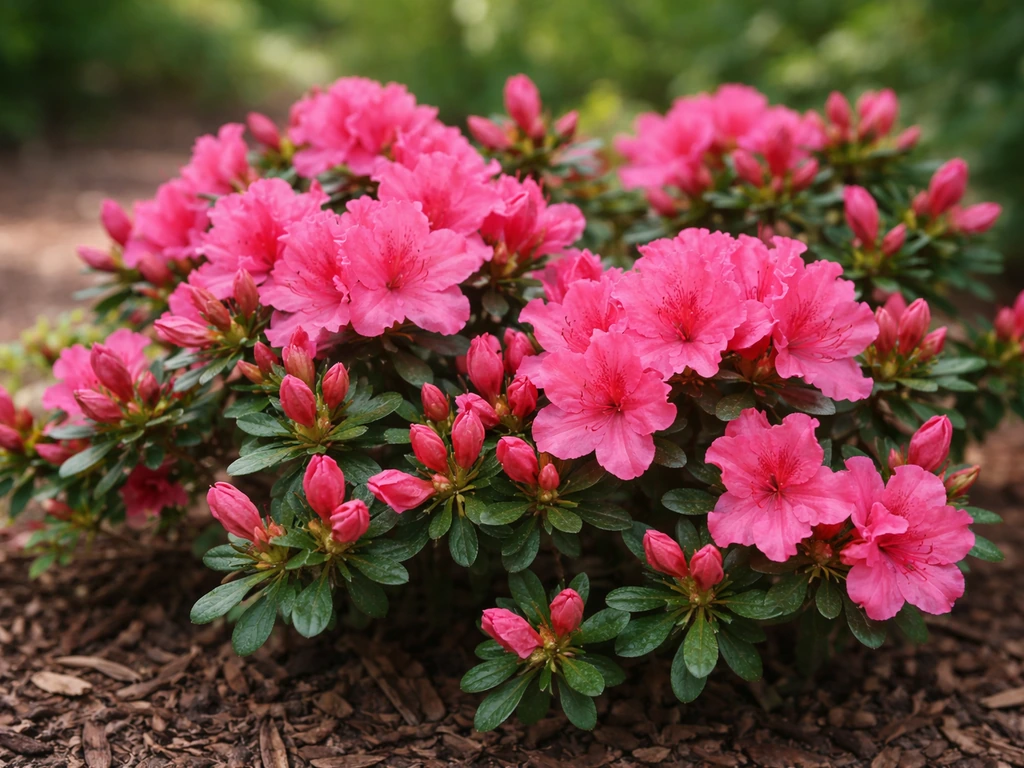
To keep that repeat blooming reliable, you need to get a few fundamentals right: plant in a spot with morning sun and afternoon shade (or filtered light all day), use acidic well-draining soil with a pH between 5. 0 and 6. 5, water consistently through the establishment period, fertilize once after the spring bloom with a slow-release azalea formula, and prune only right after that spring flush ends.
Get those five things dialed in and your Encores will reward you every year with minimal fuss.
What Encore Azaleas Are and Why They're Different
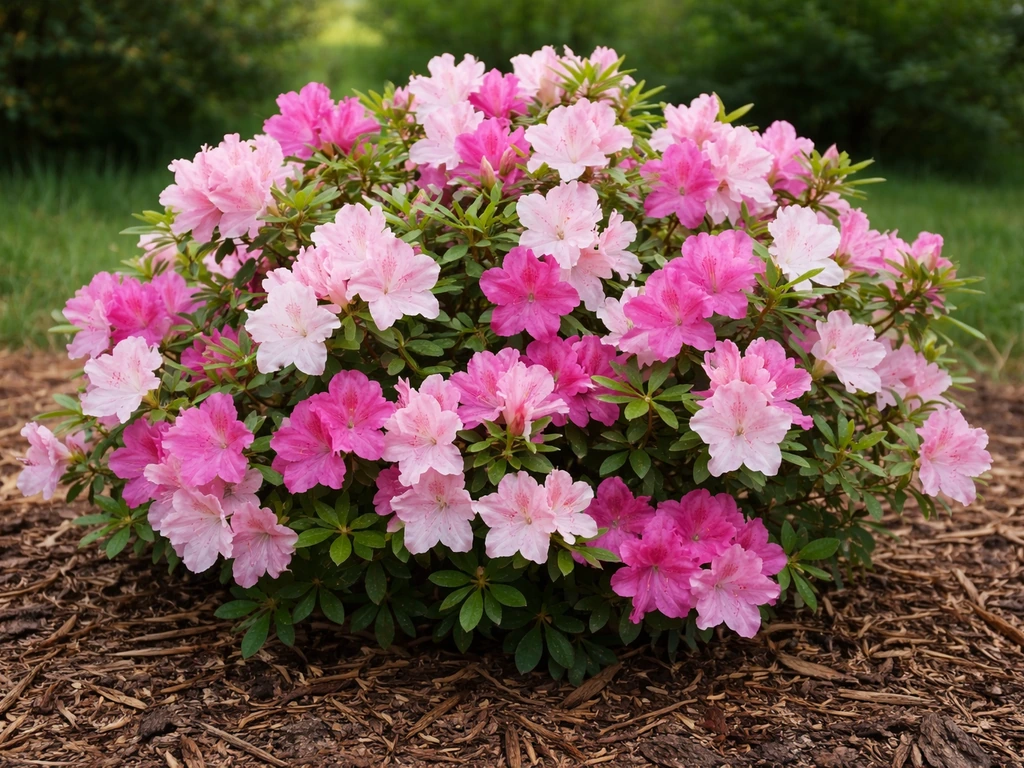
Encore azaleas are a hybrid series bred specifically for repeat flowering. Standard azaleas, including most classic Southern varieties, set their flower buds once in late summer or fall, then bloom the following spring and that's it. Encore varieties do something genuinely different: they bloom in spring, then form new buds on that fresh growth through summer, and bloom again in late summer and fall. The Azalea Society of America notes that this secondary bud formation on new growth typically kicks off around mid-July, which is why what you do after the spring bloom matters so much.
The series includes dozens of cultivars in a wide range of colors, sizes, and forms, so you can find something that fits a tight foundation planting, a large shrub border, or even a container. They're bred for USDA hardiness zones 6 through 10, which covers a wide swath of the US. If you're already growing azaleas outdoors in your region, Encores will generally work there too, though they do need some specific care adjustments compared with traditional varieties. If you're learning how to grow azaleas outdoors, these same principles for light and timing will help you get the best results from Encores.
Choosing the Right Planting Site and Timing
Site selection is where most people get tripped up. The old advice with azaleas is to tuck them in deep shade, and that works fine for traditional varieties focused on spring blooms. But Encore azaleas need light to trigger that summer and fall rebloom. The sweet spot is morning sun with afternoon shade, or consistent high filtered shade throughout the day. Deep all-day shade will give you a living plant that barely flowers after spring. Too much harsh afternoon sun in hot climates (think Texas or the Deep South) will stress the plant and scorch leaves. If you're in a hot region, afternoon shade is genuinely important, not optional.
As for timing, the best windows for planting in the ground are early spring (before it gets hot) or early fall (at least six weeks before your first frost). Fall planting gives roots time to establish before winter without the stress of summer heat bearing down. Spring planting works well too, but you'll need to stay on top of watering through the summer. Container planting gives you flexibility year-round as long as you protect the plant from freezing temperatures.
Think carefully about the mature size of the cultivar you choose before you plant. Some Encores stay compact at around 2 to 3 feet; others push to 4 or 5 feet wide. Planting too close to a structure or walkway means you'll be hacking at them constantly, which disrupts that bloom cycle.
Soil Requirements, Planting Steps, and Early Care

Encore azaleas need acidic soil, ideally between pH 5.0 and 6.5. Outside that range, nutrients (especially iron) become unavailable to the plant and you'll start seeing yellowing leaves even when the soil looks fine. Test your soil before you plant if you haven't already. It's a ten-dollar fix that saves you months of troubleshooting.
Amending Soil by Type
Sandy or loamy soil needs the least work. Mix in 1 to 2 inches of organic matter like pine bark fines or compost into the planting area and you're in good shape. Clay soil is a different story. It holds too much water around azalea roots, and that's a fast path to root rot. For clay, broadcast gypsum (calcium sulfate) at roughly 5 to 10 pounds per 100 square feet to improve internal drainage without dramatically changing pH, then mix in generous amounts of organic matter. Raise the planting area a few inches above grade if your drainage is truly poor.
How to Plant
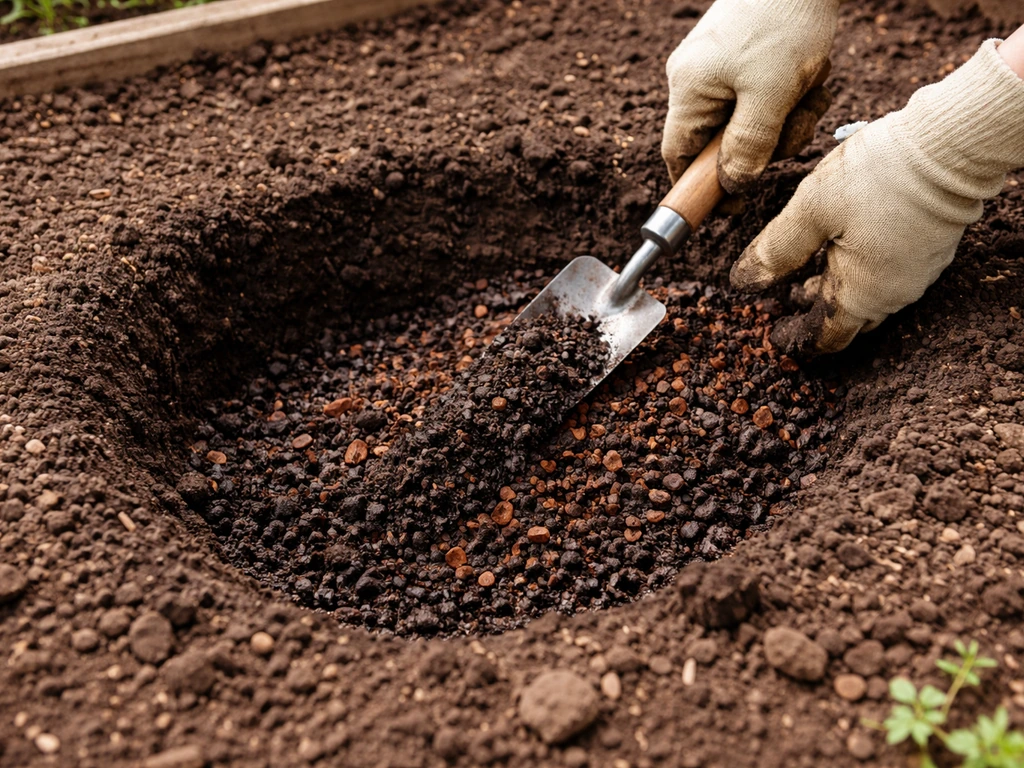
- Dig a hole two to three times as wide as the root ball but only as deep as the root ball is tall. Azalea roots are shallow and wide, not deep.
- Remove the plant from its container and loosen any circling roots gently.
- Set the plant so the top of the root ball sits at or very slightly above the surrounding soil level. Planting too deep is one of the most common reasons azaleas fail.
- Backfill with your amended soil, firming it in without compacting hard.
- Water thoroughly at planting, soaking the entire root zone until water runs out of the base of the hole.
- Apply a 2 to 3 inch layer of mulch (pine straw and pine bark are both excellent choices) over the root zone. Keep mulch pulled a couple of inches back from the main stem to prevent rot.
- Water again within a day or two, and then maintain consistent moisture through the first growing season until winter.
During the establishment period, your goal is to never let the root ball dry out completely. The roots haven't yet spread beyond their original ball, so they can't pull moisture from surrounding soil. Once established, Encores are quite drought tolerant, but you need to get them there first.
Watering and Fertilizing for Nonstop Blooms
Watering
For newly planted Encores, water deeply every few days during warm weather, checking the soil a couple of inches down to make sure it's still moist. As the plant establishes through summer and into fall, you can taper off. Even in winter, if temperatures are above freezing and rain has been scarce, water every 7 to 10 days. Azaleas don't go fully dormant in mild winters and still lose some moisture through their leaves.
For established plants, deep infrequent watering is better than frequent shallow watering. You want roots growing down and out, not hovering near the surface waiting for the next sprinkle. In summer heat, a thorough weekly soaking is usually enough unless your soil drains extremely fast.
Fertilizing
Use a slow-release, granular fertilizer formulated for azaleas and camellias. The timing matters more than the product. Fertilize right after the spring bloom ends, which is when the plant is pushing new growth and setting the stage for summer and fall buds. This is the single most important fertilizer application of the year. Some gardeners do a light second application in early summer, but avoid fertilizing in late summer or fall as that can push tender new growth just before cold weather hits.
Scatter the fertilizer according to package rates around the drip line of the plant (not piled against the stem), then water it in. Don't guess on quantity: more fertilizer does not mean more flowers. Overfertilizing, especially with high-nitrogen products, pushes leafy growth at the expense of blooms and can burn roots. Stick with the azalea-specific slow-release granular formula and follow the label.
Sunlight and Temperature Management
The ideal light situation for Encore azaleas is somewhere between 4 and 6 hours of direct sun per day, ideally morning sun, with protection from the harshest afternoon rays. In cooler climates (zones 6 and 7), they can handle more direct sun. In zones 8 through 10, afternoon shade becomes essential to prevent heat stress and leaf scorch. If your plant looks washed out or bleached in summer, it's getting too much intense sun. If it blooms beautifully in spring but weakly in fall, lack of light is often the culprit.
Encores are cold hardy to roughly zone 6 (around minus 10 degrees Fahrenheit), but late-spring freezes after buds have broken can damage the spring bloom. If a hard frost threatens after your plant has already leafed out, a layer of frost cloth overnight can protect the buds. In the hottest parts of zones 9 and 10, midday irrigation, shade cloth, or strategic positioning near taller plants can help buffer summer heat stress.
Pruning, Shaping, and Whether to Deadhead
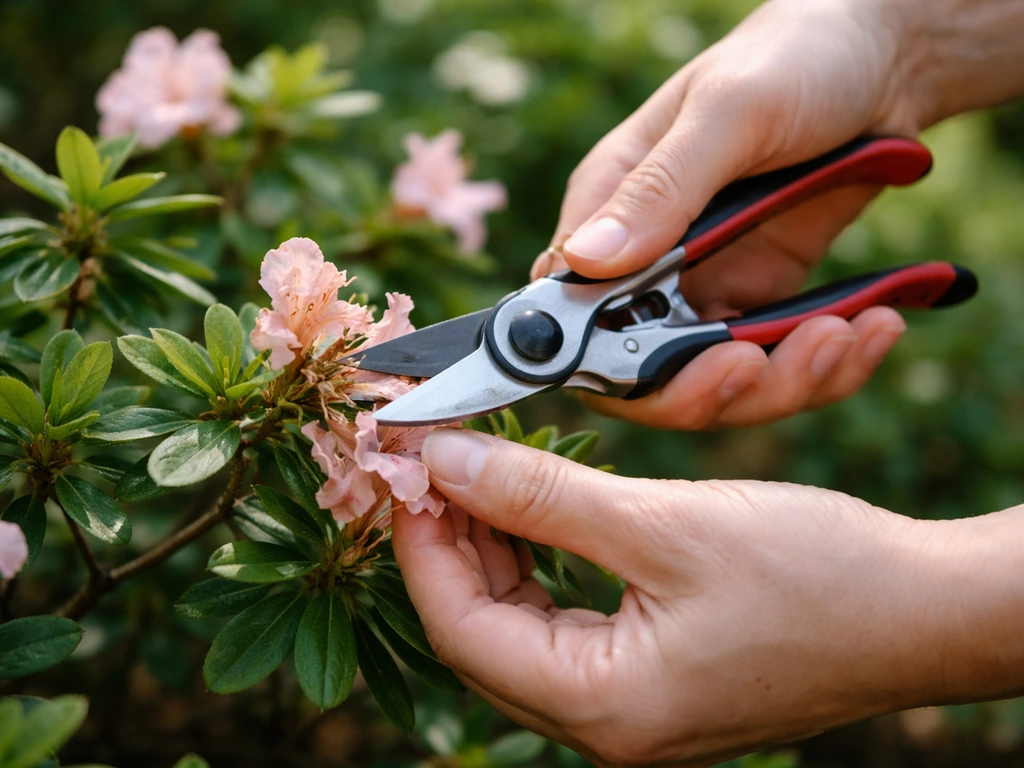
Here's good news: Encore azaleas require very little pruning. The key rule is timing. Prune immediately after the spring bloom ends, before the plant sets new growth that will carry the summer and fall buds. That window is roughly late April through early June depending on your region. If you miss it and prune in midsummer or later, you'll cut off the flower buds for the next cycle and sacrifice your fall bloom.
For shaping, you're generally just removing any crossing or dead branches, tipping back wayward shoots, and cleaning up the silhouette. Avoid shearing Encores into tight geometric forms the way you might with boxwood. That forces dense growth at the tips and reduces flowering. Light, selective hand-pruning is the better approach.
As for deadheading: you don't need to do it. Spent flowers will drop on their own and removing them manually won't meaningfully improve the next bloom cycle the way it does with, say, petunias or geraniums. If you want to do a quick tidy-up after the spring flush, that's fine, but don't stress about it.
If you've inherited a badly overgrown or neglected Encore azalea, you can do a more aggressive renewal prune in early spring before new growth begins, cutting back hard to reshape. Understand that you will lose the spring bloom that year, but the plant will come back and rebloom in summer and fall. Don't do hard renovation pruning and then also prune after spring bloom the same year.
Troubleshooting Common Problems
Yellowing Leaves (Chlorosis)
If leaves turn yellow while the veins stay green, you're likely looking at iron deficiency caused by soil pH being too high. Even if iron is present in the soil, azaleas can't absorb it when pH climbs above about 6.5. Test your soil, and if pH is high, acidify it with sulfur or an acidifying fertilizer over time. A short-term fix is chelated iron applied as a foliar spray or soil drench, but you have to fix the pH issue eventually or the problem will keep returning.
Overall yellowing (not just between veins) can indicate magnesium deficiency, overwatering, or root problems. If your soil is consistently waterlogged, shift toward fixing drainage first, because saturated roots can't function regardless of what nutrients are present.
Wilting and Sudden Dieback
Wilting when the soil is moist (not dry) is a red flag for Phytophthora root rot, a fungal-like water mold that thrives in poorly drained, wet conditions. If you dig up affected roots, they'll look brown and mushy rather than white and firm. There's no great cure once it's established; prevention is everything. The Azalea Society of America materials similarly emphasize that preventing Phytophthora root rot is key, since there is no great cure once it is established blank" rel="noopener noreferrer">prevention is everything. Improve drainage, don't plant too deep, and never let water pool around the base. If a plant is severely affected, remove it and don't replant in the same spot without fixing the drainage problem first.
Azalea Lace Bugs
Lace bugs are the most common insect pest on azaleas, and they're sneaky because the damage looks like a nutrient problem. You'll see a stippled, bleached, or silvery appearance on the upper surface of leaves. Flip the leaf over and look for small black specks (fecal deposits) and tiny pale insects. They lay their eggs along the leaf midribs. Plants in full sun tend to have more severe lace bug problems than those in shade, which is one more reason to avoid blasting Encores with all-day sun. Treat with insecticidal soap, neem oil, or a systemic insecticide if the infestation is heavy. Catching it early makes treatment much easier.
Poor Flowering or No Rebloom
If your Encore is blooming in spring but skipping the summer and fall cycles, run through this checklist: Is it getting enough light (at least 4 hours of direct sun)? If your Encore is blooming in spring but skipping the summer and fall cycles, check whether it is getting enough light (at least 4 hours of direct sun), which is also a key factor when you learn how to grow forsythia.
To get a forsythia hedge that blooms well and stays dense, focus on choosing the right location, watering consistently, and pruning at the proper time after flowering. If you want a simple troubleshooting guide, focus on the main causes of poor flowering and why your azalea may not rebloom. Did you prune at the wrong time and remove the new growth that carries fall buds? Did you over-fertilize with high nitrogen, pushing foliage instead of flowers?
Did a late freeze damage the emerging buds? Any one of these is enough to knock out a bloom cycle.
Leaf Drop
Some leaf drop in fall and winter is normal for semi-evergreen Encore varieties, especially after cold snaps. If you're seeing heavy drop during the growing season, look for root problems (overwatering, compacted soil), drought stress, or a pest/disease issue working at the roots or stems.
Season-by-Season Care Checklist
| Season | What to Do |
|---|---|
| Early Spring (March–April) | Plant new Encores if soil is workable. Do any heavy renovation pruning on established plants before new growth breaks. Refresh mulch to 2–3 inches. Resume watering as temperatures rise. |
| Late Spring (May–June) | Enjoy the spring bloom. Once it ends, prune lightly to shape and remove dead wood. Apply slow-release azalea fertilizer right after pruning. Water deeply and consistently as temperatures climb. |
| Summer (July–August) | Watch for lace bug damage and treat early if found. Water established plants deeply once a week in hot, dry stretches. New plantings may need watering every 2–3 days. Second bloom cycle begins around mid-summer. |
| Early Fall (September–October) | Fall bloom is in full swing. Do not prune now. Water as needed if rain is scarce. This is a good time to plant new Encores for root establishment before winter. |
| Late Fall (November) | Taper off fertilizing completely. Continue light watering if there's no rain and temperatures are above freezing. Apply fresh mulch before hard freezes to protect roots. |
| Winter (December–February) | Water every 7–10 days during dry stretches if temps are above freezing. Protect plants from late-season ice events with frost cloth if buds are already swelling. Plan any spring planting or pruning work. |
If you stick to this rhythm year after year, Encore azaleas are genuinely one of the easier flowering shrubs to maintain. The learning curve is mostly front-loaded: get the site, soil, and establishment right, nail the pruning timing, and the plant does most of the heavy lifting from there. They're a meaningful step up from traditional azaleas in terms of bloom value, and once you understand what drives the repeat flowering, it stops feeling complicated and starts feeling like one of the better investments in your garden.
FAQ
Why does my Encore bloom great in spring but not again in late summer or fall?
Most often, it is one of three issues: pruning happened too late (after the new bud-forming growth starts), light is too low (less than about 4 hours of direct sun), or a late-spring freeze damaged buds right after they formed. Double-check that you pruned soon after the spring flush ended, then confirm sun exposure on the exact spots where the plant gets its strongest growth.
Can I deadhead Encore azaleas to encourage more rebloom?
Usually no, it is not necessary. Encore flowers typically drop on their own, and removing individual spent blooms rarely changes the number of summer and fall buds, since those buds form on new growth later. If you do a cleanup, keep it minimal and avoid pruning deeper branches where new bud points are forming.
What is the best fertilizer schedule if I want strong fall blooms?
Plan for one main slow-release azalea/camellia feeding right after the spring bloom ends, when new growth is starting and buds are being set. Avoid feeding in late summer or fall, because nitrogen can trigger tender growth that does not have time to harden off, and it can also reduce flower quality the following cycles.
My leaves turn yellow. How do I tell iron deficiency from overwatering?
Iron issues often show as yellowing between leaf veins (veins remain greener) and usually trace back to high soil pH, typically above about 6.5. Overwatering and root stress more commonly cause broader, overall yellowing, plus signs like wilting while the soil stays wet. If you see overall decline, check drainage first and then test pH so you do not treat the wrong problem.
Should I mulch around Encore azaleas, and how thick?
Yes, mulch helps keep moisture steady during establishment and protects roots from temperature swings. Use an acidic-friendly mulch such as pine bark fines, and keep it a few inches away from the crown. In general aim for a moderate depth (often around 2 to 3 inches), because thick layers that stay constantly wet can worsen root-rot risk.
How can I protect buds from late frosts without overheating the plant?
If a hard freeze threatens after buds break or right when buds are visible, use frost cloth overnight and remove it the next morning. Do not wrap the plant with plastic directly, and avoid leaving covers on all day, since trapped heat can stress buds and foliage.
What watering approach works best after the first year?
After establishment, switch to deep, infrequent watering. The goal is to encourage roots to grow downward and outward, so water thoroughly only when the top several inches begin to dry, then let the plant go through a short dry-down period before watering again. If your soil drains extremely fast, you may need more frequent deep soaks, but avoid daily sprinkling.
Can I grow Encore azaleas in containers, and what is different from in-ground care?
Container Encores can rebloom well, but they are more vulnerable to drying out and root damage. Use an acidic potting mix, ensure excellent drainage, and water consistently because containers dry faster than beds. In cold climates, insulate the pot or protect it from freeze-thaw cycles, since the root ball can be harmed even when the plant is hardy in the ground.
Why are my Encore leaves getting scorched in hot weather?
Leaf scorch is usually heat and sun stress, especially when afternoon sun is too intense in zones 8 to 10. Move the plant to morning sun with afternoon shade, or increase shade using taller plant cover or shade cloth during peak heat. Also check that watering is deep enough, because drought-stressed plants scorch more easily even when they are not fully dry.
When should I prune, and what should I avoid doing?
Prune immediately after the spring bloom ends, before the plant sets the new growth that carries summer and fall buds. Avoid pruning in midsummer or later, and avoid heavy shearing into tight shapes, since that can remove flowering-capable growth points and reduce repeat blooms.
Is hard renovation pruning ever worth it?
Yes, if the plant is overgrown or neglected, you can do a renewal prune in early spring before new growth starts. Expect to sacrifice the spring bloom for that year, but you should still get summer and fall rebloom if you follow the normal “prune right after spring” rule afterward and keep light and soil conditions on target.
What soil problem causes wilting even though the soil looks moist?
Wilting while the soil stays moist can indicate Phytophthora root rot, which is linked to poor drainage and waterlogged conditions. If you suspect it, do not keep watering to “push through,” instead improve drainage, avoid planting too deep, and consider removing severely affected plants. Prevention is the key, because established rot is hard to cure.