
You can grow pink hyacinths reliably by planting firm, top-size bulbs (16 cm+ circumference) in free-draining soil or pots in autumn, chilling them for 10 to 14 weeks at 35–50°F (2–10°C), then coaxing them into bloom in a cool, bright spot. Whether you're planting a fragrant outdoor bed, forcing bulbs in a pot on the windowsill, or growing them in a water vase, the same core principles apply: good drainage, adequate cold, and patient warmth. Get those three right and pink hyacinths almost grow themselves.
How to Grow Pink Hyacinth: Indoor, Container & Forcing Guide
Marcus Holloway
13 Aug 2026
Why pink hyacinths are worth every bit of effort
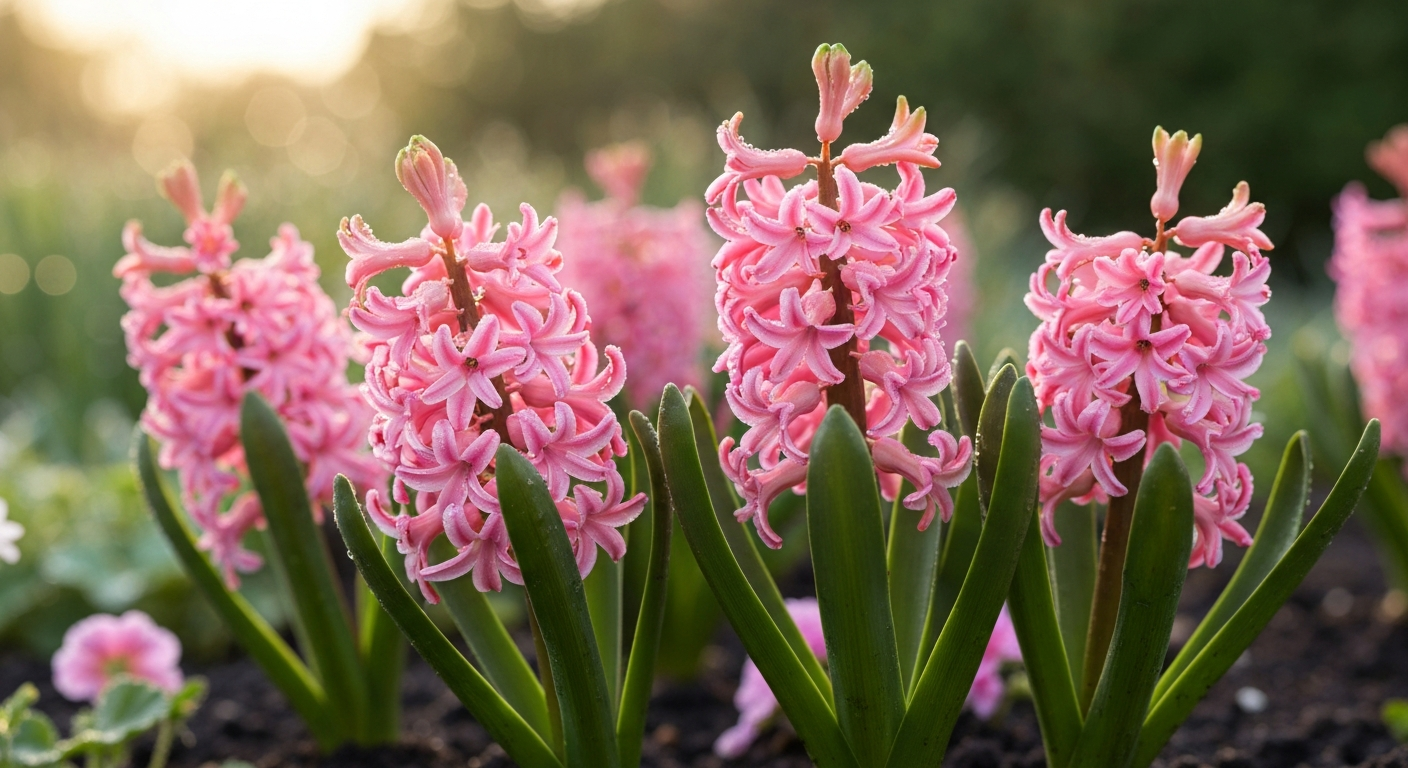
I grow a lot of spring bulbs, but nothing stops visitors in their tracks the way a clump of pink hyacinths does in late March. The color range alone is remarkable: you can go from the palest blush of 'Fondant' to the rich rose-pink of 'Pink Pearl', all on the same species. Add the fragrance and you have arguably the most rewarding bulb you can plant in an afternoon and forget about until spring. This guide covers everything from picking the right cultivar at the garden center through to lifting and storing your bulbs at the end of the season, with a detour through indoor forcing and water-vase growing for anyone who wants blooms on the kitchen table in February.
Getting to know hyacinths and how pink color works
All common garden hyacinths belong to a single species: Hyacinthus orientalis, usually called the Dutch or common hyacinth. Centuries of Dutch breeding have produced hundreds of named cultivars spanning white, cream, yellow, pink, red, purple, and blue. If you want advice specific to blue forms, see my short guide on how to grow blue hyacinth for tips on cultivar selection and cultural tweaks to bring out blue tones. For readers also interested in purple varieties, see a companion guide on how to grow purple hyacinth acnh for tips specific to that color form. Pink cultivars get their color from anthocyanin pigments in the florets; the depth of color you see on the label or in catalog photos can shift slightly depending on soil pH, temperature during bud development, and how long a spike has been open. A cultivar labeled 'deep rose' in a Dutch catalog may look softer pink in a cool English spring or slightly more saturated in a warmer climate. This isn't a flaw, it's just biology, and it means you should expect a range rather than a single fixed shade.
Pink sits between the red and white ends of the hyacinth color spectrum, and it shares genes with both. Some older pink cultivars have a slight salmon or coral note; newer selections trend toward cooler, cleaner pinks. The key practical point is this: color is a cultivar trait, not something you can influence much through growing conditions. If you want a specific shade, choose your cultivar carefully rather than hoping a random bulb bag will deliver.
The best pink varieties to grow
There are dozens of pink hyacinth cultivars in the trade, but a handful consistently deliver excellent garden performance and are stocked reliably by bulb suppliers year after year. Here are the ones I'd recommend to almost anyone.
| Cultivar | Shade | Best use | Notes |
|---|---|---|---|
| Pink Pearl | Deep rose-pink | Beds, borders, indoor forcing | The most widely available pink; large, densely packed spikes; strong fragrance |
| Fondant (aka Pink Frosting) | Soft pastel pink | Forcing, containers, gift pots | Compact, elegant; popular in wholesale trade; great for indoor use |
| Anna Marie | Light pink | Beds, early forcing | Early to bloom; paler than Pink Pearl; reliable performer in most zones |
| Splendid Cornelia | Lilac-pink | Mixed borders, outdoor beds | Slightly unusual tone; good for naturalistic planting |
| Lady Derby | Pale shell-pink | Containers, windowsill forcing | Long-established cultivar; reliably true to color; sweet scent |
When you're choosing between these, think about your end use first. For outdoor beds where you want a bold statement, 'Pink Pearl' is hard to beat. For forcing in pots or growing in a water vase, 'Fondant' and 'Anna Marie' tend to produce more compact, manageable flower spikes that won't flop over as easily. If you want to mix pink hyacinths with purples and blues in the same bed, 'Lady Derby' or 'Splendid Cornelia' will blend better than the more saturated 'Pink Pearl'.
Buying bulbs: what to look for and when to buy
Bulb quality matters more with hyacinths than with almost any other spring bulb. You're essentially buying a year's worth of stored energy, and a compromised bulb rarely recovers. Here's what to check before you buy:
- Size: look for top-size bulbs with a circumference of at least 16–17 cm. Bigger bulbs produce more florets per spike and are more forgiving of imperfect growing conditions.
- Firmness: squeeze gently. The bulb should feel solid all the way through, with no give at the base (the basal plate). A soft base almost always means rot is already underway.
- Skin: the papery outer tunic should be intact and dry. Minor nicks are fine; large patches of bare, moist flesh are not.
- Certification: look for bulbs from certified Dutch or reputable North American suppliers. Many major Dutch exporters label bulbs as virus-indexed or disease-tested. This is worth paying for.
- No sprouting: avoid bulbs that have already started sending up green shoots at purchase time. They've broken dormancy early and may bloom poorly.
Timing your purchase is almost as important as the bulbs themselves. In most of the US and UK, hyacinth bulbs arrive in garden centers from August onward. Buy early for the best selection, especially if you want specific pink cultivars rather than mixed bags. If you're buying pre-chilled bulbs for Christmas or holiday forcing, suppliers typically ship those from October onward. For outdoor planting, you can hold purchased bulbs in a cool (50–60°F / 10–15°C), dark, well-ventilated spot until you're ready to plant, but avoid refrigerating them with fruit. Apples, pears, and other ripening produce release ethylene gas, which can damage bulb flower buds and ruin your bloom before you've even planted anything.
Hardiness, planting time, and which zone you're in
Hyacinthus orientalis is hardy in USDA Zones 4 through 8 (and Zone 9 with some effort). In Zones 4–7, plant bulbs outdoors in autumn, typically from late September through November, once soil temperatures drop below about 60°F (15°C) but before the ground freezes solid. This cool-soil window is important: it lets roots establish before winter without triggering premature top growth.
In warmer zones (8–9), autumn planting is later, often November through December. UC ANR's Sacramento planting schedule, for instance, lists hyacinths going in during November and December for California's Central Valley. In Zone 9 and warmer, you'll likely need to pre-chill bulbs artificially (6–8 weeks in the refrigerator) before planting because winters simply aren't cold enough to provide the required chilling naturally. In Zone 10 and above, hyacinths are typically grown as annuals, relying entirely on refrigerator pre-chilling.
For indoor forcing without any outdoor planting, you have more flexibility. You can start chilling potted bulbs as early as September to hit a January bloom, or start in November for a March display. If you're interested in growing hyacinths in a water vase on a glass or forcing jar, the same chilling requirements apply: roots before warmth, every time.
| USDA Zone | Typical outdoor planting window | Pre-chilling needed? | Notes |
|---|---|---|---|
| 4–6 | Late Sept – Oct | No | Natural winters provide sufficient chilling |
| 7 | Oct – Nov | No | Plant before ground freezes; mulch after frost |
| 8 | Nov – Dec | Rarely (borderline) | Mild winters may reduce bloom quality; pre-chill if in doubt |
| 9 | Nov – Dec | Yes (6–8 weeks in fridge) | Winters too warm for reliable natural chilling |
| 10+ | Treat as annual | Yes (required) | Grow as forced/annual only; discard after bloom |
Soil, drainage, and picking the right spot outdoors
The single biggest killer of outdoor hyacinth bulbs is sitting in wet soil over winter. Bulbs that stay soggy from November to February almost always develop Fusarium or Pythium rot, and by spring you'll find a mushy lump where your 'Pink Pearl' should be. Good drainage isn't optional; it's the foundation of the whole enterprise. For a step-by-step walkthrough specifically focused on planting and caring for hyacinths outside, see our guide on how to grow hyacinth outdoors.
Hyacinths prefer moderately fertile, well-drained soil with a pH between 6.0 and 7.0. If your soil is heavy clay, you need to amend it before planting. The Extension Gardener Handbook, NC State (chapter on bulbs and herbaceous ornamentals) recommends amending heavy clay with coarse grit and well‑rotted organic matter to improve drainage and advises a target soil pH of about 6.0–7.0 for best hyacinth performance Extension Gardener Handbook — NC State (chapter on bulbs and herbaceous ornamentals). Work in generous amounts of coarse grit (not builder's sand, which can create a concrete-like effect when mixed with clay) and well-rotted compost or leaf mold to improve both structure and drainage. Raised beds are genuinely worth considering in heavy soils: even a 6-inch (15 cm) raise changes drainage dramatically. Sandy soils at the other extreme dry out quickly and benefit from the same organic matter addition, which helps retain moisture during the spring growing season.
For site selection, choose an open position that gets full sun to partial shade. Hyacinths in full sun generally produce the most vibrant flower color and the sturdiest stems. A spot with morning sun and afternoon shade works well in hot climates where late-spring temperatures can accelerate flowering and fade colors quickly. Avoid spots under dense tree canopies where roots compete aggressively and rain drips cause prolonged wet patches. A south- or west-facing border in temperate climates is close to ideal.
How deep, how far apart, and how to lay out your bed
For outdoor in-ground planting, plant bulbs 4 to 6 inches deep (10–15 cm), measured from the base of the bulb. The pointy tip should face upward. This depth protects bulbs from temperature fluctuations and frost heave while still allowing easy emergence. Spacing of 3 to 6 inches (8–15 cm) between bulbs gives each plant enough room to develop without crowding, though you can plant slightly closer (3 inches) if you want a dense, formal display and plan to lift bulbs annually.
For a planting in containers, the rules change slightly. In a standard pot, you can plant bulbs with their tips about 1 inch below the soil surface rather than at the full 4–6 inch depth, particularly if the pot is shallow. Multiple bulbs can be arranged with tips just showing or barely covered. The key is that no bulb should sit in trapped moisture at the base of the pot, so always ensure your container has drainage holes and use a free-draining mix.
For bed layout, I like planting hyacinths in irregular clusters of five to seven bulbs rather than straight rows. It looks more natural and means that if one or two bulbs fail (it happens), the gap isn't a glaringly obvious hole. In formal gardens, three identical rows in a rectangular patch looks deliberately structured and works beautifully. Plant a 'Pink Pearl' block next to a white 'Carnegie' block for a classic combination.
Container potting mix recipe
Mix two to three parts quality loam-based potting compost with one part coarse horticultural grit or perlite. That 25–30% grit or perlite ratio is the practical sweet spot: enough drainage to prevent soggy conditions, enough body to anchor roots and hold some moisture during active growth. Avoid peat-heavy, bark-heavy, or very light mixes designed for houseplants; these tend to stay too wet and offer poor anchoring for a heavy hyacinth spike.
Light, temperature, and microclimate for the best blooms
Outdoors, hyacinths bloom best in full sun to dappled partial shade. Direct sun through the flowering period keeps stems compact and colors saturated. Where spring temperatures climb quickly into the 70s°F (low-to-mid 20s°C), a spot with afternoon shade buys you a few extra days of bloom by slowing the opening of florets.
Indoors, temperature management is everything. After the chilling phase is complete and roots are well developed (you'll see white roots emerging from drainage holes, and the shoot will be 1–2 inches tall), move pots to a cool, bright room at around 60–65°F (15–18°C). Growing bulbs indoors | UMN Extension recommends introducing forced hyacinths to bright, cool light (bright indirect light or a cool sunny window) after roots and chilling to encourage compact, well‑coloured flower spikes. This slightly cool display temperature is the step most beginners skip, and it's the main reason indoor forced hyacinths so often produce floppy, pale, short-lived spikes. Heat rushes the flower open and weakens the stem tissue as it forms. A cool, sunny windowsill is ideal; a warm living room radiator shelf is not.
For water-vase forcing, the logic is the same but the setup is more delicate. After chilling (10–14 weeks), move the vase to a cool bright spot away from direct heat. The water level in a forcing vase should sit just below the basal plate of the bulb during chilling so the roots reach down to find water without the bulb base sitting in it. Once roots have developed and you've moved the vase into light, maintain a small reservoir of water that the roots contact, but never let the base of the bulb submerge. Rotting at the basal plate is the classic failure point for water-vase growers.
Keeping stems straight: why they flop and how to prevent it
Leggy, toppling hyacinth stems are almost always caused by one of three things: temperatures that are too warm during forcing, insufficient light, or both. The fix is preventive rather than corrective. Keep forcing and display temperatures cool (60–65°F / 15–18°C), ensure the plant gets bright light from all sides (rotate the pot every day or two), and transition from dark cold storage to light gradually rather than moving straight from a dark refrigerator to a sunny south-facing window. For step-by-step tips on preventing floppy spikes and training stems, see how to make hyacinth grow straight (ae156b7d-3a51-47d8-a2c1-c094e92d8975). For water-vase growing, using a narrow-necked vase is essential: the neck supports the base of the bulb and later the developing stem. For potted plants, planting at the full recommended depth gives the stem more basal support. If a spike does start to lean, a thin bamboo cane and a loose tie will save it without looking too clinical.
Watering and fertilizing through the growing season
Water thoroughly at planting time to settle the soil around the bulbs, then hold back. Outdoor bulbs in autumn soil generally need no additional watering unless conditions are unusually dry. Once spring growth appears, keep soil evenly moist but never soggy. For container plants, check moisture every two to three days during active growth: stick a finger an inch into the soil, and water only if it feels dry at that depth.
Fertilizing hyacinths is straightforward. A bulb-specific fertilizer (high in potassium and phosphorus, lower in nitrogen) applied at planting and again when shoots emerge in spring supports root development and flower quality. I use a slow-release granular fertilizer worked into the top few inches of soil at planting rather than relying on liquid feeds during active growth. Here's where I'll be blunt about Miracle-Gro: a standard all-purpose Miracle-Gro high in nitrogen will push leafy growth at the expense of the flower and can contribute to soft, floppy stems. It's not the right tool for bulbs. A low-nitrogen, high-potash formula (like those marketed specifically for bulbs and flowering plants) does the job better.
How to force pink hyacinths indoors: step by step
Forcing hyacinths indoors gives you fragrant blooms weeks or months ahead of the garden. For a detailed step‑by‑step guide on how to grow forced hyacinths, see how to grow forced hyacinths. The process is not complicated, but it has a specific sequence that cannot be shortcut. Here's how I do it every year.
- Choose your container: a pot with drainage holes, at least 4–5 inches deep, or a dedicated hyacinth forcing vase if you're going the water route.
- Fill with your grit-amended potting mix and nestle bulbs in with tips pointing up, clustered close but not touching. For a 6-inch pot, three bulbs fit well.
- Water thoroughly and allow to drain completely.
- Label each pot with the cultivar name and the date you started chilling. You will forget otherwise.
- Place pots in your cold location: an unheated garage, a cold frame, a basement that stays at 35–50°F (2–10°C), or a spare refrigerator. Keep them in the dark.
- Leave them alone for 10–14 weeks. Check occasionally for moisture and water very lightly if the soil has dried out completely.
- At the end of the chilling period, look for roots emerging from drainage holes and a pale green 1–2 inch shoot. These are your green lights.
- Move pots to a cool (60–65°F / 15–18°C), bright location. Avoid direct heat sources.
- Rotate the pot a quarter turn every day to encourage straight, even stem growth.
- Blooms typically appear 2–4 weeks after moving into warmth and light. Once open, move to your desired display location—but keep it cool to extend bloom life.
Growing pink hyacinths in a water vase
The water-vase method is one of the most satisfying ways to grow a hyacinth. You get to watch the entire root development process through glass, the fragrance fills a room, and it requires almost no equipment. Use a proper hyacinth forcing vase with a pinched neck that cradles the bulb above the water level, or any narrow-necked glass vessel that will support the bulb without letting it touch the water.
- Fill the vase with clean water so the level sits about a quarter inch (5–6 mm) below where the base of the bulb will rest.
- Place a firm, healthy pink hyacinth bulb, base down, in the neck of the vase.
- Move the vase to a cool, dark location at 35–50°F (2–10°C) for the full chilling period of 10–14 weeks.
- Check the water level every week or two and top up as needed, maintaining that gap between water and bulb base. Do not let the basal plate sit in water.
- After 10–14 weeks, white roots should be growing down into the water and a shoot will have emerged from the top.
- Move the vase to a cool, bright location (not in direct hot sunlight) at around 60–65°F (15–18°C).
- Keep the water topped up just below the bulb base as roots continue to grow.
- Blooms will open within 2–3 weeks. A narrow-necked vase will provide natural stem support as the spike develops.
After the blooms fade: what to do next
Once the flowers fade, the temptation is to tidy everything up immediately. Resist it. The leaves are still photosynthesizing and sending energy back into the bulb for next year's bloom. Cut or snap off the spent flower spike at its base (this stops the plant wasting energy on seed production) but leave all the foliage intact until it yellows and dies back naturally. This usually takes six to eight weeks after flowering. Only then should you remove the leaves.
For outdoor hyacinths in Zones 4–7, you can leave bulbs in the ground year-round if your soil drains well. They will naturalize and return each spring, though flower quality tends to decrease after the first two to three years. For zones with wet summers or poor drainage, or if you want reliably large blooms annually, lift bulbs after the foliage dies back.
Lifting, drying, and storing bulbs
Lift bulbs carefully with a fork once foliage is fully yellow and withered, usually in June or early July depending on your climate. Shake off the soil, inspect each bulb for signs of rot or disease, and discard any soft, mushy, or discolored ones without hesitation. The remaining bulbs need to be dried before storage: lay them out in a single layer in a warm, airy spot out of direct sun for two to three weeks. A potting shed or garage bench works well.
Once dry, store bulbs in labeled paper bags or open mesh bags in a cool (50–60°F / 10–15°C), dark, well-ventilated location. Keep them away from any fruit that might be stored nearby. Apples and pears release ethylene gas during ripening, and exposure can damage the developing flower bud inside the bulb, leading to poor or absent blooms the following spring. Check bulbs monthly during storage and remove any that develop soft spots.
Propagating pink hyacinths
Hyacinths are slower to propagate than many bulbs, but it is possible. The most accessible method for home gardeners is simply to collect the small offset bulblets (bulbils) that form around the base of a mature bulb when you lift it in summer. Detach these carefully, dry them with the parent bulb, and plant them out in autumn in a nursery bed. They'll take two to four years to reach flowering size, so this is a long game. A second method, scoring or scooping the basal plate, is used commercially to generate more offsets quickly but is fiddly to do at home and risks disease entry if not done cleanly with a sterilized knife.
Seasonal planting calendar at a glance
| Month (Northern Hemisphere) | Outdoor (Zones 4–7) | Indoor forcing (pots) | Water vase |
|---|---|---|---|
| August–September | Source and buy bulbs | Buy bulbs; start chilling from Sept for Jan bloom | Buy bulbs; start chilling from Sept |
| October | Plant bulbs outdoors | Continue chilling in dark cold location | Continue chilling in dark cold location |
| November | Mulch after first frost | Continue chilling; check moisture | Continue chilling; check water level |
| December | Bulbs dormant underground | 10–14 weeks reached; move to cool bright spot if started Sept | Move to cool bright spot if started Sept |
| January | Dormant (Zones 4–7) | Blooms if started Sept/Oct forcing; otherwise continue chilling | Blooms or near-bloom if started early |
| February–March | First shoots emerge | In bloom or approaching bloom depending on start date | In bloom |
| April | Peak outdoor bloom | Post-bloom aftercare; continue feeding leaves | Discard or pot up after bloom |
| May–June | Foliage dying back | Foliage dying back; reduce watering | N/A |
| July | Lift, dry, and store bulbs | Lift container bulbs; dry and store | N/A |
Troubleshooting common problems
Most failures with pink hyacinths come down to a small number of recurring problems. Here's what typically goes wrong and why, with honest fixes rather than vague reassurances.
| Problem | Likely cause | Fix |
|---|---|---|
| Bulb fails to sprout | Rot at basal plate; insufficient chilling; planted too late | Dig and inspect; cull soft bulbs; ensure 10–14 weeks chilling next time |
| Floppy, leaning stem | Too warm or too dark during forcing; insufficient depth | Cool display temps (60–65°F); bright light; rotate pot; use narrow vase for water growing |
| Short, stunted flower spike | Chilling period cut short; warm forcing temps rushed development | Allow full 10–14 week chill; move to cool light gradually |
| Pale or washed-out flower color | Too much direct hot sun at bloom; insufficient chill | Partial afternoon shade in hot climates; ensure full chilling |
| Mushy bulb base (basal plate rot) | Overwatering; poor drainage; bulb sitting in standing water | Improve drainage; never let bulb base sit in water; cull affected bulbs |
| Mold on bulb or compost surface | High humidity; poor air circulation; overwatering | Improve ventilation; reduce watering frequency; remove affected material promptly |
| Leaves yellowing prematurely | Overly wet soil; root rot; virus | Check drainage; reduce watering; if virus-mosaic pattern on leaves, remove and discard plant |
| No fragrance | Cultivar selection; warm temperatures shortening bloom life | Choose high-fragrance cultivars ('Pink Pearl'); keep display location cool |
| Offsets but no flowers the next year | Offset bulblets too small to flower; parent bulb exhausted | Allow three to four years for offsets to mature; feed parent bulbs well post-bloom |
Quick pre-planting checklist
- Bulbs are firm with no soft patches at the base
- Bulb circumference is at least 16 cm for top-size blooms
- Planting site or container has adequate drainage
- Soil pH is between 6.0 and 7.0
- Outdoor soil temperature is below 60°F (15°C) before planting
- Container mix includes at least 25–30% grit or perlite
- Storage or chilling location is free from ripening fruit
- Labels and dates are written before bulbs go in the ground or cold storage
A few final thoughts
Pink hyacinths reward straightforward, attentive gardening. You don't need a greenhouse, specialized equipment, or years of experience. What you do need is good bulbs, decent drainage, the patience to let chilling do its work, and the restraint to keep forced bulbs cool while they bloom. Start with 'Pink Pearl' if you want bold color and strong fragrance outdoors, or 'Fondant' if you're setting up a water vase or a pot for a windowsill display. Master the basics this season and you'll find yourself adding more varieties next year, and maybe experimenting with forcing hyacinths in a vase or growing them alongside other color forms. The genus has a lot to offer once you're past the first successful bloom. For tips on a different color and cultivar-specific care, see how to grow purple hyacinth for advice on varieties and color-related growing tweaks.
FAQ
What are the best pink hyacinth cultivars for home gardeners and forcing indoors?
Look for Hyacinthus orientalis (Dutch hyacinth) pink cultivars known for reliable flowering and good scent: 'Pink Pearl', 'Fondant' (aka 'Pink Frosting'), and 'Carnegie'. Choose firm, heavy bulbs from a reputable supplier; larger bulbs generally produce stronger stems and bigger flower spikes, which is helpful for forcing.
When should I plant pink hyacinth bulbs outdoors and what hardiness should I expect?
Plant outdoors in autumn (timing varies by zone: generally when soil cools—mid‑autumn to early winter). Hyacinthus orientalis is hardy in many temperate regions; check local hardiness maps, but most types tolerate typical winter cold if planted 4–6 inches (10–15 cm) deep in well‑drained soil.
What soil and drainage do pink hyacinths need?
They need moderately fertile, well‑drained soil with pH about 6.0–7.0. Amend heavy clay with compost plus coarse grit or sand to improve drainage. Avoid sites where water pools; good drainage prevents bulb rots.
What depth and spacing should I use for bulbs in ground and in containers?
In ground: plant bulbs about 4–6 inches (10–15 cm) deep and space 3–6 inches (8–15 cm) apart depending on bulb size. In containers: use a fast‑draining potting mix with 25–30% grit/perlite; plant so the bulb tip is 1–2 inches (2.5–5 cm) below the surface or slightly showing for shallow pots to encourage flowering and airflow.
How much light do hyacinths need when planted outdoors and when forced indoors?
Outdoors: full sun to part shade produces best flowering. Indoors/forced: after root formation and chilling, provide bright, cool light (a bright, cool window or bright indirect light). Strong light and cool display temperatures yield compact, well‑coloured spikes.
How should I water and fertilize hyacinths?
Water thoroughly at planting to settle soil, then keep soil evenly moist during active root and shoot growth but never waterlog. In pots ensure excess drains away. Fertilize lightly at planting with a balanced bulb fertilizer or slow‑release granules; feed again in spring as shoots appear with a low‑to‑balanced NPK (follow product rates). Avoid heavy late‑season nitrogen once foliage begins to yellow.