
You can absolutely grow hyacinths in a water vase at home, and it's honestly one of the most satisfying flower projects you can do in winter. The process is called forcing, and it works like this: you get a proper hyacinth glass or an hourglass-shaped vase, set the bulb so it sits just above the water (not touching it), give it 12 to 14 weeks of cold darkness to build roots, then bring it into warmth and light and watch it bloom. To grow purple hyacinth in the water-vase method, choose forcing-size bulbs and follow the same cold, dark rooting and gradual warm-up schedule described here how to grow purple hyacinth. That's the whole arc. Everything below is just filling in the details so yours actually works.
How to Grow Hyacinth in a Water Vase Step by Step

Marcus Holloway
13 May 2026
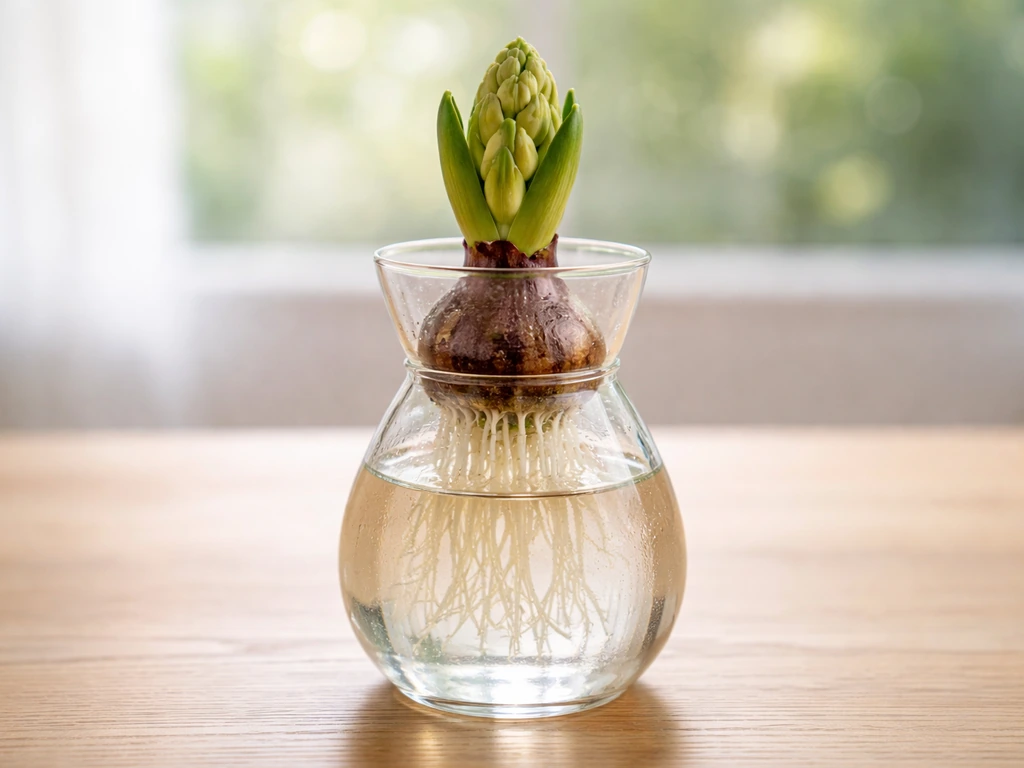
Choosing the right hyacinth bulbs and vase setup
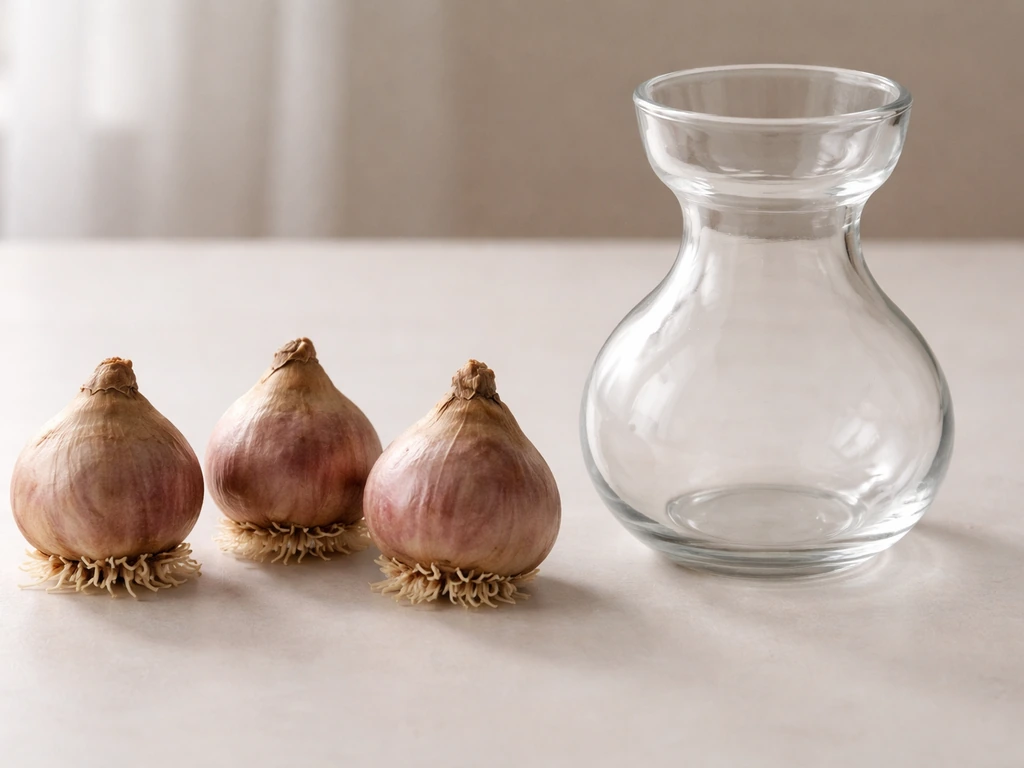
Start with the best bulbs you can find, because size really does matter here. For forcing, you want bulbs with a circumference in the 16/17 cm to 17/18 cm range. That's the size most often labeled as 'forcing size' or 'top size' at garden centers. Smaller bulbs can technically work, but they're far more likely to produce weak stems or skip blooming entirely. Look for bulbs that feel heavy and firm with no soft spots or visible mold. Some retailers sell pre-chilled or 'prepared' bulbs specifically for early forcing (sometimes marketed for Christmas bloom), and those are worth using if you want flowers before February.
Hyacinths are generally the easiest spring bulbs to force in water, which is partly why they have their own dedicated vessel. The classic tool is a French hyacinth glass, sometimes called a hyacinth forcing vase. It has an hourglass shape with a narrow waist that cradles the bulb and suspends it above the lower chamber of water. If you don't have one, a wide-mouth mason jar or any jar where the bulb can rest on the rim without falling in works fine too. What matters is that the bulb sits just above the waterline, not submerged in it. The goal is roots in water, not bulb in water.
How to prepare the vase and set the bulb at the correct height
Before you add the bulb, drop a few small pieces of activated charcoal into the bottom of the vase. This keeps the water fresher longer and cuts down on algae and odor. It's a small step that pays off over the 12-plus weeks you'll be babysitting this thing.
Fill the vase with water until it reaches about 1/4 inch (roughly 6 mm) below the flat base of the bulb. The exact measurement matters less than the principle: the bottom of the bulb should not be touching the water. Place the bulb in the vase, flat side down, and check that there's a visible gap between the basal plate and the water surface. If the bulb is sitting in the water, it will rot before it ever roots. As roots develop over the coming weeks, they'll reach down into the water on their own.
Use room-temperature or cool water. Cold tap water is fine. Avoid distilled water, which lacks the trace minerals that support root development. If your tap water is heavily chlorinated, let it sit out for a few hours before using it.
The rooting phase: cold treatment, timing, and what to expect
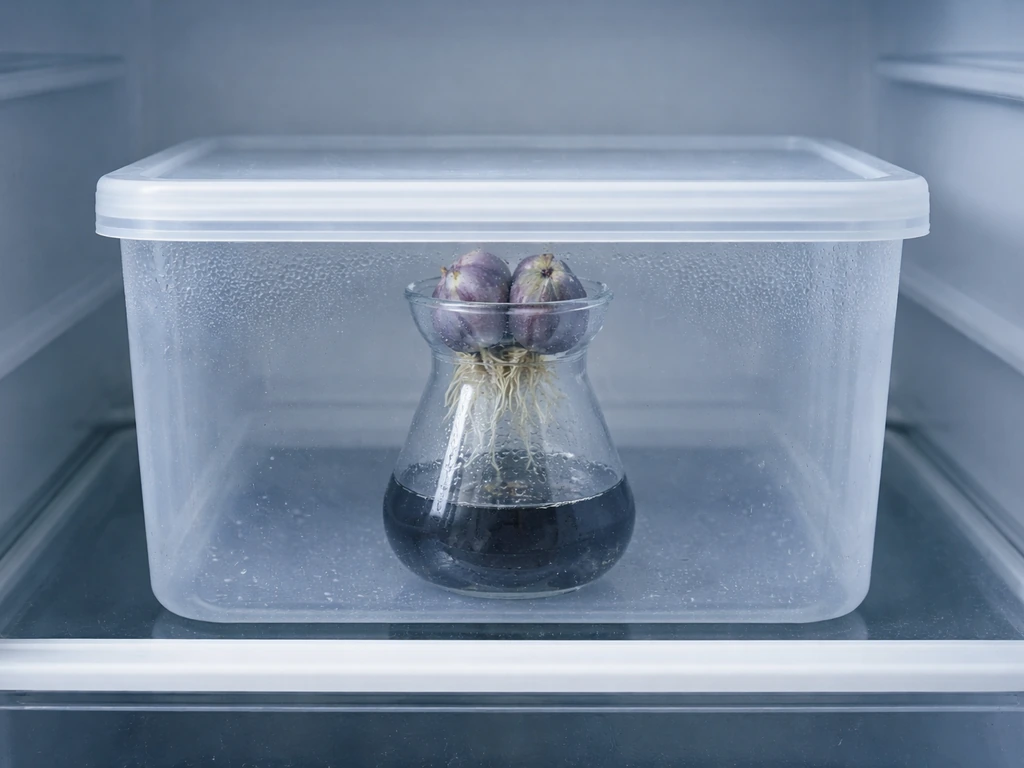
Here's where most beginners either skip a step or underestimate the timeline. Hyacinth bulbs need a cold, dark period of 12 to 14 weeks at temperatures between 35°F and 45°F (2°C to 7°C) before they'll root properly and eventually bloom. This mimics winter. Without it, the bulb doesn't know it's supposed to wake up.
The best place to provide this cold treatment is a refrigerator. Set the vase in the back of the fridge, away from fruit (ripening fruit releases ethylene gas, which can damage bulbs). If you don't have fridge space, an unheated garage, basement, or cool closet that stays reliably between 35°F and 48°F works. The key is consistency: dramatic temperature swings during this phase interrupt rooting.
During this cold period, keep the space dark or very dim. Check the water level every week or two and top it up to maintain that near-but-not-touching gap. You should start seeing roots reaching into the water after about 5 to 6 weeks. Shoots will follow. Once the shoots are about 1 to 2 inches (2.5 to 5 cm) tall and you've hit your 12-to-14-week mark, the bulb is ready to come out. If you want blooms in mid-January, count back 14 weeks and start your cold treatment in late September or early October.
| Stage | Timeline | Temperature | Light |
|---|---|---|---|
| Cold/rooting phase | 12–14 weeks | 35°F–45°F (2°C–7°C) | Dark or very dim |
| Transition phase | 3–5 days | 55°F–60°F (13°C–16°C) | Indirect light |
| Growing/shoot phase | 1–2 weeks | 60°F–65°F (16°C–18°C) | Bright indirect light |
| Bloom/display phase | 2–4 weeks to flower | Cool room, 60°F–65°F | Bright light, avoid direct heat |
The growing phase: light and temperature after the cold treatment
Don't rush the transition from cold to warm. When you pull the vase out of the fridge, the shoots will likely be pale yellow or white. That's normal. Move it to a cool spot with indirect light first, somewhere around 55°F to 60°F (13°C to 16°C), for about three to five days. This gradual warm-up helps the shoots green up without getting leggy or collapsing. Think of it as a decompression period.
Once the shoot has greened up and is actively growing, move the vase to your brightest window. A south- or east-facing windowsill is ideal. Keep temperatures in the 60°F to 65°F range. If your home runs warm (above 68°F to 70°F consistently), the flowers will open faster but won't last as long. Cooler rooms genuinely extend bloom time, so if you have a choice, pick the cooler window. To get pink hyacinth blooms from forcing, choose pink-flowered bulbs and follow the same water-vase timing and temperature steps outlined above.
Keep the vase away from heating vents, radiators, and direct drafts from windows. Both extremes accelerate deterioration. Rotate the vase every couple of days so the stem grows straight toward the light rather than leaning. For straighter growth, rotate the vase and keep the stem growing evenly toward the light rather than leaning. This is especially worth doing in the early growing phase when stems are elongating fast.
Ongoing care while your hyacinth is growing in the vase
Water management is the main job once the bulb is in its growing phase. Change the water completely once a week. Don't just top it off: dump the old water out, rinse the vase, refill with fresh cool water, and reset the bulb so the base is just above the waterline. Weekly changes dramatically reduce the chance of algae buildup, bacterial rot, and that swampy smell that can develop in stagnant water.
As roots grow longer they'll fill the lower chamber of the vase, which can make water changes a bit awkward. Be gentle when lifting the bulb out to avoid snapping the roots. If some roots wrap around the vase walls, don't force them loose. Just pour out what you can, add fresh water, and let it be.
You can add a very diluted balanced liquid fertilizer (something like a half-strength all-purpose houseplant feed) to the water once the shoot is actively growing and green. Don't over-fertilize: one light application every two to three weeks is plenty. The bulb itself contains a lot of stored energy, so it doesn't need heavy feeding to bloom.
Troubleshooting: rot, algae, no roots, and weak or missing blooms
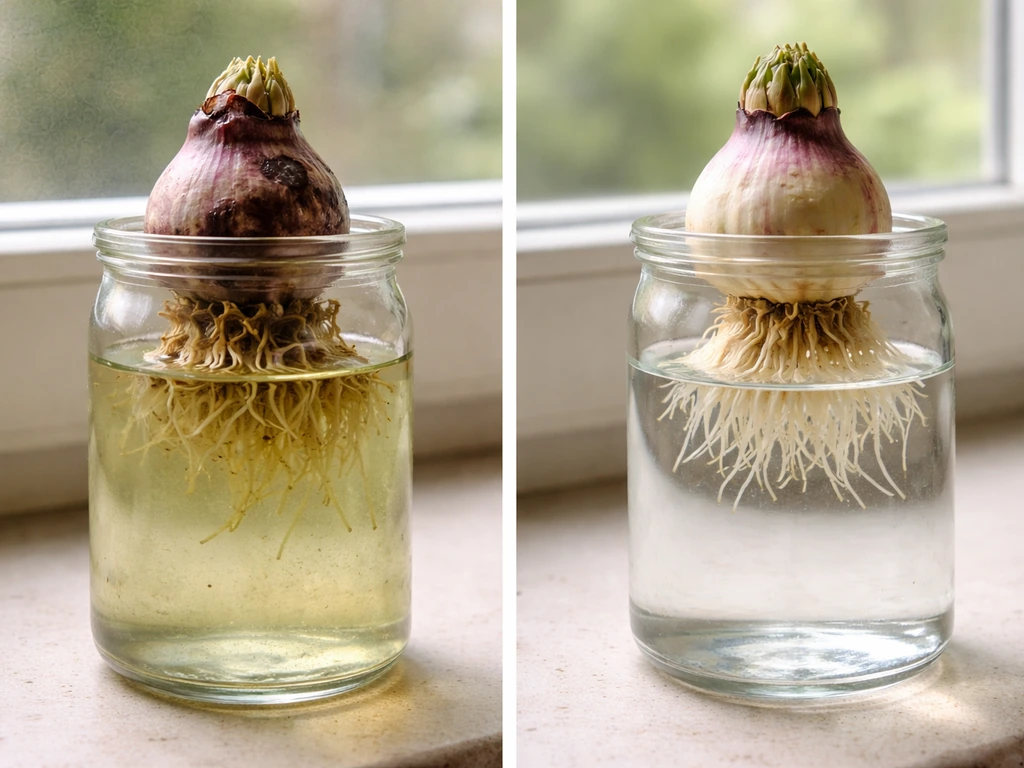
Here's where things actually go wrong and why. Most hyacinth water-forcing failures come down to one of five problems:
- Rot at the bulb base: Almost always caused by the bulb sitting in the water rather than above it. If you catch this early, lift the bulb out, let it air-dry for a day, trim away any soft tissue with a clean knife, and reseat it with a proper gap above the water. If the entire base is mushy, the bulb is lost.
- Algae in the vase: Green or brown slime in the water usually means the vase is getting too much direct sunlight or the water hasn't been changed often enough. Move to indirect light, change the water more frequently, add activated charcoal, and consider using a dark or opaque vase to block light from reaching the water.
- No roots after 6 to 8 weeks: The cold probably wasn't cold enough or consistent enough. Check your fridge or cold storage temperature with a thermometer. If it's above 48°F, the bulb isn't getting adequate chilling. Also verify the bulb wasn't touching the water, which can cause it to rot instead of root.
- Weak, floppy, or yellow stems: This usually means the transition from cold to warm was too fast, or the plant is in too warm or too dark a location during the growing phase. Move to a brighter, cooler spot. If the stem is already elongated and weak, supporting it with a thin stake is fine.
- Flower spike stuck inside the rosette (bloom won't stretch out): This is a quirky but common problem. Roll a piece of stiff paper into a cone or tube and place it over the top of the shoot. The darkness encourages the bloom to stretch upward toward the light. Remove the cone once the flower spike is clearly above the leaves.
If you get to the growing phase with a healthy-looking shoot but no flower by week four or five indoors, the likely culprit is inadequate chilling. The bulb didn't complete its cold requirement, so it produces foliage but holds back the flower. This is honestly hard to rescue mid-cycle. Keep it in the brightest, coolest window you have and be patient, but accept that undercold bulbs sometimes just don't bloom in their first forcing year.
When and how to enjoy the bloom, and what comes next
Once your hyacinth is in bloom, move it away from direct sunlight and any heat sources. The cooler the room, the longer the flowers last. A spot around 60°F to 65°F with bright indirect light will give you the longest display. Hyacinths in water typically bloom for about one to two weeks once fully open. If you are aiming for a specific color like purple hyacinth, you can use the same water-forcing method and just start with a purple bulb hyacinths in water typically bloom. The fragrance is intense in a closed room, so if you find it overwhelming, move the vase to a larger space during the day.
After the flowers fade, the realistic choice for most water-forced bulbs is to discard them. Forcing in water depletes the bulb significantly more than soil growing does, and the bulb rarely has enough energy stored to bloom again the following year. This isn't a failure, it's just how the process works. Think of it as a one-season investment.
That said, if you want to try saving the bulb, let the foliage keep growing in a sunny spot after blooming (you may want to move it to a pot of soil at this point to give it more nutrients). Once the leaves die back naturally, lift the bulb, let it dry, and store it in a cool dry place until fall. Plant it outdoors in your garden. Some bulbs do recover and bloom again the next spring in the ground, though they won't reliably force in water a second time. If you're interested in growing hyacinths outdoors from that point forward, the approach shifts considerably compared to this water-forcing method.
If you want to repeat the whole water-vase experience next season, simply buy fresh forcing-size bulbs in late summer or early fall and start again. If you are specifically aiming for a blue hyacinth bloom, choose blue-flowering forcing bulbs and follow the same timing and water-forcing steps to get strong roots and a full spike water-vase experience. Given how straightforward hyacinths are to force compared to other spring bulbs, it's worth doing with a few vases at once so you can stagger the timeline and get blooms across several weeks of winter. If you want a more exact schedule, the specific steps for how to grow forced hyacinths in water are the same core method throughout the process stagger the timeline.
Your step-by-step forcing checklist
- Buy top-quality, forcing-size hyacinth bulbs (16/17 cm to 17/18 cm circumference) in late summer or early fall.
- Choose a hyacinth forcing glass or suitable jar. Drop a few pieces of activated charcoal in the bottom.
- Fill with cool water to 1/4 inch below the base of the bulb. The bulb must not touch the water.
- Place the vase in a refrigerator or cold space at 35°F to 45°F (2°C to 7°C) in darkness for 12 to 14 weeks.
- Check water levels every one to two weeks and top up as needed. Watch for root growth starting around week 5 to 6.
- When shoots are 1 to 2 inches tall and the full chilling period is complete, move the vase to a cool (55°F to 60°F), dim spot for three to five days.
- Once shoots turn green, move to the brightest window available. Keep away from heat sources and drafts.
- Change the water completely once a week. Add a half-strength liquid fertilizer every two to three weeks.
- Rotate the vase every couple of days for straight stem growth.
- If the flower spike is stuck inside the leaves, use a paper cone around the shoot to encourage stretching.
- Once in bloom, move to cool indirect light to maximize flower longevity.
- After bloom, discard or attempt outdoor rehabilitation of the bulb. Plan fresh bulbs for next season.
FAQ
Can I use tap water straight from the faucet for a water-vase hyacinth, or do I need to let it sit?
You can usually use tap water as long as it is not very hot, very cold, or heavily chlorinated. If your area has strong chlorine smell, fill a container and let the water sit a few hours before using it, then keep topping or changing with similarly cool water to avoid shocking the bulb.
What if the bulb accidentally touches the water during setup, will it definitely rot?
It may, but you can often prevent full failure by correcting it immediately. Remove the bulb, adjust the water level so the basal plate sits above the surface (around 6 mm below the bulb base is a good target), then restart the cold rooting period without changing to warm light too soon.
How do I tell the difference between roots not yet reaching the water and a problem starting early?
During the cold phase, roots usually appear around weeks 5 to 6 and then extend down into the water. If you see a foul odor, cloudy slime, or the bulb itself feels soft, that is a rot or sanitation issue. In that case, dump the water, rinse thoroughly, reset water height, and do not delay weekly water changes.
Should I cover the vase during the cold, dark period, or is “dark room” enough?
A true dark or very dim setup is best, covering the vase can help keep light from leaking in. The goal is to maintain cold and darkness for 12 to 14 weeks, so if your refrigerator light cycles on, either move the vase to a back corner with minimal light exposure or loosely cover it with an opaque bag.
My hyacinth grew leaves but no flower. Is there anything I can do after the cold period to fix it?
If the bulb skipped adequate chilling, recovery mid-cycle is limited. Your best options are to keep the plant in the coolest brightest window you can and ensure weekly water changes, but expect that some underchilled bulbs simply won’t produce a bloom spike the first forcing year.
Do I need fertilizer in the water before the shoot appears?
No. Keep the water clean and at the correct height during the rooting phase, adding fertilizer too early can worsen algae and bacterial buildup. Fertilize only after the shoot is green and actively growing, and use about half-strength with a light frequency (every two to three weeks).
How much should I rotate the vase, and will turning it affect the bloom timing?
Rotate every couple of days to keep growth straight toward the light. This usually does not change the overall bloom timing, but excessive disturbance or frequent moving between warm and cool spots can stress the plant and shorten display time.
Is it okay if roots grow into the jar and tangle, should I remove them?
Do not try to pull roots apart once they are established. When changing water, be gentle when lifting, and if you cannot remove the bulb without damaging roots, just pour out as much water as possible, refill carefully, and maintain the correct water gap.
How long can I wait between water changes once the bulb is in the growing phase?
Stick to weekly changes. Going longer increases the chance of bacterial rot, algae, and the “swampy” smell. If you notice cloudiness or odor early, change the water immediately and rinse the vase before refilling.
What temperature should I aim for during flowering to make the blossoms last longer?
For longest display, aim for a cooler room around 60°F to 65°F with bright indirect light. Avoid heating vents and direct sun, because higher temperatures and direct light can speed up opening and fade the flowers sooner.
Can I force hyacinths in water without a special hyacinth glass, like using a regular drinking glass?
You can use a jar as long as the bulb can rest securely and the basal plate stays above the waterline. The key is the narrow waist or rim support that prevents the bulb from tipping into the water, so choose a stable container with a wide rim and enough clearance for the bulb to sit flat.
Will a forced hyacinth bulb bloom again if I keep it in the water after flowering?
Usually no. Water forcing depletes the bulb more than soil growing, so it rarely has enough energy for another reliable bloom while still in water. After flowers fade, the practical approach is to move it to soil for recovery, then plant outdoors later if you want a chance at future bloom.