
Growing a hummingbird plant is genuinely rewarding, but the first thing you need to know is that 'hummingbird plant' is not a single species. It is a loose common name applied to a whole group of tubular, nectar-rich flowering plants that hummingbirds love, including Cuphea ignea (cigar plant), Justicia spicigera (Mexican honeysuckle), Salvia greggii (autumn sage), Lobelia cardinalis (cardinal flower), Campsis radicans (trumpet vine), and others. Which one you grow, how you plant it, and how you care for it all depend on which species you have and where you live. This guide walks you through all of them, from choosing the right plant for your yard and zone, to soil prep, planting timing, feeding, pruning, propagation, and designing a planting that keeps hummingbirds coming back season after season.
How to Grow Hummingbird Plant: Complete Home Gardener Guide
What gardeners actually mean by 'hummingbird plant'
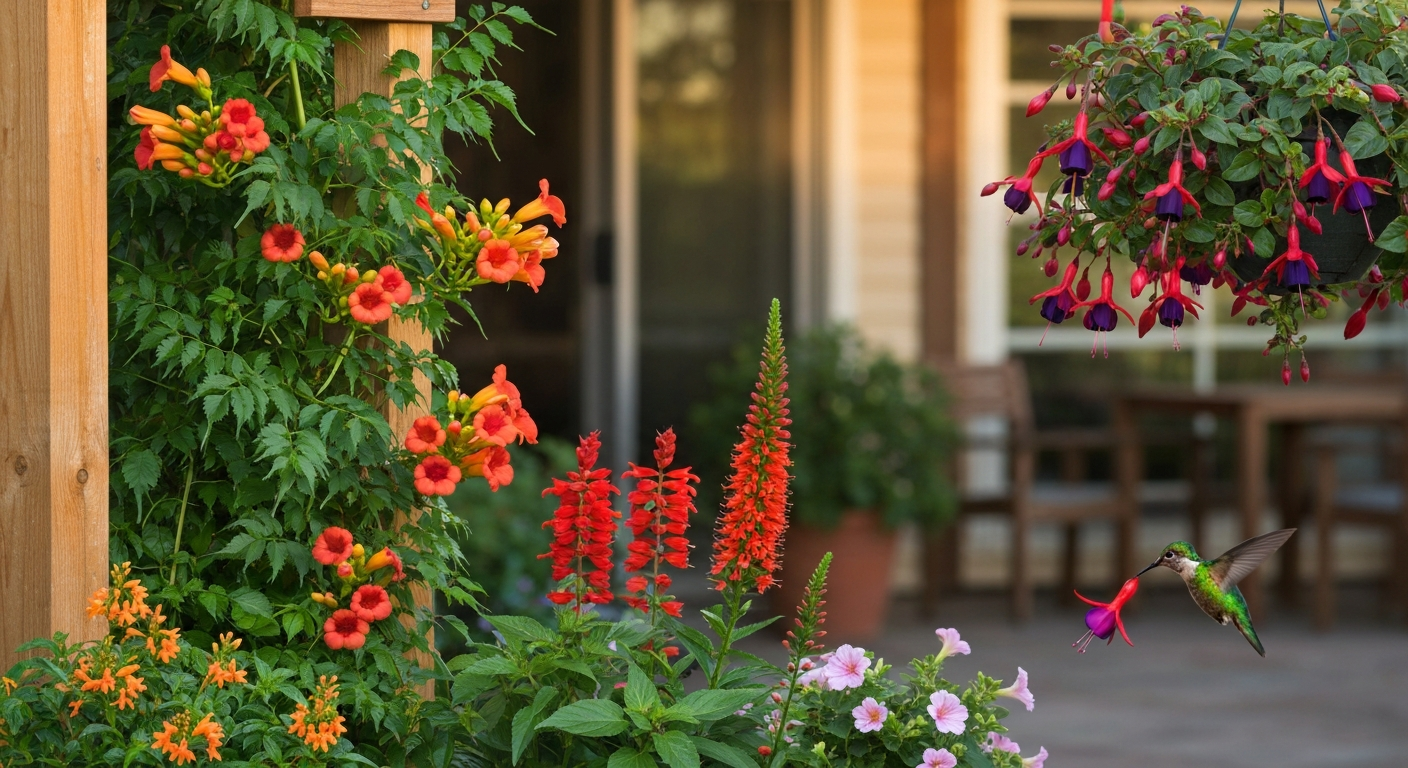
The name is a marketing umbrella, not a botanical category. Nurseries and seed catalogs slap 'hummingbird plant' on anything with a bright, tubular flower that a hummingbird will reliably visit. That means you could buy a plant labeled 'hummingbird plant' and take home a tender tropical subshrub, a native perennial wildflower, a vigorous woody vine, or a cold-hardy sage, depending on who packaged it. University extension programs and botanical gardens confirm that this broad group includes plants from completely unrelated plant families. What they share is form and function: long, narrow flower tubes loaded with nectar, and colors, especially reds, oranges, and pinks, that hummingbirds spot easily in flight.
Why grow them? Honestly, few gardening decisions deliver as much visible payoff as planting even a single tubular-flowered species near a window or patio. Within weeks of bloom, you will likely have ruby-throated, Anna's, or rufous hummingbirds hovering inches from your face. Beyond the wildlife value, most of these plants are genuinely low-maintenance once established, and many bloom for months. They also double as excellent pollinator plants for bees and butterflies, so the garden ecology benefits stack up quickly.
Common species called 'hummingbird plant' and how to tell them apart
Knowing which plant you have before you plant it saves a lot of frustration. Here is a rundown of the most commonly sold species under the hummingbird plant name, with the key identifying traits that separate them.
| Common Name | Scientific Name | Flower Color | Form | Hardiness (USDA Zones) | Key ID Feature |
|---|---|---|---|---|---|
| Cigar plant / Firecracker plant | Cuphea ignea | Orange-red with dark tip | Subshrub, 1–2 ft | 9B–11 (annual elsewhere) | Tiny cigar-shaped tubular flowers with no petals |
| Mexican honeysuckle | Justicia spicigera | Orange | Shrub, 1.5–5 ft | 8–11 | Soft velvety leaves, clustered orange tubes |
| Chuparosa | Justicia californica | Red | Deciduous desert shrub, 3–5 ft | 8–11 | Nearly leafless in heat; flowers on bare stems |
| Autumn sage | Salvia greggii | Red, pink, coral | Subshrub, 1–3 ft | 6–9 | Aromatic leaves; two-lipped sage flowers |
| Cardinal flower | Lobelia cardinalis | Scarlet red | Perennial, 2–4 ft | 3–9 | Tall spikes; bright red star-burst petals |
| Trumpet vine | Campsis radicans | Orange-red | Deciduous climbing vine, 30–40 ft | 4–9 | Vigorous aerial-root climber; large trumpet clusters |
| Hardy fuchsia | Fuchsia magellanica and hybrids | Red and purple | Shrub or trailing, 1–8 ft | 6–9 | Dangling bi-color pendulous flowers |
| Yellow trumpetbush | Tecoma stans | Bright yellow | Large shrub/small tree, 6–20 ft | 10B–11 | Bold yellow flared trumpets; pinnate leaves |
| Mexican blood trumpet | Amphilophium buccinatorium (syn. Distictis) | Red-orange | Tropical vine, 20–30 ft | 9–11 | Large flared trumpet; woody vine with tendrils |
The easiest way to confirm your plant's identity before buying is to check the pot label for the Latin name, then cross-reference it against a resource like the Missouri Botanical Garden Plant Finder or the USDA PLANTS database, both of which carry clear photos and distribution maps. I made the mistake early in my gardening years of buying an unlabeled 'hummingbird shrub' at a big-box store, planting it as a perennial, and losing it the first frost. Turned out it was Cuphea ignea, a zone 9B-plus plant I was trying to overwinter in zone 7. Latin names matter.
Recommended varieties and cultivars for different gardens
Not every hummingbird plant species comes in named cultivars, but several do, and picking the right one for your space makes a real difference in bloom duration and plant habit. Here are the best picks by garden type.
Best for containers and small spaces
- Cuphea ignea 'David Verity': a sterile hybrid that blooms non-stop from late spring through frost, grows to about 18 inches, and thrives in pots — this is arguably the single easiest hummingbird plant for beginners in warmer zones or anyone growing annuals.
- Salvia greggii 'Furman's Red': compact at 2 feet, deep crimson, long-blooming from spring into fall, and reliably hardy to zone 6.
- Fuchsia 'Gartenmeister Bonstedt': an upright tender fuchsia with dark foliage and salmon-orange tubular flowers, perfect for a shaded patio container.
- Lobelia cardinalis: although technically a perennial, it grows happily in a large pot near a water feature or pond edge and blooms reliably in its second year.
Best for in-ground landscape beds
- Salvia greggii 'Furman's Red' or 'Wild Thing': both are heat- and drought-tolerant once established and bloom from spring through hard frost in zones 6–9.
- Justicia spicigera: exceptional for a mid-border shrub in zones 8–11, with semi-evergreen to evergreen foliage and a near-continuous bloom from late spring through fall.
- Lobelia cardinalis native strains: plant in a moist border or rain garden; mid-summer scarlet spikes are dramatic and attract hummingbirds reliably.
- Campsis radicans 'Flava' (yellow trumpet vine) or 'Mme Galen' (orange-red hybrid): both are less aggressively suckering than the straight species, still hardy to zone 4–5, and provide bold summer color on fences, arbors, or walls.
Best for hot, dry or desert gardens
- Justicia californica (chuparosa): blooms late winter to spring in the Sonoran Desert, nearly leafless in summer heat, and extremely drought tolerant once established.
- Salvia coccinea 'Lady in Red': an annual sage that self-sows freely, tolerates heat and humidity, and blooms almost year-round in frost-free zones.
- Tecoma stans: if you are in zone 10B or warmer, this large shrub or small tree provides massive yellow blooms for months and requires almost no supplemental irrigation once established.
Hardiness zones, climate, and microclimates
Zone compatibility is non-negotiable with this group of plants. The range is enormous: Lobelia cardinalis is hardy from zones 3 to 9, while Tecoma stans barely survives a light frost and is only reliably perennial in zones 10B–11. Campsis radicans is one of the most cold-tolerant options, surviving to zone 4. Cuphea ignea, often sold cheaply as a bedding annual in northern states, is only a true perennial in zones 9B–11.
Microclimates can stretch what your zone technically allows. A south-facing wall in zone 7 that absorbs and radiates heat can let you overwinter a Justicia spicigera that would normally die at that latitude. Conversely, a low frost pocket in an otherwise zone 8 garden will kill tender plants faster than the USDA map suggests. Before you assume a plant will survive your winter, think about air drainage, proximity to masonry or concrete (which holds warmth), and whether you can mulch the root zone heavily in November. I have kept a Cuphea alive through a zone 8b winter by mounding 4 inches of pine straw over the crown after the first light freeze, though it did die back completely and regrow from the roots.
| Species | USDA Zones (Perennial) | Notes on Cold Limits |
|---|---|---|
| Cuphea ignea | 9B–11 | Treat as annual in zones 8 and below; may re-sprout from roots in 9A with heavy mulch |
| Justicia spicigera | 8–11 | Root-hardy to zone 8 with mulch; tops die at light frost |
| Justicia californica | 8–11 | Desert species; dislikes cold wet winters |
| Salvia greggii | 6–9 | One of the most cold-tolerant hummingbird sages |
| Lobelia cardinalis | 3–9 | Extremely cold hardy; native across most of eastern North America |
| Campsis radicans | 4–9 | Very cold tolerant; dies back to ground in zone 4–5 and regrows |
| Fuchsia magellanica | 6–9 | Hardy types tolerate hard frost; tender bedding fuchsias are zone 10+ |
| Tecoma stans | 10B–11 | Killed by hard frost; treat as annual or container plant in most of the US |
Choosing the right planting site
Most hummingbird plants want full sun, meaning at least 6 hours of direct sunlight per day. Salvia greggii, Cuphea ignea, Justicia spicigera, Campsis radicans, and Tecoma stans all perform best in full sun and bloom less aggressively in shade. Lobelia cardinalis and Fuchsia are the notable exceptions: cardinal flower thrives in part shade to full sun and tolerates consistently moist, even boggy, conditions, while hardy fuchsias actually prefer dappled light or morning sun with afternoon shade in warmer climates, making them ideal for a north-facing or shaded patio. WSU Extension notes that hardy fuchsias (Fuchsia magellanica and related hybrids) prefer light shade or morning sun with afternoon protection and are recommended for shaded patios (Hardy Fuchsias (WSU extension publication)).
Wind exposure matters more than most gardeners realize. Hummingbirds are small and precise flyers, and a planting in a wind tunnel will see far fewer visitors than the same plants in a sheltered courtyard or against a wall. Tall hummingbird plants like Campsis radicans obviously need structural support, a sturdy trellis, pergola, or fence, and you should plan that before planting, not after the vine has engulfed your downspout. Justicia californica and Salvia greggii both handle dry, hot, exposed sites with no fuss.
Space requirements vary widely. Cuphea ignea stays compact at 1–2 feet and works in a 10-inch pot. Campsis radicans can cover 30–40 feet of fence in a single season once established and needs serious room. Tecoma stans can reach 20 feet tall without pruning. Plan spacing based on mature size, not nursery pot size. A common beginner error is planting a Tecoma stans 2 feet from a fence thinking it will stay small, then discovering it has become a small tree in 18 months.
Soil requirements and how to prepare the bed
The majority of hummingbird plants share one critical soil requirement: good drainage. Cuphea, Justicia, Salvia, and Campsis will all rot in waterlogged soil, especially over winter. Lobelia cardinalis is the exception, genuinely preferring consistently moist to wet soil and tolerating boggy conditions near pond edges or rain gardens.
For most species, aim for a slightly acidic to neutral soil pH of 6.0 to 7.0. Salvia greggii actually tolerates slightly alkaline soils, which makes it a good choice for gardens in regions with naturally high pH. Justicia species prefer a richer, more organic soil than Cuphea or Campsis, which both thrive in lean, fast-draining ground. If you have heavy clay, amend it with coarse perlite or horticultural grit, not just compost. Compost alone can make clay worse by adding organic matter that holds more water. A 1:1 ratio of native soil to a gritty amendment works well as a starting point.
Before planting, loosen the bed to a depth of at least 12 inches. For shrubby species like Justicia spicigera or Salvia greggii, dig a planting zone about twice the diameter of the root ball. Incorporate a modest amount of balanced slow-release fertilizer into the backfill, something like an 8-8-8 or 10-10-10 granular at the rate on the package. I tend to be skeptical of dumping Miracle-Gro into the planting hole as a cure-all. It gives plants a fast push but does nothing for soil structure, and high-nitrogen soluble fertilizers early in establishment can actually encourage lush leaf growth at the expense of roots and flowers.
Planting timeline: season-by-season guidance by zone
When you plant depends heavily on which species you are growing and which zone you are in. Here is a practical calendar framework to work from.
| Season / Month | Cool Zones (3–6) | Warm Zones (7–9) | Hot/Subtropical Zones (10–11) |
|---|---|---|---|
| Late Winter (Jan–Feb) | Start Lobelia, Salvia seeds indoors 8–10 weeks before last frost | Direct sow Salvia coccinea; plant Justicia californica outdoors | Plant Tecoma stans, Justicia, Cuphea outdoors; begin propagation cuttings |
| Early Spring (Mar–Apr) | Harden off seedlings; do not transplant until frost risk passes | Transplant Salvia greggii, Lobelia after last frost; plant Cuphea as annual | Divide established Lobelia; prune Campsis before new growth |
| Late Spring (May–Jun) | Transplant all species after last frost; plant Campsis once soil warms above 60°F | Plant Cuphea, Justicia spicigera, Fuchsia in containers outdoors | Main planting season for all species; water heavily until established |
| Summer (Jul–Aug) | Maintain; side-dress with slow-release fertilizer; deadhead Salvia | Deadhead and lightly prune; watch for spider mites on Cuphea | Reduce irrigation for desert species; Justicia californica semi-dormant |
| Fall (Sep–Oct) | Collect Lobelia seed; mulch crowns before frost; bring tender Cuphea indoors | Cut Campsis back hard; divide and transplant Lobelia; plant Salvia greggii in zone 7+ | Plant cool-season hummingbird salvias; divide Lobelia clumps |
| Winter (Nov–Feb) | Cold-hardy species dormant; protect root zones with 3–4 inch mulch layer | Prune hardy fuchsias and Campsis to structural framework; protect Justicia roots | Light pruning; continue planting; Tecoma stans may be semi-evergreen |
For gardeners in zones 4–6, the most reliable approach is to treat Cuphea ignea, Justicia spicigera, and Tecoma stans as warm-season annuals, starting them from seed or transplants after your last frost date and pulling them before winter. Salvia greggii and Lobelia cardinalis are the backbone perennials in those zones. In zones 7–9, you have access to nearly the full range of species, with most surviving as perennials or root-hardy subshrubs with minimal protection.
Step-by-step planting guide
Whether you are planting a single Cuphea in a container or a row of Salvia greggii along a border, the fundamentals are the same. Follow these steps and you will sidestep most of the common establishment failures.
- Water the plant thoroughly in its nursery pot the day before planting. A dry root ball will pull moisture away from surrounding soil and slow establishment by weeks.
- Dig the planting hole two to three times as wide as the root ball and only as deep as the root ball itself. Setting the plant too deep is one of the top reasons hummingbird shrubs rot at the crown. The top of the root ball should sit level with or very slightly above the surrounding grade.
- If amending the backfill, mix the native soil with perlite or coarse grit (not fine sand, which creates a concrete-like layer in clay). For Lobelia, substitute compost for the grit amendment to retain moisture.
- Gently tease apart any circling roots at the bottom of the root ball before placing the plant. Circling roots left intact will girdle the stem as the plant grows.
- Backfill halfway, firm lightly by hand, then water to collapse air pockets before finishing the fill. Avoid stomping the soil, which compacts the root zone.
- Build a shallow watering basin or berm around the plant about 6 inches from the stem. This directs irrigation water directly to the root zone instead of running off.
- Apply 2–3 inches of organic mulch (shredded bark, wood chips, or pine straw) over the root zone, keeping it 2 inches away from the stem. Mulch piled against the stem invites fungal rot.
- For vining species like Campsis radicans, install the trellis or support structure at planting time. Driving stakes near established roots damages them and you will regret doing it later.
- Water deeply immediately after planting, then follow a consistent establishment watering schedule: daily for the first week in hot weather, every 2–3 days for weeks 2–4, then taper to weekly deep watering once you see active new growth.
Spacing guidelines by species
| Species | Recommended Spacing | Notes |
|---|---|---|
| Cuphea ignea | 12–18 inches | Good for mass planting or containers; fills in quickly |
| Justicia spicigera | 3–4 feet | Allow full mature width; do not crowd |
| Salvia greggii | 2–3 feet | Responds well to mass planting in drifts |
| Lobelia cardinalis | 12–18 inches | Will spread by offsets; give room to naturalize in moist borders |
| Campsis radicans | 8–10 feet | One plant covers a large structure; rarely need more than one |
| Fuchsia magellanica | 3–5 feet | Varies by cultivar; check mature size on label |
| Tecoma stans | 6–10 feet | Grows large; plant away from structures unless pruning hard annually |
Watering, feeding, and daily care routines
Once established (typically 4–8 weeks after planting), most hummingbird plants are surprisingly drought-tolerant. Salvia greggii, Justicia californica, and Cuphea ignea all perform better with moderate water and will flower less if overwatered. A good general rule: water deeply once a week in the growing season when rainfall is less than an inch, and allow the top inch of soil to dry out between waterings. Lobelia cardinalis breaks this rule entirely: it wants consistent moisture and will wilt and brown out if allowed to dry down. If you are growing cardinal flower, keep the root zone moist at all times, especially in summer.
For fertilizing, a balanced slow-release granular fertilizer applied once in early spring as growth resumes is usually sufficient for Salvia and Justicia in reasonably fertile soil. Cuphea in containers benefits from a half-strength liquid fertilizer every two to three weeks through the bloom season, since container plants exhaust soil nutrients faster. Avoid high-nitrogen formulas if your main goal is flowers, since nitrogen pushes leafy growth. Look for a formulation with a middle or higher phosphorus number (the middle digit on the N-P-K ratio), which supports root and flower development.
Pruning and shaping throughout the year
Salvia greggii benefits from a hard cutback of about one-third in early spring before new growth begins, which prevents woody leggy stems and keeps the plant dense and floriferous. During the season, deadheading spent flower spikes encourages repeat bloom. Cuphea ignea rarely needs deadheading (its flowers drop cleanly) but benefits from a light shear in midsummer if it becomes floppy, which will trigger a fresh flush of growth and flowers.
Campsis radicans needs the most aggressive pruning of any plant in this group. Left unchecked, it will take over a fence, root into the lawn via underground runners, and even work its way under siding. Prune it hard every late winter or early spring, cutting the previous season's growth back to a permanent framework of two to four main stems. This is the single most important maintenance task for trumpet vine. You will hear people say it is invasive, and they are not wrong in some regions, so check your local invasive plant lists before planting it, especially in the mid-Atlantic and southeastern U.S.
Tecoma stans should be cut back by one-third to one-half in early spring to keep it from becoming a tree-sized shrub. Fuchsia magellanica can be cut to the ground in late fall in zone 6–7 where tops die back; in warmer zones, thin out old woody stems and shape lightly in early spring.
Growing in containers vs. in-ground
Container growing is the right strategy for gardeners in colder zones who want to enjoy tender hummingbird plants like Cuphea ignea, Justicia spicigera, or Tecoma stans without losing them each winter. The Royal Horticultural Society lists Justicia spicigera (Mexican honeysuckle) as a broadleaf evergreen ornamental valued for its orange tubular flowers and strong appeal to hummingbirds Justicia spicigera (Mexican honeysuckle) | RHS plant profile. Use a container at least 12 inches in diameter for Cuphea and 16–18 inches for Justicia, filled with a well-draining potting mix (not garden soil, which compacts hard in pots). Containers dry out faster than the ground, so plan to water every 1–3 days in hot weather and fertilize more frequently than in-ground plants.
The real advantage of containers is mobility. In fall, before the first frost, bring tender species indoors to a bright, cool window (55–65°F is ideal) where they will often continue to bloom lightly through winter. Cut the plants back by about one-third before bringing them in to reduce size and pest pressure. Inspect carefully for spider mites and whiteflies before moving them inside, because both pests explode indoors where there are no natural enemies.
In-ground plants establish stronger root systems, bloom more prolifically in warm seasons, and require less frequent watering. If you are in a zone where your chosen species is reliably perennial, in-ground is the better long-term choice. The trade-off is commitment: you cannot move a 5-year-old Campsis vine if you change your mind.
Winter protection and cold hardiness tips
For species near the edge of their hardiness range, a few simple steps in fall can be the difference between losing and saving the plant. After the first light frost, cut back the tops of tender or marginally hardy species to about 6 inches. Apply a 4-inch layer of dry organic mulch, pine straw works particularly well because it stays loose and insulating without matting wet, over the root zone. In zone 7 or colder, you can also mound the mulch over the crown of the plant itself, then remove it gradually in early spring once the worst cold has passed.
Avoid watering tender hummingbird plants heavily in late fall. Cold, wet soil is far more damaging to roots than cold, dry soil. For container plants overwintering indoors, cut back on watering significantly in winter: once every 10–14 days is usually enough to keep the roots alive without encouraging rot.
Propagation: seeds, cuttings, and division
Growing from seed
Lobelia cardinalis is one of the most satisfying hummingbird plants to start from seed. Sow seeds on the surface of moist seed-starting mix (do not cover, as they need light to germinate), at 65–70°F, and expect germination in 10–21 days. Start seeds 8–10 weeks before your last frost date and transplant seedlings outdoors once they have at least two sets of true leaves and the weather has settled. Salvia greggii and Salvia coccinea also germinate readily from seed at similar temperatures. Cuphea ignea can be started from seed but most gardeners find cuttings far easier and faster.
Stem cuttings
Cuphea ignea, Justicia spicigera, and Fuchsia all root readily from softwood stem cuttings taken in late spring or summer. Take a 3–4 inch cutting just below a leaf node, strip the lower leaves, and dip the cut end in rooting hormone powder. Insert it into a small pot of moist perlite or a 50:50 perlite and peat mix, cover with a plastic bag or dome to hold humidity, and place in bright indirect light at 65–75°F. You should see roots developing in 2–4 weeks. Once rooted, pot up into regular potting mix and grow on before transplanting outdoors. This is an excellent way to produce multiple plants to bulk up a hummingbird border.
Division
Lobelia cardinalis forms basal offsets or rosettes that can be divided in early spring or fall. Dig the clump carefully, separate individual rosettes with a sharp knife, and replant immediately at the same depth in moist, amended soil. This is also a good way to rejuvenate an old clump that has become crowded and is flowering less. Salvia greggii can be divided in early spring, though it tends to resent root disturbance more than Lobelia, so only divide when the clump is clearly too dense.
Pests and diseases to watch for
Most hummingbird plants are relatively pest-resistant, but a few problems show up consistently. Spider mites are the most common issue on Cuphea indoors and on Justicia in hot, dry conditions. You will notice stippled, yellowing leaves and fine webbing on the undersides. A strong jet of water to knock mites off the leaves works well for mild infestations; insecticidal soap or neem oil spray is the next step if mites persist. Whiteflies colonize Fuchsia and Justicia, clustering on the undersides of leaves. Yellow sticky traps help monitor populations; insecticidal soap spray handles active infestations.
Root rot caused by Phytophthora or Pythium fungal pathogens is the most serious disease risk, and it is almost always the result of poorly drained soil or overwatering. The plant will look wilted even with wet soil, and the roots will be brown and mushy rather than firm and white. There is no effective chemical cure for root rot in an established plant; prevention through drainage is everything. Powdery mildew occasionally affects Salvia and Lobelia in humid summers, showing as a white powdery coating on leaves. Improve air circulation, avoid overhead watering in the evening, and apply a sulfur-based fungicide if the infection is severe.
Troubleshooting: common problems and what actually fixes them
| Symptom | Likely Cause | Fix |
|---|---|---|
| Plant wilts despite moist soil | Root rot from overwatering or poor drainage | Improve drainage; reduce watering; repot container plants into fresh mix |
| Few or no flowers | Too much shade, too much nitrogen fertilizer, or plant too young | Move to sunnier spot; switch to low-N fertilizer; wait for establishment |
| Yellowing leaves (lower first) | Overwatering, nutrient deficiency, or natural senescence | Check drainage; apply balanced fertilizer; remove old leaves |
| Leggy, floppy growth | Insufficient light or lack of pruning | Relocate to full sun; prune hard in early spring |
| Leaf scorch (brown crispy edges) | Underwatering or excess direct afternoon sun on Fuchsia/Lobelia | Increase watering frequency; provide afternoon shade for sensitive species |
| No regrowth after winter | Plant died from cold (outside zone) or crown rot under mulch | Check zone compatibility; remove mulch from crown in early spring |
| Hummingbirds not visiting | Wrong flower color/form, poor site visibility, or competing feeder | Prioritize red/orange tubular species; place plants in an open, visible location |
| Vine taking over | Campsis or Tecoma not pruned annually | Cut back hard to framework in late winter; root prune suckering stems |
Designing your planting to actually attract hummingbirds
The single most effective thing you can do is plant in mass rather than in isolation. A single Cuphea plant will attract the occasional visitor; a 6-foot sweep of Cuphea, Salvia greggii, and Lobelia cardinalis planted together creates a feeding territory that hummingbirds will return to and defend. Red and orange flowers draw hummingbirds instinctively, but once they have learned a garden, they will visit flowers of any color. Layering by bloom time so that something is always flowering, from Justicia californica in late winter to Salvia greggii in fall, keeps hummingbirds present for a much longer stretch of the season.
Companion plants that round out the planting include Agastache (hyssop), Monarda (bee balm), and Penstemon, all of which carry similar tubular flowers and fill bloom gaps. If you are growing hibiscus in the same border, many of the same hummingbirds that visit your Salvia will work the hibiscus flowers too, as the large open blooms are also nectar sources. A nearby water feature, even a simple dripper or mister, is one of the most reliably effective additions for hummingbirds, who use moving water to bathe.
Nectar feeders can complement your planting but should not replace it. The problem with relying too heavily on feeders is that the feeders need to be cleaned every 2–3 days in warm weather to prevent mold and fermentation, which can harm birds. Live plants never need cleaning and they give hummingbirds the full nutritional profile of natural nectar plus insects that also live in the flowers. If you do use a feeder, place it within 10–15 feet of your hummingbird planting so that birds naturally transition between the two.
A note on species choice and related plants
If you find yourself drawn to the shrubby, tropical feel of hummingbird plants, hibiscus species make natural companions in the same garden bed. They share similar preferences for full sun, well-drained soil, and warm temperatures, and hummingbirds visit hibiscus flowers readily. For step-by-step tips specific to yellow hibiscus, site selection, soil, pruning, and winter care, see how to grow yellow hibiscus. The growing requirements overlap enough that once you master one of these plants, the others come naturally. For step-by-step tips on how to grow hibiscus, see a dedicated guide on how to grow hibiscus hello kitty island adventure. The main distinction is scale: hibiscus tends to grow larger and needs more pruning management, especially in warmer zones where it never goes dormant. For specific care instructions, see our guide on how to grow luna hibiscus. For step-by-step planting, pruning, and care instructions, learn how to grow hibiscus at home.
FAQ
What plants are commonly called 'hummingbird plant' and how do I identify them?
Several unrelated species earn the common name because of their tubular, nectar-rich flowers. Key groups: Cuphea (cigar/firecracker plant) — small subshrub with 1–2 in tubular flowers; Justicia (e.g., J. spicigera, J. californica) — orange/red tube-bearing shrubs; Salvia (e.g., S. greggii, S. coccinea) — aromatic perennials/shrubs with spikes of tubular flowers; Fuchsia (including hardy F. magellanica types) — pendulous two‑tone flowers; Lobelia cardinalis (cardinal flower) — upright spikes of red blooms in wet sites; Campsis (trumpet vine) and Tecoma (trumpetbush) — large trumpet-shaped flowers, vines/shrubs. For ID, use flower shape (long, narrow tube), color (reds/oranges/pinks/yellows), and resources such as Kew POWO, USDA PLANTS, and local botanical garden profiles for photographs and range information.
Which cultivars/species should I choose for my climate and garden goals?
Choose by hardiness, size, bloom time and maintenance needs: - Cool/temperate (zones 3–8): Lobelia cardinalis (moist sites), hardy Fuchsia (F. magellanica group), Salvia greggii/coccinea for heat into fall. - Warm/subtropical (zones 8–11): Cuphea ignea, Justicia spicigera, Tecoma stans, Distictis/Campsis vines. - Containers/patio: Cuphea ignea, dwarf Salvias, Fuchsia (tender types in warm summers). - Screening or fast attraction: Campsis radicans (vigorous vine) or Tecoma for shrubs. Check local extension hardiness and invasive-risk advice for aggressive species (e.g., Campsis) before planting.
When and where should I plant hummingbird plants?
Planting time: spring after frost for most, or fall in warm climates to establish roots before heat. Choose a site with: 4–6+ hours of sun for most nectar producers (some like part shade — J. spicigera, Fuchsia in hot climates), well‑draining soil amended with compost, and protection from harsh afternoon sun if your summers are extreme. For wet‑loving species (Lobelia cardinalis), select consistently moist or boggy areas. Space plants according to mature width (read tag: Salvias 12–36 in, shrubs 3–6 ft, vines trained on supports).
How do I prepare soil and plant properly?
Prepare by removing weeds, loosening soil to 12–18 inches, and incorporating 25–50% compost for structure and nutrient retention. For containers, use a high‑quality potting mix with good drainage plus slow‑release fertilizer. Plant at the same depth as the nursery pot, backfill firmly, water thoroughly, and mulch 2–3 inches (keep mulch away from stems). For vines, provide a trellis or support at planting time.
What is the season‑by‑season care routine for hummingbird plants?
Spring: prune dead wood, apply balanced slow‑release fertilizer, plant new specimens, and mulch. Early summer: monitor moisture; water deeply during dry spells; deadhead spent flowers on Salvias and Fuchsias to encourage repeat bloom. Mid/late summer: shade or extra water for heat‑sensitive types; control pests. Fall: cut back perennials to tidy form after first frost risk, divide clumps as needed, move containers to protected spots if tender. Winter: protect frost‑tender species with frost cloth, move indoors or provide mulch/insulation; hardy species need only minimal care.
How often and how much should I water hummingbird plants?
Watering depends on species and site: - Moist‑soil species (Lobelia cardinalis): keep consistently moist; shallow frequent watering or irrigation. - Drought‑tolerant species (Cuphea, Salvias, Tecoma once established): water deeply and infrequently — allow top 1–2 inches of soil to dry between waterings. - Containers: check daily in hot weather; water until drainage exits bottom. In all cases water at the root zone early morning to reduce evaporation and disease risk.