
Hybrid fuchsia (Fuchsia x hybrida) rewards you with some of the most dramatic, jewel-toned blooms in the garden, but it has a reputation for being fussy. That reputation is mostly undeserved once you understand two things: fuchsias hate heat and dry soil, and they flower on new growth. Get those two facts into your planting decisions and routine, and you'll have cascading blooms from late spring right through fall.
Hybrid Fuchsia How to Grow: Step-by-Step Care Guide

Marcus Holloway
9 Jul 2026
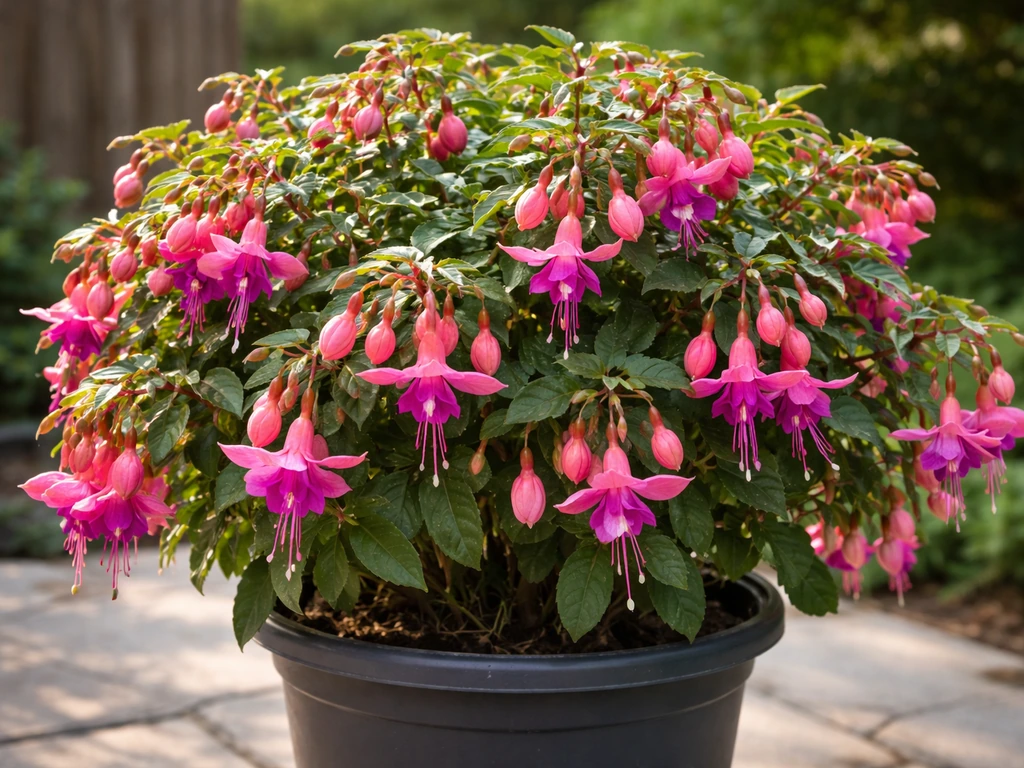
What hybrid fuchsia is and where it fits in the garden
Fuchsia x hybrida is the catch-all name for the thousands of cultivated hybrid fuchsias you'll find at garden centers. These are different from the hardy species types (like Fuchsia magellanica and its derivatives), which can survive winter in the ground in USDA zones 6 to 8. Hybrid fuchsias are tender. They can't take frost, and most won't tolerate prolonged temperatures above 76°F either, which is why they thrive in cool coastal climates and struggle in hot, dry inland summers. If you're comparing options, hardy fuchsias offer more cold tolerance for in-ground planting, while hybrids give you bigger, showier blooms and incredible variety in flower form, from single to heavily doubled, in every combination of pink, red, purple, and white you can imagine.
In the garden, hybrid fuchsias are almost always grown in hanging baskets or containers, which lets you move them easily as temperatures shift. They're a natural fit for covered patios, shaded porches, and pergolas, where they get bright indirect light and some protection from midday sun and rain. Trailing types are bred specifically for baskets, upright types work in pots or window boxes, and standard (tree-form) fuchsias make elegant focal points on a deck. Trailing fuchsias follow many of the same care rules for hybrid fuchsias, but their basket-friendly growth habit affects how you shape and position them for best results. They pair beautifully with begonias, impatiens, and lobelia in mixed container arrangements because they all share a love of cool, shaded conditions.
Choosing the right spot: light, temperature, and airflow
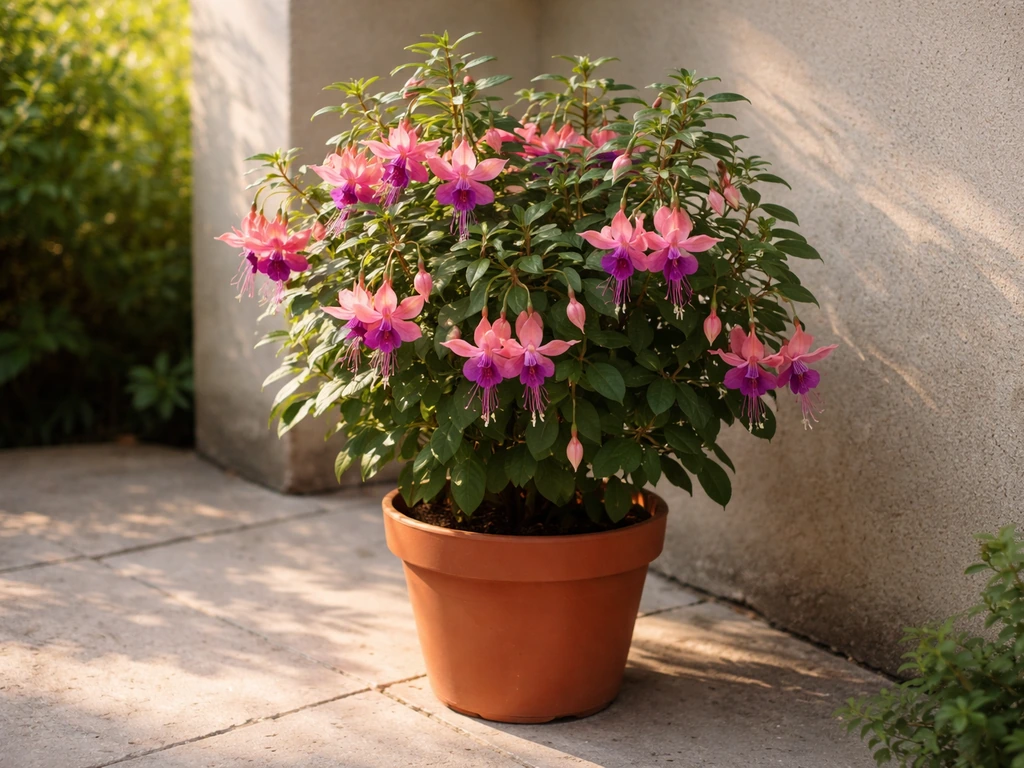
Hybrid fuchsias want bright light but not fierce, direct sun. Morning sun with afternoon shade is the classic recommendation, and it works. An east-facing spot or a position under a high tree canopy that gets dappled light throughout the day is ideal. Full afternoon sun in summer, especially in warmer regions, will scorch leaves and push temperatures at the root zone into the danger zone. The RHS notes that fuchsias flower well in full sun but are equally happy in partial shade, so if you're in a cool maritime climate, you can get away with more sun exposure than a gardener in the Southeast or Midwest.
Temperature is the piece most growers underestimate. Fuchsias perform best when daytime temperatures sit between 60 and 70°F with nights about 10°F cooler. Cornell's research is blunt on this: flowering stops when the average daily temperature rises above 76°F. If your summers routinely hit the 80s and 90s, your fuchsia will sulk and drop buds from July onward. Moving containers to a cooler north-facing spot, or even under a covered area with good reflected light, can buy you several extra weeks of bloom in hot climates.
Airflow matters too, and it's easy to overlook. Good air circulation around the foliage reduces the risk of botrytis blight (gray mold) and fuchsia rust, both of which thrive in still, humid conditions. Don't jam hanging baskets right up against walls or cluster containers so tightly that leaves overlap. Spacing plants and raising pots off the ground (more on that in the next section) makes a real difference in disease pressure.
Planting basics: containers vs ground, soil, and drainage
Containers vs in-ground
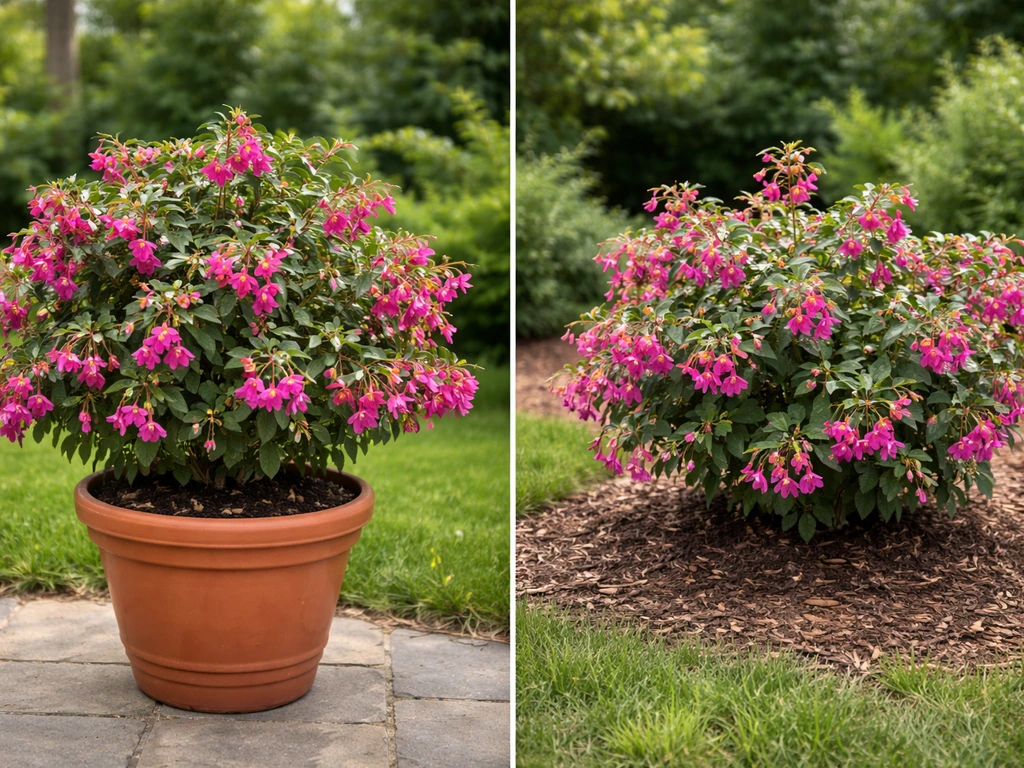
For hybrid fuchsias, containers win almost every time. To successfully grow hardy fuchsia outdoors, focus on choosing varieties with real winter tolerance and matching them with a protected planting site Hybrid fuchsias. Because these plants are frost-tender, growing them in pots means you can bring them indoors before winter without disturbing roots. It also gives you control over soil quality and lets you move the plant when temperatures spike. If you live in a reliably frost-free climate (USDA zones 10 to 11), in-ground planting works fine, but for the majority of home gardeners, a container or hanging basket is the practical choice. Penn State Extension makes a useful point: the roots in above-ground containers track winter air temperature much more closely than in-ground roots, so container-grown hybrid fuchsias need proactive protection earlier in the season.
Soil mix and drainage
The biggest mistake people make with fuchsias in containers is using a heavy, water-retentive potting mix. Fuchsias need consistently moist soil, but the roots must breathe. A good mix is 2 parts peat moss (or coco coir as a peat alternative), 1 part coarse sand, and 1 part perlite. Purdue Extension recommends this ratio for indoor container plants, and it translates well to outdoor fuchsia culture. If you prefer a simpler approach, Clemson suggests an equal blend of peat, coarse sand, and pine bark, which gives excellent drainage and a slightly acidic pH that fuchsias prefer. Aim for a soil pH between 5.5 and 6.5. Cornell's disease research notes that keeping pH below 5.5 actually discourages fuchsia rust development, so erring on the slightly acidic side has a bonus benefit. If you are trying to grow a Chicago hardy fig, the key is to provide strong sun, excellent drainage, and winter protection so it can survive cold snaps.
Drainage from the pot itself is just as important as the mix. Use containers with multiple drainage holes, and if water doesn't run through quickly after watering, add additional holes near the base of the pot using a drill. Rutgers NJAES specifically recommends this, and they also suggest raising pots on pot feet to improve air circulation under the container. A basket or pot sitting in a saucer of standing water is a root rot situation waiting to happen.
Watering and feeding for nonstop blooms
How and when to water
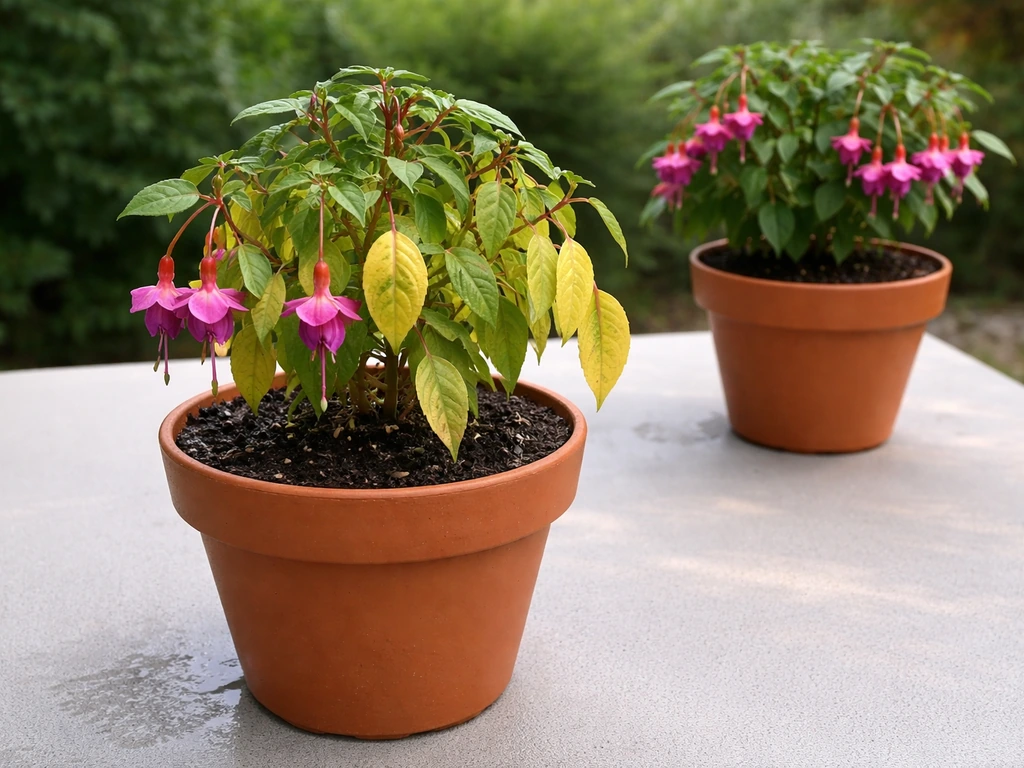
Fuchsias are genuinely thirsty plants when they're actively growing and blooming, but overwatering is still the most common way to kill them. The rule is simple: water thoroughly when the top inch of soil is dry, and let the excess drain completely. Don't let the pot sit in water. In warm weather, a hanging basket in a breezy spot may need watering every day or even twice a day. A large container in partial shade might need watering every two to three days. Check with your finger, not by schedule. Reddit growers consistently report bud drop and root problems from squishy, persistently wet soil, and that matches what the research shows: prolonged waterlogging reduces oxygen to roots, causes yellowing, and leads to root rot.
Fuchsias also hate dry heat. If the air is hot and dry, the plant experiences stress even when the soil is adequately moist. In those conditions, lightly misting the foliage in the early morning (not midday, to avoid scorch) can help, but the better fix is moving the plant to a cooler location.
Fertilizing for continuous flowering
Fuchsias are heavy feeders during the growing season. Once your plant is actively growing and budding, feed it with a balanced liquid fertilizer (a roughly equal NPK ratio like 10-10-10 or 20-20-20) every one to two weeks through spring and summer. Some growers switch to a higher-potassium feed (like a tomato fertilizer) once the plant is established and budding heavily, as potassium supports flower production. If you're getting lots of lush green growth but few flowers, you may be overdoing the nitrogen. Ease back on the nitrogen component and let the plant focus on blooms. Stop feeding in late summer as you prepare the plant for dormancy.
Pruning and shaping for flowers (plus deadheading)
The single most important thing to understand about fuchsia pruning is that the plant flowers on new growth. Every time you pinch or cut back a growing tip, the plant responds by pushing out new side shoots, and those new shoots are where your next round of blooms will come from. Climbing fuchsia care follows the same fundamentals, but you also need strong support, regular tying, and training as new growth rises. The American Fuchsia Society's culture calendar puts a useful number on this: single-flower types typically bloom about 6 to 8 weeks after the last pinch. That means if you want flowers for a party in late July, your last pinch should be in late May or early June.
Spring pinching
When new growth begins in spring, pinch out the growing tip on each shoot after it has made two sets of leaves. This forces two new shoots to develop where there was one, quickly building a fuller, more floriferous plant. The UC Marin Master Gardeners recommend leaving at least two or three healthy leaf buds per branch when you prune, so there's always a point for new growth to emerge. Repeat this pinching process through spring, stopping about 6 to 8 weeks before you want peak bloom.
Summer maintenance pruning
Mid-season, the American Fuchsia Society recommends a light pruning to push new growth and encourage another flush of flowers. You don't need to cut hard at this point. Just trim back any stems that look stretched, remove crossing or rubbing branches, and tip-pinch any shoots that have become leggy. This keeps the plant tidy and productive through the hottest part of summer.
Deadheading
Deadhead spent blooms regularly, but go a step further: remove the small berry-like seed pod that forms behind the flower after petals drop. If you let seed pods develop, the plant diverts energy into seed production instead of making more flowers. Pinching off both the faded bloom and the developing pod keeps the plant focused on what you want, which is more blooms. A quick pass over the plant every two to three days during peak season takes only a few minutes and makes a visible difference.
Troubleshooting common problems and pests
Few or no flowers
If your fuchsia has plenty of healthy foliage but almost no blooms, the most common causes are too much heat (above 76°F average daily temperature), too much nitrogen fertilizer, or not enough light. Check where you've placed the plant, stop any high-nitrogen feeds, and if heat is the problem, move the plant to a cooler spot. If you recently pinched it, you may just need to wait out the 6 to 8 week regrowth period.
Yellowing leaves
Yellow leaves are one of those symptoms that could mean almost anything, but the two most common causes in fuchsia are overwatering and underwatering, which is frustrating. The British Fuchsia Society acknowledges both as culprits. To diagnose, push your finger an inch into the soil. If it feels soggy and cool, you're overwatering. If it's bone dry, you've let it get too dry. The RHS is clear that prolonged waterlogging starves roots of oxygen and leads to yellowing followed by root rot and eventual plant death. Sun scorch from hosing wet foliage in direct sun can also cause yellow patches, so water at the base of the plant, not over the top.
Leggy growth
Long, weak stems with large gaps between leaves are almost always a light problem. Fuchsias stretch toward any available light when they're not getting enough. Move the plant to a brighter spot (still avoiding harsh afternoon sun) and tip-pinch the long shoots to encourage the plant to branch out rather than reach.
Pests: whiteflies, aphids, and spider mites
Whiteflies are the most common and most annoying fuchsia pest, as Clemson HGIC notes. You'll notice clouds of tiny white insects flying up when you disturb the plant. They weaken growth and leave behind a sticky honeydew that promotes sooty mold. Yellow sticky traps catch adults, and insecticidal soap or neem oil applied directly to the undersides of leaves knocks back populations effectively. Aphids cluster on new growth and flower buds, distorting them as they feed. A strong blast of water from a hose dislodges most of them, and insecticidal soap handles the rest. Spider mites become a problem in hot, dry conditions and leave a fine webbing and stippled, dull leaves. Increase humidity around the plant, improve air circulation, and use a miticide or neem oil if infestations are severe.
Fungal diseases: rust and botrytis
Fuchsia rust appears as orange or rusty-brown pustules on the undersides of leaves, with yellowing on the upper surface. WSU Hortsense notes that older leaves are most susceptible and that low light encourages the disease. Cornell's research adds that slightly acidic soil (below pH 5.5) discourages rust development. Remove and dispose of affected leaves immediately, improve air circulation, and avoid wetting the foliage. UMass Amherst warns that fungicide options for fuchsia are limited, so prevention matters more than treatment. Botrytis blight (gray mold) shows up as fuzzy gray mold on stems, leaves, or flowers, especially in cool, damp, still conditions. Clemson HGIC recommends preventing it with good air circulation, adequate spacing between plants, and regular removal of dead or dying plant material. Both diseases are much easier to prevent than to cure.
Bud drop
Buds dropping before they open is a stress response. The usual triggers are inconsistent watering (swinging between too wet and too dry), heat, low humidity, or a sudden environmental change like moving the plant to a new location. Stabilize the watering routine, check temperatures, and try not to move the plant once it's in bud.
Seasonal care: summer maintenance and overwintering
Keeping blooms going through summer
In midsummer, if your fuchsia slows down or stops blooming in heat, don't panic and don't overwater out of concern. Cut back watering slightly, give the plant a light trim to remove spent growth, and wait for temperatures to drop. Once cooler weather returns in late summer and early fall, fuchsias typically bounce back with another strong flush of growth and flowers. This is a good time to do a mid-season liquid feed to support that late-season bloom push.
Overwintering hybrid fuchsias
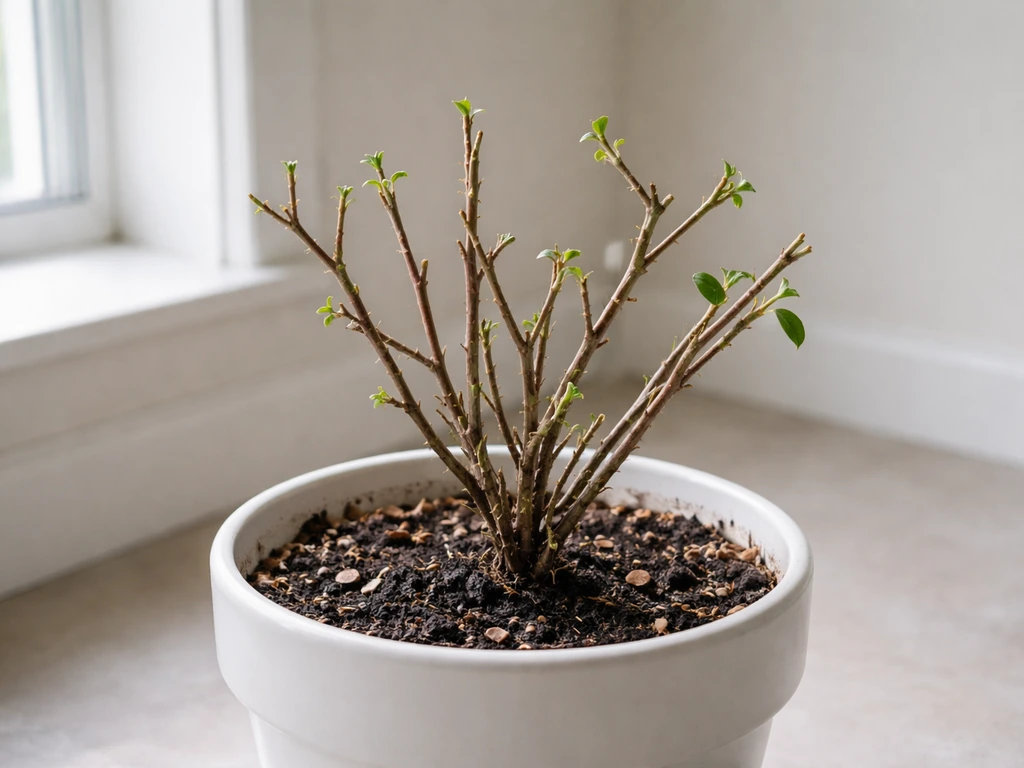
Because hybrid fuchsias are frost-tender, you need to bring them indoors before the first fall frost, no exceptions. The goal over winter is controlled dormancy, not active growth. Here's how to do it well:
- Before first frost, cut the plant back by about one-third to one-half and bring it indoors.
- Place it in a cool location: 40 to 50°F is ideal, with 45°F being the sweet spot cited by both Iowa State Extension and the Chicago Botanic Garden. An unheated basement, garage, or cool spare room works well.
- The space doesn't need to be bright for a fully dormant plant. A dimly lit basement is fine through the coldest months.
- Water only to keep the soil barely moist, roughly every three to four weeks through fall and winter. The plant is resting and needs almost nothing.
- In late winter or early spring (February to March), move the plant to a bright windowsill (east, west, or south-facing) and gradually increase watering as new growth emerges.
- Once nighttime temperatures are reliably above freezing, harden the plant off outdoors over a week or two, then return it to its summer spot.
The University of Alaska Fairbanks adds a useful note: if you're overwintering in a space warmer than 55°F with good light, the plant may stay semi-active rather than going fully dormant. In that case, keep it in maximum available light to avoid spindly growth, and water more regularly than you would for a dormant plant. Just don't expect much flowering until it's back in its prime outdoor conditions.
Taking cuttings before winter
If you have a favorite cultivar you're worried about losing, take softwood cuttings in late summer before you bring the plant in. Cut a 3 to 4 inch tip with two or three sets of leaves, remove the lower leaves, dip in rooting hormone, and pot into a moist, well-draining mix. Cuttings root easily at room temperature under a loose plastic cover to retain humidity. Cornell notes that botrytis can be a problem during propagation, causing stem cankering on cuttings, so make sure your propagation setup has good air circulation and you're using clean, disease-free plant material. Once rooted, overwinter the cuttings the same way as the parent plant. Starting from rooted cuttings in spring often produces more vigorous plants than overwintering a large, aging specimen.
Quick-start checklist and next steps
Here's everything distilled into an actionable checklist you can use right now, whether you're starting from scratch or trying to fix a struggling plant. If you want the step-by-step routine, learn the basics of light, soil mix, watering, and pruning to keep fuchsia plants thriving grow fuchsia plants.
- Choose a spot with morning sun and afternoon shade, or bright dappled light, with good airflow and protection from hot afternoon sun.
- Use a well-draining mix: 2 parts peat/coco coir, 1 part perlite, 1 part coarse sand. Target soil pH 5.5 to 6.5.
- Plant in a container with multiple drainage holes. Raise the pot on feet to improve airflow and drainage.
- Water when the top inch of soil is dry. Water deeply, let it drain fully, and never leave the pot sitting in a saucer of water.
- Feed with a balanced liquid fertilizer every one to two weeks during active growth. Switch to lower-nitrogen, higher-potassium feed once budding begins.
- Pinch growing tips after every two sets of leaves in spring to build a bushy, floriferous plant. Stop pinching 6 to 8 weeks before you want peak blooms.
- Deadhead spent flowers and remove developing seed pods every two to three days to keep blooms coming.
- Check regularly for whiteflies and aphids, especially under leaves. Treat with insecticidal soap or neem oil at first sign.
- Watch for rust (orange pustules under leaves) and botrytis (gray mold). Both are best prevented with airflow, dry foliage, and clean-up of dead material.
- Bring indoors before first fall frost. Store dormant in a cool 40 to 50°F location and water sparingly every three to four weeks.
- In late winter, move to a bright windowsill, increase watering, and begin feeding as new growth appears.
- Consider taking cuttings in late summer to multiply your best plants and have insurance against winter losses.
If you're working through a specific problem right now, start with the two biggest levers: temperature and watering. If you want a fuller, step-by-step guide, you can also follow our tips on how to grow a hybrid plant. Most hybrid fuchsia failures trace back to one of those two things. Get those right and the plant will reward you with blooms that genuinely stop people in their tracks.
FAQ
Can I move my hybrid fuchsia around during the summer to avoid heat? If so, how often?
Yes, but treat it as a transition, not a reset. Move the container to the cooler spot you want, then keep pruning and feeding the same only if it still has healthy, active growth. If buds are already forming, avoid repeated relocating (each move can trigger bud drop).
How do I know when to water hybrid fuchsia in a container? Is there a calendar I can follow?
Don’t rely on a weekly schedule. Use the finger test, water thoroughly, and confirm that excess drains out of the bottom holes. In very hot, breezy locations, some hanging baskets need water more than once a day, but only when the top inch has dried.
What pot size should I use for hybrid fuchsia, and can an oversized container cause problems?
Use the smallest pot size that lets it grow for the season, because a pot that is too large holds moisture too long and can lead to root stress. If you see water taking a long time to drain or soil staying wet for days, it is often a pot size and drainage issue, not just “too much water.”
My hybrid fuchsia has yellow leaves, but I’m not sure if it is overwatering or underwatering. What’s the quickest way to tell?
For fuchsia, the priority is air at the roots and consistent moisture, not constant wetness. If your leaves yellow while the soil stays soggy, shift to a faster-draining mix and make sure the pot has multiple bottom holes plus no saucer standing water.
Why does my hybrid fuchsia stop blooming when temperatures rise, even though I’m watering correctly?
If days are above the mid-70s°F range, expect bud drop even with good care. The practical fix is to lower root-zone temperature (cooler location, reflective surface around containers, morning sun only) and stop pushing nitrogen. Let it ride out heat, then resume normal feeding when cooler weather returns.
How important is soil pH for hybrid fuchsia, and how do I manage pH in pots without overcorrecting?
Slightly acidic is helpful, but don’t chase pH too aggressively. If you use acidic-friendly potting mixes and avoid alkaline water, you usually stay in the right range. If your water source is very hard or alkaline, you may need to use a fertilizer plan that won’t raise pH over time.
What are the most common reasons a hybrid fuchsia grows a lot of leaves but won’t flower?
If your plant looks healthy but blooms are sparse, check light and nitrogen first. Fuchsias need bright indirect light, and too much nitrogen often produces lush foliage with fewer flowers. Also confirm you pinched on time, since fuchsia flowers on new growth.
Does misting or spraying hybrid fuchsia help, or can it cause issues like fungal disease?
Yes, and it is often a mistake. Misting can help with hot, dry air but it rarely fixes core problems like excessive sun, wrong temperature, or persistently wet soil. If you mist, do it early morning and avoid wetting foliage late in the day.
What should I do first if I see whiteflies, aphids, or spider mites on my hybrid fuchsia?
Start by isolating the plant from others and controlling the specific pest. Whiteflies respond well to sticky traps plus insecticidal soap on leaf undersides, while spider mites increase in hot, dry conditions, so raise humidity and consider a targeted treatment if damage is spreading.
How can I prevent fuchsia rust from coming back after I remove the infected leaves?
Keep rust spread risk low by removing affected leaves promptly and improving light and airflow. Also avoid water on foliage. If you are in consistently low light, relocate the container to brighter indirect light because rust pressure is higher under dim conditions.
Is it worth taking softwood cuttings in late summer instead of overwintering the whole hybrid fuchsia?
Don’t wait until spring to start cuttings planning. Taking softwood cuttings in late summer gives you a head start, and rooted cuttings tend to overwinter more consistently than trying to save a large, aging specimen.
My overwintering spot is a bit warm. Should I treat my indoor hybrid fuchsia as dormant or semi-active?
A “dormant” fuchsia should slow down, not completely fry. If your indoor space is warmer than about 55°F with decent light, it may stay semi-active, so reduce stress by maximizing light and watering less on a strict “dry-out then soak” pattern, rather than letting it stay wet.