
Chicago Hardy fig is one of the most reliably cold-tolerant figs you can grow, surviving root systems down to about -10°F (-23°C) with heavy mulch, and fruiting on new wood every season even after a hard winter kills the top growth. If you're in Zone 5 or warmer, you can grow this fig in-ground with the right microclimate and winter protection. In Zone 6 and above, it's genuinely easy. Below Zone 5, container growing is the smarter play, and a garage or unheated basement is all you need to get it through winter.
How to Grow Chicago Hardy Fig: Planting, Care, Winter Prep
Marcus Holloway
30 May 2026
What Chicago Hardy fig actually is (and whether it suits your zone)
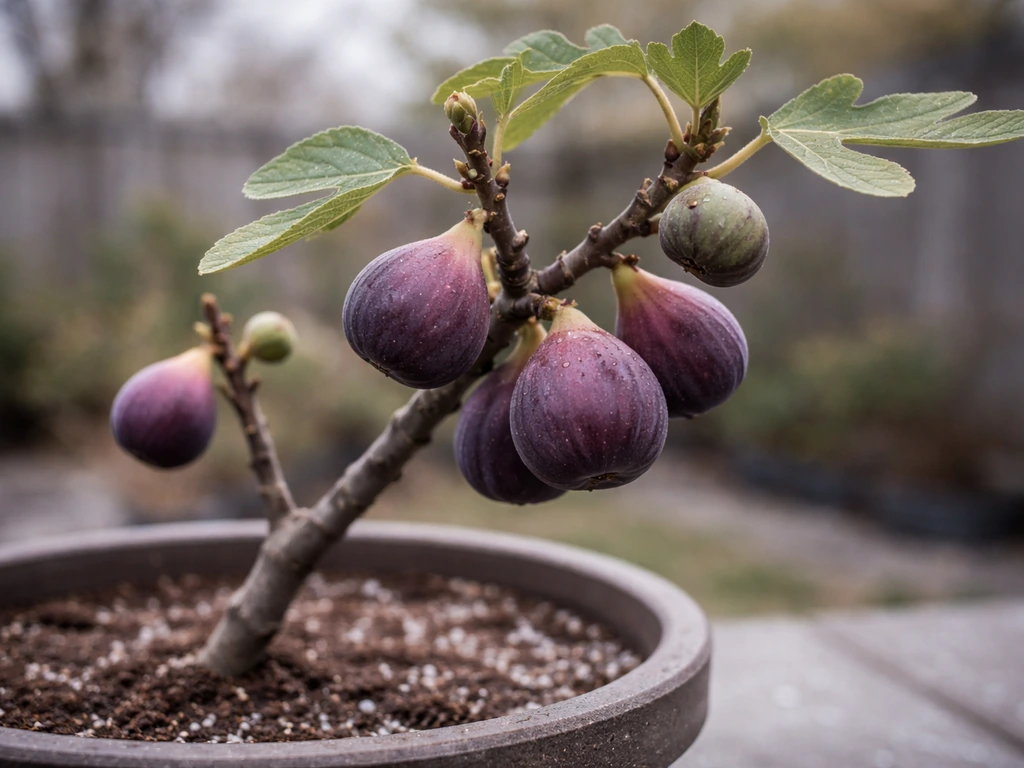
Chicago Hardy (Ficus carica 'Hardy Chicago') is a purple-fruited fig cultivar that became popular in northern gardens because it handles cold better than most figs. It's rated for USDA Zones 5 through 10, and with root protection some growers push it into Zone 4 territory. The fruit is sweet and richly flavored, ripening from a green skin to brownish-purple when fully ready.
What makes it special for colder climates isn't just cold tolerance; it's the fact that it fruits heavily on new wood. That means even if winter kills the branches back to the ground, the plant regrows from the roots in spring and still produces a crop later that same year. In Zones 7 and warmer, you also get a bonus early-summer breba crop on the old wood that survived winter. In Zone 5, you're mostly counting on that new-growth crop from July through October. That's still a genuinely good harvest window.
One honest note if you're in Chicago itself or a similarly brutal Zone 5b/6a spot: the Chicago Botanic Garden has observed that fruit set and ripening can be limited in harsh outdoor conditions even for this cultivar. It performs well, but you may not get the abundance you'd see in Zone 7. Managing expectations matters, and using every microclimate trick below will make a real difference.
Picking the right time and spot to plant
When to plant
Plant Chicago Hardy after your last frost date in spring, once nighttime temperatures are consistently above 40°F. In Zone 6, that's typically mid-April to early May. In Zone 5, wait until late May. Figs are not frost-tolerant as young transplants, and a late freeze on a freshly planted tree can set you back weeks. If you're working with a container-grown nursery tree, you can plant it a bit earlier since you can cover it quickly if a surprise frost hits.
Sun and microclimate are everything
Chicago Hardy wants full sun, at least 7 to 8 hours daily. But in cold climates, where you place it is almost as important as how much sun it gets. The single best location is against a south-facing brick or masonry wall. That wall absorbs heat during the day and radiates it back at night, creating a microclimate that can be several degrees warmer than the open garden. This can be the difference between the wood surviving winter or dying back to the ground. If you don't have a south wall, a south-facing fence or slope is the next best option.
Avoid low-lying frost pockets where cold air settles on still nights, and keep the tree out of areas with strong winter wind, which dramatically increases cold damage. A windbreak from a hedge, fence, or structure to the north and west is worth setting up before the tree goes in if you're in Zone 5 or 6.
In-ground vs. container: how to decide for your climate
This is the first big decision, and your winter low temperature should drive it. If you are trying hybrid fuchsia how to grow in cold climates, temperature and sheltering choices make just as much difference your winter low temperature should drive it. Here's a practical breakdown:
| Your USDA Zone | Typical Winter Low | Best Approach |
|---|---|---|
| Zone 7 and warmer | 0°F (-18°C) or above | In-ground, minimal or no protection needed |
| Zone 6 | -10°F to 0°F (-23°C to -18°C) | In-ground with mulch and optional wrapping, or container |
| Zone 5 | -20°F to -10°F (-29°C to -23°C) | In-ground only in warm microclimate with heavy protection, or container moved indoors |
| Zone 4 and colder | Below -20°F (-29°C) | Container only, overwintered in unheated garage or basement |
The critical thing to know about containers is that the roots are exposed to the same air temperature as the surroundings, unlike in-ground roots that are buffered by soil mass. Root damage in containers can begin around 27°F (-3°C), while in-ground roots can handle around 20°F (-6°C) before damage starts, and with mulch that threshold drops much further. So if you're growing in a pot and leaving it outside, you must insulate it or move it.
Setting up an in-ground planting
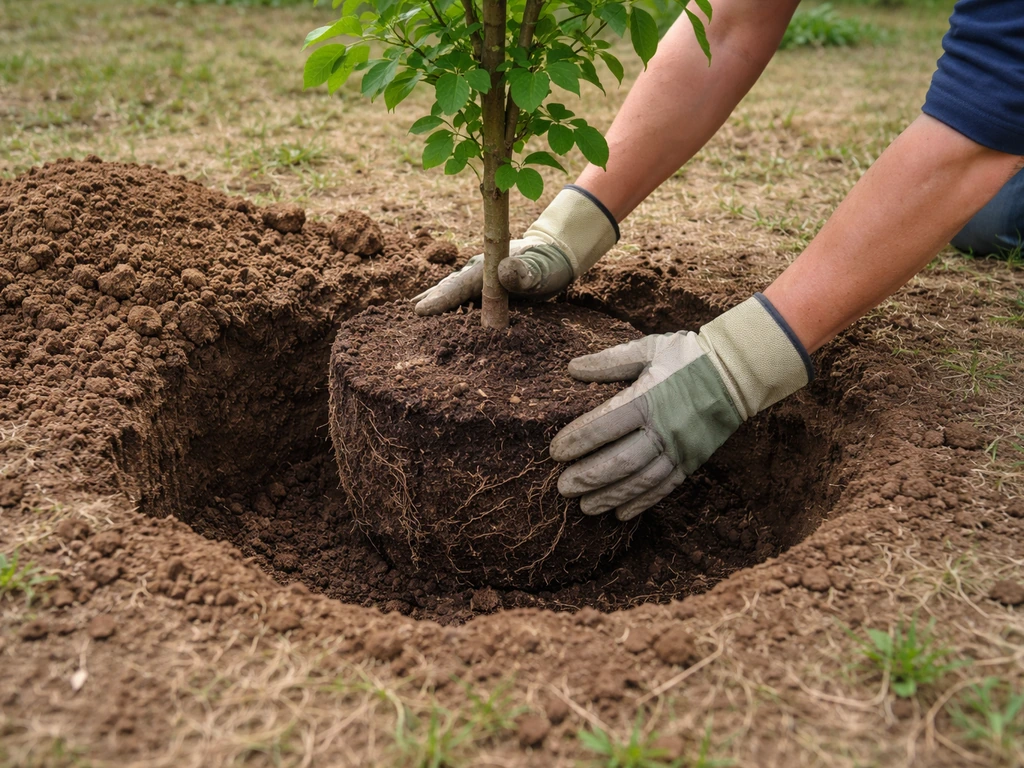
Chicago Hardy prefers well-drained soil. It does not tolerate waterlogged roots, and standing water in winter will kill it faster than cold air will. If your soil is heavy clay, work in compost and coarse grit to improve drainage before planting. The tree isn't fussy about pH and grows well in a moderately fertile, slightly acidic to neutral soil (roughly 6.0 to 7.0). Avoid rich, heavily amended beds that push too much leafy growth at the expense of fruit.
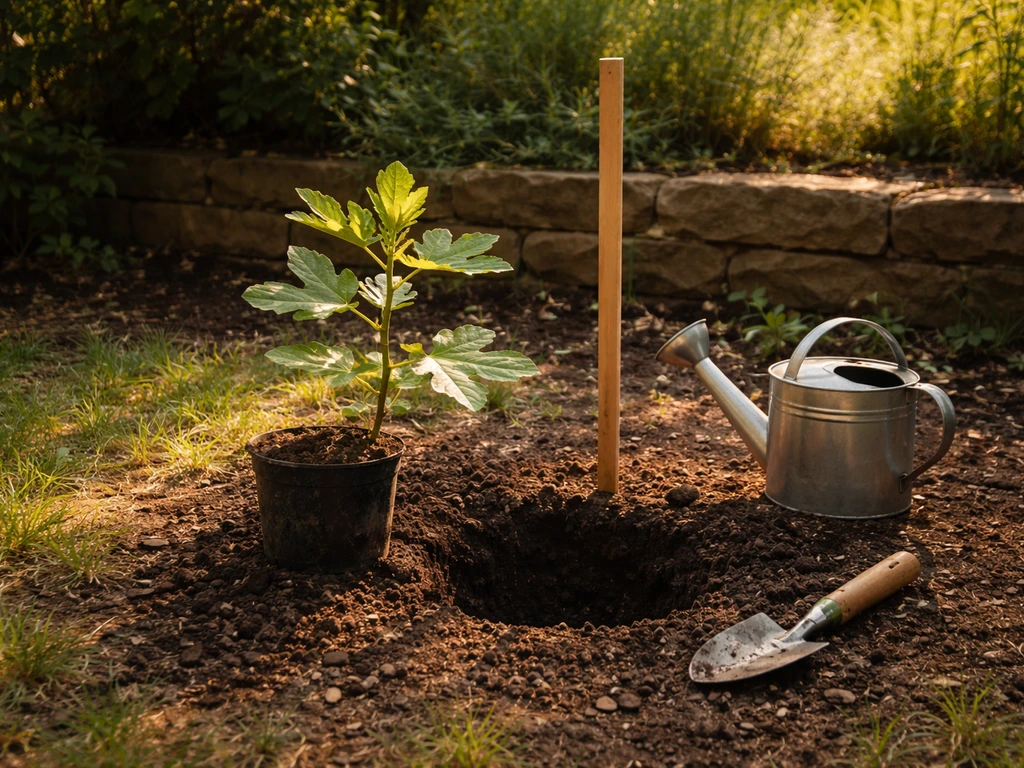
Dig your hole twice as wide as the root ball and the same depth. Set the tree at the same level it was in the nursery container. Backfill with the native soil (no need for a fancy planting mix in the hole itself) and water in thoroughly. Spread a 4 to 6 inch layer of mulch over the root zone, keeping it a few inches away from the trunk. That mulch is doing two jobs: conserving moisture and, come winter, protecting the roots from freeze.
Setting up a container planting
For containers, bigger is better but you still want manageable. Start with a 15 to 25 gallon pot if you're going to move it indoors for winter. Go larger (30+ gallons) only if you have mechanical help or a dolly for moving it. Any material works, clay, ceramic, plastic, or wood, as long as there's at least one drainage hole in the bottom. Use a well-draining potting mix, not straight garden soil, which compacts in pots and can suffocate roots. A mix of potting soil, perlite, and a little compost works well. Avoid water-retaining gels in cold climates; you want drainage, not moisture retention.
Planting steps and getting established
- Plant after your last frost date, when nighttime temps are above 40°F.
- Choose your south-facing, sheltered microclimate spot or pick a movable container.
- For in-ground: dig a wide hole, set the tree at nursery depth, backfill with native soil, and water deeply.
- For containers: use a drainage-holed pot with a free-draining potting mix, plant at the same depth as the nursery container.
- Water thoroughly at planting to settle the soil around the roots.
- Mulch the root zone (in-ground) or top-dress the container with a thin layer of compost.
- For the first summer, keep the soil consistently moist but not soggy as the tree establishes. Newly planted figs need more water attention than established ones.
- Hold off on fertilizing for the first 4 to 6 weeks after planting to let roots settle without being pushed into forced growth.
First-year trees may not fruit much, and that's completely normal. The plant is putting energy into roots. Resist the urge to over-fertilize to push fruiting early. A tree with a strong root system will outperform a tree you pushed hard in year one, every time.
Day-to-day care: watering, feeding, and pruning for fruit
Watering
Established in-ground figs are surprisingly drought tolerant once the root system is settled (typically after the first full growing season). Water deeply every 1 to 2 weeks during dry spells, letting the soil dry slightly between waterings. Overwatering causes yellowing leaves and root problems. Container figs need more frequent checking; pots dry out faster, especially in summer heat. Stick your finger 2 inches into the soil, if it's dry at that depth, water until it drains freely from the bottom.
As fruit begins to develop, consistent moisture is important. Irregular watering during fruit development can cause fruit to split or drop early. Don't soak the plant, but don't let it go bone dry either during that window.
Fertilizing
Figs don't need heavy feeding. In fact, too much nitrogen is one of the most common reasons gardeners get a big leafy tree and almost no fruit. A light application of balanced fertilizer (something like a 10-10-10) in early spring as growth resumes is plenty for in-ground trees. For containers, a slow-release balanced fertilizer in spring works well, with an optional light liquid feed once a month through July. Stop fertilizing by August to let the plant slow down before winter. If your soil is already rich, you may not need to fertilize at all in the first couple of years.
Pruning for structure and fruiting
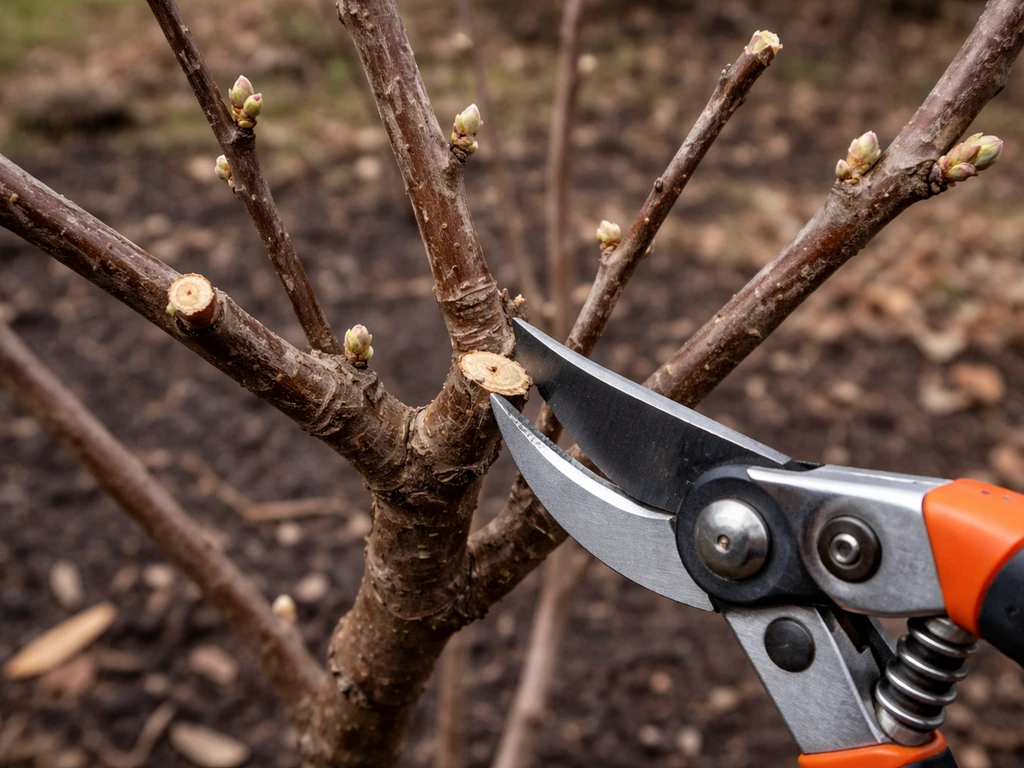
The best time to prune Chicago Hardy is late winter to early spring, after the worst cold has passed but before the plant pushes new growth. This is when you can clearly see which wood survived winter (it will be flexible and green inside when nicked) and which is dead (dry, brown, brittle). Remove all dead or damaged wood first. Then shape the tree to an open structure that allows sunlight into the center.
During the growing season, you can pinch back the tips of new growth when shoots have 4 to 5 leaves. This encourages branching and more fruiting points. Avoid cutting into old wood in late summer, which can reduce your potential early-season breba crop the following year. Keep your late-season pruning light and focus on soft, green growth only.
Harvesting figs at the right moment
Figs do not ripen after picking, so timing your harvest correctly is critical. A ripe Chicago Hardy fig will droop slightly on the stem, feel soft to gentle pressure, and the skin will have deepened to a brownish-purple. The neck of the fruit often wrinkles slightly when it's ready. In cold climates, expect the main new-wood crop to ripen from August through October. Don't rush the harvest, but once fig beetles or birds start investigating the tree, that's your signal to pick daily.
Getting your fig through winter
Winter survival is where Chicago Hardy separates itself from less cold-hardy figs, but you still need to do your part. What you do in late fall can determine whether you're training a new tree from the ground in June or enjoying fruit on established branches in July.
In-ground winter protection (Zones 5 and 6)
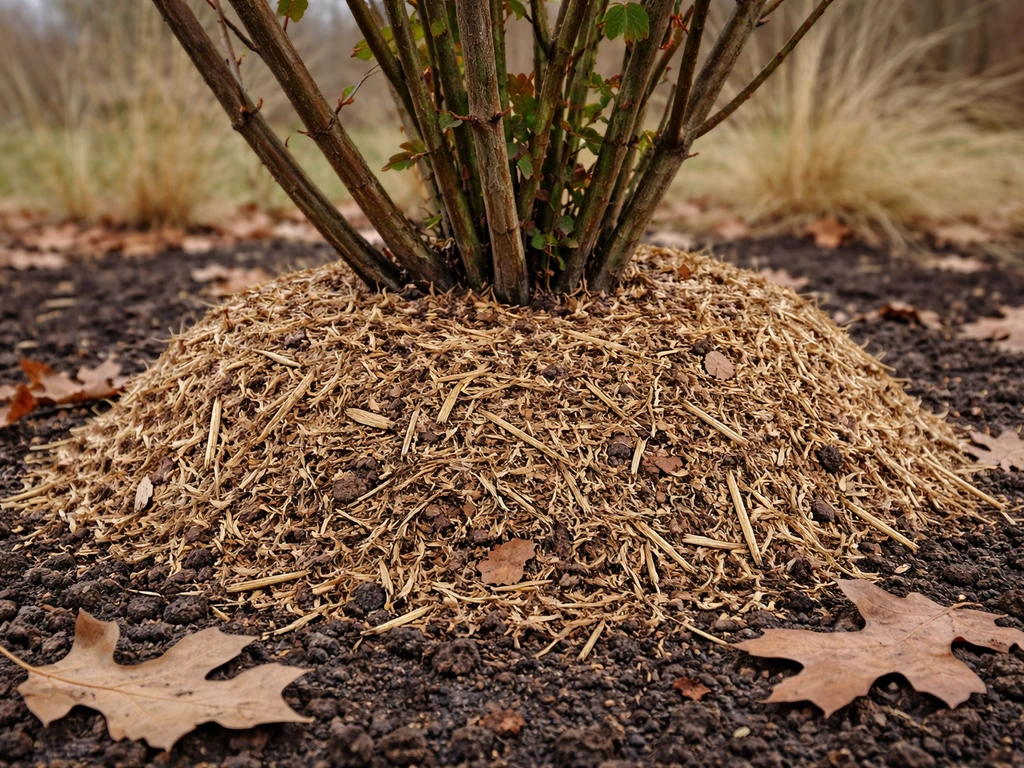
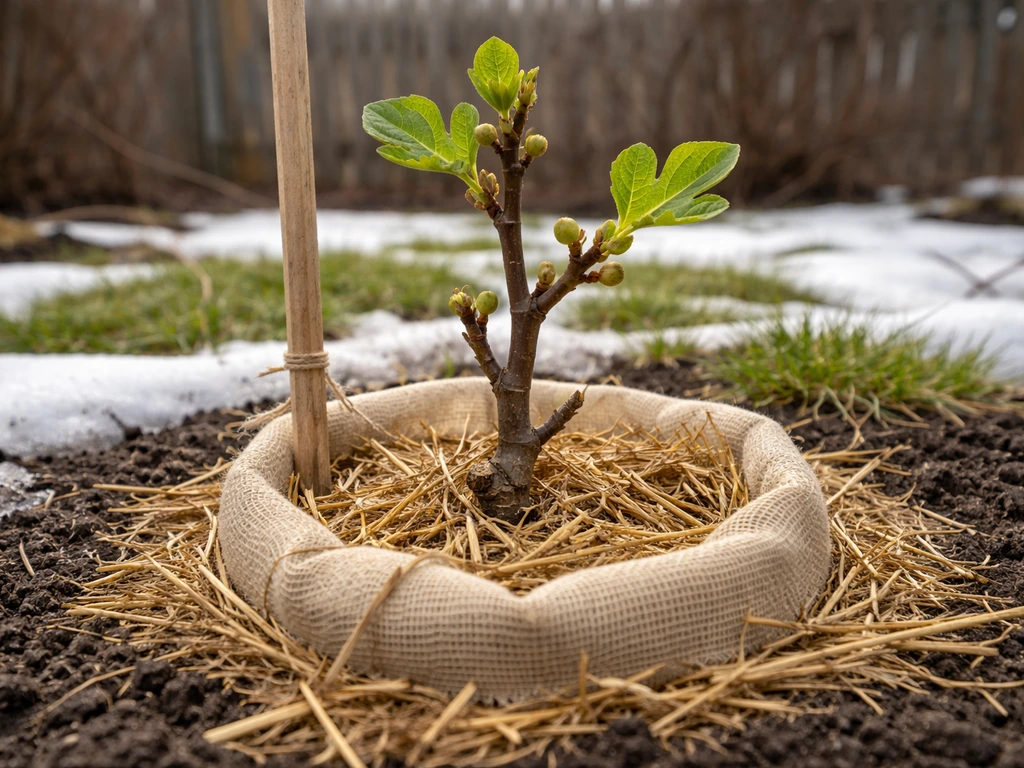
After the first hard frost in fall (when the leaves have dropped), mound 6 to 12 inches of mulch over the root zone. Straw, shredded leaves, or wood chips all work. For Zone 5 plants, you can go further: tie the branches together loosely, then wrap the entire plant with burlap or horticultural fleece, stuffing the interior with dry straw or leaves for insulation. Some gardeners in extreme cold build a simple chicken-wire cage around the plant and fill it with straw bales for serious insulation. The roots are the priority: as long as those survive, the plant will come back even if the top dies completely.
Remove the wrapping in spring when the risk of hard frost has passed, typically the same time you'd plant tomatoes in your area. Don't rush this: a late frost hitting a newly unwrapped fig with swelling buds can set you back a full season. Uncover gradually if possible, giving the plant a few days to adjust.
Container overwintering (Zones 4 and 5)
Once your container fig has dropped its leaves in fall, move it to an unheated but frost-free space: a garage, basement, shed, or unheated greenhouse all work. For colder areas, GrowVeg recommends placing container-grown figs against a south-facing wall, insulating them for winter with a winter frame or plastic cover, and mulching the root zone with compost each spring year-round.
The plant needs to stay dormant through winter, so you don't want it somewhere warm and lit, that would trigger premature growth. A temperature range of 20 to 45°F (-7 to 7°C) is ideal for dormancy. Water very sparingly through winter, just enough to keep the roots from completely desiccating, roughly once every 3 to 4 weeks depending on how dry the storage space is.
If you can't move the pot, wrap it heavily. Use multiple layers of burlap, bubble wrap, or old blankets around the pot itself, then cover the top of the soil with straw. You can also bury the pot in the ground up to its rim and cover with mulch. Penn State Extension research confirms that container roots can reach the same temperature as outdoor air, which is why wrapping or burying the pot itself (not just the plant) is essential.
Bring the container back outside in spring after your last frost date. Reintroduce it to outdoor conditions gradually, starting with a sheltered spot before moving it to full sun. Resume regular watering as new growth emerges.
What cold damage looks like and what to do
If branches look brown and dead in spring, don't panic yet. Wait until late spring (when temps are consistently warm) and scratch the bark with your thumbnail: green and moist inside means alive, dry and tan means dead. Cut dead wood back to where you see green, even if that means cutting to 6 inches from the ground. The roots of Chicago Hardy can survive where the top wood cannot, and new shoots from the base will come up vigorously and fruit on that new growth by late summer.
Troubleshooting: when things aren't going right
Tree is growing but not fruiting
This is almost always a nitrogen problem. Too much fertilizer (or a very rich soil) pushes vegetative growth at the expense of fruit. Back off the feeding completely and let the plant experience a little stress. Full sun is also non-negotiable for fruiting; a tree in partial shade will grow but won't fruit well. Young trees (under 2 years) often need another season to mature before fruiting kicks in, so patience is part of the answer too.
Leaves dropping in summer
Summer leaf drop on a fig is usually a stress response: too much water, too little water, or a sudden temperature swing. If you want a climbing plant with similar care attention, follow a guide for how to grow climbing fuchsia so you can get strong growth and blooms. Check soil moisture first. If the soil is soggy, ease up on watering and check drainage. If the soil is bone dry, water deeply and consistently. Occasionally a fig will drop leaves after being moved (common with container plants brought outside in spring), but it typically recovers within a few weeks once it adjusts.
Fruit dropping before it ripens
Immature fig drop is usually caused by inconsistent watering during fruit development or a sudden heat spike. Keep soil moisture steady through the fruiting window. If you're in a very cold climate and consistently lose fruit before it ripens, consider accelerating ripening by reducing watering slightly in late August to stress the plant into finishing the fruit faster.
Pests and disease to watch for
- Fig beetles (June bugs): Large iridescent beetles that go after ripe fruit. Harvest promptly when fruit is ready.
- Spider mites: Tiny mites that cause bronzing or stippling on leaves in hot, dry conditions. A strong spray of water or insecticidal soap helps.
- Root rot: Almost always caused by poor drainage or overwatering. Improve drainage before planting and don't let containers sit in standing water.
- Souring (fermented fruit): Figs left on the tree too long attract insects and ferment. Harvest at peak ripeness and don't let overripe fruit hang.
- Scale insects: Small, waxy bumps on stems. Treat with horticultural oil in late winter before growth resumes.
Dieback every year even with protection
If your tree keeps dying back to the ground every winter despite wrapping, you're either in too cold a zone for in-ground success or your microclimate is exposing it to more cold than you think. The honest fix is to switch to container growing so you can control overwintering conditions. To learn the details of container overwintering and day-to-day care, use this guide on how to grow fuchsias. A tree that regrows from the roots each year in Zone 5 can still give you a solid August-to-October crop, it just won't build the tall, branching structure that Zone 7 growers get. Work with it rather than against it.
Your next steps based on where you are right now
If it's late May and you haven't planted yet, you're in a great window right now. Get your tree in the ground or into a container this week. If you want to branch out beyond figs, here is a straightforward guide to how to grow a standard fuchsia in your garden. If you already have a Chicago Hardy and it's struggling, start with the basics: check your sun exposure, check your watering, and back off the fertilizer.
Trailing fuchsias have their own similar approach to warmth and shelter, so match the planting spot and overwintering plan to your local conditions. If you're also interested in colorful blooms, you can follow the same step-by-step thinking with our guide on how to grow fuchsia plants. If winter killed the top and you're seeing new shoots from the base, that's a healthy sign; just let those new canes grow and fruit this season.
If you are also interested in how to grow hardy fuchsia, the key is choosing a cold-tolerant variety and protecting the roots through winter. The plant knows what it's doing, and your job is mostly to stay out of its way while keeping it alive through winter. If you want broader guidance beyond Chicago Hardy, you can also follow a dedicated overview on how to grow a hybrid plant.
FAQ
Can I grow Chicago Hardy fig in Zone 4, and how should I change the setup?
Yes, but plan around root survival. In Zone 4, many growers use a larger container moved indoors, or in-ground planting with deeper root mounding (often 10 to 14 inches) plus a full plant wrap that includes dry insulation inside. Expect top dieback is likely, so rely on the new-wood crop and choose a warmer south-wall microclimate.
Should I plant Chicago Hardy fig deeper than the nursery line to protect it from cold?
No, keep it at the same depth as it was in the nursery container. Planting much deeper can keep the crown overly wet and increase rot risk, especially in winter. The protection comes from mulch on top of the root zone and, for containers, insulating the pot, not from burying the crown.
How do I prevent root rot in Chicago Hardy figs during wet winters?
Focus on drainage and avoid winter standing water. Improve heavy clay with coarse grit and compost before planting, and if water pools in your yard, consider building a slight mound. For containers, never let the pot sit in a saucer of water, and confirm the drainage holes are open.
What is the biggest mistake people make that reduces or eliminates fruit?
Over-fertilizing, especially nitrogen, and not enough sun. A lush, leafy plant with little fruit is usually from rich soil or too much feeding. Use balanced fertilizer lightly in early spring, then stop by August, and confirm you have 7 to 8 hours of direct sun.
Why does my fig leaf out and then drop leaves again midseason?
Leaf drop often follows stress from inconsistent moisture or temperature swings. Check soil moisture at 2 inches deep, correct any drainage issues, and try to avoid alternating between soaking and letting it fully dry. Container plants are more prone, so small changes in watering timing matter more.
How can I tell whether a fig branch is truly dead after winter?
Wait until late spring when growth is clearly active, then scratch the bark. If the tissue is green and moist underneath, it is alive. If it is dry and tan/brown, cut back to living wood, even if that means taking branches down close to the base.
Will Chicago Hardy fig fruit on the branches that survived winter, or only on new growth?
It fruits heavily on new wood each season, so even if you lose the top, you still can get fruit later in summer. If you live in warmer areas, some breba fruit can come from old wood, so preserving at least part of the framework helps, but it is not required for a crop.
When should I harvest Chicago Hardy figs in cold climates?
Pick when the skin deepens to brownish-purple, the fruit softens gently, and the neck often wrinkles. In cooler areas, that main new-wood crop typically comes late summer into October. If birds or fig beetles start probing, harvest promptly, even if some fruit is slightly softer than “perfect.”
Do Chicago Hardy figs ripen after picking?
No, they do not reliably ripen after harvest. Bring fruit in at the right ripeness stage, since once picked, sugar development and texture do not continue the way some other fruits do.
How much water should I give a container Chicago Hardy fig during fruiting?
Keep moisture steady but never waterlogged. In a pot, water when the top 2 inches are dry, then water until it drains freely. During fruit development, avoid letting the soil swing from very wet to very dry, since that can cause splitting or early drop.
Should I prune Chicago Hardy in summer to increase yield?
Limit pruning in late summer. You can pinch soft new tips during active growth for branching, but avoid cutting into older wood late in the season because it can reduce your potential breba crop. For shaping and dead wood removal, stick to late winter or early spring.
How should I overwinter a Chicago Hardy fig container if I cannot move it indoors?
Insulate the pot itself, not just the plant. Wrap the container with multiple layers (burlap plus bubble wrap or old blankets), cover the soil with straw, and ideally bury the pot up to its rim and mulch over it. You still want dormancy, so do not keep it in a warm, bright room.