
Yes, Miracle-Gro can be good for begonias, but the product you pick and how you use it matters a lot. A diluted water-soluble formula applied every two weeks during active growth will give your begonias a real boost in blooms and foliage. Use it too strong, too often, or right after repotting, and you'll end up with crispy leaf edges and stressed roots instead. The good news is that begonias are forgiving if you get the basics right.
Is Miracle-Gro Good for Begonias? How to Use It Safely

Marcus Holloway
3 Jul 2026
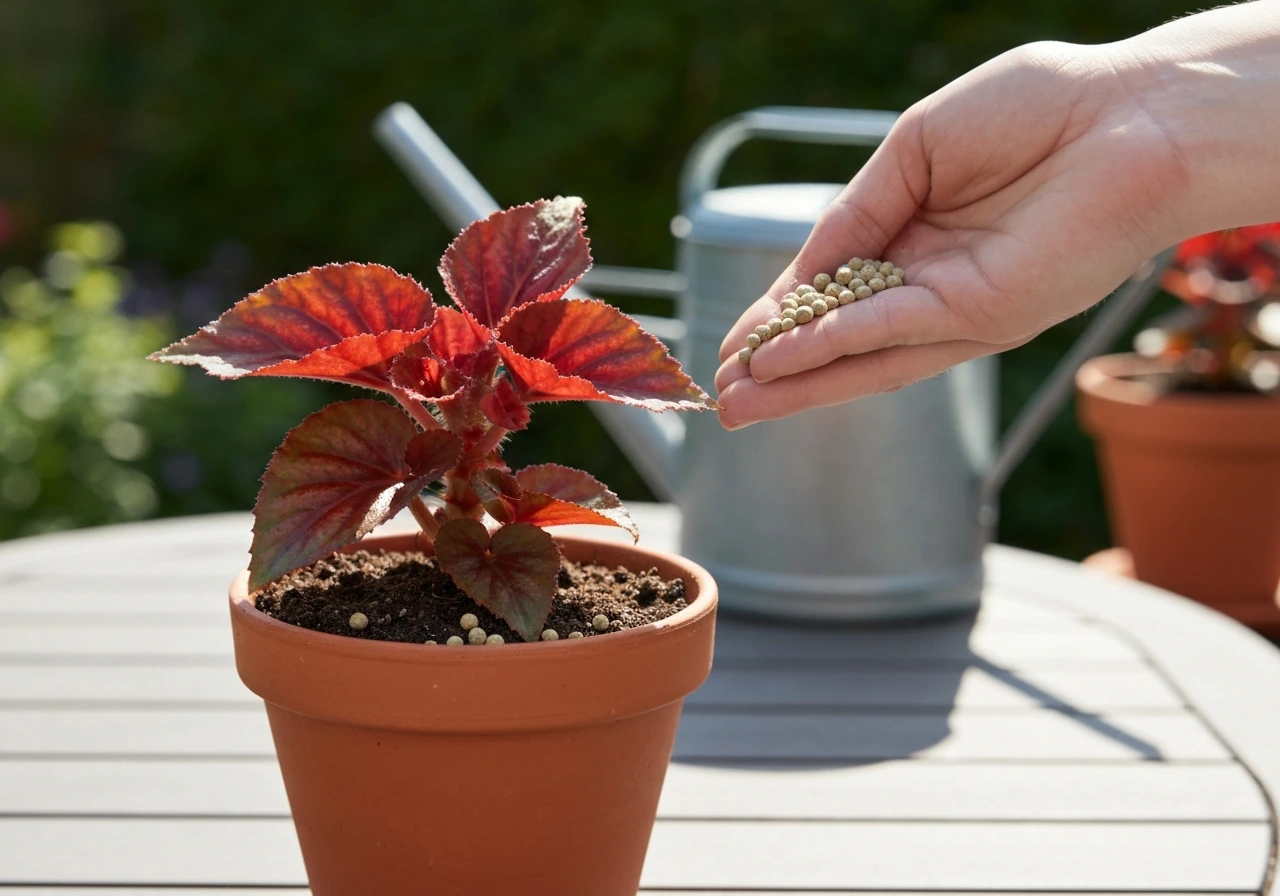
Miracle-Gro basics for begonias
Begonias are moderate feeders. They want nutrients to push out new growth and flowers, but they're not heavy hitters the way tomatoes or roses are. Their root systems are relatively fine and sensitive to salt buildup, which means a full-strength dose of fertilizer can do more damage than doing nothing at all. The goal with Miracle-Gro is to give begonias a consistent, gentle supply of nutrients rather than an aggressive blast every now and then.
The University of Minnesota Extension recommends fertilizing begonias monthly with a fertilizer that has higher phosphorus than nitrogen to promote blooms. That's a conservative baseline. If you're using a water-soluble product like Miracle-Gro and diluting properly, feeding every two weeks at half strength lands in a safe, productive range. The key word is diluted. More is not better with begonias.
Which Miracle-Gro products to consider (and which to skip)
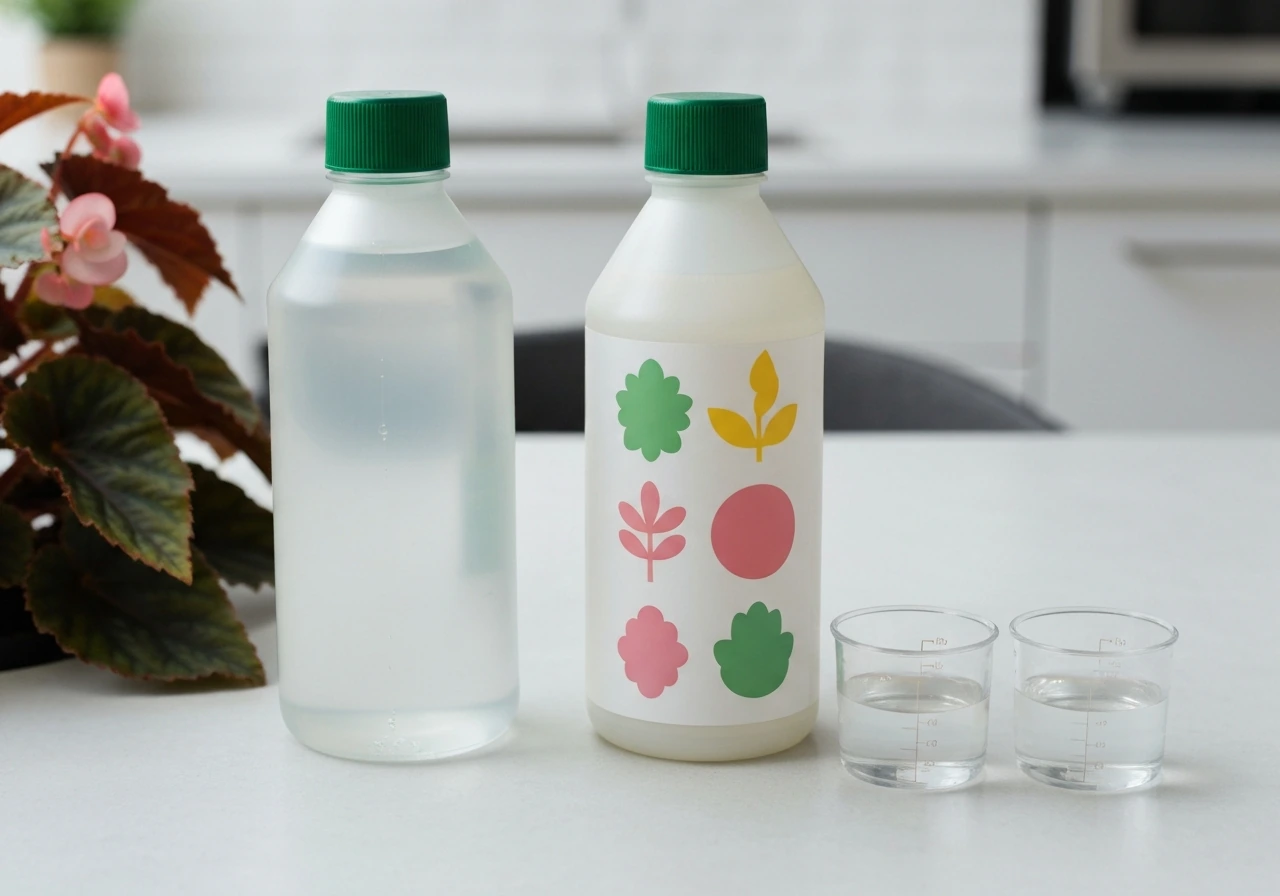
Not all Miracle-Gro products are equally well-suited to begonias. Here's how the main options stack up.
| Product Type | Good for Begonias? | Why / Why Not |
|---|---|---|
| Water Soluble All Purpose Plant Food | Yes, with dilution | Flexible concentration; easy to dial down to half strength; feeds quickly and flushes out between applications |
| Bloom Booster (higher phosphorus formula) | Yes, preferred for flowering | Higher phosphorus encourages more blooms; aligns with begonia feeding recommendations |
| Pour & Feed (ready-to-use liquid) | Yes, convenient for containers | Pre-mixed, lower risk of over-concentration; use every 1–2 weeks per label |
| LiquaFeed All Purpose | Yes, if used as directed | Safe for all plants per Miracle-Gro when label directions are followed; less control over dilution |
| Shake 'n Feed Granular (12-4-8) | Use with caution | Granules releasing near shallow begonia roots can cause salt buildup; risk of uneven distribution in containers |
| Potting Mix with built-in fertilizer | Avoid for tuberous begonias | American Begonia Society specifically states the planting medium should not contain fertilizer or manure for tuberous types |
My recommendation: start with the water-soluble All Purpose or a Bloom Booster formula. If you are wondering whether Miracle-Gro is good for pansies, the same dilution-and-frequency approach usually applies, but you should always follow the product label water-soluble All Purpose. They give you the most control. You can mix them weaker than the label suggests, which is exactly what begonias prefer. If you do use Shake 'n Feed granular in a container, work it only into the top 1 to 3 inches of soil, water thoroughly afterward, and keep granules away from the stem base to reduce burn risk.
How to apply it: dilution, frequency, and timing
Getting the dilution right
The Miracle-Gro Water Soluble All Purpose Plant Food label recommends 1/2 teaspoon per 1 gallon of water for indoor plants. That's already a lighter rate than the outdoor formula. For begonias, especially those in smaller containers or under lower light, I'd stick to that indoor rate or even go slightly below it. The approach that works best for sensitive container plants is weak solutions applied frequently rather than strong doses applied occasionally. Some experienced container gardeners swear by this method, and it's backed by cooperative extension guidance too.
How often to feed
During active growth (spring through summer), feed your begonias every 7 to 14 days with a diluted water-soluble formula. Every two weeks is a safe cadence for most home gardeners. If your begonias are growing vigorously, in bright indirect light, and you're watering frequently, you can push to every 10 days. If growth is slow or light is limited, stretch it to every 14 days or skip a feeding entirely.
When to start and stop fertilizing
- Wait 2 to 6 weeks after planting or repotting before starting fertilizer. The plant needs time to establish roots in new soil without the added stress of salt from fertilizer.
- Do not fertilize immediately after transplanting. Illinois Extension is clear on this: let the plant adjust to new conditions first.
- Start regular feeding once you see active new growth, usually mid-spring.
- Taper off in late summer and stop entirely when nighttime temperatures drop below 60°F. The American Begonia Society notes that begonias do not grow or use fertilizer below that threshold.
- Do not fertilize dormant, dry, or sick plants. A plant that's already stressed will be pushed further over the edge.
Soil and light: the two things that determine whether fertilizer actually helps
Fertilizer is not a fix for bad growing conditions. If your begonia's soil is dense and waterlogged, or it's sitting in dim light, feeding it won't produce better results. It'll just increase the salt load in the soil and stress the roots further.
Soil mix and drainage
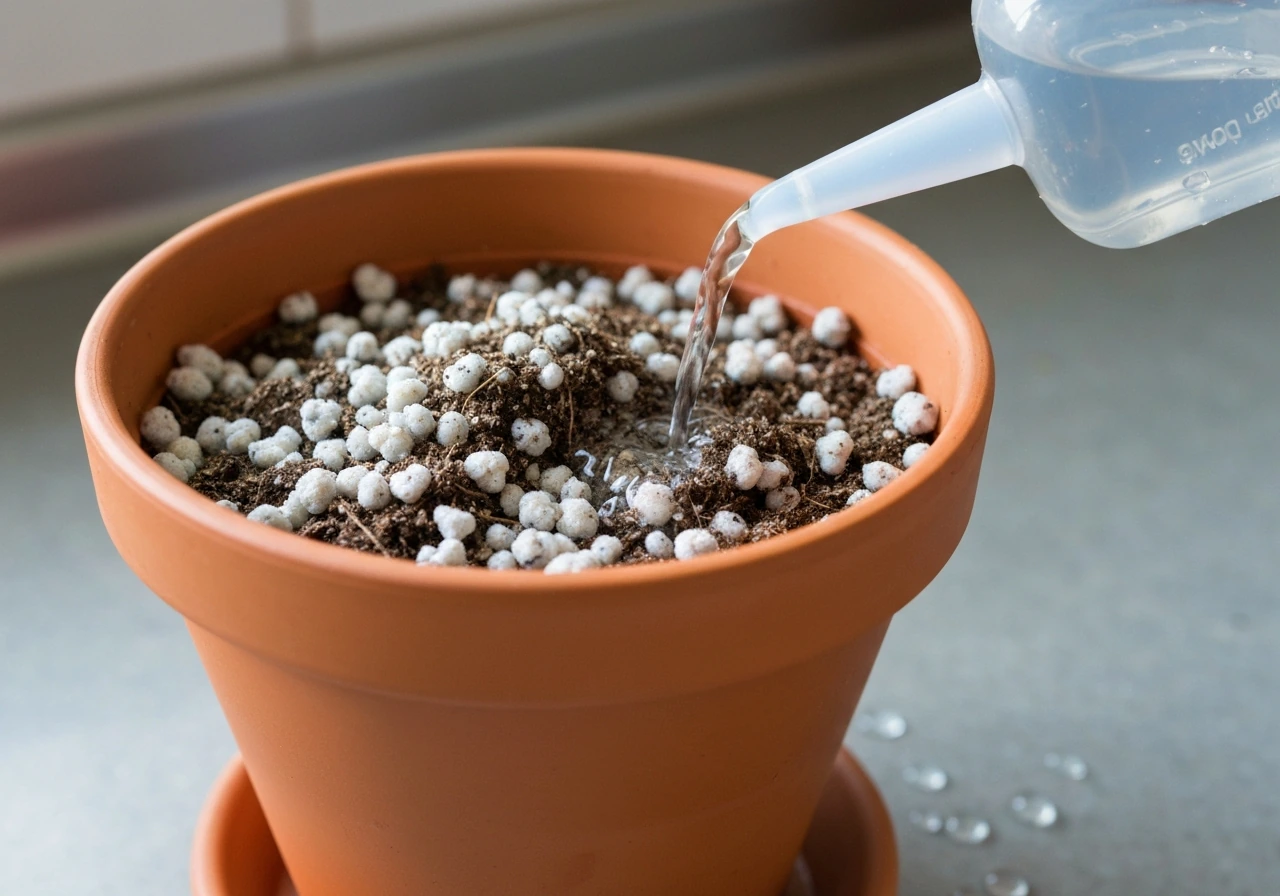
Begonias need a loose, well-draining potting mix. The American Begonia Society recommends ingredients like perlite, vermiculite, sphagnum peat, and leaf mold. A classic tuberous begonia mix is roughly four parts decayed leaf mold or forest humus, one part garden loam, and one part coarse sand. The critical point is that the medium drains freely. When water moves through quickly, salts from fertilizer get flushed out rather than accumulating around the roots. If your current mix feels dense or stays soggy for days after watering, amend it with perlite or coarse sand before you start a fertilizer program.
Always water your begonias to runoff, meaning water until it drains from the bottom of the pot. This habit alone prevents salt buildup. Texas A&M and Washington State University both highlight this as the most practical way to keep container plants from accumulating harmful fertilizer salts over time.
Light intensity and feeding rate
Begonias prefer bright but indirect light, roughly 100 to 500 foot-candles indoors, which corresponds to a well-lit east or west-facing window. Here's the connection to fertilizer: a plant growing in good light is actively photosynthesizing and using nutrients. That same idea applies to fuchsias too, where the right dose and timing make the difference between healthy growth and fertilizer stress. A plant in low light is barely ticking over and can't process the nutrients you're feeding it. If your begonia is in a dim corner and you're feeding it on a regular schedule, those unused nutrients accumulate as salts in the soil. Match your feeding frequency to your light conditions. Low light means less feeding, or none at all.
Signs it's working vs signs you've overdone it
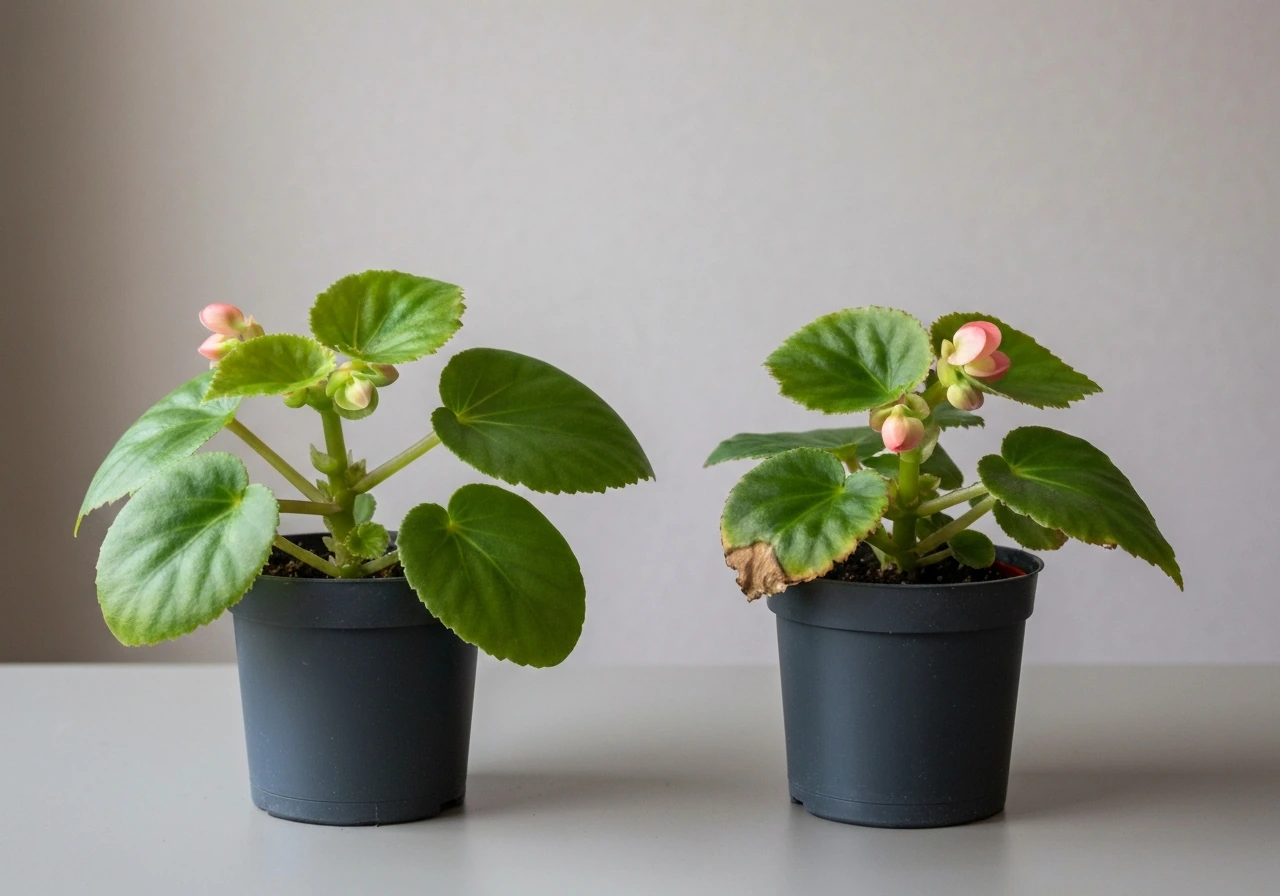
Good signs the feeding is helping
- New leaves emerging with good color and size
- More flower buds forming over several weeks
- Stems look sturdy rather than leggy or etiolated
- Overall plant looks fuller and more vigorous compared to before you started feeding
Signs of overfeeding or fertilizer burn
The most common sign of fertilizer burn in begonias is browning or dieback at the leaf tips and margins. University of Maine also lists brown leaf tips as a possible chemical burn from overapplying pesticide or fertilizer, while noting drought stress and low temperatures as alternative causes brown leaf tips as possible chemical burn from overapplying pesticide or fertilizer. You might also notice a yellow halo around the brown area. If the damage is fairly evenly distributed across the plant rather than isolated to one or two leaves, that's a strong indicator of a fertilizer or salt issue rather than a watering or pest problem. A white or brownish crust on the surface of the potting mix or on the inside rim of the pot is a direct sign of salt accumulation. In severe cases, you may see stem collapse at the soil line.
If you suspect overfeeding, flush the pot thoroughly by watering heavily several times and letting it drain completely. This leaches excess salts out of the root zone. Then hold off on fertilizing for at least two to four weeks and let the plant recover. Going forward, cut your dilution rate in half and space out your applications.
One other thing worth mentioning: stunted plants can also be a symptom of excess fertilizer. If your begonia seems frozen in place and isn't putting out new growth despite decent light and regular watering, overfertilization is one of the causes worth ruling out alongside overwatering and root bound conditions.
Seasonal care: potting, transplanting, and winter
Spring repotting and starting the season right
Spring is the best time to repot begonias if they need it, just as new growth is starting. When you do repot, resist the urge to move the plant into a much larger container. The American Begonia Society specifically cautions against overpotting begonias because a pot that's too large holds excess moisture for too long, which creates a wetter environment where fertilizer salts accumulate and roots are more vulnerable. Go up one pot size at most. After repotting, wait at least two to four weeks before resuming any fertilizer applications.
Summer feeding schedule
From late spring through midsummer, this is when begonias are most actively growing and can genuinely benefit from regular feeding. Use your diluted Miracle-Gro every 10 to 14 days. If you want more flowers (and most people do), lean toward a formulation with higher phosphorus relative to nitrogen, something like a 15-30-15 ratio. African violets are also typically happier with a diluted, regular fertilizer routine rather than a strong dose, so Miracle-Gro can be a good fit if you follow the same careful approach. That higher middle number is the phosphorus, and it's what drives bloom production. Plain all-purpose formulas work fine for general health but a bloom booster formula will give you more flowers.
Late summer and fall: slowing down
As days shorten and temperatures start to cool in late summer, begonias naturally slow their growth. Pull back feeding to once a month in August, then stop entirely in September or once nighttime temperatures regularly dip below 60°F. Continuing to fertilize during slow growth phases is one of the most common mistakes I see, and it leads to exactly the salt buildup and leaf edge burn described above.
Winter and dormancy
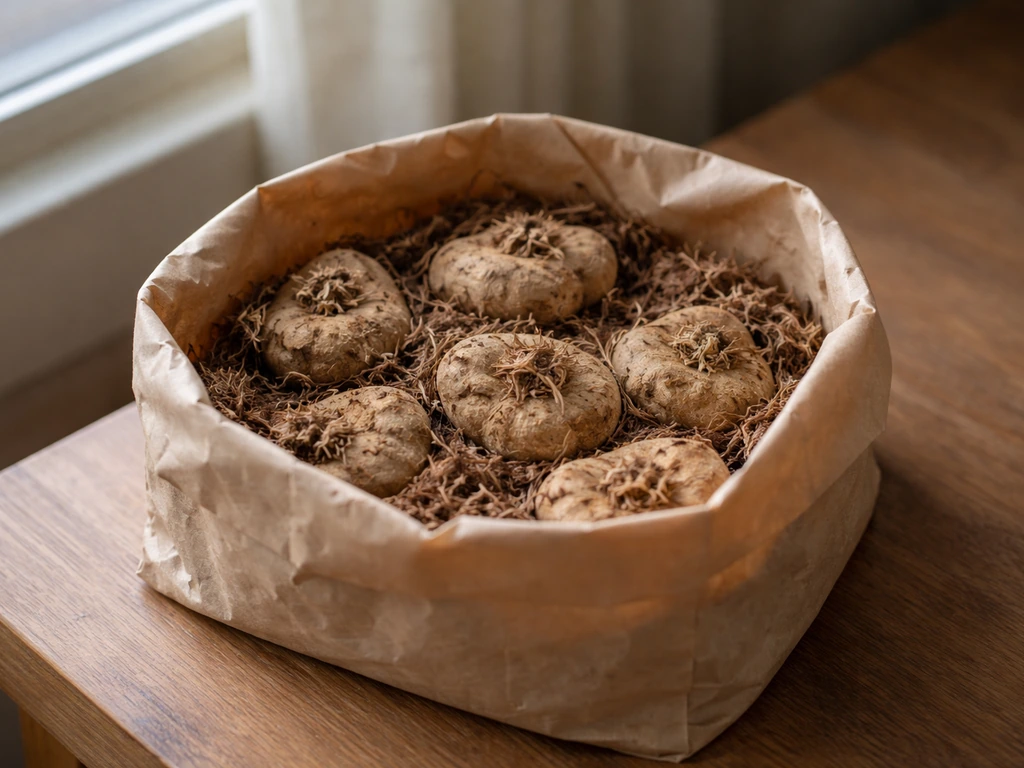
Tuberous begonias go fully dormant in winter and should not be fertilized at all during that period. If you're overwintering tubers, let the foliage die back naturally, stop watering gradually, and store the tubers dry and cool. For non-tuberous types kept as houseplants through winter, water only when the top inch or two of soil has dried out and hold all fertilizer until you see new growth returning in late winter or early spring. At that point, you can restart your Miracle-Gro routine at a reduced rate and build back up as the plant kicks into gear.
If you're also growing other flowering plants alongside your begonias, the same general logic applies across the board: dilution and timing matter more than the brand name on the bottle. The approach for begonias is actually quite similar to what works well for fuchsias and pansies, both of which are bloom-focused plants that respond better to consistent light feeding than to occasional heavy doses. If you’re wondering whether Miracle-Gro is good for lilacs too, the same idea applies: dilute it appropriately and don’t overfeed, especially in less ideal light is miracle grow good for lilacs.
FAQ
Can I use Miracle-Gro on begonias year-round, or should I stop at some point?
Not necessarily. Use Miracle-Gro only for the type you have, meaning tuberous begonias should not be fertilized during winter dormancy, and other begonias should be held back in late summer or whenever growth slows. If your begonia has no new leaves or flower buds for several weeks, treat that as a sign to pause feeding rather than continue on the same schedule.
What if my begonia is in low light or a darker room, is Miracle-Gro still a good idea?
Yes, but only if you keep the dose low and the potting mix fast-draining. Start by using a water-soluble formula at half the indoor label rate, apply every 14 days, and check for salt signs (crust on the pot rim or leaf tip browning). In very low light, it is better to skip fertilizer even if you are still watering regularly.
Do I have to water to runoff if I’m using diluted Miracle-Gro?
Avoid that. For container begonias, fertilizer burn is usually linked to salt buildup, which happens faster when water is not flushing the salts out. Water to runoff every time you water, then let the pot drain fully, and never leave the pot sitting in a saucer of water for hours.
If I already fertilized, how long should I wait before repotting (or after repotting)?
Use the plant’s current growth as your guide. If you just fertilized and then the begonia is repotted, wait at least two to four weeks before resuming fertilizer. Repotting disturbs roots, and right after that the risk of burn and stressed regrowth is higher, especially in slightly larger pots.
Is Shake 'n Feed granular Miracle-Gro okay for begonias, or is liquid better?
Yes, and it can be safe if you use it correctly. If you choose Shake 'n Feed, confine granules to the top 1 to 3 inches, keep them away from the stem base, then water thoroughly. Do not apply on top of dry soil, because uneven wetting can create localized burn points.
How do I tell the difference between fertilizer burn and normal leaf issues?
Watch for salt buildup before switching schedules. The clearest cues are a white or brown crust on the soil surface or pot rim, browning at leaf tips and margins, and yellowing halos around damaged areas. If you see those, flush the pot and pause fertilizer for two to four weeks, then restart at half strength and less often.
What should I do if my begonia is root bound but also looks like it needs nutrients?
If the begonia is root bound, fertilizer can worsen the situation because the plant cannot use nutrients efficiently and salts concentrate in the root zone. In that case, it is often better to repot (up one pot size at most) using a well-draining mix, then restart fertilizer after a recovery window instead of trying to “fix it” with more feeding.
Does using Miracle-Gro mean I should move to a bigger pot to help begonias bloom?
No. Overpotting is a common reason fertilizer seems to cause problems. A container that holds extra moisture for too long keeps roots under stress and increases salt accumulation risk, so increase pot size only by about one step and ensure the mix drains quickly.
Can I fertilize begonias that are not outdoors (indoors under grow lights), and how should timing change?
You can, but adjust expectations and timing. If you are forcing blooms indoors under steady bright indirect light, keep the same dilution concept and feed every 10 to 14 days. If light is inconsistent, fertilize less often or pause, because the plant may not be able to process nutrients between growth spurts.