
Yes, you can use Miracle-Gro on lilacs, but the type you choose matters a lot. If you're wondering whether Miracle-Gro is good for begonias, the answer depends on the formulation and how heavily you feed is miracle grow good for begonias. Lilacs are not heavy feeders, and the biggest mistake most gardeners make is reaching for a high-nitrogen product and accidentally suppressing the very blooms they're trying to encourage. The best Miracle-Gro option for lilacs is Miracle-Gro Shake 'N Feed Flowering Trees & Shrubs Plant Food (18-6-12), a slow-release granular formula built specifically for flowering woody shrubs. Used correctly, it supports healthy growth without the nitrogen overload that turns a lilac into a leafy green mound with zero flowers.
Is Miracle-Gro Good for Lilacs? How to Fertilize Safely

Which Miracle-Gro product to use (and which to skip)
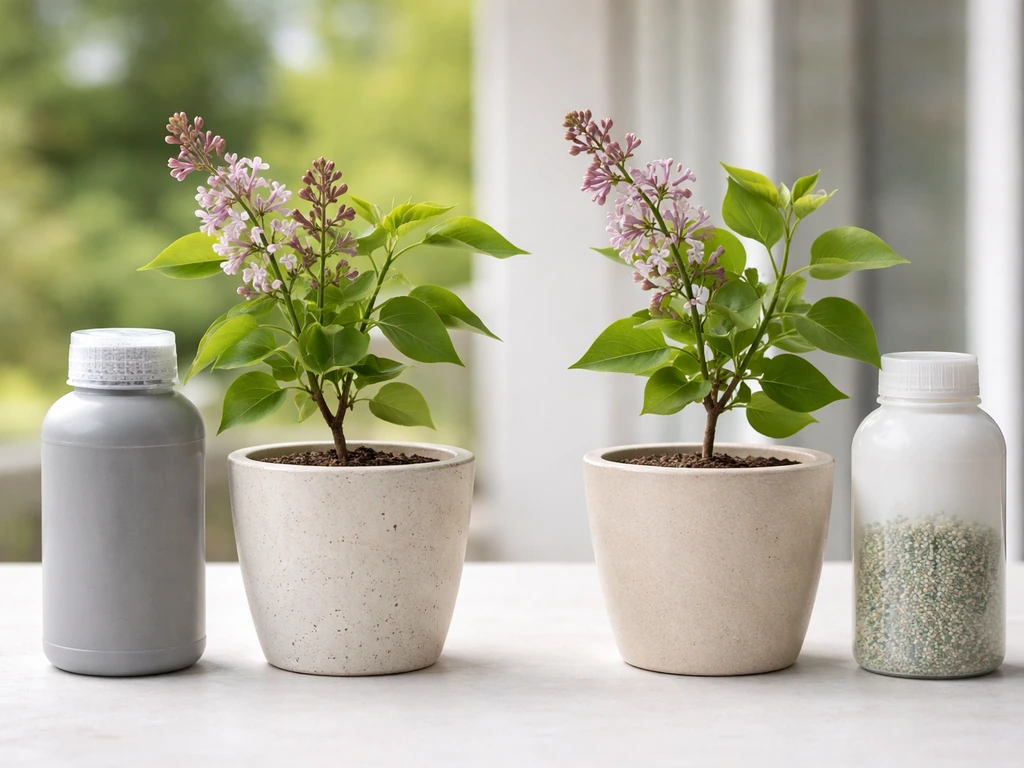
Not all Miracle-Gro products are created equal for lilacs. Because lilacs are woody shrubs that bloom on old wood and don't need aggressive feeding, slow-release formulas are the right tool. Here's how the main Miracle-Gro options stack up.
| Product | N-P-K | Type | Verdict for Lilacs |
|---|---|---|---|
| Shake 'N Feed Flowering Trees & Shrubs | 18-6-12 | Slow-release granular | Best choice — feeds for 3 months, designed for flowering woody shrubs |
| Tree & Shrub Plant Food Spikes | 15-5-10 | Slow-release spike | Good option — easy to apply, steady slow release, good for established shrubs |
| Water Soluble All Purpose Plant Food | 24-8-16 | Water-soluble | Use with caution — high nitrogen, less ideal for woody plants; follow label precisely |
| Water Soluble Bloom Booster | 10-52-10 | Water-soluble | Occasional use only — very high phosphorus can help pre-bloom but not a primary feed |
| LiquaFeed Bloom Booster Flower Food | 12-9-6 | Liquid | Marginal — better suited to annuals and container plants than established shrubs |
| Lawn fertilizers (any brand) | Varies, high N | Granular | Avoid entirely — high nitrogen is the fastest way to kill lilac blooms |
The core reason to avoid the water-soluble All Purpose formula as your main lilac fertilizer is the high nitrogen content. University of Maine Cooperative Extension is very clear on this: excess nitrogen pushes lilacs into leafy vegetative growth and shuts down flower bud development. That lush, thick green bush that never blooms? Nitrogen overload is usually the culprit. Slow-release products like Shake 'N Feed release nutrients gradually, which is exactly what a woody shrub needs. Colorado State University Extension specifically recommends slow-release fertilizers for trees and shrubs over continuous water-soluble feeding, and that guidance holds for lilacs.
How to apply Miracle-Gro to lilacs: timing, amount, and method
When to fertilize
Fertilize lilacs once in early spring, just as new growth is beginning to emerge. That's the window where feeding pays off. A second light application in late spring after blooms have finished is fine if your shrub looks pale or growth is sluggish. After that, stop. Do not fertilize past mid-summer. Elevated nitrogen in late summer and fall can encourage disease, push out soft new growth that won't harden before frost, and reduce next year's flower bud set. This is one of those cases where less is genuinely more.
Applying Shake 'N Feed Flowering Trees & Shrubs (recommended method)

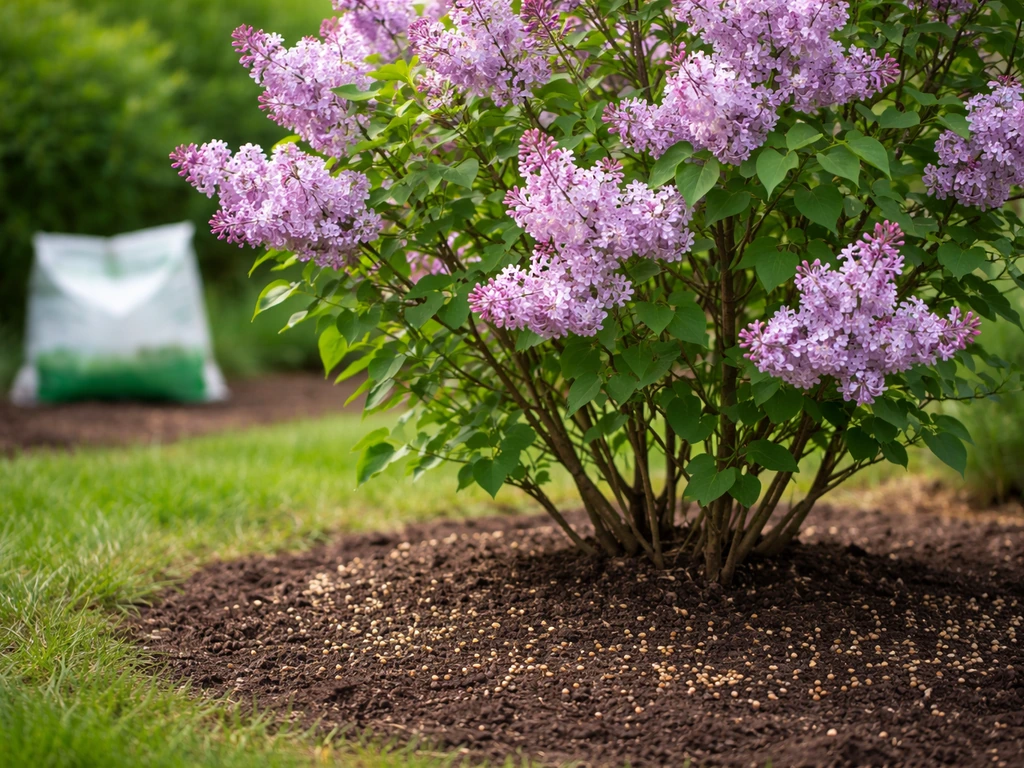
Spread the granules evenly on the soil surface within the drip line of your shrub (that's the area beneath the outer edge of the branches). The Miracle-Gro label ties dosage to the drip line diameter: use about 3 tablespoons for a 4-foot drip line, 7 tablespoons for a 6-foot drip line, and roughly 3/4 cup for an 8-foot-plus drip line. Keep granules away from the trunk and off foliage. Once applied, lightly work them into the top inch of soil without disturbing shallow roots, and water thoroughly. The product feeds for about 3 months, so a single spring application is typically all you need for the season.
Applying Tree & Shrub Spikes
Plant food spikes (15-5-10) are a low-effort alternative. Drive them into the soil at the drip line, spacing them evenly around the shrub per the package instructions. They release nutrients slowly as you water, and because you're not broadcasting granules, there's almost no risk of trunk contact. Good option if you want to set it and forget it for the spring season.
If you use Water Soluble All Purpose (cautious approach)
If Shake 'N Feed isn't available and you're using the water-soluble All Purpose formula, mix 1.5 tablespoons per 1.5 gallons of water and apply to the root zone, not the foliage. Limit this to once in early spring, and consider diluting slightly below the label rate for lilacs given their sensitivity to nitrogen. Don't make this your regular approach for an established shrub.
Get the basics right: soil, light, and water
Fertilizer will not fix a lilac that's sitting in the wrong conditions. I've seen gardeners dump feed on a struggling shrub for years when the real problem was shade or waterlogged roots. Get these fundamentals dialed in first, then fertilize.
- Sunlight: Lilacs need full sun, minimum half a day. Ask Extension is direct about this: inadequate sunlight prevents blooming regardless of fertilizer. If your lilac is under a tree canopy or on the north side of a building, fertilizer won't save it.
- Soil pH: Lilacs tolerate a surprisingly wide range, roughly pH 5.5 to 8.0, but they perform best in neutral to slightly alkaline soil around pH 6.5 to 7.0. If you haven't tested your soil, do it before you buy a bag of fertilizer. You can correct pH cheaply; fixing years of wrong feeding is harder.
- Drainage: Lilacs hate wet feet. Well-draining soil is non-negotiable. Root rot from poorly drained soil causes the same pale, struggling look as a nutrient deficiency, so don't chase the wrong problem.
- Watering: Deep, infrequent watering is better than shallow, frequent watering. Soak the root zone thoroughly and let the soil dry out somewhat between waterings. Consistent moisture through the growing season supports nutrient uptake, but soggy soil does the opposite.
One more thing worth saying: soil test before you fertilize, especially if your lilac isn't blooming well. Phosphorus is often already present in sufficient amounts in established garden soil. Adding high-phosphorus Bloom Booster on top of a soil that already has plenty doesn't help and can throw off nutrient balance. A $15 soil test tells you exactly what you're working with.
How to tell if you're over- or under-fertilizing
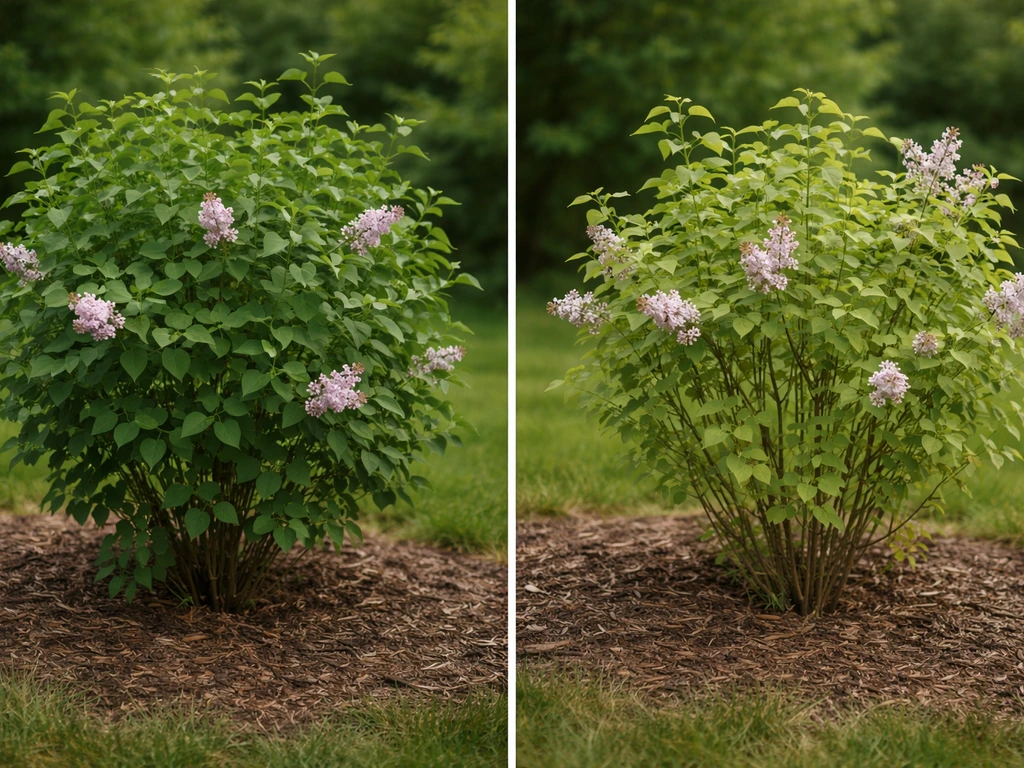
Lilacs are pretty communicative once you know what to look for. Over-fertilizing (especially with nitrogen) and under-fertilizing have distinct symptom patterns, and getting this diagnosis right saves you from making things worse.
Signs of too much nitrogen / over-fertilizing
- Lots of lush, dark green leafy growth but few or no blooms
- Soft, floppy new growth that seems out of proportion to the season
- The shrub looks healthy but hasn't bloomed in years despite otherwise good conditions
- You (or a previous owner) have been applying lawn fertilizer nearby or directly to the shrub
If this sounds familiar, stop all fertilizing immediately. If you're wondering about fuchsias specifically, Miracle-Gro can work, but you still need to avoid over-feeding, especially with nitrogen stop all fertilizing immediately. Let the shrub reset for a full season. Don't apply any fertilizer for the rest of the current year and reassess the following spring. The shrub won't suffer from a feeding pause; lilacs managed on their own for decades before Miracle-Gro existed.
Signs of under-fertilizing or nutrient deficiency
- Pale or yellowing leaves (chlorosis), especially on older leaves
- Slow, stunted growth over multiple seasons
- Small flower clusters that seem to be getting smaller year over year
- Generally lackluster appearance even with adequate sun and water
Before you assume nutrient deficiency, confirm sunlight and drainage are adequate and check soil pH. A lilac struggling in pH 5.0 acidic soil can't take up nutrients efficiently no matter what you feed it. If conditions are solid and deficiency symptoms persist, a single spring application of Shake 'N Feed at the recommended rate is a reasonable starting point. Give it a full growing season to respond before adding more.
A seasonal care plan for lilacs
Lilacs have a pretty clear annual rhythm, and matching your care to that rhythm is the most effective thing you can do. Here's how to approach it month by month from spring through fall.
Early spring (buds swelling, before bloom)
This is your main fertilizing window. Apply Shake 'N Feed Flowering Trees & Shrubs at the drip line as described above. Miracle-Gro can work well for pansies too, but you still want the right product and the proper dilution to avoid stressing the plants Shake 'N Feed Flowering Trees & Shrubs. Water it in well. This is also a good time to do a soil pH check if you haven't done one recently. If the soil is too acidic, work in garden lime to push toward neutral. Hold off on any pruning at this stage since you'll cut off the developing flower buds.
Mid-spring (bloom time)
Enjoy the blooms. No fertilizer needed during flowering. Keep the soil evenly moist during the bloom period. If you want to extend the display, deadhead spent flower clusters as they fade, but leave the woody stems intact. Cutting too deep removes next year's buds.
Late spring to early summer (post-bloom)
This is the right time to prune, right after the blooms finish. Remove dead wood, crossing branches, and any suckers growing from the base. If your shrub is overgrown, take out no more than a third of the oldest, thickest stems at ground level to encourage new growth from the base. A light second feeding with Shake 'N Feed is fine here if the shrub looks pale or slow, but skip it if growth looks healthy and vigorous.
Midsummer
Stop fertilizing by midsummer at the latest. The shrub is already setting next year's flower buds, and any nitrogen push now works against that process. Water deeply during dry spells, particularly for shrubs under 3 years old. Established mature lilacs are fairly drought-tolerant but appreciate a deep soak every couple of weeks in a dry summer.
Fall and winter
No fertilizer, full stop. Fall is for cleanup: rake up fallen leaves from around the base to reduce disease pressure, and remove any obviously diseased or damaged wood. In colder climates (Zone 4 and below), a 2 to 3 inch layer of mulch over the root zone helps moderate soil temperature through winter. Pull it back a few inches from the trunk to avoid rot. Lilacs are cold-hardy and don't need much coddling, but a clean base going into winter sets you up for a strong bloom next spring.
Lilacs reward a light touch more than a heavy hand. The best thing Miracle-Gro can do for your shrub is give it a gentle, balanced nutritional boost in early spring and then step back. African violets have very different light and fertilizing needs than lilacs, so Miracle-Gro for them is not a direct substitute. Match that with full sun, well-drained neutral soil, and a post-bloom prune, and you'll have a healthy, floriferous shrub for decades. If you're also growing other flowering shrubs and annuals, the same principle of matching the product to the plant type applies whether you're feeding begonias, fuchsias, or pansies: the NPK ratio matters, and more is rarely better.
FAQ
Can I use Miracle-Gro on lilacs that are newly planted or still small (under 2 or 3 years)?
You can, but go lighter. For young lilacs, focus on correct watering and full sun first, then consider a reduced first feeding (for example, about half the labeled amount) in early spring only if the plant looks pale or growth is noticeably slow. Avoid any late-spring or late-season feeding, because tender new growth is more likely to be damaged by early frost.
What if my lilac already looks lush and green, but it won’t bloom after using a Miracle-Gro product?
Stop fertilizing immediately and do not switch to another high-nitrogen formula. If the plant is producing lots of leaves with few or no flower buds, the cause is often nitrogen excess or shade. Give it a full season without fertilizer, verify the lilac gets at least about 6 hours of sun, and check drainage before you try any nutrient fixes again.
Is it safe to apply Miracle-Gro during bloom or right after I see flowers forming?
It’s best to avoid feeding during the bloom period. The article recommends fertilizing early spring, then only optionally in late spring after blooms finish. If you already applied fertilizer during bloom, flush the soil with a deep watering and skip all feeding until next early spring.
How do I know the lilac fertilizer I bought is the right Miracle-Gro type (since not all are the same)?
Choose the slow-release flowering trees and shrubs type (the 18-6-12 Shake ’N Feed) or another product specifically intended for woody shrubs and flowering. Avoid “all purpose” or any product that lists a very high nitrogen number as the dominant nutrient, because that commonly drives leaf growth at the expense of bloom buds.
Can I mix Miracle-Gro granules into the soil instead of sprinkling them and watering in?
Try to avoid digging or stirring deeply. Lilacs have shallower roots near the surface, so lightly work granules only into the top inch or just scratch them in at the drip line, then water thoroughly. Deep mixing can damage roots and can make the fertilizer hit too aggressively in the wrong spot.
Should I fertilize if I recently amended the soil with compost, manure, or mulch?
Be cautious about stacking nutrients. Compost and manure can add nitrogen, especially spring-amended materials. If you added a fresh organic amendment in the last few months, consider skipping the spring feeding or using a reduced dose, then reassess after you see normal bud and leaf development.
What’s the correct way to measure the drip line if my lilac is irregular or not perfectly round?
Use the widest outer branch spread as your reference. Measure the approximate diameter of the shrub’s canopy and choose the closest dosage tier based on that drip line size. If it’s between sizes, it’s usually safer to pick the lower amount to avoid nitrogen overload.
Can I use Miracle-Gro spikes instead of Shake ’N Feed granules, and how do I place them to avoid damage?
Yes, spikes are a low-risk option. Place them at the drip line, spaced evenly around the shrub, and keep them away from the trunk. Press them into the soil according to the package depth guidance, then water well so release starts promptly.
If my soil test shows low phosphorus, should I still avoid Miracle-Gro Bloom Booster (high phosphorus products)?
Do not assume you should add more phosphorus just because your soil is low. Lilacs can be sensitive to nitrogen, and Bloom Booster-style products may not address the main limiter. Use your soil test to decide, then stick primarily to the recommended low-stress lilac approach, focusing on an appropriate nitrogen level and correct timing (early spring, stop by midsummer).
What should I do if I accidentally used too much Miracle-Gro this spring?
First, stop any additional fertilizing right away. Then water deeply to help moderate nutrient concentration, and do not apply a second dose. In future seasons, return to early spring only, use the correct product type, and follow the drip line dosage rather than “eyeballing” higher rates.
Does watering frequency change how much Miracle-Gro I should use?
Yes. If you water lightly or let the soil stay dry, plants may uptake nutrients unevenly, increasing stress. After applying slow-release granules, water thoroughly once to start the process, then maintain consistent moisture during active growth. If you routinely have heavy rains, you still generally follow the same dosing, but you may not need an extra late-spring application.